
EU Smart Toilet Exports Face EN 1717 Rule From Aug 4
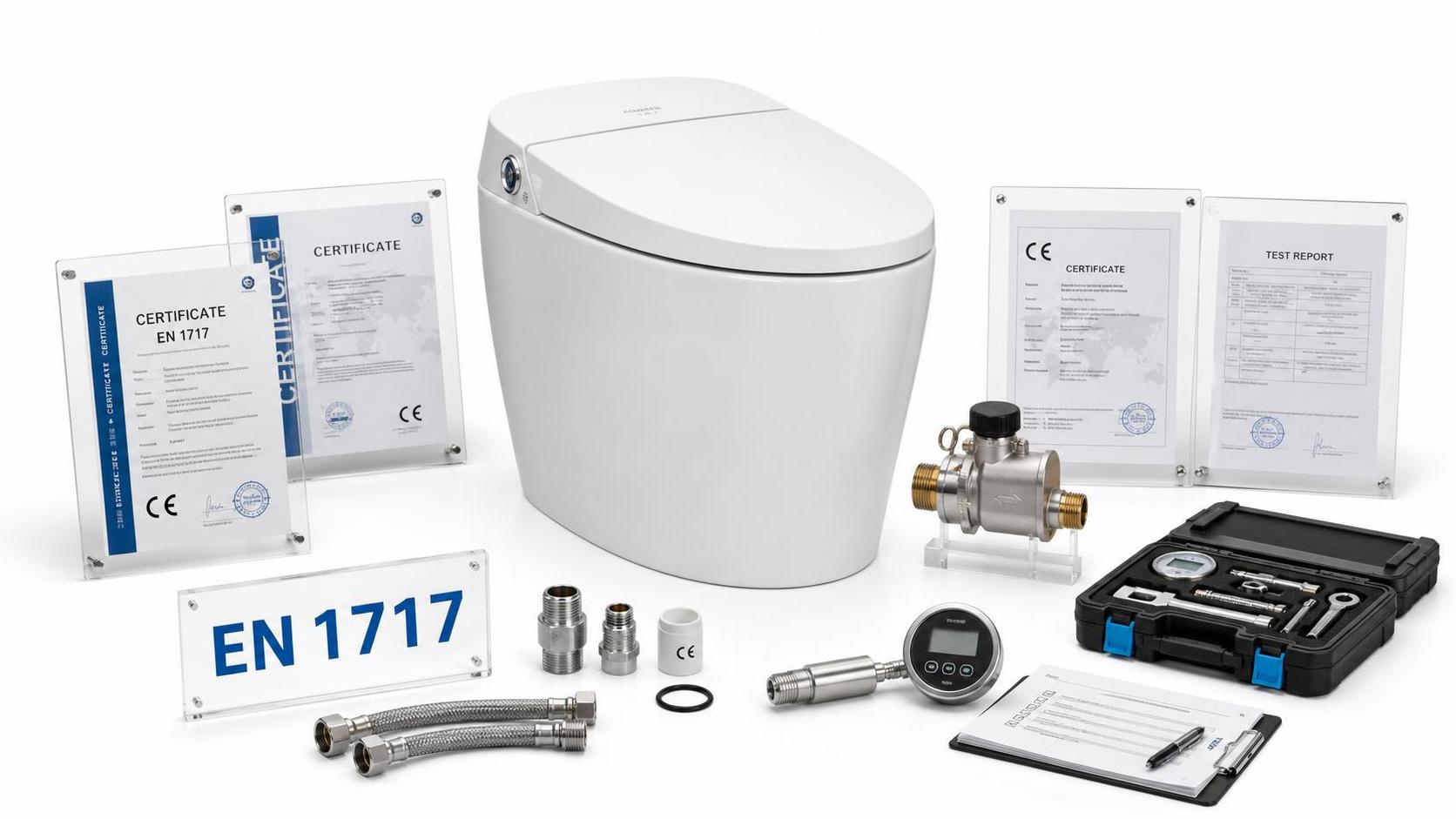
On August 4, 2026, a new EU-facing compliance condition took effect for smart toilet exports: products shipped to the EU must be fitted with a mechanical backflow isolation module compliant with EN 1717:2022 and be supported by a type examination certificate issued by an EU-recognized Notified Body. For manufacturers, exporters, certification teams, and supply chain operators in the smart sanitary sector, this is worth close attention because it links product configuration directly to factory inspection, CE marking steps, and customs release, with non-compliant goods facing refusal of entry or removal from the market.
What the emergency notice changes
According to the provided event summary, the European Commission issued an emergency technical notification on August 3, 2026, under reference EU/COM/2026/0803-1. The notice states that from August 4, 2026, all Smart Toilets sold to the EU must incorporate a mechanical backflow isolation module that complies with EN 1717:2022.
The same notice also requires a type examination certificate issued by an EU-recognized Notified Body. The requirement is described as directly affecting factory inspection, CE mark application, and customs clearance for Chinese smart sanitary ware exporters. Products that do not meet the requirement may be refused entry by member state customs authorities or be removed from sale and recalled.
Where pressure is likely to appear first in the business chain
Product design and manufacturing moves to the front line
From an industry perspective, manufacturers are likely to be affected first because the rule is tied to an internal product configuration rather than an external shipping or labeling step. The immediate issue is whether the smart toilet already includes the required EN 1717:2022-compliant mechanical backflow isolation module as part of its waterway design. This means production, outgoing inspection, and technical file preparation become closely connected.
Export execution now depends on document readiness
Exporters and trading companies may see the impact at the shipment stage. Analysis shows that the new requirement is not limited to product hardware; it also brings a documentation threshold in the form of a type examination certificate from an EU-recognized Notified Body. In practical terms, export arrangements, CE marking steps, and customs release may all depend on whether product documentation and product configuration remain aligned.
Certification and testing workflows may become a bottleneck
Certification-related service providers and internal compliance teams are also likely to face tighter timing pressure. What deserves closer attention is that the notice links market access to a specific standard and a specific certificate route. That raises the importance of document review, test coordination, certificate availability, and consistency between technical declarations and the delivered product.
Distribution and after-sales exposure does not end at import
Channels, import-side operators, and after-sales teams may also be affected because the stated consequence is not only refusal at customs, but also product removal and recall where requirements are not met. Observably, that extends compliance risk beyond shipment and into post-entry circulation, stock handling, and product traceability.
What companies should check immediately
Whether the product configuration already matches the new requirement
Companies should first verify whether EU-bound smart toilet models already include the required mechanical backflow isolation module and whether that configuration is consistently reflected in product specifications, inspection points, and shipment documentation. Where the module is not built in, the issue is not merely a paperwork gap.
Whether the certificate path is in place before shipment
Analysis shows that the certificate requirement deserves equal attention. Firms should check whether the relevant type examination certificate from an EU-recognized Notified Body has been obtained, whether it covers the actual exported model, and whether internal compliance teams, exporters, and customers are working from the same document set.
Whether CE marking and customs files remain consistent
Because the notice is described as directly affecting CE mark application and customs release, companies should review whether declarations, technical documentation, inspection records, and shipment files are consistent with the updated requirement. If documentation trails lag behind product changes, delivery risk may persist even where hardware has been adjusted.
Whether order planning and delivery commitments need review
What deserves closer attention is the impact on orders already in production, pending dispatch, or awaiting clearance. The provided information does not specify detailed transition handling, so it is more appropriate to treat this as an area requiring active verification rather than assuming a uniform enforcement outcome across all pending shipments.
How this should be read at this stage
Observably, this development is more than a policy signal in principle, because the provided summary describes a start date of August 4, 2026 and connects compliance directly to export inspection, CE marking, and customs release. At the same time, analysis shows it should not yet be overstated as a fully transparent enforcement framework, because the input does not provide additional detail on implementation wording, review practice, or transitional handling.
It is more appropriate to understand this as an immediate rule activation with operational consequences, while still keeping attention on how certification interpretation, customs checks, procurement specifications, and downstream market controls are applied in practice.
A near-term compliance signal rather than a distant policy trend
For the smart sanitary export business, the practical significance of this notice lies in the fact that a product-side technical requirement and a certificate-side market access condition are now presented together. From an industry perspective, the key takeaway is not broad policy rhetoric but the possibility of direct disruption to shipment, clearance, and downstream placement if model configuration and compliance files do not match the new requirement.
At this stage, the event is better understood as a landed compliance signal with immediate trade relevance, while the finer points of execution still merit continued observation.
Basis of this article and what still needs verification
This article is generated on the basis of the user-provided news title, event date, and event summary. For developments of this kind, commonly relevant source categories may include official notices, regulatory releases, customs or trade authority information, industry association updates, standard organization documents, and reporting by authoritative media. A specific official source link was not provided in the input, so further verification remains necessary.
What still needs continued observation includes any later clarification of policy details, certification application practice, customs enforcement approach, changes in procurement or tender documentation, market feedback, and how affected companies implement the requirement in production and delivery workflows.
Industry Briefing
Get the top 5 industry headlines delivered to your inbox every morning.