
Egypt Tightens Cable Rules for Smart Toilets and Digital Locks
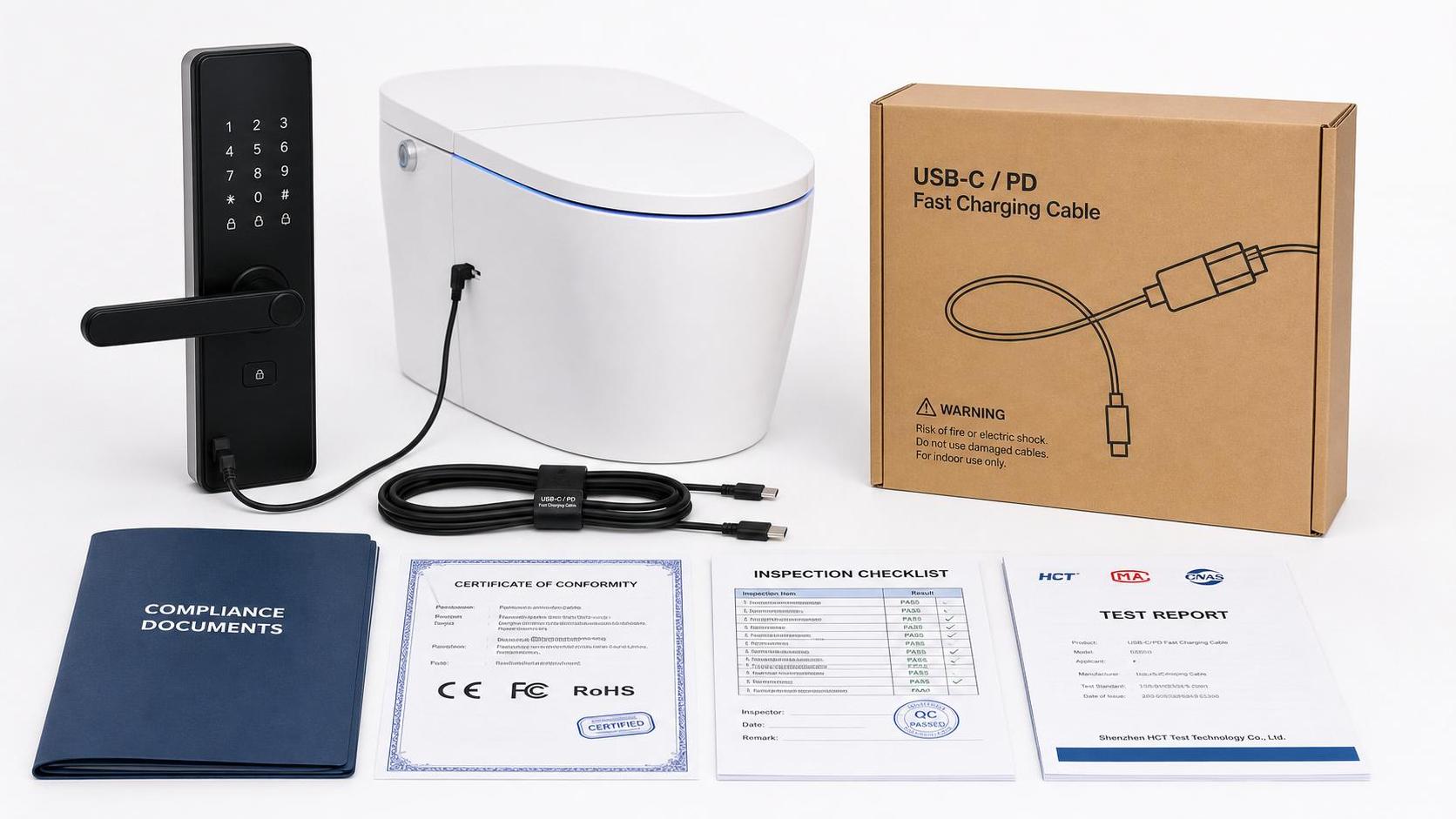
On June 23, 2026, Egypt’s standards authority EOS released ES 8521:2026, setting a new mandatory requirement for USB-C/PD fast-charging cables supplied with imported smart toilets and digital locks, with enforcement starting July 1. The update matters not only to exporters and importers serving the Egyptian market, but also to compliance, documentation, shipping, and customs-facing teams, because the rule applies even to goods already in transit and creates an immediate clearance risk for non-compliant shipments.
What the new requirement covers
According to the information provided, ES 8521:2026 requires USB-C/PD fast-charging cables bundled with imported smart toilets and digital locks to pass both local EMC and safety testing in Egypt. The rule also requires Arabic warning labels on the relevant products or accompanying cable-related compliance presentation. It applies to all in-transit cargo, and products that do not meet the requirement may be held by Alexandria Port customs. Chinese manufacturers are also required to update documentation so that both IEC 62368-1 and ES 8521 certification materials are aligned.
Where pressure is likely to appear across the supply chain
Export and import execution faces immediate customs risk
From an industry perspective, trading companies handling shipments to Egypt may feel the impact first because the rule is not limited to future production; it also covers cargo already on the way. That makes customs clearance, shipment timing, and document readiness the most exposed business steps in the short term.
Manufacturing and packaging teams need to review bundled cable compliance
Analysis shows that manufacturers of smart toilets and digital locks cannot treat the charging cable as a minor accessory in this case. If the bundled USB-C/PD cable does not satisfy local EMC and safety testing requirements, or if Arabic warning labeling is missing, the compliance gap may affect the shipment status of the full product package rather than only the cable itself.
Documentation and certification work becomes a frontline issue
What deserves closer attention is the document layer. The information provided states that Chinese manufacturers need to synchronize IEC 62368-1 and ES 8521 certification files. For compliance, quality, and export documentation teams, the pressure point is whether technical files, test records, and market-entry paperwork remain consistent with the new Egyptian requirement.
Logistics and supply chain service providers may need earlier intervention
Observably, freight coordination and customs-facing service providers may also be affected because the rule explicitly reaches in-transit goods and names a detention consequence at Alexandria Port customs. In practice, this raises the importance of pre-arrival document checks and communication among exporter, importer, and logistics partners.
What companies should watch now
Check whether current bundled cables match the new scope
Companies shipping smart toilets or digital locks to Egypt should first verify whether the included USB-C/PD fast-charging cables fall directly within the scope described in the new rule. The key issue is not general product compliance in the abstract, but whether the bundled cable configuration now triggers local EMC and safety testing requirements.
Review Arabic warning label readiness
Another practical focus is labeling. The requirement for Arabic warning markings means businesses should review packaging, product inserts, and other compliance-facing materials tied to the shipment, so that labeling does not become the reason for a customs problem alongside testing or certification gaps.
Reconcile certification files before goods arrive
Analysis shows that documentation timing may be as important as product readiness. Because the summary states that Chinese manufacturers must update both IEC 62368-1 and ES 8521 certification documents, firms should pay close attention to whether internal files, supplier documents, and submission materials are fully consistent before arrival in Egypt.
Prepare for customer and shipment communication
For commercial and account teams, it is worth preparing a clear explanation for customers, importers, and channel partners regarding shipment status, applicable testing, labeling readiness, and any document updates. This is especially relevant where cargo is already in transit and delivery expectations may need to be managed carefully.
How this development is best understood
As an editorial observation, this update is better understood as an immediate compliance and market-access signal rather than a distant policy direction. The enforcement date is close, the rule applies to in-transit goods, and a specific customs detention consequence is identified. At the same time, it is still more appropriate to treat broader commercial effects as something to watch rather than to assume a fixed long-term outcome, because the provided information focuses on the rule itself and its direct enforcement conditions.
Why this matters beyond a single shipment
The significance of this development lies in how narrowly targeted technical requirements can quickly become a broader trade execution issue. Based on the information provided, the most reasonable reading at this stage is that companies serving Egypt in these product categories should treat cable compliance, Arabic labeling, and dual-document alignment as near-term operational priorities, while continuing to monitor whether further clarification or additional implementation details emerge.
Basis of this article
This article is generated from the user-provided news title, event date, and event summary. The analysis is limited to the supplied facts: the June 23, 2026 release of ES 8521:2026 by EOS, the local EMC and safety testing requirement for bundled USB-C/PD fast-charging cables used with imported smart toilets and digital locks, the Arabic warning label requirement, the inclusion of in-transit cargo, the possible detention of non-compliant goods at Alexandria Port customs, and the need for Chinese manufacturers to align IEC 62368-1 and ES 8521 certification documents. No specific official source link was provided in the input, so the exact source document link still requires ongoing verification. For follow-up observation, the main areas to watch are any further official clarification, implementation wording, and document-handling requirements tied to shipment clearance.
Industry Briefing
Get the top 5 industry headlines delivered to your inbox every morning.