
Smart Bathroom Technology IoT: What to Evaluate Before Choosing Sensors, Controls, and Connectivity
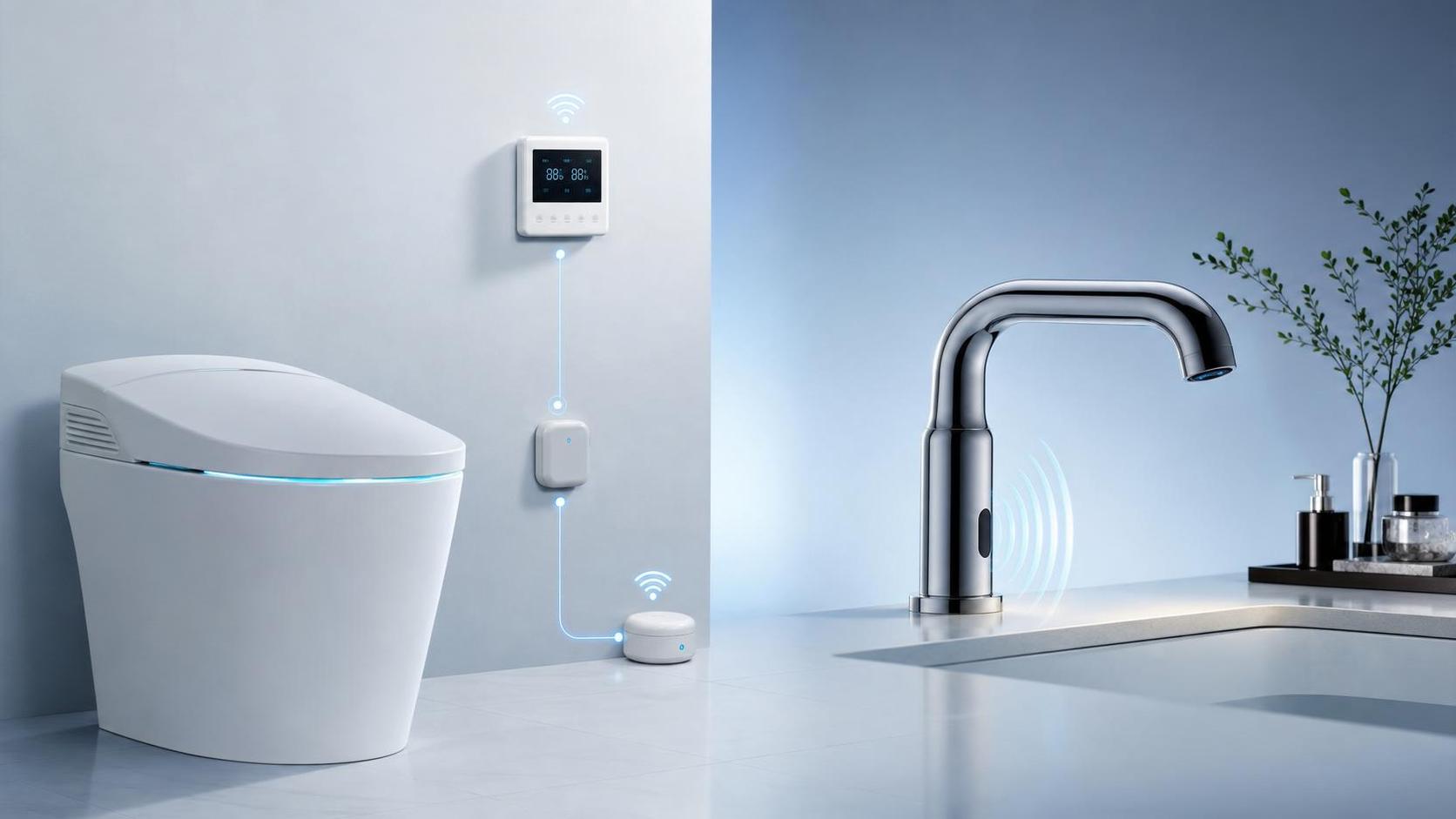
Smart bathroom technology IoT is no longer a novelty layer added at the end of a project. It is becoming part of how bathrooms manage water, hygiene, energy, access, and user comfort across homes, hotels, healthcare spaces, offices, and premium mixed-use developments.
That shift changes the evaluation process. Feature lists and demo-room impressions are not enough when sensors, controls, and connectivity must perform in wet, enclosed, regulation-sensitive environments for years.
From GIAM’s perspective, this is where building materials intelligence, sanitary systems knowledge, and digital infrastructure start to converge. The real question is not whether smart fixtures look advanced, but whether the whole system is reliable, secure, maintainable, and scalable in actual operation.
Why the evaluation standard is rising
Bathrooms were once judged mainly by fixture quality, water efficiency, finish durability, and design fit. Smart bathroom technology IoT adds another layer: data, automation, software logic, and network behavior.
This matters because bathrooms now sit inside broader smart building strategies. Water-saving mandates, anti-bacterial surface trends, occupancy analytics, touchless expectations, and carbon reduction targets all influence specification decisions.
In commercial settings, the pressure is stronger. A failed soap dispenser is inconvenient. A failed connected flush system, leak sensor network, or access control node can disrupt hygiene protocols, maintenance workflows, and operating costs.
In residential projects, the expectations are different but equally demanding. Consumers may want comfort, personalization, and remote visibility, but they also expect quiet operation, privacy, and simple maintenance.
What smart bathroom technology IoT really includes
The term covers more than connected toilets or app-controlled mirrors. In practice, smart bathroom technology IoT includes a network of sensing, control, response, and reporting components embedded in sanitary spaces.
Typical elements include leak detection sensors, occupancy sensors, humidity and temperature monitors, smart faucets, touchless flushing, connected lighting, heated systems, ventilation control, smart locks, and cloud or local management platforms.
The quality of the system depends on how these elements work together. An isolated smart faucet may be acceptable for a light retrofit. A multi-device washroom or hospitality suite needs coordinated logic and stable data exchange.
Core layers to review
Start with interoperability, not device count
One of the most common mistakes is treating each device as a separate purchase decision. In reality, smart bathroom technology IoT should be judged as part of an ecosystem.
Interoperability matters at several levels. Devices should communicate across brands or at least through open or well-documented gateways. Control logic should also connect with building management systems where required.
This becomes critical in projects with phased rollout. A sensor package installed this year may need to work with upgraded controls or analytics software two years later.
It is worth asking whether the solution supports firmware updates, API access, data export, and protocol bridges. Closed systems may look efficient at installation, then become expensive during expansion.
Useful interoperability checks
- Which protocols are native, and which require gateways?
- Can sensor data feed existing building platforms?
- Are updates managed remotely and securely?
- What happens if one product line is discontinued?
Environmental durability is not a minor detail
Bathrooms are hard environments for electronics. Moisture, temperature swings, cleaning chemicals, condensation, steam, mineral buildup, and frequent touchless activation cycles all create performance risks.
That means sensors and controls should be reviewed with the same seriousness used for traditional material selection. An elegant interface has little value if seals degrade, sensor windows cloud, or connectors corrode.
Ingress protection ratings matter, but they are only one part of the picture. Cleaning compatibility, enclosure design, cable routing, and tolerance for real-world water exposure often reveal more than catalog claims.
GIAM’s broader sanitary-space lens is useful here. Smart systems should not be evaluated separately from anti-bacterial materials, water-saving hardware, and the physical maintenance conditions around them.
Security and privacy need operational clarity
Because smart bathroom technology IoT can collect occupancy data, usage patterns, maintenance events, and access signals, cybersecurity is not an abstract IT concern. It is part of product suitability.
The evaluation should cover encryption, authentication, update governance, credential handling, and network segmentation. Cloud dependence also deserves scrutiny, especially in regulated or high-security environments.
Privacy is equally important. Data minimization, anonymization, retention policies, and ownership terms should be understood before deployment. Even harmless-seeming sensor data can become sensitive when aggregated over time.
A strong platform explains where data is processed, how alerts are routed, who can access logs, and how incidents are handled. Vague answers here usually signal future compliance problems.
Connectivity choices shape reliability and maintenance
Connectivity is often reduced to a simple question: wired or wireless. In practice, the right answer depends on layout, wall composition, retrofit constraints, power availability, traffic density, and response requirements.
Wireless options can reduce installation complexity, especially in renovation projects. Still, tiled partitions, metal frames, mirrors, and dense mechanical zones may interfere with performance.
Wired architectures can offer stronger stability for mission-critical nodes such as central controllers, metering clusters, or integrated washroom systems. They may also simplify power delivery and reduce battery dependence.
A mixed architecture is often the practical route. Fixed infrastructure can stay wired, while distributed sensing uses low-power wireless connections where access is difficult.
Questions worth testing on site
- How stable is the signal in enclosed wet areas?
- What is the real battery replacement interval?
- Can the network recover automatically after outages?
- Is latency acceptable for touchless response?
Lifecycle cost usually matters more than entry price
Smart bathroom technology IoT can reduce water use, improve cleaning schedules, and detect issues earlier. Those benefits are real, but only when the system remains serviceable over time.
A lower purchase price may hide expensive battery programs, proprietary replacement parts, mandatory subscriptions, or limited local support. Maintenance burden should be calculated early, not after commissioning.
This is especially relevant in distributed portfolios. Hotels, offices, campuses, and residential developments can carry hundreds or thousands of nodes. Small service inefficiencies multiply quickly.
Look beyond unit cost to uptime expectations, spare part availability, technician access, and dashboard usability. If alerting produces noise instead of action, the intelligence layer loses its value.
Different settings produce different priorities
The same smart bathroom technology IoT solution will not suit every project type. Evaluation should reflect the actual operating context rather than a generic smart-building checklist.
A practical path for evaluation
A sound review process usually begins with the physical bathroom environment, then moves outward to controls, platform logic, and long-term service structure. That order prevents software features from overshadowing basic fit.
It also helps to build a short decision matrix before specification. Score solutions against interoperability, environmental resilience, cybersecurity, installation complexity, maintenance effort, and scalability.
Where possible, request pilot data from similar projects. Lab performance is useful, but real-world evidence from humid, high-frequency spaces is more revealing.
For organizations tracking green materials and smart space performance, this is where GIAM’s intelligence approach becomes relevant. The strongest choices usually align material science, water management, digital controls, and life-cycle economics rather than isolating them.
The next step is simple: define the bathroom use case, map the infrastructure constraints, and compare smart bathroom technology IoT options against measurable operating requirements. That creates a better basis for selection than brand image or showroom convenience.
Industry Briefing
Get the top 5 industry headlines delivered to your inbox every morning.