
Turkey Fair Signals Compliance Shift for Smart Home Exports
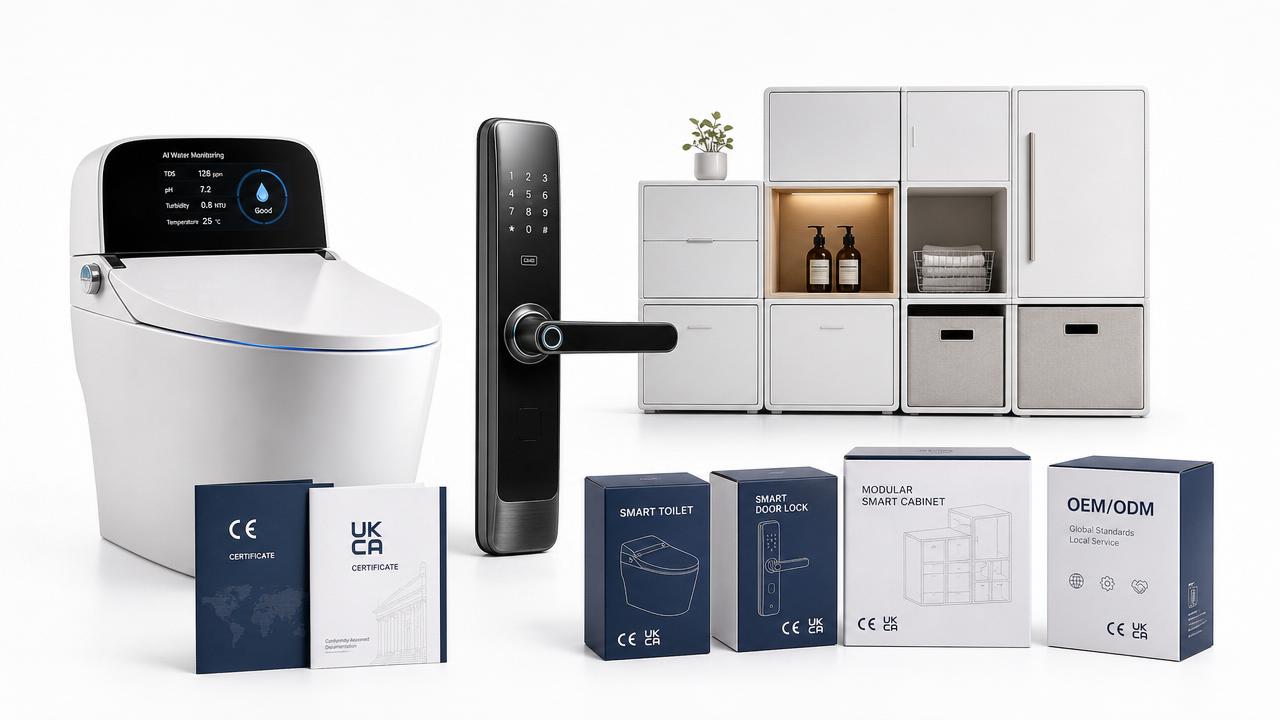
At the 18th International Construction Machinery Fair in Turkey, held in Istanbul from June 3 to 6, 2026, strong buyer interest in Chinese smart toilets with AI-based water quality monitoring, IoT-enabled digital locks, and modular smart cabinet systems did more than highlight product demand. It also pointed to a practical shift in market entry requirements, as Chinese exhibitors reported that local importers are accelerating CE and UKCA dual-certification alignment while seeking localized OEM/ODM private-label cooperation. For exporters, importers, certification-related service providers, and supply-chain partners, this is worth watching because the commercial conversation is moving closer to compliance readiness, documentation matching, and delivery execution.
What the Istanbul Exhibition Confirmed
Confirmed information from the event shows that buyers from Turkey, the Middle East, and Eastern Europe made concentrated inquiries for several Chinese product categories during the exhibition. The products highlighted were smart toilets equipped with AI water quality monitoring, digital locks that support IoT connectivity, and modular smart cabinet systems.
Chinese exhibitors also reported two related buyer-side developments. First, local importers are speeding up adaptation work for CE and UKCA dual certification. Second, these importers are looking for OEM/ODM cooperation structured around localized private-label arrangements.
Why the Trade Discussion Is Shifting Beyond Product Interest
Export suppliers may face earlier compliance screening
From an industry perspective, exporters are likely to feel the impact first because buyer interest is being linked more directly to certification compatibility and branding structure. This can affect quotation stages, technical file preparation, product specification confirmation, and pre-shipment document readiness. What deserves closer attention is whether product claims, technical descriptions, and certification status are presented in a way that supports both CE and UKCA alignment without creating gaps between marketing materials and compliance documents.
Importers and distributors may tighten document and labeling expectations
For importers or channel partners, the reported push toward dual-certification adaptation and localized private-label cooperation suggests that procurement decisions may increasingly depend on document consistency, labeling suitability, and supplier responsiveness. The practical impact may appear in onboarding requirements, product file reviews, packaging adaptation, and acceptance conditions tied to the target sales channel.
Certification and testing-related service providers may see a more integrated role
Analysis shows that certification-related firms and testing support providers could become more involved earlier in the transaction cycle. If buyers are asking for CE and UKCA alignment before order execution is fully settled, service providers may need to support document review, technical matching, and coordination between factory output and market-entry requirements. This is not proof of a formal rule change by itself, but it is a visible execution signal in buyer behavior.
Supply-chain and after-sales partners may be pulled into localization requirements
Observably, OEM/ODM private-label cooperation can extend the compliance discussion beyond manufacturing alone. Packaging, traceability materials, installation documents, and after-sales support arrangements may all become part of commercial negotiation. For supply-chain service providers and after-sales partners, the issue is less about volume at this stage and more about whether the delivery model can support localized presentation and post-delivery accountability.
What Companies Should Review Next
Check whether certification status matches current product configuration
Companies involved in the highlighted product categories should review whether existing certification positioning remains consistent with actual product functions, especially where AI monitoring or IoT connectivity is part of the offering. Where dual-certification adaptation is being discussed by buyers, the immediate priority is not to assume approval outcomes, but to confirm whether current technical files, declarations, and product descriptions are internally aligned.
Prepare for closer scrutiny of technical and tender-facing materials
If buyer conversations move toward OEM/ODM cooperation, technical documents, product specifications, testing-related materials, and commercial files may receive more detailed review. Companies should pay attention to whether localized private-label arrangements change how product information is presented across packaging, manuals, product sheets, and procurement submissions.
Watch how procurement timelines connect to compliance readiness
Analysis shows that concentrated inquiries do not automatically mean immediate orders, but they can shorten the time allowed for certification checks and document preparation once procurement advances. Export teams and supply-chain coordinators should therefore monitor how quotation cycles, production planning, and delivery commitments depend on proof of compliance readiness rather than on price and product features alone.
Keep after-sales and traceability capabilities in scope
Where localized branding or OEM/ODM supply is under discussion, companies should also keep quality traceability and after-sales responsibility within the negotiation framework. This is especially relevant when the marketed identity differs from the manufacturing identity, because post-delivery issues may depend on clear allocation of documentation, support obligations, and product records.
How This Signal Should Be Read for Now
It is more appropriate to understand this development as an execution signal rather than as a fully defined regulatory outcome. The confirmed facts do not establish a new formal policy text, a new regulator instruction, or a finalized market rule on their own. However, the combination of concentrated buyer inquiries, faster CE and UKCA adaptation efforts, and interest in localized private-label cooperation suggests that compliance positioning is moving closer to the center of cross-border purchasing discussions.
From an industry perspective, that matters because market demand is not appearing separately from certification and delivery structure. Instead, buyers appear to be linking product selection with market-entry preparedness, which can influence how suppliers structure offers, documents, and post-sale support.
What This Means for Near-Term Market Execution
The event is best read as a practical market cue: product interest in smart sanitary and access-control categories is being accompanied by more explicit attention to certification alignment and localized commercial execution. That does not yet confirm a broad rule reset, but it does indicate that companies active in these categories should not treat compliance preparation as a later-stage formality.
A balanced reading is that this is neither a routine exhibition takeaway nor a completed regulatory conclusion. It is a commercially meaningful signal that certification fit, document quality, and OEM/ODM execution terms may shape how future inquiries convert into orders.
Basis of This Article
This article is based on the user-provided news title, event date, and event summary. No specific official source links were provided in the input, so official links and formal source documents remain to be verified. For this type of development, source categories that usually merit follow-up include official notices, regulator releases, customs or trade authority information, industry association updates, standards documentation, certification guidance, tender documents, and reporting from authoritative trade media.
What still needs continued verification includes any later policy detail, certification enforcement interpretation, procurement document changes, market feedback from buyers, and actual implementation by enterprises involved in export, import, certification, and localized OEM/ODM delivery.
Industry Briefing
Get the top 5 industry headlines delivered to your inbox every morning.