Architectural Intelligence Software Solutions: Key Features for Design Coordination
Architectural Intelligence Software Solutions: Key Features for Design Coordination
For complex projects, coordination failures rarely begin with design intent.
They usually start with fragmented data, delayed updates, and weak cross-discipline visibility.
That is why architectural intelligence software solutions now matter far beyond simple drawing management.
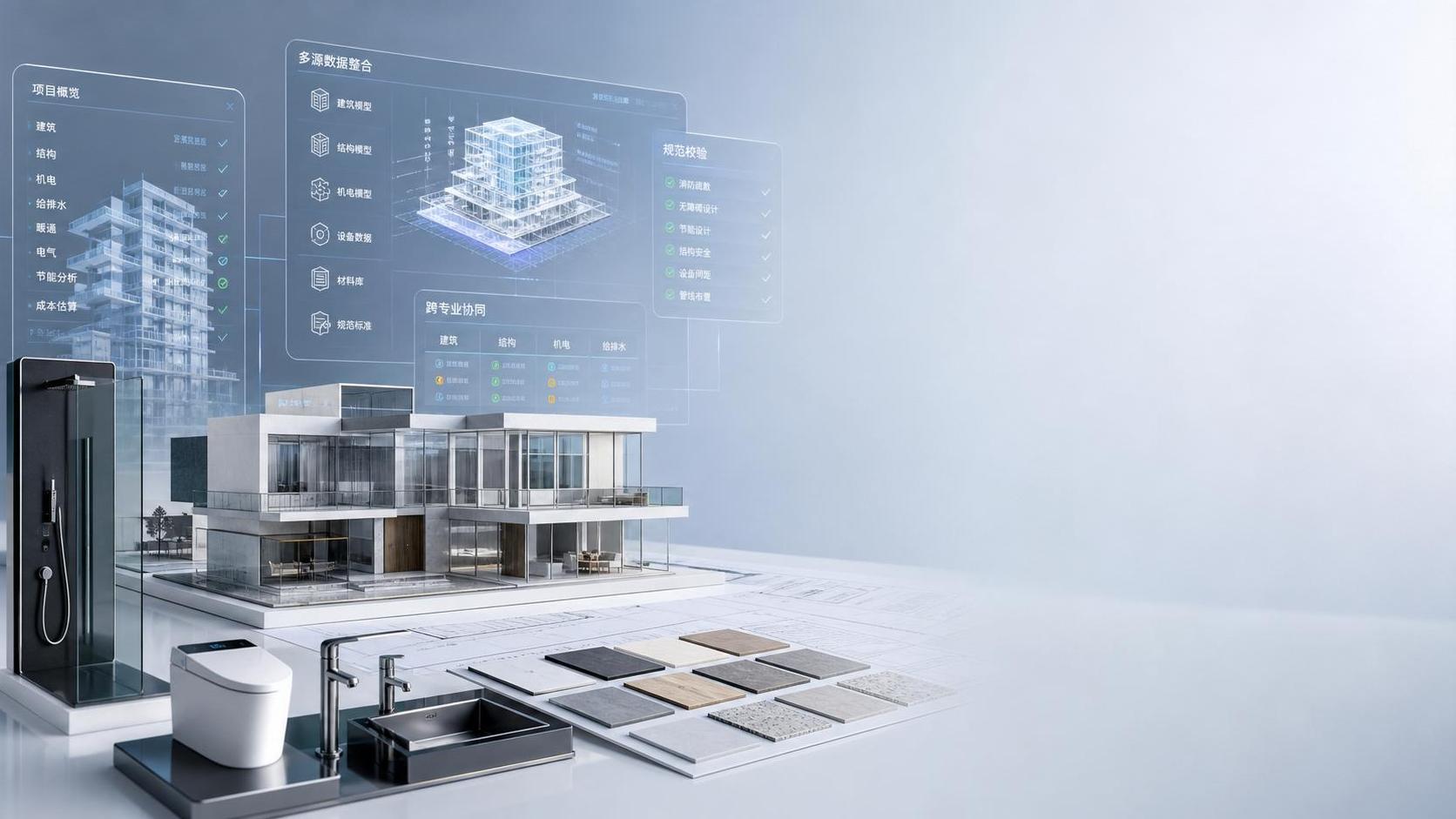
They support design coordination by connecting materials, standards, commercial constraints, and smart building systems in one decision environment.
From a technical review perspective, the real question is not whether software looks advanced.
The question is whether it reduces coordination risk in measurable, repeatable ways.
Why Design Coordination Needs More Than Basic BIM Tools
Standard BIM platforms remain useful, but many teams now face a wider coordination burden.
Material performance, trade tariffs, water-saving requirements, and smart system compatibility can affect design choices early.
This is where architectural intelligence software solutions create a stronger evaluation framework.
They do not replace authoring tools.
Instead, they add decision intelligence across architecture, interiors, MEP, procurement, and compliance review.
In practical terms, this means fewer isolated assumptions during design development.
GIAM reflects this shift clearly.
Its intelligence model links core building materials, sanitary spaces, and smart kitchen and bath systems with market and standards insight.
That broader context is increasingly valuable when design coordination depends on both technical fit and supply-side reality.
Core Capabilities That Define Strong Architectural Intelligence Software Solutions
1. Unified Multi-Source Data Integration
The first feature to assess is structured data integration.
Good architectural intelligence software solutions connect design files, material databases, standards libraries, and supplier updates.
Without this, teams coordinate based on partial snapshots.
That often leads to late substitutions, specification conflicts, or duplicated review work.
- Support for BIM, CAD, PDF, and structured product datasets.
- Metadata alignment across material, system, and room-level objects.
- Change tracking when standards or supplier attributes shift.
- Reliable import and export rules for downstream teams.
2. Rule-Based Compliance Intelligence
A second critical feature is embedded compliance logic.
Modern architectural intelligence software solutions should do more than store standards references.
They should translate requirements into review rules.
That matters when evaluating energy codes, water efficiency targets, accessibility provisions, and hygiene-related material criteria.
From recent market changes, this is becoming even more important.
Global energy-saving standards and trade policies now shift faster than many project teams can manually track.
Software that flags exposure early gives reviewers a major advantage.
3. Cross-Discipline Coordination for Smart Space Systems
Design coordination now extends well beyond geometry.
Smart locks, water-saving fixtures, anti-bacterial finishes, and connected kitchen systems all introduce interface dependencies.
Architectural intelligence software solutions should make those dependencies visible early.
Otherwise, coordination meetings become reactive instead of preventive.
- Map interfaces between architecture, interiors, plumbing, and controls.
- Detect clashes in performance requirements, not only physical space.
- Verify compatibility between specified products and system protocols.
- Track unresolved issues by zone, package, or milestone.
4. Material and Product Intelligence Depth
Not all product libraries are equally useful.
Technical evaluation requires verified attributes, not marketing descriptions.
Strong architectural intelligence software solutions provide deep, structured product intelligence for decision-making.
This includes durability, maintenance, hygiene, water use, carbon impact, and installation constraints.
GIAM’s focus on core materials and sanitary systems is especially relevant here, because these categories often drive both compliance and lifecycle performance.
Evaluation Criteria for Technical Review
When comparing architectural intelligence software solutions, feature lists alone are not enough.
A better approach is to score platforms against real coordination outcomes.
That keeps the assessment grounded in project delivery value.
A useful platform should also explain why an alert appears.
Black-box scoring creates friction during review and slows stakeholder alignment.
Transparency is often the difference between adoption and resistance.
Common Risks When Selecting Architectural Intelligence Software Solutions
Several selection mistakes appear repeatedly in complex projects.
Most are avoidable if evaluation stays tied to operational use cases.
- Choosing dashboards with weak underlying data governance.
- Prioritizing 3D visualization while ignoring standards intelligence.
- Treating product databases as static, even in volatile supply conditions.
- Missing smart system dependencies during interior and MEP coordination.
- Overlooking whether regional code updates can be maintained efficiently.
A stronger method is to test software using live coordination scenarios.
For example, review a bathroom package affected by water efficiency rules, anti-bacterial surfaces, and smart access control.
That kind of scenario quickly reveals whether architectural intelligence software solutions can handle real design complexity.
What Better Software Changes in Practice
The strongest platforms improve more than reporting.
They change the timing and quality of design decisions.
That is the practical value of architectural intelligence software solutions.
When teams can see material risks, standards exposure, and system dependencies earlier, coordination becomes more deliberate.
Rework drops because fewer assumptions survive unchecked.
Procurement and specification teams also gain clearer direction.
This is especially relevant in sectors shaped by green materials and smart spaces.
GIAM’s mission aligns closely with that need.
Its intelligence-led model helps connect industrial fundamentals with modern spatial expectations and evolving living standards.
A Practical Shortlist for Final Assessment
- Confirm whether the platform supports structured coordination across architecture, interiors, MEP, and product data.
- Check how it maintains standards, tariff, and regulatory intelligence over time.
- Review how it handles material science data and smart system compatibility.
- Test real issue workflows, not just demo dashboards.
- Measure traceability, auditability, and explanation depth for every critical alert.
In the end, architectural intelligence software solutions should help teams decide faster without lowering technical confidence.
That is the benchmark worth using.
If a platform can connect compliance, materials, market shifts, and smart space coordination, it is doing real work.
That is also where architectural intelligence software solutions create lasting value for modern project delivery.
Industry Briefing
Get the top 5 industry headlines delivered to your inbox every morning.