
Are Anti-Bacterial Construction Materials Worth the Added Cost?
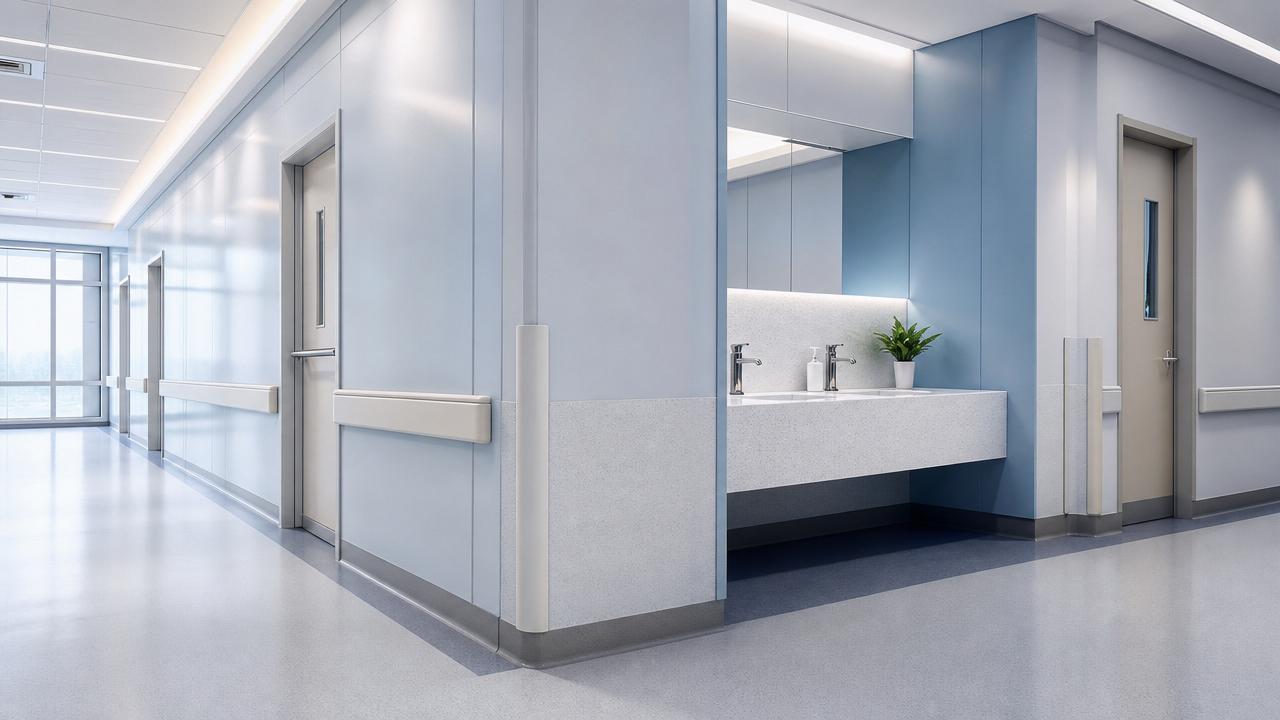
As health standards tighten across commercial and residential projects, procurement teams are asking whether anti-bacterial construction solutions truly justify their higher upfront price. Beyond marketing claims, the real value lies in lifecycle durability, hygiene performance, compliance benefits, and long-term maintenance savings. This article explores whether investing in anti-bacterial construction materials can deliver measurable returns for buyers balancing cost, safety, and project competitiveness.
Why Scenario Differences Matter More Than the Product Label
For procurement professionals, the core question is not whether anti-bacterial construction is good in general, but where it creates measurable value. A hospital isolation corridor, a premium apartment bathroom, a school washroom, and a standard office lobby do not carry the same hygiene risks, traffic volume, cleaning intensity, or compliance pressure. That means the same anti-bacterial construction material can be a high-return investment in one project and an unnecessary premium in another.
This is especially important in today’s building market, where buyers must justify every specification against budget, maintenance, ESG expectations, user safety, and long-term asset performance. Some materials reduce microbial growth on frequently touched or moisture-prone surfaces, but the procurement value depends on the full operating context: cleaning protocols, occupancy density, humidity exposure, replacement cycles, and brand positioning.
In other words, anti-bacterial construction should be evaluated as a scenario-based decision, not a blanket upgrade. Procurement teams that frame the issue by application can avoid overbuying, reduce life-cycle cost surprises, and strengthen project differentiation where hygiene is a true selling point.
Where Anti-Bacterial Construction Usually Delivers the Most Value
The strongest business case for anti-bacterial construction typically appears in spaces with one or more of the following conditions: frequent human contact, persistent moisture, high cleaning frequency, vulnerable user groups, regulatory scrutiny, or a strong need to signal premium hygiene standards. These conditions are common in both public and private projects, but the decision logic varies by use case.
High-risk hygiene environments
Healthcare facilities, clinics, rehabilitation centers, eldercare properties, and some laboratory-adjacent spaces are the clearest examples. In these projects, anti-bacterial construction can support infection-control strategies when paired with proper cleaning, ventilation, and surface design. Buyers in these environments are usually less focused on the material premium itself and more focused on documented performance, compatibility with disinfection chemicals, and durability under intensive sanitation routines.
Moisture-heavy sanitary zones
Bathrooms, shower areas, locker rooms, public washrooms, and spa facilities often justify anti-bacterial surfaces because moisture and warmth can increase hygiene management challenges. Here, anti-bacterial construction may be valuable not only for performance but also for reducing staining, odor concerns, or maintenance burden when the right material category is chosen.
High-traffic shared commercial spaces
Airports, malls, hotels, schools, offices, and mixed-use developments may benefit selectively rather than universally. Procurement teams often gain better returns by applying anti-bacterial construction to touchpoints and sanitary zones instead of specifying it across every wall, panel, or countertop. Targeted deployment tends to protect budget while still supporting public health messaging and user confidence.
Scenario Comparison: When the Added Cost Is Usually Justified
The table below helps buyers compare common project scenarios and determine where anti-bacterial construction is more likely to produce a worthwhile return.
How Different Buyers Should Evaluate the Same Material
The same anti-bacterial construction specification can mean different things to different procurement roles. A developer may care about sell-through and brand positioning, a facility manager may focus on cleaning labor and replacement intervals, and a contractor may be concerned with installation reliability and sourcing consistency. Good decisions come from aligning these perspectives early.
For developers and investors
The key question is whether anti-bacterial construction supports revenue, occupancy, or asset reputation. In hospitality, healthcare-adjacent real estate, student housing, and premium multifamily projects, hygienic surfaces can strengthen marketability. However, the upgrade should be concentrated where prospective tenants or buyers actually recognize the benefit, such as kitchens, bathrooms, common sanitary areas, and amenity spaces.
For procurement and sourcing teams
Focus on evidence rather than broad claims. Request test standards, antimicrobial mechanism details, expected performance duration, cleaning compatibility, and maintenance guidelines. Anti-bacterial construction should not create supply-chain complexity that outweighs its value. Stable lead times, reliable certifications, and consistent quality matter as much as the product feature itself.
For facility operations teams
The most relevant issue is not the brochure claim but operational reality. Does the surface resist degradation from daily disinfection? Does it reduce visible wear in washrooms? Does it help maintain cleaner-looking environments between service cycles? In many projects, long-term maintenance efficiency is the real source of return on anti-bacterial construction.
The Cost Question: Upfront Premium vs Lifecycle Economics
Anti-bacterial construction materials often carry a higher initial cost because of material engineering, specialty coatings, additive technology, or certification requirements. But procurement teams should avoid evaluating the decision only on unit price. The right comparison is total cost of ownership across installation, cleaning, repair, replacement, compliance, and occupant perception.
In projects with intensive usage, the premium may be recovered through lower maintenance frequency, less surface deterioration, fewer complaints related to hygiene appearance, and stronger tender competitiveness. In lower-risk projects, however, the same premium may not produce enough operational or commercial benefit to justify broad application. This is why selective specification usually outperforms blanket adoption.
A practical procurement approach is to divide the bill of materials into three tiers: critical hygiene surfaces, secondary moisture-prone zones, and standard low-risk areas. Anti-bacterial construction is usually easiest to justify in the first tier, potentially useful in the second, and often unnecessary in the third.
Best-Fit Application Areas Inside a Project
Rather than treating anti-bacterial construction as a full-building strategy, many buyers achieve better value by identifying the surfaces where microbial control and cleaning resilience matter most.
- Bathroom wall panels, partitions, sinks, vanity tops, and shower-adjacent finishes
- Kitchen backsplashes, countertops, cabinet-touch zones, and wet work surfaces
- Door hardware surrounds, hand-contact panels, elevator interiors, and public washroom touchpoints
- Healthcare corridor cladding, treatment room surfaces, and sanitary support spaces
- Education and sports facilities with dense traffic and repeated exposure to humidity
This targeted method supports cost control while still allowing anti-bacterial construction to improve user confidence and functional performance in the areas that matter most.
Common Misjudgments Buyers Should Avoid
One common mistake is assuming anti-bacterial construction can compensate for poor cleaning procedures. It cannot. These materials are a supporting layer, not a replacement for hygiene management. Another mistake is treating all anti-bacterial claims as equivalent. Performance depends on the base material, additive method, wear resistance, and the conditions under which the product was tested.
Buyers also sometimes over-specify low-contact decorative surfaces while under-specifying wet zones and touch-heavy areas. That creates budget inefficiency without real hygiene gains. A further risk is ignoring compatibility with aggressive cleaning agents. If a coating degrades quickly under required sanitation routines, the anti-bacterial construction premium may disappear in practice.
A quick decision filter for procurement teams
FAQ: Practical Procurement Questions About Anti-Bacterial Construction
Is anti-bacterial construction necessary for every project?
No. It is most valuable in healthcare, education, hospitality, shared sanitary spaces, and premium residential or commercial projects where hygiene performance and perception are business-relevant. In many standard spaces, selective application is the better strategy.
Does paying more always mean better antimicrobial performance?
Not necessarily. Procurement teams should verify test methods, expected service life, and resistance to cleaning wear. A higher price without credible performance evidence is not a sound buying decision.
Which spaces should buyers prioritize first?
Start with kitchens, bathrooms, healthcare-related surfaces, public washrooms, and other high-contact or wet environments. These are the areas where anti-bacterial construction is most likely to produce practical returns.
Final Verdict: Worth the Cost, But Only When the Scenario Is Right
Anti-bacterial construction materials are worth the added cost when they are matched to the right application scenario, supported by credible performance data, and integrated into a broader hygiene and maintenance strategy. For procurement teams, the strongest opportunities usually sit in wet areas, high-touch shared spaces, healthcare settings, and projects where hygiene standards influence marketability or compliance.
The smartest buying decision is rarely “use it everywhere” or “skip it entirely.” It is to map the building by risk, user expectations, and operating conditions, then allocate anti-bacterial construction where it will produce measurable lifecycle value. If your team is comparing suppliers or material options, start by defining the specific project scenarios, cleaning demands, and user-facing priorities. That is the fastest way to turn a premium feature into a procurement advantage.
Industry Briefing
Get the top 5 industry headlines delivered to your inbox every morning.