
Choosing Smart Bathroom Systems for Hotels: Integration, ROI and Guest Experience
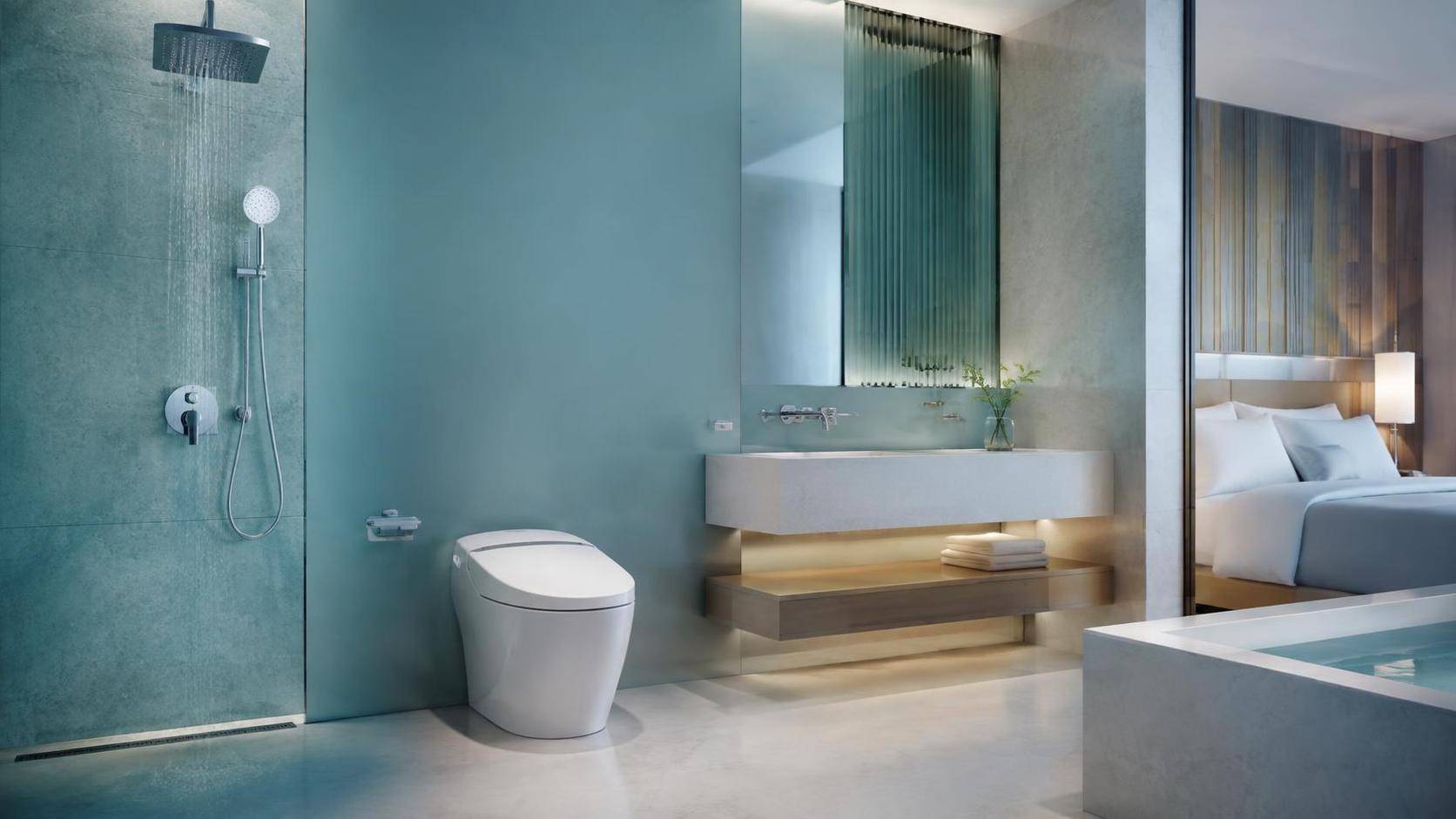
A guest enters a hotel bathroom expecting the room to work without thought: the shower reaches a comfortable temperature quickly, the lighting is flattering but practical, the toilet is hygienic, and no control panel requires a tutorial. Behind that apparently simple experience sits a much more complex decision for hotel owners, operators, and development teams.
Choosing smart bathroom systems for hotels is no longer just a design choice or an amenity upgrade. It is a capital-allocation decision involving building services, guest satisfaction, brand positioning, water and energy stewardship, maintenance workflows, data governance, and future renovation risk. The most visually impressive system is not necessarily the best investment. A better choice is one that fits the property’s operating model, integrates with its technical backbone, and remains understandable for guests and staff five years after installation.
For decision-makers, the central question is not “How smart should the bathroom be?” It is: Which intelligence solves a real hotel problem at an acceptable lifecycle cost?
Begin with the property’s operating reality, not the product catalogue
A city business hotel, a luxury resort, an airport property, and an extended-stay brand may all use the phrase “smart bathroom,” yet their priorities differ sharply. A business hotel may value quick room-turn operations and reliable shower controls. A resort may place more weight on spa-like personalization, water-saving fixtures, and a sense of quiet indulgence. In an extended-stay environment, durability and intuitive daily use tend to outweigh novelty.
Before comparing suppliers, hotel teams should define the operational outcome they are trying to improve. Common objectives include:
- Reducing water use without creating a weak shower experience;
- Lowering maintenance calls caused by leaks, blocked drains, or failed mixers;
- Making bathrooms easier to clean and reset between guests;
- Supporting accessibility and safer use for a wider range of guests;
- Creating a recognisable premium experience in selected room categories;
- Connecting bathroom status to a broader building-management or hotel-operations environment;
- Modernising aging infrastructure during renovation without triggering unnecessary civil work.
This exercise prevents a familiar procurement problem: buying a feature-rich system whose functions are rarely used because it addresses neither a guest pain point nor an operational bottleneck. Technology should follow the guest journey and the maintenance journey, not simply the latest showroom trend.
What belongs in a smart bathroom system?
In a hotel context, the term can cover much more than a sensor faucet or a connected toilet. It may include digitally controlled showers, thermostatic and occupancy-aware fittings, touchless faucets and flush systems, smart toilets or bidet seats, leak detection, humidity and ventilation controls, heated mirrors, connected lighting, floor-heating controls, emergency alerts, and interfaces with room controls or building-management systems.
These elements should not automatically be procured as one monolithic package. A modular approach is often more resilient. For example, a hotel may standardise water-control components across all rooms while reserving smart toilets, chromotherapy lighting, or wellness presets for suites and premium floors. This creates a coherent operational platform without forcing every room into the same cost profile.
The distinction matters because some technologies are guest-facing, while others create value quietly in the background. A concealed leak sensor may have more commercial importance than a conspicuous digital display if it helps prevent room outages and water damage. Likewise, a reliable thermostatic valve may produce a stronger daily guest benefit than an elaborate app that most travelers never download.
Integration is where promising projects become dependable systems
Smart bathroom systems for hotels succeed when they are treated as part of the property’s technical ecosystem. During planning, the bathroom cannot be isolated from plumbing design, electrical capacity, network architecture, ventilation, waterproofing, housekeeping procedures, and the hotel’s maintenance-management process.
Plumbing compatibility and water conditions
Digital fixtures are only as dependable as the water system behind them. Teams should review supply pressure, pressure variation, hot-water recirculation, pipe condition, water hardness, filtration strategy, and drainage performance. Mineral-heavy water, for instance, can affect sensors, aerators, valves, and spray nozzles if maintenance requirements are ignored. A specified flow rate may also feel very different at the showerhead depending on pressure balance and fixture geometry.
For renovations, verify dimensions behind finished walls and access routes for future service. A component that requires tile removal for a routine repair may erase any apparent saving from a lower purchase price. Access panels should be discreet, waterproof where needed, and genuinely usable by maintenance staff.
Electrical power, connectivity, and graceful failure
Every connected device raises practical questions. Is power hardwired, battery-supported, or both? What happens during a network outage? Can the shower, toilet, or faucet still be used safely if the control platform is unavailable? These are not edge cases in hospitality; they are basic resilience requirements.
Wireless connectivity can reduce installation complexity, but dense concrete construction, metal-framed walls, and wet environments may weaken signal reliability. Where a system relies on network access, the project team should test signal conditions in representative guestrooms rather than assume that a corridor survey is sufficient. Segmented networks, secure device onboarding, and a clear ownership model between IT, engineering, and the supplier should be established before commissioning.
A well-designed system should fail safely and remain usable in a manual or default mode. Guests should never be left unable to flush, obtain water, or control an uncomfortably hot shower because a software service is temporarily unavailable.
Interoperability beats proprietary isolation
Hotel assets have long replacement cycles. Bathroom hardware may remain in service for a decade or more, while software, room-control platforms, and cybersecurity practices evolve much faster. This makes open or clearly documented integration options important. Ask whether the system can communicate with existing building-management systems, room-management platforms, occupancy logic, or maintenance software through supported protocols or APIs.
Not every fixture needs to send data. However, where data is collected—such as unusual water consumption, leakage alerts, battery status, or fault codes—the hotel should know where it goes, who can access it, how long it is retained, and whether it can be exported if the vendor relationship changes. Vendor lock-in is not always unacceptable, but it should be a deliberate commercial decision rather than an accidental outcome.
Guest experience: invisible intelligence usually wins
Guests do not evaluate a hotel bathroom system as engineers do. They notice comfort, cleanliness, privacy, ease, and whether the room behaves predictably. The best technology often recedes into the background.
A digital shower can be valuable when it lets guests reach a consistent, safe temperature with clear physical controls. Touchless fixtures can reinforce perceptions of hygiene when activation is responsive and does not cause splashing. Humidity-responsive ventilation can make a compact bathroom feel fresher without asking the guest to locate a separate switch. Night lighting can reduce falls and preserve a restful atmosphere.
At the same time, over-automation can create friction. A guest carrying toiletries or helping a child may prefer a familiar lever to a touch panel. Elderly guests, international travelers, and people with limited dexterity should not need to decode icons, pair a phone, or navigate multiple screens for essential functions. Accessibility is not a specialist add-on; it is a test of whether the interface is genuinely intuitive.
Procurement teams should therefore assess guest-facing features through simple scenarios:
- Can a first-time guest use the shower within seconds, without instructions?
- Are temperature, water flow, flush activation, and lighting controls distinguishable by touch or clear visual cues?
- Can staff reset preferences easily at checkout?
- Is there a dignified, uncomplicated option for guests who do not want connected features?
- Do premium functions create a memorable benefit, or merely add another surface to clean and explain?
A mock-up room is invaluable here. Invite housekeeping staff, maintenance technicians, front-office colleagues, and a varied group of users to test it. Their feedback will often reveal issues that product demonstrations overlook: hard-to-reach cleaning zones, confusing controls in low light, reflective surfaces that expose water spots, or false sensor activations.
How to build an ROI case without reducing it to utility savings
The financial case for smart bathroom upgrades is frequently presented through water and energy savings. Those gains can be meaningful, especially where fixtures control flow, reduce avoidable hot-water demand, or detect abnormal use. Yet hotel leaders should evaluate return on investment across a wider set of operational effects.
The right model uses lifecycle cost, not just initial installed cost. Include fixtures, controls, cabling or gateways, civil work, commissioning, training, software or service fees, replacement parts, warranty conditions, cleaning implications, and expected refresh cycles. Where savings are projected, make assumptions visible: occupancy levels, baseline fixture performance, local tariff structures, guest behavior, and maintenance discipline all influence outcomes.
It is also wise to separate “measurable savings” from “risk avoidance.” A leak alert may not produce a neat monthly saving line, but avoiding even one serious water event can protect guestrooms, finishes, guest confidence, and insurance exposure. This is why smart-water management deserves consideration beyond sustainability reporting.
Procurement questions that expose hidden risk
Supplier presentations tend to focus on functions. Hotel buyers need to push further into serviceability and accountability. The following questions are useful during technical evaluation:
- Which components are expected to require routine replacement, and at what service intervals?
- Are spare parts available locally or regionally, and for how long after discontinuation?
- Who commissions the system: the manufacturer, an approved integrator, or the MEP contractor?
- What staff training is included for engineering, housekeeping, and front-office escalation?
- Can firmware updates be managed without disrupting guestrooms?
- What cybersecurity practices apply to connected devices and cloud dashboards?
- Which failure modes trigger an alert, and which must be discovered through manual inspection?
- What cleaning agents or procedures could damage sensors, coatings, seals, or screens?
- Are the materials appropriate for high-turnover commercial use rather than residential demonstration settings?
References should be comparable in operating conditions, not merely prestigious. A successful installation in a low-occupancy luxury residence does not automatically validate a system for a 24-hour airport hotel. Ask to understand maintenance history, not only opening-day appearance.
A phased approach reduces both capital risk and organisational resistance
For an existing property, a full-scale rollout is not always the wisest first move. A pilot across a representative set of rooms can reveal whether staff workflows, guest behavior, network conditions, and water quality match planning assumptions. Include different room types where possible, and test through a meaningful operating period rather than a brief pre-opening showcase.
Define success measures before the pilot begins. These may include maintenance tickets, guest comments, housekeeping time observations, water-use patterns, fault frequency, and staff confidence in resolving basic issues. Equally important, document what does not work. A pilot should be allowed to change the specification, not merely validate a decision already made.
New-build projects have more freedom, but they also face the temptation to over-specify. Reserve complexity for functions that deliver a clear guest or operational outcome. Future-readiness is often achieved through accessible infrastructure, spare conduit capacity, flexible control architecture, and maintainable plumbing zones—not by installing every available connected feature on day one.
Making a durable choice in a changing hospitality market
The evolution of sanitary spaces is closely connected to broader changes in commercial buildings: tighter resource expectations, increasing attention to hygiene and wellness, and a growing need for operational visibility. As GIAM’s market intelligence work across materials, water systems, and smart living technologies consistently suggests, the strongest projects connect these themes rather than treating them as separate checkboxes.
For hotel leaders, the practical lesson is straightforward. Select smart bathroom systems that are comfortable before they are clever, maintainable before they are theatrical, and interoperable before they are proprietary. Put engineering, housekeeping, IT, design, and operations at the same table early. Then evaluate the proposal against the real life of the property: wet floors, rushed room turns, diverse guests, local water conditions, and the inevitable need to repair something at an inconvenient hour.
When that discipline is applied, a smart bathroom becomes more than a collection of devices. It becomes a quieter, safer, more resource-conscious part of the hotel experience—one that supports guest loyalty while protecting the long-term performance of the asset.
Industry Briefing
Get the top 5 industry headlines delivered to your inbox every morning.