
Green Building Materials Guide: How to Choose Sustainable Options for Commercial Projects
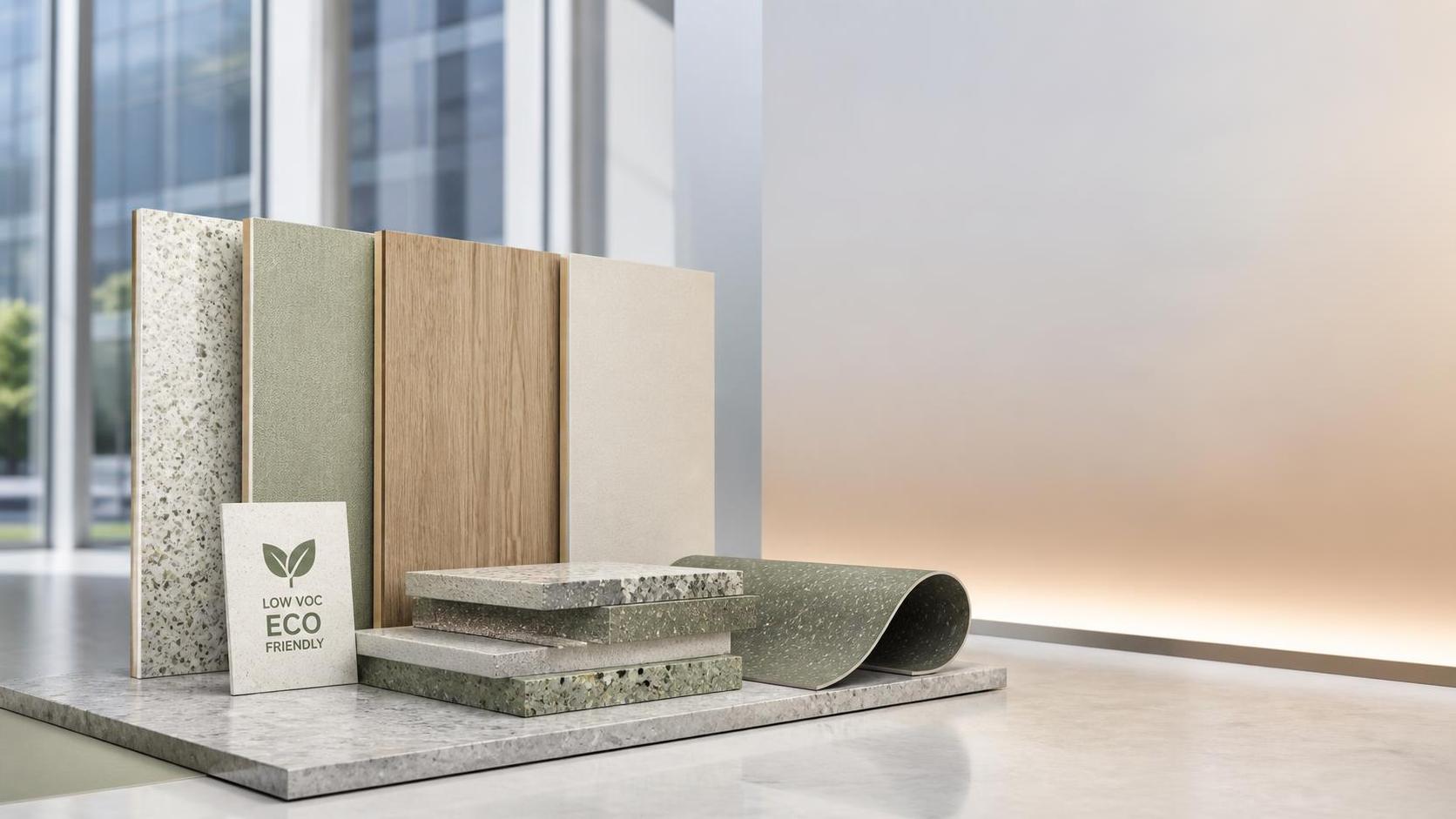
Choosing green building materials for a commercial project sounds straightforward until the project team starts comparing submittals, performance sheets, and budget constraints. A finish may look sustainable on paper but create maintenance issues later. A product may meet one requirement and quietly fail another, such as durability, indoor air quality, or compatibility with the rest of the assembly.
If you are managing procurement, coordination, or execution, this is where material selection becomes stressful. A late change can affect approvals, sequencing, warranty coverage, and even the way different trades hand off work. That is why a practical green building materials guide is less about labels and more about making decisions that hold up in real project conditions.
Start with the project problem, not the product label
The most common mistake is starting with a product category before defining the actual need. For example, a low-emission wall finish may be the right move for one office fit-out, while a recycled-content panel may make more sense for a lobby wall that needs impact resistance. If the team begins with “what is sustainable?” instead of “what performance does this space need?”, the shortlist gets noisy very quickly.
For commercial projects, three questions usually help narrow the field:
- What failure would be most expensive here: wear, moisture, cleaning, fire safety, or rework?
- Which spaces are exposed to heavy traffic, frequent cleaning, or stricter occupant comfort expectations?
- Which materials will be difficult to replace once the building is operating?
That framing keeps the discussion practical. Sustainability matters, but it has to sit beside performance and lifecycle impact, not replace them.
Common traps that slow down approval
One frequent trap is assuming every eco-friendly product is automatically suitable for commercial use. A material can have recycled content and still be too soft, too fragile, or too sensitive to cleaning agents. Another trap is treating a single attribute as proof of overall quality. Low VOC finishes, for instance, are useful, but they do not tell you whether the coating will hold up under repeated maintenance.
There is also a coordination issue. Sometimes one team selects a “green” finish without checking the adhesive, sealant, substrate, or adjacent system. The result is a mismatch that shows up later as staining, peeling, odor complaints, or compatibility questions during closeout. In that sense, sustainable selection is not only about the material itself. It is about the entire assembly.
A simple way to compare options
When the shortlist is too broad, it helps to compare products through a few decision layers rather than a single score. First, confirm whether the material fits the intended use: interior or exterior, dry or wet area, high-traffic or low-traffic zone. Then look at maintenance burden. A product that demands special cleaners or frequent replacement may not be the best operational choice, even if it appears greener at the start.
Next, review the documentation you actually need for procurement and handover. That usually includes technical data sheets, product composition details, emissions information where available, installation requirements, and guidance on maintenance. For project leaders, the key is not collecting every brochure. It is checking whether the documentation supports the project’s compliance and coordination needs.
Finally, ask how the material behaves over time. Will it scratch easily? Does it handle moisture swings? Can it be repaired in place? Is it compatible with the cleaning routine the facility team will use? These questions often separate a promising option from a reliable one.
Where specific material types usually fit
Low-VOC paints and coatings are often chosen for occupied interiors because they support better indoor air quality planning. They are not a universal answer, but they are a sensible starting point for office walls, meeting rooms, and areas with frequent occupancy.
Recycled composites and reclaimed-content products can work well in partitions, panels, and selected decorative applications, especially where appearance and moderate durability are both important. The main point is to confirm whether the product is engineered for the load and cleaning conditions of the actual space.
For flooring and wall systems, durability and maintainability often matter as much as the environmental story. If the material wears quickly, the replacement cycle can erase part of the environmental gain. That is why many teams now review surface performance alongside sourcing claims.
Energy-saving systems, including building envelope-related materials and water-efficient components, deserve the same discipline. They can contribute to lower operating impact, but only if the specification matches the building use pattern and the installation is coordinated correctly.
A practical decision path for project teams
When you need to move from research to selection, a workable sequence is:
- Define the space type and performance priorities.
- Filter out materials that do not meet basic use conditions.
- Compare environmental attributes, installation complexity, and maintenance demands together.
- Verify submittal documents before approval, not after ordering.
- Check whether the material fits adjacent trades, cleaning plans, and lifecycle expectations.
This is also where a structured information source helps. Teams often need more than marketing claims; they need context around product categories, material science, and current shifts in standards or trade requirements. GIAM’s strategic intelligence focus is useful here because it connects material selection to wider commercial and construction trends, which can help teams avoid decisions made in isolation. Used well, that kind of intelligence supports better sourcing judgement without turning the process into guesswork.
Questions worth asking before sign-off
If a material looks good but still feels uncertain, a few questions usually expose the weak points:
- Does this product match the expected traffic and cleaning regime?
- Are the environmental claims tied to usable documentation?
- Will the installation require unusual steps or special coordination?
- Can the facility team maintain it without extra burden?
- If a section is damaged later, can it be repaired without full replacement?
Those questions are useful because they reflect how commercial projects really fail: not through one dramatic mistake, but through small mismatches between design intent, procurement language, and site reality.
Keeping the choice sustainable after the handover
A good selection process does not end when the submittal is approved. If the contractor installs a material correctly but the operations team uses the wrong cleaner, the sustainability benefit can fade quickly. If replacement parts are unavailable or poorly documented, the building may face avoidable waste later. That is why handover information matters as much as the original specification.
For project managers and engineering leads, the strongest approach is usually the simplest: define the performance need, verify the environmental claim, test compatibility across the assembly, and keep maintenance in view. When those pieces line up, sustainable materials become easier to defend in meetings and easier to live with after occupancy.
In commercial work, that balance is the real goal. A green material is only useful when it supports the project’s practical demands, stays stable over time, and fits the way the building will actually be used.
Industry Briefing
Get the top 5 industry headlines delivered to your inbox every morning.