
How Much Does Smart Space Integration Cost for a New Project?
How Much Does Smart Space Integration Cost for a New Project?
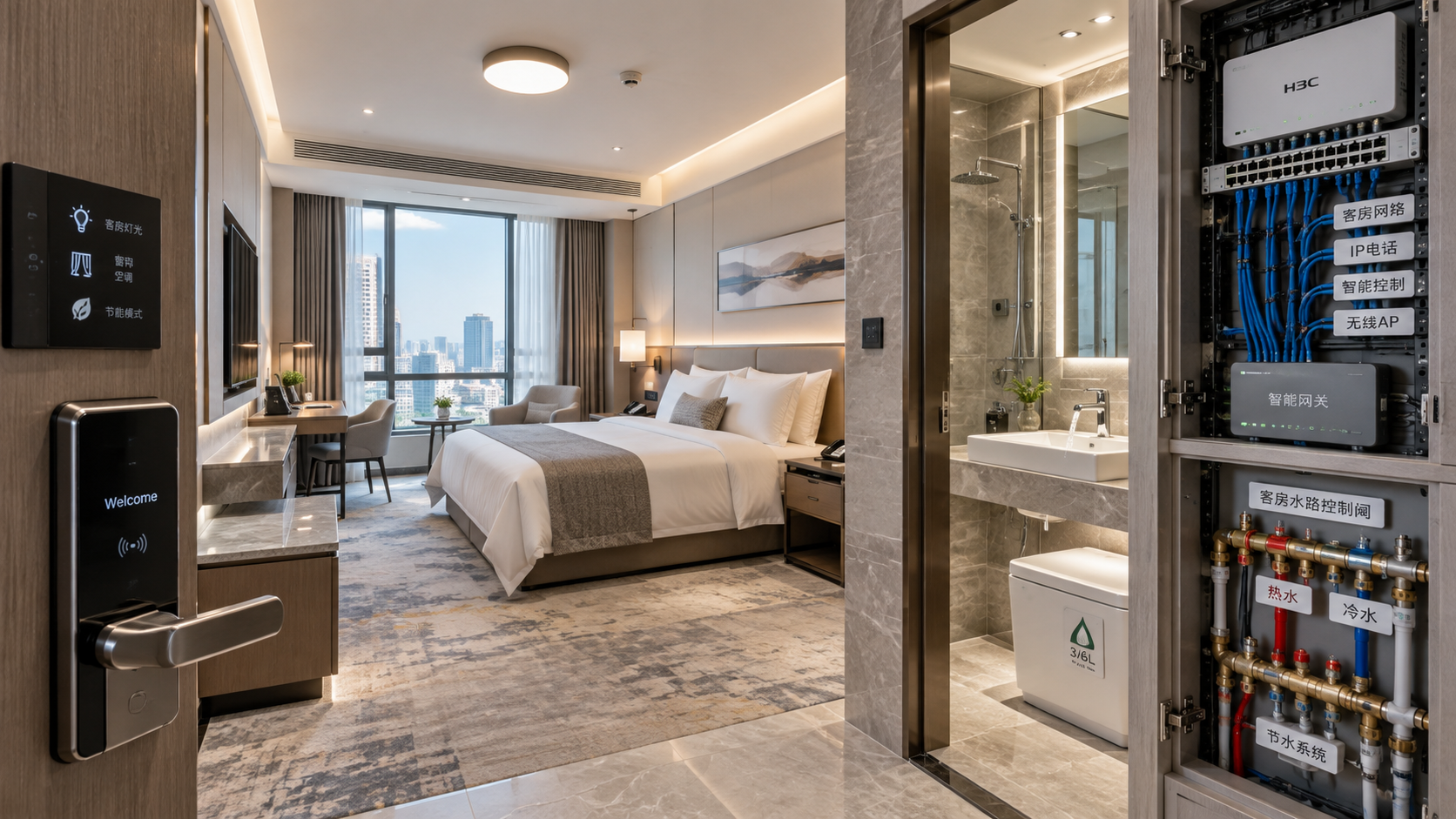
How much does smart space integration cost for a new project? The answer depends on more than the price of connected devices: project scale, system compatibility, network infrastructure, installation, and ongoing support all shape the budget. For developers, architects, and project owners, understanding these cost drivers early can help prevent expensive redesigns and disconnected systems. From smart lighting and access control to water-saving kitchen and bath technologies, the real task is to balance upfront investment with long-term operational value.
There is no defensible universal price for a “smart space.” A residence with independent lighting controls and leak alerts is a different proposition from a hotel connecting room controls, access credentials, maintenance workflows, and building management. Comparing them by floor area alone hides most of the work.
A useful budget therefore starts with the required functions, not a device catalogue. Define what the space must do, who will operate it, and what happens when a component fails. Those decisions make supplier estimates meaningful.
Separate the integration premium from the base building cost
The first budgeting mistake is counting every connected product as an entirely new expense. A project already needs lighting, door hardware, plumbing fixtures, and electrical distribution. The relevant question is often the additional cost of making those assets controllable, interoperable, and maintainable.
For example, a connected shutoff valve should be compared with the specified conventional valve, including differences in installation and servicing. Smart access hardware should be evaluated against the complete conventional door package, not just the price of a mechanical lock. Some expenditure replaces a baseline item; other expenditure, such as gateways and software configuration, is genuinely additional.
A practical budget structure is: incremental equipment cost + enabling infrastructure + integration engineering + installation and commissioning + recurring services + a project-specific contingency.
Keep the full installed system cost visible alongside this incremental figure. The former supports procurement and cash-flow planning; the latter helps assess whether the smart functionality justifies its premium. Neither should exclude work simply because it sits in another contractor’s package.
What actually drives the quotation?
Device quantities matter, but the number of interfaces and operating scenarios can matter just as much. Repeating a proven room configuration is different from engineering dozens of unique spaces. Likewise, displaying sensor readings is simpler than making several systems respond reliably to them.
- Equipment: sensors, actuators, controllers, gateways, connected fixtures, access devices, and user interfaces. Confirm whether power supplies, mounting accessories, and required licences are included.
- Infrastructure: cabling, containment, network switches, wireless coverage, equipment cabinets, and any required backup power. Existing IT capacity should not be assumed available without review.
- Engineering: control sequences, interface mapping, drawings, cybersecurity configuration, and coordination with electrical, mechanical, plumbing, and architectural teams.
- Delivery: installation, programming, functional testing, training, and handover documentation. A system that powers on is not necessarily a system that works as specified.
- Operation: subscriptions, technical support, battery replacement, software maintenance, spare parts, and eventual equipment replacement.
Ask suppliers to separate these categories. A low hardware quotation may omit the engineering needed to connect that hardware to the project’s management platform. A higher quotation may include work that another bidder has left to the owner.
Procurement location also affects landed cost. Currency exposure, freight, import duties, local approvals, and availability of qualified installers need project-specific verification. An overseas catalogue price is not an installed local price.
Choose the integration depth before choosing the platform
Not every project needs a unified platform. Independent systems can be appropriate when functions are limited and operational coordination is unnecessary. The trade-off is separate interfaces, separate maintenance arrangements, and potentially fragmented data.
A coordinated approach connects selected functions: occupancy may inform lighting and temperature control, while water alarms reach a facilities dashboard. This can provide useful operational visibility without bringing every appliance into one architecture.
Deeper integration links multiple subsystems with building management, booking, identity, or maintenance platforms. That introduces more interface testing, permissions management, and change control. It can be justified for complex operations, but a longer feature list is not automatically a better investment.
Map the intended architecture from field devices through controllers and gateways to operator interfaces. Mark every boundary between suppliers. These boundaries are where responsibilities—and quotation exclusions—often become unclear.
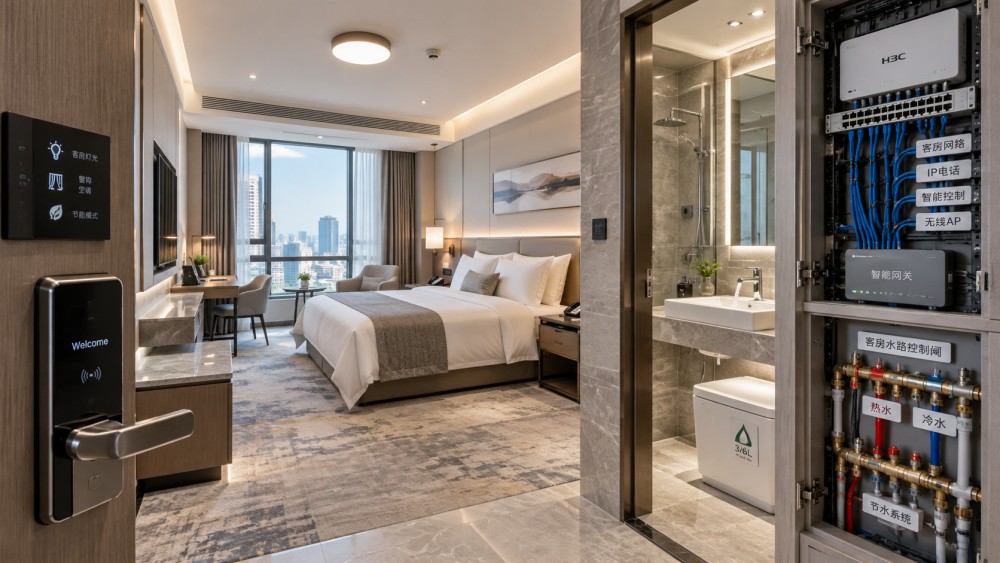
Protocol names alone do not prove compatibility. BACnet, KNX, Modbus, or Matter may be relevant to particular applications, but support must be checked at the product and function level. Confirm which data points are exposed, which commands are permitted, and whether a paid gateway or software licence is necessary.
Kitchen and bath systems bring physical constraints
Smart kitchen and sanitary spaces sit at the intersection of digital controls, water, electricity, and finished surfaces. Their costs cannot be understood through software specifications alone.
A leak-detection arrangement needs suitable sensor placement, accessible valves, and a defined response. Is the system expected only to notify someone, or to isolate a branch automatically? Which fixtures lose water when it acts? How is service restored? Those choices affect plumbing layout, control logic, testing, and maintenance access.
Similarly, connected faucets or kitchen appliances require confirmation of supply conditions, electrical provisions, service clearances, and supported interfaces. Water-saving claims should be evaluated against fixture performance and actual usage, rather than attributed to connectivity alone.
Material decisions belong in the same review. Concealed electronics behind tile or stone can become expensive to reach. Metal cabinetry and some wall assemblies may affect wireless performance, so coverage should be assessed in the intended construction conditions. The architectural finish and the control system cannot be designed independently and reconciled at the last moment.
The hidden costs appear at interfaces and handover
“Integration by others” is a small phrase with a large budget implication. If one contractor supplies sensors, another installs the network, and a third provides the dashboard, someone must own the complete operating sequence. Without that responsibility, each package can be technically complete while the intended function remains unfinished.
New construction provides an opportunity to coordinate conduits, power, valve locations, and equipment space before finishes are installed. It does not eliminate redesign risk. Late changes to door schedules, room layouts, or mechanical equipment can trigger revised wiring, software mappings, and repeat testing.
Commissioning should test normal operation and agreed failure conditions. What happens if the internet connection drops? Can occupants still use essential controls? Does an alarm reach the correct operator? Are overrides recorded and recoverable? Access-control behaviour must also be coordinated with applicable safety and egress requirements, rather than treated as a convenience setting.
Handover needs more than a demonstration. Include configuration backups, administrator credentials transferred securely, licence ownership, system drawings, maintenance instructions, and a process for removing former users. Clarify remote-access permissions and patching responsibilities before the support period begins.
Compare bids using the same operating requirements
A request for “smart lighting and smart bathrooms” leaves too much room for interpretation. A stronger brief states the spaces covered, device quantities, required sequences, operator roles, interfaces, and acceptance tests. Where quantities remain uncertain, request unit rates and identify the assumptions behind them.
Require each bidder to identify exclusions and dependencies. Establish who provides network connectivity, who programs each interface, and who resolves faults spanning two suppliers. Also ask whether recurring charges are calculated per device, room, building, account, or software feature.
For repeated spaces, a representative mock-up can resolve usability and interface questions before wider deployment. It should test the intended workflow, not simply display attractive controls. Confirm the cost and schedule implications of changes discovered during that exercise.
Contingency should reflect unresolved risks, not a percentage applied without explanation. Unknown interfaces, incomplete drawings, and uncertain approval requirements deserve explicit allowances. Once they are resolved, the budget can become more precise.
Evaluate lifetime value without assuming savings
Energy and water savings are possible outcomes, not automatic returns. Occupancy-based control depends on suitable zoning, operating schedules, sensor placement, and settings. Leak monitoring may support faster intervention, but it should not be presented as a guaranteed reduction in damage or insurance costs.
Compare options over a consistent ownership period, including support, subscriptions, replacements, and administration. Consider expansion and exit costs too: can the owner export data, replace a controller, or change service providers without rebuilding the system? Documented interfaces can help, but access rights and commercial terms still need checking.
The Global Interior & Architectural Matrix (GIAM) approaches smart spaces through the connection between building materials, sanitary systems, and digital operation. Its Strategic Intelligence Center brings material science, hydraulic design, and industrial economics into that discussion. Sector intelligence on energy-saving standards, trade conditions, and technology evolution can help teams identify questions for local verification; it does not replace engineering design or a project quotation.
Before approving a budget, prepare a scope schedule, an interface responsibility matrix, and an ownership-cost comparison. Then obtain quotations against the same requirements. The most useful price is not the lowest device total: it is the cost of delivering agreed functions, demonstrating that they work, and keeping them serviceable after handover.
Industry Briefing
Get the top 5 industry headlines delivered to your inbox every morning.