
How Smart Space Systems Are Shaping Commercial Building Projects in the Middle East
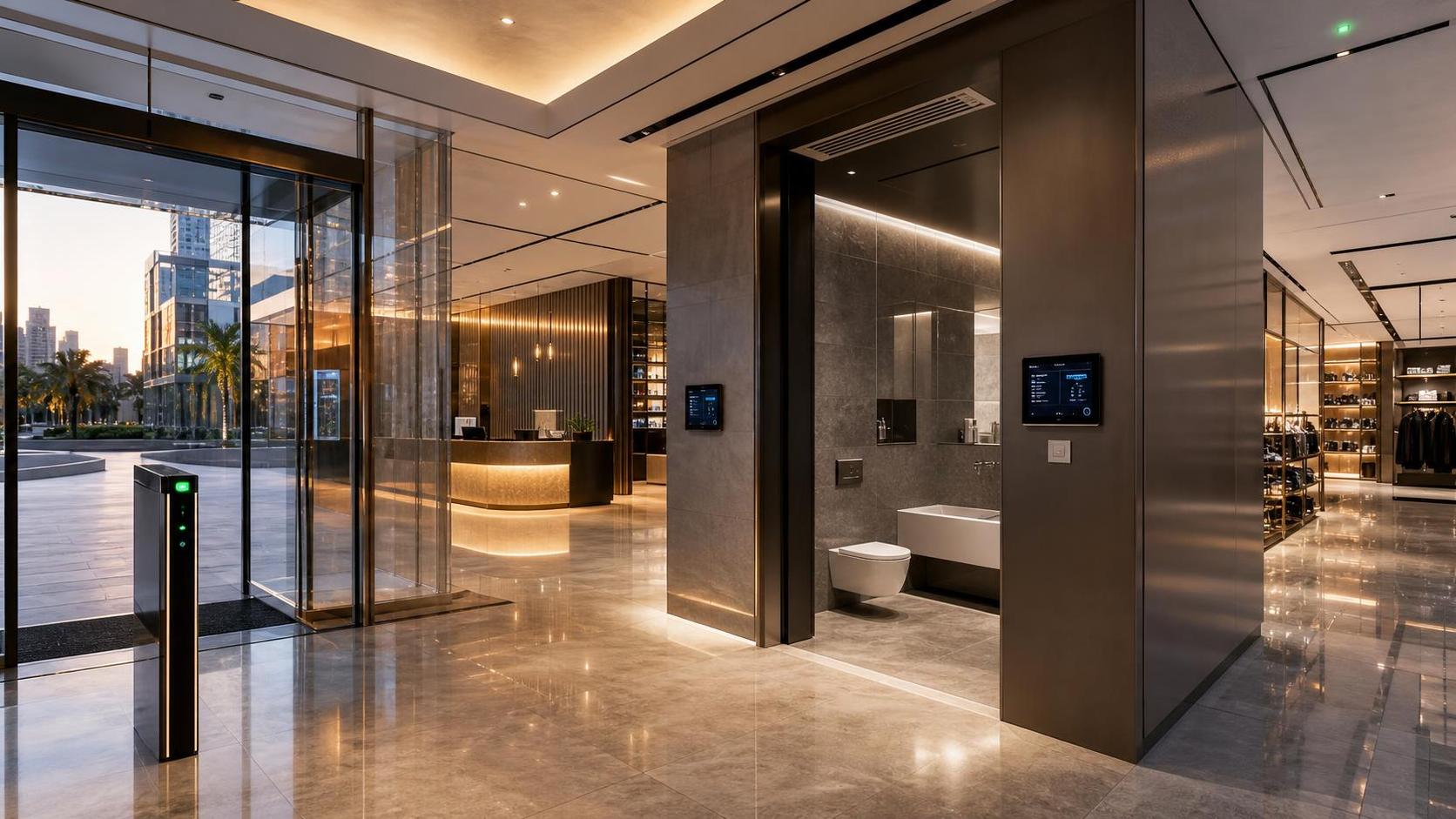
Commercial construction across the Gulf is becoming more connected, more regulated, and more performance-driven. In that context, smart space systems Middle East strategies are no longer limited to premium add-ons. They are increasingly part of how offices, hotels, retail hubs, healthcare facilities, and mixed-use assets are designed, delivered, and operated.
What makes this shift important is not only technology adoption. It is the way integrated controls, material selection, sanitary planning, and user-facing automation now influence cost, sustainability targets, operational resilience, and long-term asset value from the earliest project stages.
What smart space systems mean in commercial projects
In practical terms, smart space systems connect building infrastructure with digital control and measurable outcomes. They typically link HVAC, lighting, access control, water systems, security, occupancy sensing, and space management through one coordinated logic rather than isolated subsystems.
For the Middle East, that coordination matters because buildings often face high cooling demand, intense occupancy variation, strict image expectations, and growing pressure to align with carbon reduction pathways. A smart lobby, for example, is not just a visual feature. It can affect circulation, security, energy use, and maintenance efficiency at the same time.
This is also why the discussion has moved beyond software dashboards. Core building materials, sanitary spaces, intelligent locks, water-saving fixtures, and connected kitchen and bath systems increasingly sit inside the same performance conversation.
Why the region is paying closer attention
Several regional forces are shaping demand for smart space systems Middle East projects. The first is scale. Large pipelines in hospitality, business districts, airports, education, and healthcare require operational consistency across complex portfolios.
The second is climate performance. Cooling loads, water stress, and lifecycle efficiency are now central design issues, not secondary engineering concerns. Smart controls help reduce waste, but they work best when paired with suitable materials, durable fixtures, and clear usage data.
The third driver is experience. Commercial occupiers and visitors expect fast access, better indoor comfort, responsive lighting, touch-reduced sanitary spaces, and secure digital interaction. These expectations now influence leasing strength and brand perception.
A fourth factor is procurement risk. Tariff shifts, compliance changes, and evolving green standards can alter specification decisions quickly. This is where intelligence-led market reading becomes useful, especially when projects depend on imported components or premium finish packages.
From systems integration to material intelligence
A common mistake is to treat smart systems as a layer added after architectural and MEP decisions are mostly fixed. In reality, project performance often depends on earlier coordination between digital controls and physical product selection.
GIAM has built its perspective around that intersection. Its Strategic Intelligence Center tracks not only sector news, but also the way material science, hydraulic design, and commercial economics reshape future spaces. That matters in the Middle East, where high-spec projects must balance aesthetics, resilience, and operating efficiency.
Consider a sanitary zone in a premium office tower. Water-saving technology, anti-bacterial materials, sensor-based fixtures, smart access, and maintenance visibility should not be specified separately. Their combined effect determines hygiene performance, user flow, service response time, and total lifecycle cost.
The same applies to staff kitchens, serviced apartments, hospitality back-of-house areas, and wellness facilities. Smart space systems Middle East planning works best when data infrastructure and product performance are developed together.
Where the value shows up first
The business case for smart space systems Middle East adoption is usually strongest in four areas: utilities, uptime, user comfort, and asset adaptability. These are easier to quantify than abstract innovation claims.
These benefits are most reliable when teams define measurable targets early. A control platform alone will not fix weak zoning, poor fixture selection, fragmented vendor responsibilities, or incomplete commissioning.
High-impact scenarios in regional developments
Office and mixed-use towers
Occupancy fluctuates by hour, floor, and tenant. Smart space systems Middle East deployment helps align ventilation, lighting, and access schedules with actual use patterns. That reduces wasted load while supporting premium workplace standards.
Hotels and serviced residences
Guest rooms, wellness spaces, kitchens, and sanitary areas all benefit from connected controls. Room automation, water-efficient fixtures, and smart locks can improve both service quality and operating margins when integrated properly.
Healthcare and education
Here, hygiene, uptime, and traceability matter more than visual novelty. Anti-bacterial materials, controlled access, touch-reduced washrooms, and monitored water systems support safer environments and better maintenance governance.
Retail and public destinations
Footfall changes rapidly, and space performance affects both energy use and visitor satisfaction. Smart lighting scenes, queue-sensitive controls, and real-time facility monitoring can improve the visitor journey without overbuilding capacity.
What should be evaluated before specification
Decision quality improves when smart systems are reviewed as part of the building value chain, not only as technology packages. A few filters help keep choices practical.
- Check whether the system supports open integration or creates long-term vendor dependency.
- Test performance under local climate, occupancy density, and maintenance realities.
- Review how sensors, locks, sanitary fixtures, and control platforms share data.
- Compare lifecycle cost, not just capex, especially for cooling and water-intensive assets.
- Confirm alignment with regional standards, operator expectations, and sustainability reporting needs.
- Assess spare parts access and service capability across the intended project geography.
These points sound basic, yet many project delays begin with fragmented package decisions. When smart systems, interior finishes, hydraulic choices, and operational software are procured in isolation, handover quality usually suffers.
The growing role of market intelligence
Regional demand is changing quickly, and specification teams rarely have time to track every movement in standards, tariffs, materials, and premium product availability. That gap has made reliable sector intelligence more valuable than broad trend talk.
GIAM’s model is relevant here because it connects commercial insight with detailed attention to materials, sanitary environments, and smart kitchen and bath systems. Its reporting lens is not limited to aesthetics or notional innovation. It follows the structural demand behind urbanization, green building pressure, and evolving user expectations.
For projects in the Middle East, that kind of intelligence can help refine product shortlists, anticipate compliance pressure, and identify where premium systems genuinely create competitive differentiation rather than specification noise.
A practical way to move forward
The most effective smart space systems Middle East roadmaps usually begin with a narrow question: which building functions create the highest operational drag or user friction today? That may be cooling inefficiency, water loss, access complexity, or maintenance blind spots.
From there, it becomes easier to compare system options against real project priorities. Look at the interaction between controls, materials, sanitary performance, and service workflows. Ask which specifications will still make sense after occupancy patterns shift, tariffs change, or sustainability targets tighten.
That approach keeps smart space systems Middle East planning grounded in business value. It also creates a better basis for design coordination, phased implementation, and supplier evaluation. In a region building at speed, clearer judgment at the specification stage often determines whether a smart building performs intelligently or simply looks advanced on paper.
Industry Briefing
Get the top 5 industry headlines delivered to your inbox every morning.