How energy-saving design cuts long-term building costs
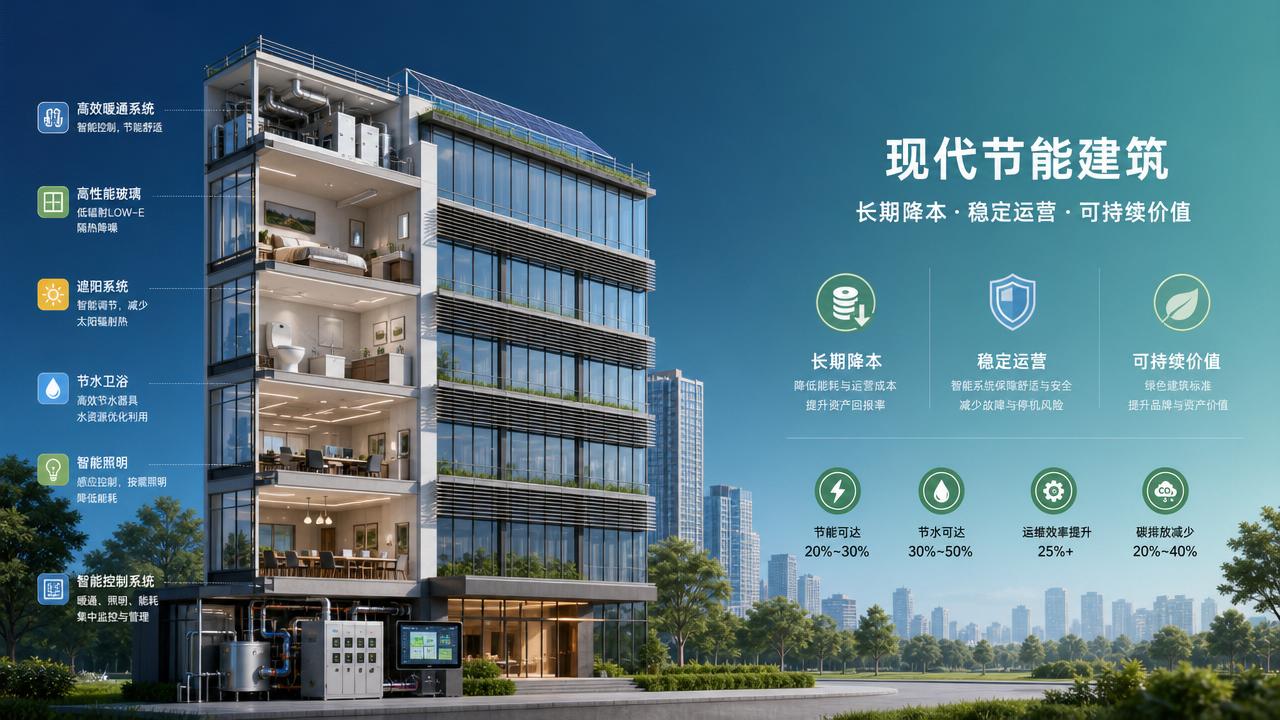
For financial decision-making, energy-saving design is more than a green upgrade. It is a cost-control framework that shapes utility spending, repair cycles, compliance risk, and long-term property value.
In building projects across residential, commercial, and mixed-use environments, early design choices often decide whether future operating budgets remain stable or become difficult to predict.
GIAM closely tracks how materials, sanitary systems, and smart kitchen and bath technologies affect building economics. That perspective shows one clear pattern: smart energy-saving design reduces lifetime costs when matched to the right use scenario.
Why scenario judgment matters before choosing energy-saving design
Not every building loses money in the same way. Some suffer from high cooling loads. Others waste water heating energy, ventilation power, or lighting hours.
That is why energy-saving design should begin with scenario judgment, not product selection. A school, hotel, apartment tower, and office each create different cost patterns.
When design matches usage intensity, climate exposure, occupancy schedules, and maintenance capacity, savings become measurable and easier to defend in capital planning.
The main cost channels affected over time
- Electricity demand for lighting, cooling, ventilation, and controls
- Fuel or power used for water heating and space heating
- Maintenance caused by system overuse or poor integration
- Compliance costs tied to future building standards
- Vacancy or pricing pressure from weak building performance
Scenario 1: High-occupancy residential buildings need predictable daily savings
In apartments, student housing, and urban residential towers, the strongest savings often come from envelope efficiency, hot water control, and efficient sanitary systems.
Here, energy-saving design works best when it cuts repetitive daily consumption. Small reductions per unit become substantial when repeated across hundreds of occupied spaces.
Core judgment points in residential use
Insulation quality, airtight windows, shading, and heat-loss control lower seasonal HVAC demand. Water-saving fixtures also reduce both water bills and the energy needed to heat water.
Smart kitchen and bath systems matter too. Leak detection, demand-based ventilation, and efficient appliances reduce avoidable utility waste and emergency repair frequency.
Scenario 2: Commercial offices benefit from load management and flexible control
Office buildings often experience changing occupancy, long lighting hours, and uneven zone usage. In this setting, energy-saving design should focus on dynamic control.
Static systems waste money when meeting rooms, shared spaces, and workstations are not used evenly. Sensors and zoned controls help align energy input with real activity.
Where office savings usually appear
- Daylight-responsive lighting cuts unnecessary daytime electricity use
- Demand-controlled ventilation lowers fan and conditioning loads
- Better glazing reduces glare, heat gain, and cooling pressure
- Smart access and scheduling improve after-hours efficiency
These measures also support healthier indoor conditions. Better comfort can protect occupancy performance, which indirectly supports the property’s long-term financial outcome.
Scenario 3: Hospitality and mixed-use properties require around-the-clock efficiency
Hotels, serviced apartments, and mixed-use complexes face constant load variation. Guest rooms, kitchens, laundry areas, lobbies, and sanitary spaces all consume energy differently.
In these projects, energy-saving design must coordinate multiple systems instead of optimizing one area alone. Fragmented upgrades rarely deliver the best long-term cost result.
Critical judgment points for hospitality environments
Water heating efficiency is a major issue because guest turnover creates repeated demand peaks. Heat recovery, fixture efficiency, and controls can produce strong cumulative savings.
Durable materials also matter. If finishes, sanitary hardware, or smart locks fail early, maintenance interruptions can erase part of the expected savings.
Scenario 4: Public and institutional buildings must balance efficiency with resilience
Schools, healthcare sites, and civic buildings often operate under budget pressure and strict performance expectations. They need lower costs without sacrificing reliability or safety.
For these settings, energy-saving design should prioritize long-life systems, easy maintenance access, healthy materials, and performance under heavy use.
Why resilience changes the savings equation
A cheaper system may reduce capital expense today, yet raise downtime risk later. Institutional assets usually benefit more from stable operating performance than from short-term installation savings.
This is where GIAM’s market intelligence is useful. Material durability, smart controls, and water-saving technologies should be assessed as part of one lifecycle strategy.
How different scenarios change energy-saving design priorities
Practical recommendations for matching energy-saving design to real building needs
- Start with operating profiles, not generic product lists
- Separate base load, peak load, and seasonal load drivers
- Compare maintenance capability before adding complex systems
- Assess water and energy performance together in sanitary spaces
- Use lifecycle costing, not first-cost comparison alone
- Check future code readiness and retrofit flexibility
The strongest energy-saving design decisions often come from system coordination. Better materials, efficient fixtures, and smart controls should reinforce one another.
Common misjudgments that reduce expected savings
One common error is copying a successful design strategy from another building type. A solution that works in offices may underperform in residential or hospitality conditions.
Another mistake is treating energy-saving design as a technology purchase instead of an operational plan. Equipment alone cannot solve bad zoning, weak envelopes, or poor user patterns.
Projects also underestimate water-related energy waste. In many buildings, hot water delivery, sanitary fittings, and leakage control represent a major hidden cost center.
Finally, short-term budgeting can ignore durability. Low-cost components may raise replacement frequency, labor demand, and service interruptions across the building lifecycle.
What to do next to turn energy-saving design into measurable value
Begin by identifying the building’s dominant cost scenario. Is the main issue occupancy fluctuation, water heating demand, envelope loss, or continuous mixed-use operation?
Then map design choices to lifecycle outcomes. Review materials, sanitary systems, smart kitchen and bath solutions, and controls as one connected cost structure.
GIAM supports this process through intelligence on green materials, smart spaces, market demand, and evolving standards. That helps turn energy-saving design into a stronger business case.
When the right scenario meets the right strategy, lower operating expenses, longer asset life, and stronger compliance readiness become achievable outcomes rather than assumptions.
Industry Briefing
Get the top 5 industry headlines delivered to your inbox every morning.