
How to Evaluate Premium Sustainable Building Materials for Long-Term Project Value
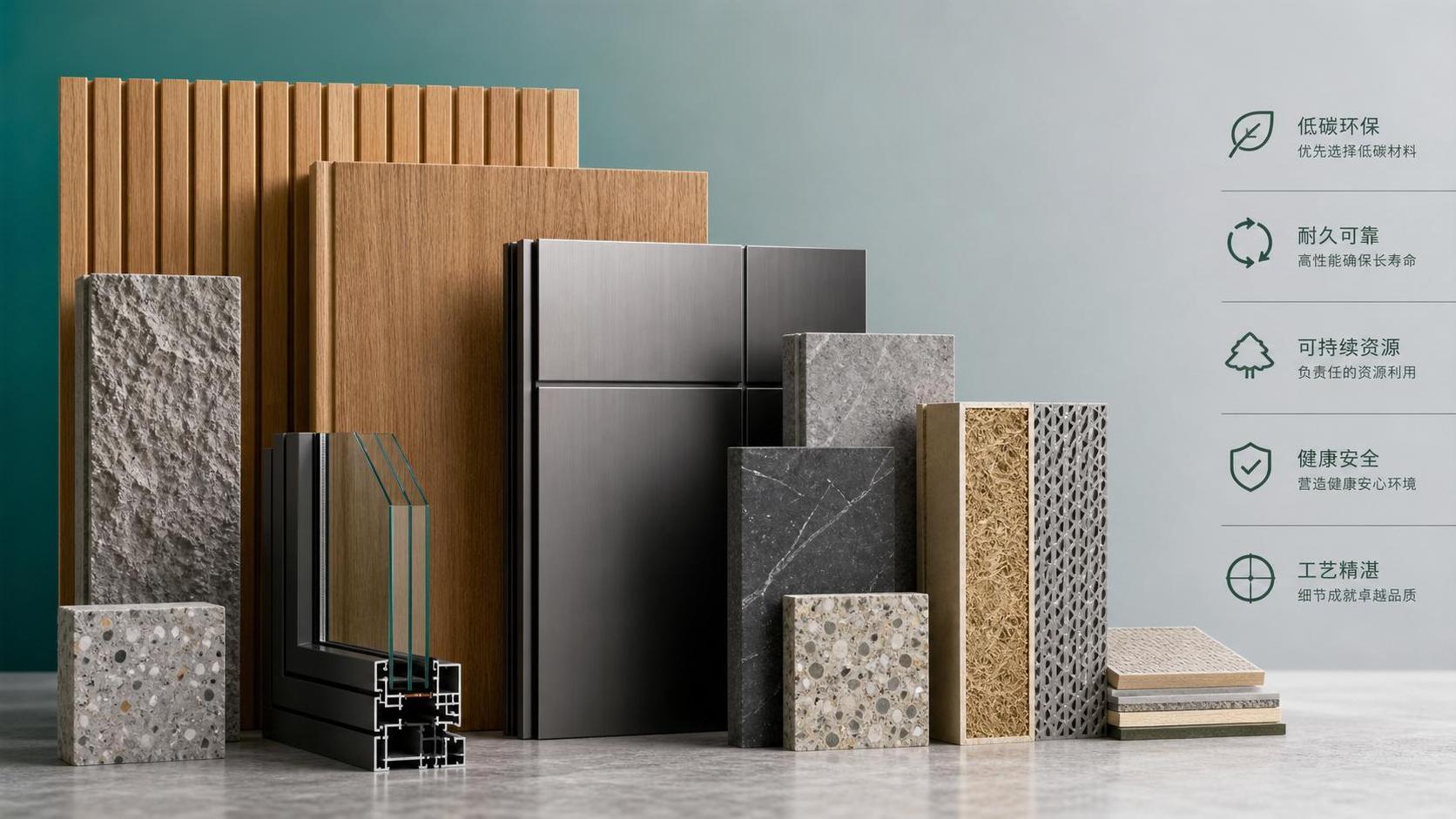
How to Evaluate Premium Sustainable Building Materials for Long-Term Project Value
Choosing premium building materials sustainable enough for modern projects is no longer a design preference. It is a value decision that shapes cost, risk, compliance, and long-term performance.
A higher purchase price does not automatically mean better project value. What matters is how a material performs across its full service life.
That includes durability, maintenance demand, installation efficiency, carbon profile, regulatory fit, and supplier reliability. In practice, these factors are tightly connected.
When the evaluation is rushed, teams often optimize for unit price only. Later, they absorb delays, replacements, warranty claims, and operating costs that were visible from the start.
A better approach is to assess premium building materials sustainable options through a structured decision framework. That creates clearer tradeoffs and stronger long-term project value.
Start with Project Value, Not Product Claims
The first step is defining what value means for the project. Different asset types reward different material decisions.
For a hospital, hygiene, moisture resistance, and easy replacement may dominate. For a mixed-use tower, lifecycle cost and finish retention may carry more weight.
This is why premium building materials sustainable selection should begin with project priorities. Otherwise, sustainability becomes a slogan instead of a measurable decision filter.
Set a shortlist of value drivers before reviewing samples or supplier decks. Most teams benefit from ranking the following areas.
- Expected service life under real operating conditions
- Maintenance frequency and replacement complexity
- Compliance with energy, fire, water, and emissions standards
- Embodied carbon and material health profile
- Supply continuity, lead time stability, and traceability
- Impact on installation speed and coordination risk
Once these priorities are visible, vendor claims become easier to test. That also keeps discussions grounded when commercial pressure increases late in procurement.
Check Technical Performance Under Real Conditions
Technical data sheets are useful, but they rarely tell the full story. Performance must be read against the building’s actual exposure and usage profile.
A material may score well in controlled tests yet underperform in humid climates, high-traffic zones, or aggressive cleaning cycles. This is a common source of hidden cost.
For premium building materials sustainable selection, review both laboratory certification and field evidence. One without the other leaves blind spots.
What to verify before approval
- Resistance to abrasion, moisture, staining, impact, and thermal cycling
- Compatibility with adhesives, substrates, fixtures, and adjacent systems
- Dimensional stability across seasonal or operational changes
- Cleaning requirements and effect of chemicals on surface integrity
- Repairability without major disruption to occupied spaces
Mock-ups are especially valuable here. They reveal installation tolerance issues, finish variation, and detailing conflicts long before they become site claims.
From recent market shifts, the stronger signal is this: materials are now judged by resilience, not just appearance. That changes how premium choices should be validated.
Evaluate Sustainability Beyond Marketing Language
Sustainability claims vary widely in quality. Some are backed by robust data. Others rely on broad language that is difficult to compare across suppliers.
To assess premium building materials sustainable value properly, focus on evidence that supports both environmental performance and project practicality.
Useful indicators usually include Environmental Product Declarations, recycled content verification, low-VOC performance, water efficiency impact, and responsible sourcing records.
Still, low embodied carbon alone does not guarantee better project value. If a material fails early or creates complex maintenance needs, the benefit can erode quickly.
A practical sustainability screen
- Confirm third-party documentation, not self-declared claims only.
- Review carbon, water, and indoor air impacts together.
- Check whether sustainable performance survives installation and daily use.
- Measure likely replacement cycles against conventional alternatives.
- Test whether sourcing is stable across project phases and regions.
This is where many decisions become clearer. Premium building materials sustainable options deserve preference when they improve both environmental outcomes and operational reliability.
Measure Total Cost of Ownership, Not Purchase Price
Long-term project value is rarely visible in the initial quote. It emerges through maintenance budgets, replacement timing, downtime, labor intensity, and risk exposure.
This means premium building materials sustainable decisions should be compared using total cost of ownership. A cheaper product can become the expensive option over time.
In actual procurement work, even a small extension in service life can justify a premium. The savings compound when access, labor, and shutdown costs are high.
This also affects investor confidence. Durable, traceable, and efficient materials strengthen the case for stable operating performance over the asset lifecycle.
Review Supply Chain Strength and Commercial Risk
A material can be technically excellent and still become a poor decision if supply is unstable. Long lead times and inconsistent batches create real schedule pressure.
For premium building materials sustainable procurement, supplier evaluation should go beyond price and sample quality. Commercial resilience matters just as much.
Review production capacity, regional inventory, quality control consistency, tariff exposure, and the supplier’s ability to support substitutions without performance loss.
It is also worth checking how transparent the supplier is about raw material origin and certification continuity. Gaps here often appear late and cost time.
Questions that reduce sourcing risk
- Can the supplier maintain finish and performance consistency across batches?
- Are critical certifications current in every delivery region?
- What is the fallback plan if a component becomes unavailable?
- How quickly can defects, shortages, or transport delays be resolved?
The more complex the project, the more important this becomes. A smart material choice is only valuable if it can be delivered reliably at the required standard.
Build a Repeatable Evaluation Matrix
The strongest decisions come from a scoring system that aligns technical, commercial, and sustainability criteria. This keeps internal reviews faster and more consistent.
A simple weighted matrix often works well for premium building materials sustainable assessment. It turns broad preferences into visible, defendable decisions.
- Define five to seven criteria linked to project outcomes.
- Assign weight based on asset priorities and risk profile.
- Score each option using evidence, not assumptions.
- Document tradeoffs, exceptions, and unresolved risks.
- Recheck the top option after mock-up and supplier review.
This method improves internal alignment as well. Designers, procurement teams, and engineering leads can challenge scores without losing the overall decision structure.
That is especially useful when comparing products with similar appearance but very different lifecycle outcomes. The matrix keeps attention on measurable long-term value.
Turn Sustainable Selection Into a Stronger Asset Strategy
The best premium building materials sustainable decisions are rarely the ones with the loudest claims. They are the ones that stand up to technical review and operating reality.
When evaluation covers performance, verified sustainability, supply resilience, and total ownership cost, material selection becomes a strategic advantage instead of a procurement exercise.
That shift matters more now. Standards are tightening, building users expect healthier environments, and long-term operating efficiency is under closer financial scrutiny.
A disciplined framework makes those pressures manageable. It also helps each material decision contribute to stronger asset quality, lower lifecycle risk, and more durable project value.
Use that framework early, test claims hard, and compare options on evidence. That is how premium building materials sustainable choices deliver lasting results.
Industry Briefing
Get the top 5 industry headlines delivered to your inbox every morning.