
How to Evaluate a Commercial Construction Materials Supplier for Multi-Trade Projects
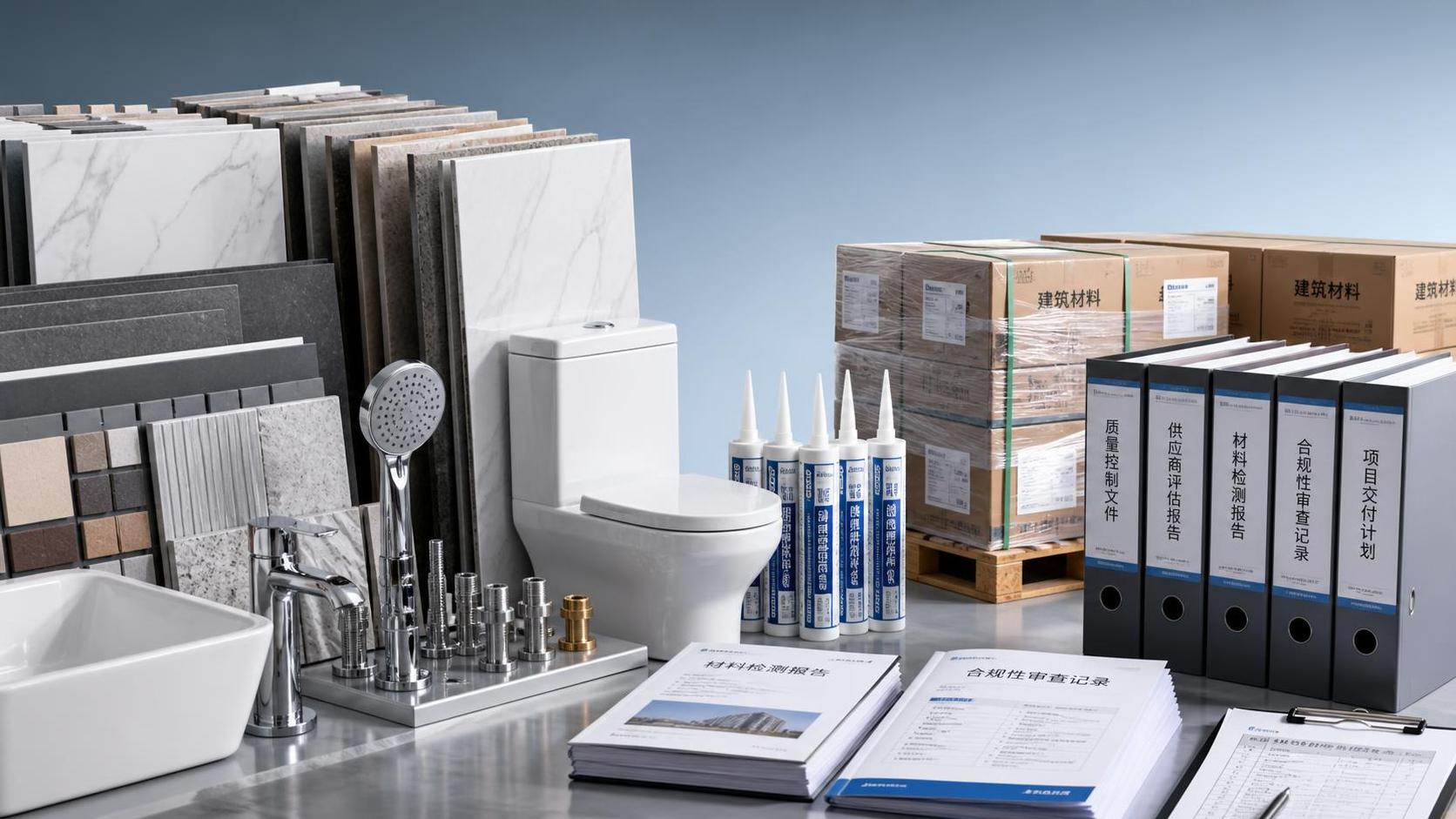
Choosing a commercial construction materials supplier for a multi-trade project is ultimately a risk decision, not just a purchasing decision. Procurement teams need to know whether a supplier can deliver compliant products, maintain supply continuity, support coordination across trades, and protect the project from delay-driven cost escalation.
The strongest suppliers are rarely the cheapest on paper. They are the ones with stable manufacturing or sourcing networks, documented quality controls, clear technical submittals, dependable delivery performance, and the ability to support field conditions when specifications, sequencing, or site realities change.
For procurement professionals, the evaluation process should therefore focus on operational fit. A supplier may have an attractive catalog and competitive pricing, but if it cannot align with phasing, approval workflows, substitutions, and trade coordination, it becomes a source of hidden project risk.
This guide explains how to assess a commercial construction materials supplier for multi-trade work, which warning signs matter most, and how to build a practical evaluation framework that improves sourcing decisions on complex commercial projects.
Why supplier evaluation matters more on multi-trade projects
Multi-trade projects create procurement pressure because materials do not move independently. Finishes, partitions, waterproofing, sanitary systems, fixtures, hardware, adhesives, and mechanical interfaces often depend on each other in sequence, compatibility, and delivery timing.
That means one supplier failure can affect several downstream trades. A delayed ceramic surface package may hold up waterproofing inspection, fixture installation, and final handover. A missing compliance document can delay approvals even when products are already on site.
In this environment, the right commercial construction materials supplier reduces coordination friction. The wrong one increases RFIs, substitutions, expediting costs, storage issues, rework exposure, and disputes about responsibility when assemblies fail in the field.
For procurement teams, the goal is to identify suppliers that can support project execution under real commercial conditions, not only under ideal purchasing assumptions. This is especially important for hospitality, retail, office, healthcare, education, and mixed-use developments.
Start with scope fit, not price
The first question is whether the supplier truly matches the project scope. A supplier may perform well on single-product orders but struggle when the package includes multiple categories, coordinated finishes, staged deliveries, and documentation across several trades.
Evaluate how much of the required material scope the supplier can support directly. Can it provide only one product line, or can it support a broader package such as surfaces, sanitary products, accessories, hardware interfaces, and related technical documentation?
Broader scope coverage is not automatically better, but it can simplify procurement when it reduces handoffs and interface risk. A supplier that understands how materials interact across wet areas, wall systems, joinery, and MEP touchpoints often adds more value than a low-price specialist.
Ask whether the supplier has handled similar project types before. Experience with residential supply does not always transfer well to large commercial fit-outs, public projects, or phased refurbishment programs where access, sequencing, and specification control are stricter.
Scope fit also includes geography. A supplier with strong pricing but weak regional support may struggle with import lead times, local certification, customs delays, or after-sales response. Procurement teams should treat local execution capability as part of technical fit.
Verify product consistency and quality assurance
Product consistency is one of the most practical evaluation criteria, especially for visible finishes and system-based materials. In multi-trade projects, even minor batch variation in color, size, texture, tolerances, or performance can create costly rework.
Ask how the supplier controls lot traceability, incoming inspection, manufacturing tolerances, and final quality checks. Reliable suppliers should be able to explain their quality process clearly and provide supporting records rather than generic assurances.
For products such as tile, panels, sanitary ware, fittings, hardware, and smart kitchen or bath systems, request sample control procedures. Procurement teams need confidence that approved samples and delivered goods will match across multiple shipments and installation phases.
Where systems are involved, verify compatibility between components. A supplier that provides excellent individual products but weak system integration can still create site failures. Sealants, substrates, anchors, controls, and accessories should be reviewed as part of the same quality conversation.
Claims about durability, hygiene, anti-bacterial performance, water efficiency, or smart functionality should be supported by test data and recognized standards. Marketing language has limited value unless it translates into documented project-ready performance.
Check compliance, certification, and documentation discipline
Documentation quality is a major differentiator between average and dependable suppliers. Procurement teams working on commercial projects need more than invoices and product brochures. They need submittal-ready documentation that supports approvals, inspections, and closeout requirements.
Review whether the supplier can provide test reports, declarations of performance, fire ratings, environmental data, maintenance instructions, warranties, installation guidance, and country-specific compliance documentation where required. Missing documents often create bigger delays than missing materials.
It is also important to verify whether certifications are current, project-relevant, and issued by credible bodies. Procurement teams should not assume that a certificate used in one market or project class automatically satisfies another jurisdiction or consultant requirement.
For green building or ESG-driven projects, confirm whether the supplier can support environmental reporting needs. Recycled content, low-emission profiles, water-saving performance, and lifecycle considerations may influence specification approval and owner decision-making.
A disciplined commercial construction materials supplier should have a standard process for document control. If technical files arrive slowly, inconsistently, or in incomplete form during bidding, the same weakness usually appears later during execution and handover.
Evaluate logistics strength and delivery reliability
On multi-trade projects, logistics performance often matters as much as unit cost. A supplier that cannot deliver according to installation sequence can disrupt labor planning, site storage, and trade access. This is where many procurement decisions succeed or fail in practice.
Ask detailed questions about lead times, buffer stock, warehouse coverage, packaging standards, damage rates, and transport visibility. Do not rely on nominal lead times alone. Request actual performance data from comparable projects where possible.
Procurement teams should understand whether deliveries can be phased by zone, floor, or trade package. Many commercial sites cannot accept bulk deliveries at once. Suppliers need to support controlled release schedules that align with real installation windows.
Also examine how the supplier handles disruption. What happens if a shipment is damaged, a production batch fails inspection, or a container is delayed? The quality of the contingency plan often reveals more than the standard logistics presentation.
Reliable suppliers usually have defined escalation contacts, replacement procedures, and realistic communication habits. A supplier that communicates issues early gives the project more room to adjust. A supplier that hides problems until the last minute increases commercial exposure.
Assess technical support and cross-trade coordination ability
Procurement professionals should pay close attention to technical support because multi-trade risk often appears at interfaces. Materials that seem straightforward in specification can become problematic when they meet waterproofing details, substrate tolerances, plumbing points, or electrical integration.
Strong suppliers can support submittal review, mockups, installation queries, maintenance planning, and reasonable substitution discussions. They understand that project success depends on more than delivering cartons to site.
Ask who provides technical support and how quickly they respond. Is there a qualified technical team, or only a sales contact? Can they review drawings, advise on compatibility, and participate in coordination calls when needed?
This is especially relevant for sanitary spaces, commercial kitchens, bath systems, and smart fixtures where performance depends on correct interface planning. Procurement teams benefit from suppliers that can clarify limitations before materials are ordered or installed.
Suppliers with practical field awareness reduce ambiguity. They help identify application risks early, which improves decision quality for procurement, consultants, contractors, and owners alike.
Look beyond quoted price to total procurement cost
Price matters, but unit price alone is an incomplete comparison method. In commercial construction, the lower quote can become the more expensive choice once expediting, wastage, delay claims, rework, storage, and administrative burden are included.
A more useful approach is to compare total procurement cost. This includes not only material pricing but also freight, duties, packaging, damage risk, compliance support, sample turnaround, technical assistance, payment terms, and delivery accuracy.
Procurement teams should also consider the cost of complexity. A fragmented supply structure can appear competitive during tender review while creating significant coordination overhead later. Every additional interface adds communication and accountability risk.
When evaluating commercial construction materials supplier proposals, build a weighted scorecard rather than selecting purely on price rank. This makes tradeoffs visible and allows teams to defend sourcing decisions to internal stakeholders more effectively.
Typical scoring categories may include price, compliance readiness, lead time reliability, technical support, project experience, quality consistency, logistics flexibility, and financial stability. The exact weighting should reflect the project’s risk profile.
Review financial stability and long-term reliability
Procurement teams should not overlook supplier financial health, especially for large packages, phased delivery contracts, or projects with long execution periods. A supplier under financial strain may show warning signs through inconsistent service long before a formal failure occurs.
Review trade references, payment behavior indicators where available, years in operation, manufacturing depth, ownership structure, and dependence on single factories or regions. The objective is not perfection but resilience.
Long-term reliability also matters after installation. Commercial projects often require spare parts, maintenance support, warranty follow-up, and product continuity for future phases. A supplier that disappears after delivery creates lifecycle risk for owners and facility managers.
This issue is particularly important for smart kitchen and bath systems, controls, fittings, and accessory ranges. Continuity of components and technical support affects not only project completion but also post-handover operating performance.
Procurement teams should therefore ask a simple question: can this supplier still support this project twelve to twenty-four months after the purchase order is issued? The answer often reveals whether the relationship is transactional or dependable.
Use a practical supplier evaluation checklist
A structured checklist helps procurement teams compare suppliers consistently. Without one, decisions are often influenced too heavily by price, sales responsiveness, or brand familiarity, while execution risks remain underexamined.
At minimum, the checklist should cover scope fit, comparable project experience, sample consistency, technical documentation, certification status, logistics capability, phased delivery support, technical response time, warranty terms, and financial reliability.
It should also include project-specific questions. For example, does the supplier understand site access restrictions, mockup approval requirements, local code obligations, sustainability targets, or interface risks with adjacent trades?
Where possible, score suppliers using evidence rather than promises. Reference projects, actual submittals, lead-time records, factory audit findings, and documented response times are more useful than polished presentations.
Procurement leaders can improve outcomes further by involving technical, site, and commercial stakeholders early in the evaluation. Multi-trade projects benefit when sourcing decisions reflect installation reality as well as purchasing strategy.
Common red flags during supplier evaluation
Several warning signs should trigger caution. One is unclear documentation, especially when a supplier avoids sharing test data, certification details, or manufacturing information. Another is overly optimistic lead times that are not backed by process transparency.
Inconsistent sample quality is another red flag. If early samples vary or arrive without clear identification, batch control may be weak. That risk becomes more serious on large commercial projects where visual alignment and repeatability matter.
Procurement teams should also watch for vague answers around substitutions, warranty scope, or technical responsibility at system interfaces. Ambiguity at the evaluation stage usually becomes conflict during execution.
Another concern is dependence on one individual. If all knowledge sits with a single salesperson and there is no visible operations, technical, or logistics structure behind them, service continuity may be fragile.
Finally, be cautious when the quote looks unusually low compared with the market. That may reflect exclusions, unstable sourcing, incomplete compliance, or an inability to sustain service once the order is placed.
Final takeaway for procurement teams
The best commercial construction materials supplier for a multi-trade project is not simply the one with the lowest bid or the broadest catalog. It is the supplier that can reliably support the project across compliance, coordination, quality, delivery, and technical execution.
For procurement teams, the most effective evaluation process starts with scope fit, tests the supplier’s operational discipline, and measures total risk alongside price. That approach improves sourcing decisions and helps protect schedule certainty, installation quality, and margin performance.
In practical terms, supplier evaluation should answer three questions. Can this supplier meet the specification? Can it support the way the project will actually be built? Can it continue performing when conditions become less predictable?
If the answer to all three is yes, procurement has likely found a partner worth selecting. In complex commercial builds, that level of reliability is often more valuable than the cheapest number in the tender comparison.
Industry Briefing
Get the top 5 industry headlines delivered to your inbox every morning.