
Material Performance Evaluation Criteria for Specifying Durable Interior Surfaces
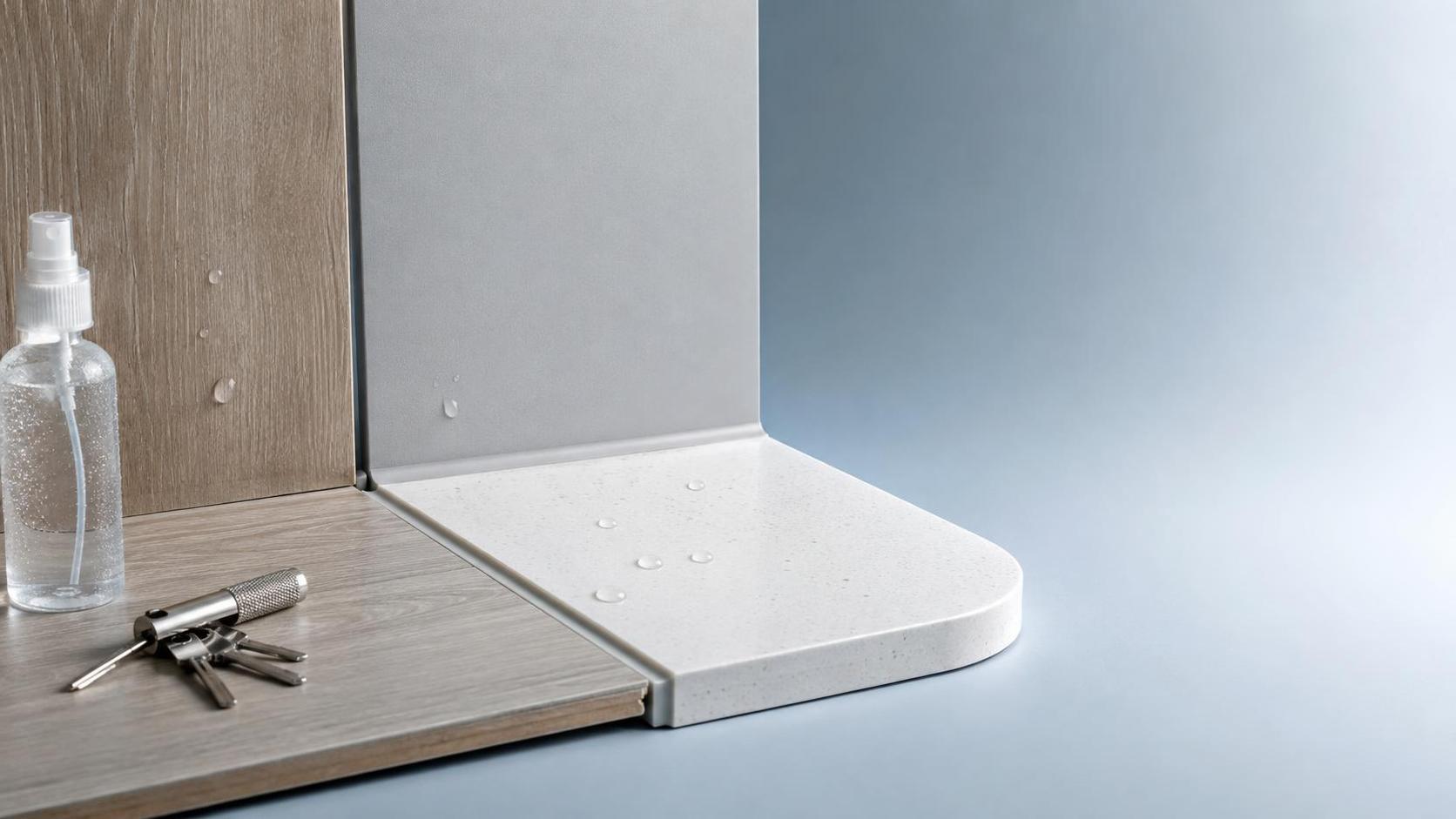
A durable interior surface can look acceptable at handover and still become the source of complaints, replacement work, or hygiene concerns within a short period of use. The failure often begins at specification stage: a material is selected for color, texture, price, or a single test value without matching its performance profile to the actual exposure conditions. A matte wall panel near a service sink, a decorative laminate at a reception desk, and a resilient floor in a corridor may all face abrasion, cleaning chemicals, impact, moisture, and frequent contact—but not at the same intensity or in the same combination.
The practical approach is to evaluate materials against the actual service environment, then confirm that documented test evidence, installation details, maintenance requirements, and replacement implications support that use. Material performance evaluation criteria should therefore be organized around failure modes rather than broad claims such as “durable,” “waterproof,” or “easy to clean.” A surface is suitable only when its weak points are compatible with the expected loads, cleaning regime, substrate conditions, and required service life.
Start with the exposure map, not the material sample
Before comparing products, define where and how the surface will be used. This avoids a common mistake: applying one performance threshold across areas with very different risks. A wall finish in a low-contact residential bedroom does not require the same resistance profile as a washroom partition, lift lobby wall, school corridor, healthcare reception counter, or food preparation backsplash.
Map each location using the following questions:
- Who will touch, clean, move against, or load the surface?
- Will the material experience rolling traffic, wheeled equipment, bags, carts, furniture movement, or repeated door impact?
- Is liquid exposure occasional splashing, recurring condensation, routine washdown, or prolonged wetting?
- Which cleaners, disinfectants, solvents, descalers, oils, cosmetics, or food substances may contact the finish?
- Will the surface be exposed to daylight, heat sources, steam, temperature swings, or indoor humidity cycles?
- Does the detail include joints, edges, cutouts, sealant lines, fasteners, or transitions that may fail before the face material?
The resulting exposure map should distinguish between normal use and foreseeable misuse. For example, a corridor wall may be designed for pedestrian contact but should also account for occasional impact from carts. A vanity surround may only receive intermittent water on its face, while its cut edges, joints, and substrate can remain vulnerable to repeated wetting. The surface layer alone cannot be evaluated in isolation.
Assess wear in the way the surface will actually be used
Wear resistance is often treated as a single property, yet interior materials wear through different mechanisms. Abrasion removes or dulls the face layer. Scratch resistance concerns visible marks from hard objects. Impact resistance addresses sudden force. Indentation relates to concentrated loading. Stain retention can make a surface appear worn even where its structure remains intact.
For floors, distinguish between foot traffic, grit abrasion, castor movement, and point loading from furniture. Entrances and circulation routes usually experience abrasive particles carried on footwear, while office zones may be more affected by chair castors. A flooring material with adequate resistance to pedestrian wear may still show premature damage under rolling equipment if the top layer, backing, adhesive, or subfloor is not suited to that load.
For vertical surfaces, evaluate impact and scratch exposure separately. Wall panels near seating, luggage areas, service routes, and doors need resistance to localized impact. Decorative films and coatings may resist light wiping but be easily cut by hard edges. Countertops need a different review again: their critical risks may include scratching from utensils, abrasion from repetitive handling, and edge chipping near sinks or appliance openings.
Test reports are useful only when the test method reflects the intended use. A favorable laboratory result should not be interpreted as proof that a material will tolerate every form of mechanical abuse. Confirm what was tested, what specimen construction was used, whether the result applies to the selected finish, and whether the installed assembly introduces new vulnerabilities.
Moisture tolerance is a system question
Terms such as water-resistant, waterproof, moisture-resistant, and suitable for wet areas are not interchangeable. A material may withstand occasional surface moisture while failing at open edges, unsealed penetrations, joints, or damaged coating areas. In many interior applications, deterioration is caused less by visible water on the face than by water migration behind the finish.
Evaluation should separate four conditions: ambient humidity, incidental splash, repeated direct wetting, and standing or trapped water. A finish appropriate for humid air may not be appropriate for shower-adjacent walls. A panel that tolerates splash may still require sealed edges and a compatible backing system. Flooring in a pantry may handle a spill, but this does not demonstrate suitability for frequent wet cleaning or leaks that remain undetected beneath the surface.
Review the vulnerable interfaces
Ask where moisture can enter and what happens after entry. Check cut edges, drilled holes, sink and fixture cutouts, seams, expansion gaps, transitions to drains, floor-to-wall junctions, and interfaces with metal trims or sealants. Materials containing wood-based cores, fiber layers, porous backings, or absorbent adhesives require particular scrutiny where water exposure is possible. Swelling, delamination, microbial growth, staining, and substrate damage may occur long before the face finish shows obvious failure.
Moisture assessment should also include drying potential. A surface assembly that becomes wet but can dry safely is different from one that traps water in an enclosed cavity. Where wet-area use is proposed, verify the complete construction: substrate preparation, membrane or moisture barrier where relevant, adhesive, grout or sealant, edge treatment, and maintenance access.
Chemical resistance must match the cleaning protocol
A surface may resist ordinary household cleaning while reacting poorly to disinfectants, acidic descalers, alkaline degreasers, alcohol-based agents, peroxide products, dyes, cosmetics, or solvents. This gap is particularly important in washrooms, kitchens, healthcare-adjacent spaces, education facilities, hospitality areas, and commercial interiors with frequent cleaning cycles.
Do not ask only whether a material is “chemical resistant.” Request compatibility information for the cleaning agents likely to be used, including concentration, dwell time, rinsing requirements, and frequency. Repeated exposure can change gloss, soften coatings, discolor sealants, weaken printed patterns, or leave a tacky surface that attracts soil. A material that needs restricted cleaning products may be acceptable in a controlled residential setting but unsuitable where cleaning teams use standardized commercial products.
Stain resistance should be evaluated in the same practical way. Consider likely staining agents rather than a generic list. In kitchens, these may include oils, pigments, food acids, and hot liquids. In sanitary spaces, cosmetics, hair products, soap residues, and mineral deposits may matter. At reception or retail counters, inks, adhesives, beverage spills, and hand sanitizers can be more relevant. Confirm whether stains can be removed without aggressive methods that shorten the finish life.
Hygiene depends on surface geometry and maintainability
Hygienic performance is not determined by a marketing claim alone. Smooth, intact, non-porous surfaces are generally easier to clean than deeply textured, open-jointed, or damaged surfaces, but the installation detail remains critical. Grout lines, unsealed seams, rough edges, cracked coatings, and failed sealant joints can retain dirt and moisture even when the primary material is easy to wipe.
Where hygiene control is important, assess cleanability after realistic wear. A pristine sample may clean easily, whereas a scratched or worn surface can retain residues. Consider whether the material can withstand the required cleaning frequency without losing its protective finish. Also examine whether repairs can be made without creating uneven joints or visually obvious patches that become cleaning traps.
Antimicrobial additives, where offered, should not replace normal hygiene design. They do not eliminate the need for cleanable geometry, appropriate cleaning procedures, controlled moisture, and repair of damaged areas. The specification should focus on what can be verified: surface continuity, resistance to intended cleaners, joint treatment, and practical access for routine maintenance.
Do not separate appearance retention from durability
In interior projects, a surface can remain structurally intact while becoming visually unacceptable. Fading, gloss change, staining, print wear, inconsistent aging, and visible repair marks can trigger replacement decisions earlier than physical failure. Appearance retention is therefore part of lifecycle performance, especially for large continuous installations where localized replacement may not match surrounding material.
Evaluate color and finish stability against lighting exposure, particularly near glazing or strong artificial light. Dark, high-gloss, ultra-matte, and heavily textured finishes may reveal damage differently. A high-gloss surface can show fine scratches; a deep matte finish may develop polished contact zones; a texture may trap soil; a strongly patterned surface may make repairs difficult to blend. These are not reasons to exclude such finishes, but they should influence location, cleaning method, spare-material strategy, and acceptance criteria.
Compare materials through failure consequences
When several materials appear technically viable, compare them by what happens when they are damaged or reach the end of their serviceable condition. A hard surface may resist wear well but be difficult to repair after chipping. A resilient finish may show scuffs sooner but allow localized replacement. A seamless coating may support hygiene goals yet require disciplined substrate preparation and controlled curing conditions. The preferred option depends on whether likely failures are visible, progressive, repairable, or likely to interrupt operations.
A useful evaluation record should include the following:
- Intended location and exposure profile: document traffic, moisture, impact, cleaning, and visual expectations.
- Material construction: identify face layer, core, backing, coating, edge condition, and compatible accessories.
- Evidence basis: retain relevant technical data, test method references, limitations, and finish-specific information.
- Installation dependencies: identify substrate tolerances, adhesive or fixing requirements, expansion provisions, sealing details, and curing conditions.
- Maintenance constraints: record approved cleaners, prohibited agents, cleaning frequency, repair methods, and inspection needs.
- Replacement implications: assess access, batch variation risk, spare stock needs, repair visibility, and disruption caused by replacement.
Set pass/fail criteria before reviewing samples
Samples are valuable for checking color, texture, joint appearance, and cleaning response, but they can distort decisions when visual preference leads the process. Establish minimum requirements first. For example, a wet-area wall finish may require a defined approach to edge sealing, repeated-cleaning compatibility, and resistance to moisture-related dimensional change. A corridor finish may need repairable impact protection, tolerance of cleaning equipment, and acceptable appearance after scuff removal.
Then use samples and mock-up areas to resolve questions that documentation cannot answer easily: whether a texture retains soil, whether a cleaner alters sheen, how joints look under project lighting, how vulnerable corners behave, and whether repairs remain acceptable. A mock-up should replicate the relevant assembly and exposure points rather than present only an undamaged flat panel.
Where specifications most often become too vague
Broad language such as “commercial grade,” “heavy duty,” “moisture proof,” or “low maintenance” leaves too much room for interpretation. Better specifications identify the required performance outcome and the conditions under which it must be maintained. They also state where a product is not acceptable. For instance, an otherwise suitable decorative panel may be excluded from direct splash zones, high-impact service routes, or locations where its edge treatment cannot be maintained.
The strongest material performance evaluation criteria connect the material to the complete installed condition. They define the expected exposure, identify measurable or documentable performance evidence, address installation interfaces, and recognize the maintenance regime that preserves the intended result. This produces a more defensible selection than choosing the hardest, most expensive, or most visually appealing surface in isolation.
Industry Briefing
Get the top 5 industry headlines delivered to your inbox every morning.