
Prefab Green Building Materials vs Traditional Options: Cost, Speed, and Compliance
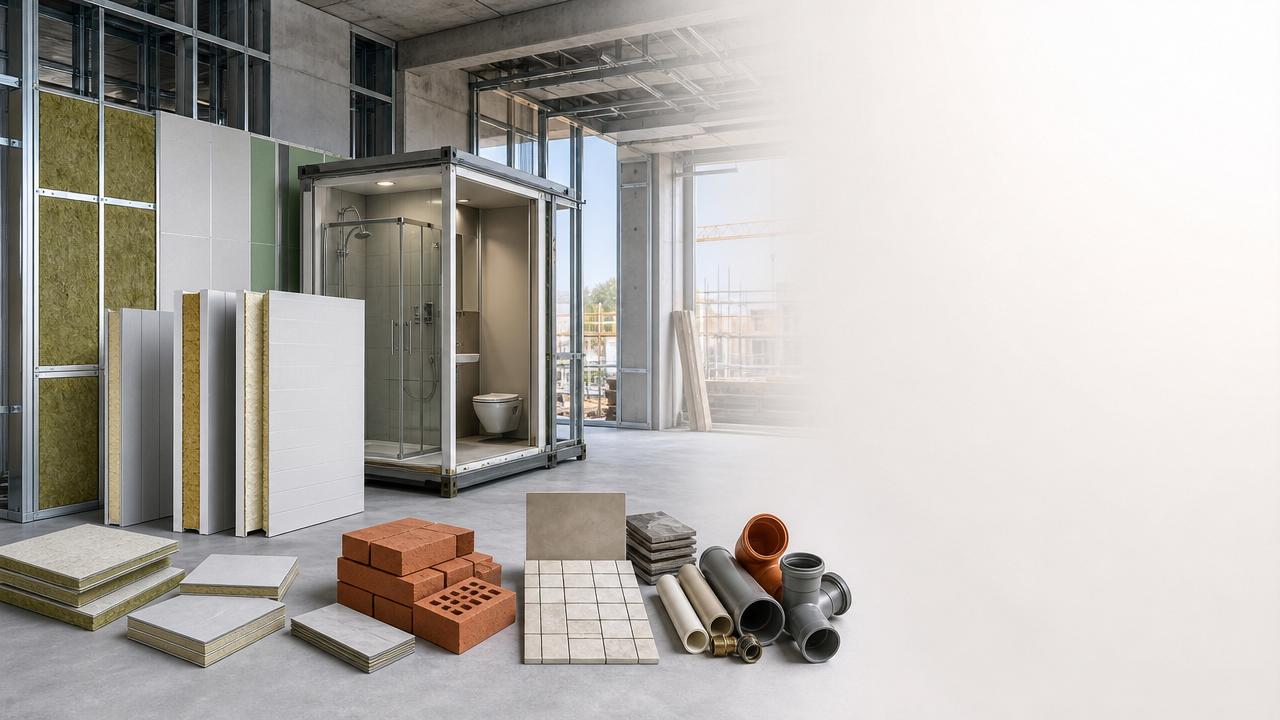
For many building projects, the real question is not whether prefab green building materials are “better” than traditional options. It is whether they create a better total outcome.
That outcome usually comes down to four things: upfront cost, installation speed, compliance risk, and long-term value. Miss one of them, and the cheapest quote can become the most expensive decision.
In today’s market, prefab green building materials are no longer limited to niche eco projects. They are now part of mainstream decisions in residential towers, hospitality fit-outs, healthcare upgrades, and commercial interiors.
GIAM tracks this shift closely through its Strategic Intelligence Center, where material science, hydraulic design, and industrial economics come together to decode changing standards, tariffs, and demand signals.
If the goal is smarter purchasing with fewer surprises, the comparison needs to go beyond price per unit. Here is what actually matters.
What prefab green building materials really change
Prefab green building materials combine factory-controlled production with lower-impact material strategies. That may include recycled content, lower VOC finishes, water-saving assemblies, insulated panels, or modular wet-area systems.
Unlike traditional options, much of the work happens before delivery. This shifts risk away from the jobsite and into planning, specification, and supplier coordination.
- Check whether factory-made assemblies reduce on-site cutting, waste handling, and weather delays. Those hidden savings often matter more than the quoted material price difference.
- Verify environmental claims with EPDs, HPDs, VOC reports, or recycled-content data. Green language without documentation can create specification gaps later.
- Confirm the module size fits freight, hoisting, storage, and floor loading limits. A sustainable product still fails if site logistics are ignored.
- Review connection details early. Prefab green building materials save time only when interfaces with structure, MEP, and finishes are resolved before delivery.
- Ask suppliers about quality control frequency, batch consistency, and factory testing. Stable production usually means fewer rework costs after installation begins.
- Compare service life, maintenance intervals, and replacement cycles, not only purchase price. Long-life assemblies often outperform cheaper traditional options over time.
Cost: where the numbers look simple but rarely are
Traditional materials often win the first-glance price comparison. A basic wall system, tile package, or sanitary assembly can look cheaper on paper when viewed only by unit rate.
But installed cost tells a different story. Labor intensity, error rates, waste, schedule overruns, and inspection delays can quickly erase that initial advantage.
Prefab green building materials usually shift more cost upfront into engineering, fabrication, and transport. In exchange, they often reduce variable site costs, especially in labor-tight markets.
A practical way to compare is to run two budgets: purchase cost and installed cost. Then add one more line for delay exposure. That third line is where prefab green building materials often become more competitive.
A few cost checks worth doing early
- Separate freight, craning, storage, and packaging from unit price. Prefab systems can appear expensive simply because logistics are bundled more transparently.
- Model the cost of labor scarcity. If skilled installers are hard to secure, prefab green building materials may protect budget certainty better.
- Quantify disposal fees and material loss. Traditional wet trades and cut-to-fit products usually create more waste than expected.
- Include commissioning and inspection time. Factory-tested systems may reduce field corrections, especially for sanitary or kitchen-related assemblies.
Speed: the biggest advantage when time has a price
Speed is where prefab green building materials usually create the clearest advantage. Factory fabrication can run in parallel with site preparation, compressing the overall timeline.
Traditional options depend more heavily on sequential site work. That leaves the schedule more exposed to weather, crew availability, curing times, and coordination mistakes.
This matters even more in sectors where every handover day has a revenue impact, such as hotels, rental units, retail spaces, and healthcare refurbishments.
- Prioritize assemblies with repetitive layouts. Standardized bathrooms, façade panels, wall modules, and kitchen systems usually deliver the strongest schedule gains.
- Freeze critical dimensions earlier than usual. Prefab green building materials lose speed benefits when drawings keep changing after production starts.
- Align delivery sequence with floor-by-floor installation. Poor staging can turn fast fabrication into site congestion and damage risk.
- Ask for realistic lead times, not brochure claims. Factory capacity, customs clearance, and regional trucking can easily shift the schedule.
In urban projects, the value of speed is not only earlier completion. It also means fewer noisy site activities, less neighborhood disruption, and more predictable coordination with other trades.
Compliance: where low-risk decisions are usually made
Compliance has become a deciding factor, not a final paperwork step. Building codes, fire ratings, embodied carbon targets, indoor air quality rules, and water-efficiency standards are all tightening.
Prefab green building materials can help here, but only when the documentation is complete and recognized locally. A certified product in one market may still need extra approval in another.
GIAM’s intelligence work is useful in this area because regulatory shifts rarely happen in isolation. Trade tariffs, regional energy codes, and sustainability benchmarks often move together.
What to verify before issuing an order
- Match test standards to the project jurisdiction. Fire, slip resistance, acoustic, and water-performance reports must align with local acceptance criteria.
- Check chain-of-custody and environmental declarations if green certification points matter. Missing documents can delay approval close to handover.
- Confirm adhesives, sealants, coatings, and accessories too. A compliant panel can still fail indoor air quality targets because of secondary components.
- Review substitution clauses carefully. Replacing traditional options with prefab green building materials late in the process may trigger redesign or retesting.
- Watch tariff exposure on imported modules. Cost and lead time can change quickly when trade rules shift during procurement.
One common mistake is assuming “green” automatically means “code-ready.” It does not. Sustainability claims and compliance approval are related, but they are not the same thing.
Where prefab green building materials fit best
High-repeat projects usually benefit the most. Student housing, apartments, hotels, and senior living schemes often gain from standardized wet zones, wall systems, and finish packages.
In these settings, prefab green building materials improve predictability. That helps with procurement planning, installation sequencing, and quality consistency across many units.
Healthcare and education projects are another strong match. Cleaner installation, better indoor air quality control, and lower site disruption can outweigh a higher purchase price.
For premium commercial interiors, the answer is more selective. Traditional options may still make sense for highly customized areas, while prefab green building materials work well in back-of-house, restrooms, or repeatable service cores.
Situations where traditional materials may still win
- If layouts are changing constantly, flexible traditional materials may carry less redesign risk than factory-locked modules.
- If local labor is abundant and low-cost, the economic advantage of prefab green building materials may narrow significantly.
- If access is extremely tight, transporting large assemblies may be harder than installing smaller conventional components on site.
Often-missed details that affect the final result
The biggest problems usually come from small assumptions. A product can be sustainable, well-priced, and fast to install, yet still create costly friction if details are missed early.
- Request tolerance data, not just nominal dimensions. Minor variance between structure and modules can create large finishing problems on site.
- Review replacement strategy for damaged parts. Fast systems become slow when one broken component has a long reorder cycle.
- Clarify warranty responsibility across multiple suppliers. Split accountability is a common risk in hybrid prefab and traditional assemblies.
- Ask for maintenance manuals before purchase approval. Long-term value matters more when selecting sanitary, kitchen, and wet-area components.
This is also where market intelligence matters. GIAM’s coverage of smart kitchen and bath systems, anti-bacterial materials, and water-saving technologies helps connect product selection with future operating value, not just installation decisions.
A simple way to make the decision
If the project has repeatable layouts, tight timelines, sustainability targets, and expensive labor exposure, prefab green building materials deserve serious priority.
If the project is highly custom, still evolving, or constrained by access and local approvals, traditional options may remain the safer choice in selected areas.
In many cases, the best answer is not all-or-nothing. A hybrid strategy often works better: prefab green building materials for repeatable, compliance-sensitive zones, and traditional materials for bespoke spaces.
Before moving forward, compare installed cost, timeline risk, and compliance evidence side by side. Then test the decision against logistics, warranty structure, and likely code changes.
That approach leads to fewer surprises and better long-term value. And in a market shaped by carbon pressure, labor volatility, and fast-changing standards, that is usually the smartest place to start.
Industry Briefing
Get the top 5 industry headlines delivered to your inbox every morning.