
Project Material Selection for Healthcare: What to Check for Safety and Maintenance
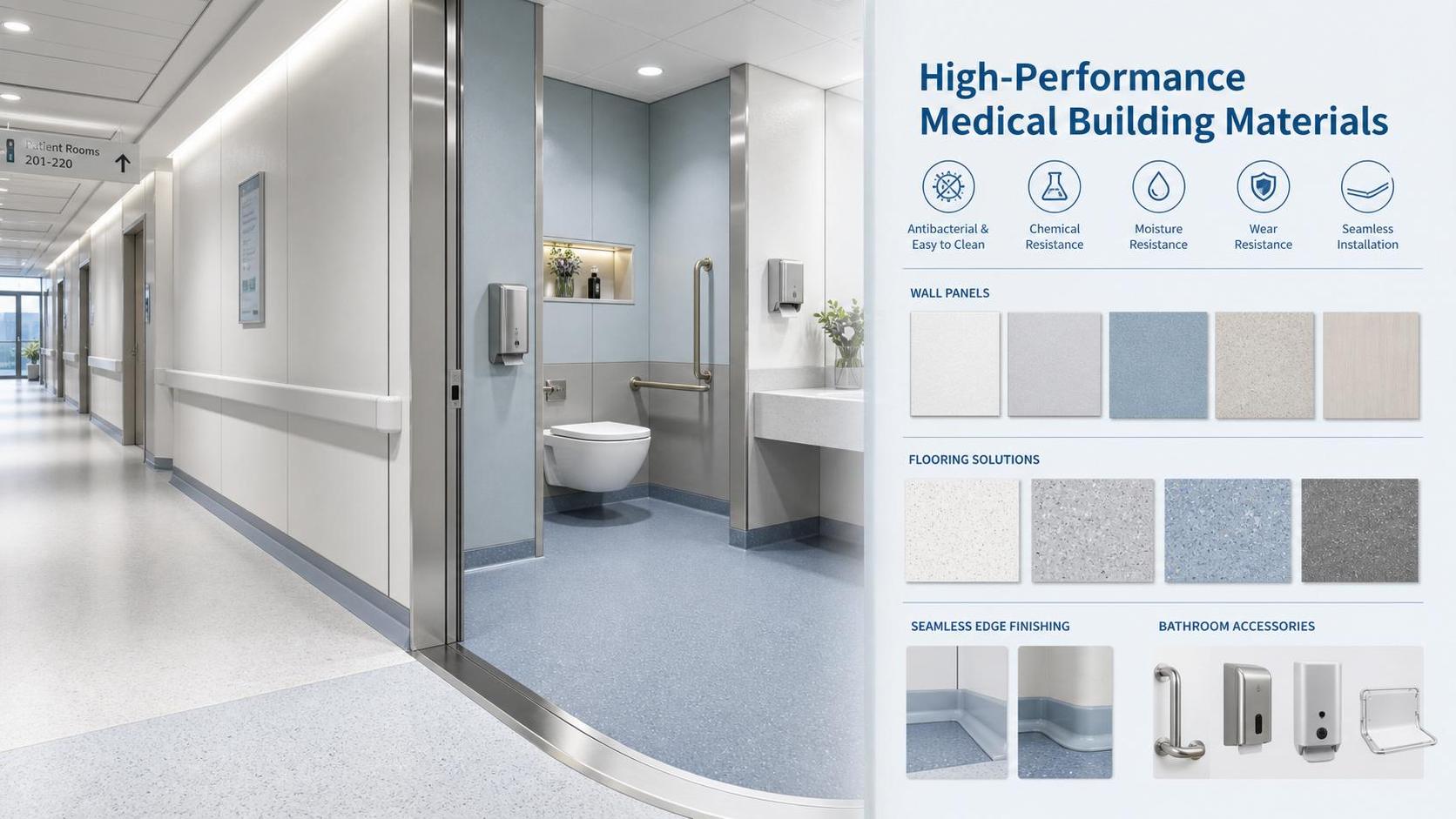
In project material selection for healthcare, the decision rarely ends with appearance or upfront cost. A wall panel, flooring system, sealant, or fixture can influence infection control, cleaning routines, user safety, downtime, and replacement cycles for years.
That is why project material selection for healthcare has become a strategic review point across design, construction, and operations. The most reliable choices support compliance, tolerate aggressive maintenance, and keep performance stable under constant use.
Healthcare projects also sit at the intersection of building science, hygiene, water efficiency, and evolving standards. This broader view matters, especially as GIAM tracks how antibacterial materials, smart sanitary systems, and green construction requirements reshape practical decisions.
Why material decisions carry more risk in healthcare
Hospitals, clinics, diagnostic centers, and long-term care facilities place unusual demands on surfaces and installed systems. Materials are exposed to wheeled traffic, impact, moisture, body fluids, disinfectants, and repeated touch.
In many settings, the material itself becomes part of the safety system. If it traps dirt, absorbs liquids, sheds particles, or breaks down under cleaning chemicals, the failure is operational as much as technical.
Project material selection for healthcare therefore needs a risk-based mindset. The question is not only whether a product meets a specification, but whether it stays fit for purpose after thousands of cleaning cycles.
Start with function, not catalog claims
A common mistake is reviewing materials as isolated products. In practice, performance depends on room type, adjacent systems, traffic pattern, cleaning protocol, and installation quality.
An outpatient waiting area, an operating room, a sterile processing zone, and a patient bathroom do not share the same exposure profile. Even within one facility, the approval logic should change by risk level.
This is where project material selection for healthcare becomes more disciplined. Each material should be checked against intended use, expected contaminants, maintenance method, and likely failure mode.
Core questions before approval
- Will the surface remain intact under the actual cleaning chemicals in use?
- Can joints, corners, and transitions be sealed without creating dirt traps?
- Does the product support slip resistance without making cleaning harder?
- Is there reliable test data, not only marketing language?
- What does maintenance look like after one, three, and five years?
Safety checks that should never be skipped
Compliance remains the first filter. Fire performance, VOC emissions, anti-slip properties, moisture resistance, and local healthcare regulations should be confirmed early, before aesthetic preferences drive the shortlist.
Yet paperwork alone is not enough. The safer approach is to verify whether the certification actually matches the application. A product approved for general commercial use may still fall short in a treatment area.
Touch frequency also matters. Door hardware, rails, counters, and sanitary fittings need attention because wear, contamination, and cleaning intensity are concentrated there.
High-priority safety criteria
Cleanability is a design issue, not only a housekeeping issue
Many maintenance problems start during selection. Textured finishes, deep grout lines, exposed fasteners, and difficult transitions may look manageable on drawings, but they become labor-intensive in daily operation.
For project material selection for healthcare, smooth cleanable surfaces often outperform visually complex ones, especially in critical zones. The same applies to coved skirtings, welded seams, and integrated detailing around sinks and wet areas.
Simple detailing reduces not only cleaning time, but also the chance of inconsistent sanitation. In environments where routines must be repeatable, maintenance-friendly design supports better control.
What to review in wet and sanitary spaces
- Water resistance at penetrations, corners, and floor-to-wall transitions
- Resistance to limescale removers, bleach-based cleaners, and quaternary disinfectants
- Compatibility between substrate, adhesive, membrane, and finish layer
- Ease of access for routine maintenance around fixtures and drains
Durability should be measured in service conditions
A durable material in a showroom may fail in a real corridor or patient bathroom. Healthcare environments apply rolling loads, concentrated impacts, frequent washdowns, and constant occupancy pressure.
This is why project material selection for healthcare should examine abrasion data, indentation resistance, edge stability, and repairability. Replacement cost includes disruption, infection control precautions, and lost room availability.
It is often better to choose a slightly higher-cost material with predictable upkeep than a cheaper option requiring early patching. Lifecycle performance usually reveals the real financial picture.
Different zones require different approval logic
Material review becomes clearer when spaces are grouped by risk and maintenance intensity. That structure helps teams avoid over-specifying low-risk rooms and under-specifying critical ones.
What current industry signals are changing the checklist
The checklist is no longer limited to basic hygiene and durability. Energy standards, water-saving targets, tariff shifts, and procurement pressure now affect material choice and sourcing risk.
GIAM’s sector intelligence is useful here because it connects materials, sanitary spaces, and smart building systems through one decision lens. That perspective helps identify where a technical choice may also influence maintenance economics or sustainability reporting.
Antibacterial claims are another area needing caution. Some products add value, but performance should be reviewed alongside cleanability, wear behavior, and compliance evidence. A claim is not a substitute for a sound surface system.
A practical review method for project teams
A useful way to manage project material selection for healthcare is to score each candidate across five filters: compliance, hygiene performance, maintenance burden, durability, and total service-life cost.
Mock-ups and sample testing add value when materials will face harsh chemicals or unusual traffic. It is easier to reject a weak finish before installation than after operational complaints begin.
Documentation should also be consistent. Technical data sheets, cleaning guidance, certification records, and compatibility notes need to align. Gaps between those documents often reveal hidden risk.
Useful next checks
- Map every material to the room’s real exposure conditions
- Confirm cleaning chemicals against manufacturer resistance data
- Review detail drawings for seams, corners, and penetrations
- Compare replacement difficulty, not only purchase cost
- Track standards and market shifts that may affect future approvals
Strong project material selection for healthcare is built on careful comparison, not assumptions. When safety, maintenance, and long-term value are evaluated together, specifications become more resilient and easier to defend.
The next step is usually straightforward: refine the shortlist by zone, test high-risk materials against real cleaning and use conditions, and use current intelligence to keep each approval grounded in evidence.
Industry Briefing
Get the top 5 industry headlines delivered to your inbox every morning.