
Smart Home Construction: Key Systems, Budget Factors, and Planning Mistakes to Avoid
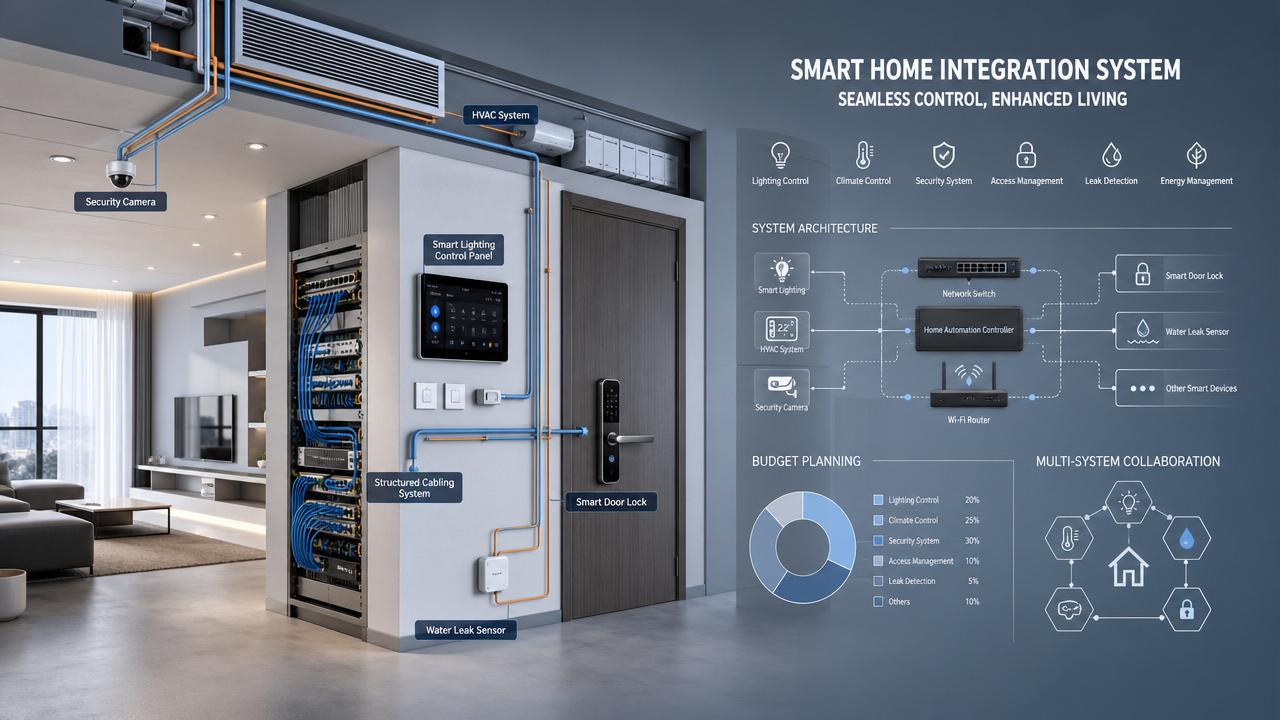
Smart Home Construction: Key Systems, Budget Factors, and Planning Mistakes to Avoid
Smart home construction is no longer just a design upgrade. It is a project decision that shapes performance, cost, safety, and long-term value.
In both residential and mixed-use projects, connected systems now affect mechanical planning, electrical design, network reliability, and maintenance strategy.
That also means smart home construction should be treated as infrastructure, not decoration. When teams plan late, costs rise and integration quality drops fast.
A stronger approach starts with system priorities, realistic budget logic, and a clear view of the planning mistakes that usually create delays, change orders, and user frustration.
Why Smart Home Construction Starts with System Architecture
The most successful smart home construction projects begin with architecture decisions, not device shopping lists.
From recent market shifts, the clearer signal is this: owners want fewer isolated gadgets and more coordinated building intelligence.
That requires teams to define control layers, protocol compatibility, data flow, and future expansion before rough-in begins.
In practical delivery terms, smart home construction works best when core systems are grouped into functional categories.
Core systems that deserve early planning
- Network backbone, including structured cabling, Wi-Fi coverage, router placement, and secure remote access.
- Lighting control, such as scene settings, dimming logic, occupancy response, and daylight integration.
- HVAC automation, covering thermostats, zoning, air quality sensors, and energy optimization.
- Security and access, including cameras, smart locks, alarms, video intercoms, and visitor management.
- Water-related systems, such as leak detection, pump monitoring, shutoff valves, and usage tracking.
- Kitchen and bath intelligence, where connected appliances, hygiene controls, and efficient fixtures add user value.
When these systems are planned together, smart home construction becomes easier to install, easier to commission, and much easier to operate.
The Key Budget Factors Behind Smart Home Construction
Budget control in smart home construction is often misunderstood. Hardware is only one part of the real project cost.
The bigger cost drivers usually come from infrastructure readiness, system coordination, brand compatibility, and lifecycle support.
What usually shapes the budget most
- Project scale and room count. More zones mean more sensors, controls, testing points, and user scenarios.
- Wiring strategy. New construction is easier. Retrofit smart home construction often needs wall opening and route changes.
- System depth. Basic control costs less than integrated lighting, HVAC, security, audio, and water management.
- Platform choice. Open ecosystems may reduce lock-in, while premium proprietary platforms may simplify support.
- Commissioning and programming. Scenes, automations, permissions, and interface setup require skilled labor.
- After-sales service. Maintenance contracts, firmware updates, and replacement planning protect long-term performance.
A common mistake is pricing smart home construction by device count alone. That looks simple, but it hides integration effort.
A better model separates capital cost from operating impact. This helps teams compare upfront savings with future reliability and energy benefits.
In other words, good smart home construction budgeting is not about buying the cheapest package. It is about reducing expensive surprises later.
Planning Mistakes That Damage Smart Home Construction Projects
Most smart home construction failures are planning failures first. The equipment often gets blamed, but the root cause appears much earlier.
Mistake 1: Bringing in smart systems too late
If integration starts after electrical, HVAC, and interior packages are fixed, options become limited and costs jump.
This is one of the most expensive smart home construction mistakes because rework touches multiple trades at once.
Mistake 2: Ignoring network quality
A premium control system still fails if the network is weak. Dead zones, unstable handoff, and poor segmentation break the experience.
In actual operations, network design is the hidden foundation of smart home construction performance.
Mistake 3: Overcomplicating automation
More automation is not always better. If logic chains are too complex, users disable them and service calls increase.
Good smart home construction favors intuitive scenes, clear overrides, and stable daily routines.
Mistake 4: Choosing products without lifecycle support
Some products look competitive at bid stage but create future problems through weak firmware support or uncertain spare supply.
This matters even more in smart home construction for premium residences, serviced apartments, and branded property assets.
Mistake 5: Forgetting user handover
A well-built system can still disappoint if handover is rushed. Users need training, documentation, and clear support channels.
This final step often decides whether smart home construction is seen as a premium solution or an operational burden.
A Practical Smart Home Construction Planning Framework
A practical framework helps turn smart home construction from a risky upgrade into a controlled delivery process.
Step 1: Define use cases first
Start with real scenarios. Night arrival, away mode, leak protection, energy saving, and visitor access are better than abstract feature lists.
Step 2: Map every trade interface
Document where smart home construction meets electrical, plumbing, HVAC, joinery, security, and finishing teams.
Step 3: Build a compatibility matrix
List brands, protocols, gateways, power needs, control logic, and software dependencies before procurement is locked.
Step 4: Set testing milestones
Do not wait for final handover. Test devices, scenes, coverage, failover, and user interface responses in stages.
Step 5: Plan operations from day one
Include update procedures, service ownership, fault escalation, and replacement timelines in the original smart home construction scope.
- Keep automation useful, not excessive.
- Specify expansion capacity for future devices.
- Protect cybersecurity through segmented networks and controlled permissions.
- Align sustainable materials and water-saving systems with smart controls for stronger building value.
This kind of planning reflects the wider direction of the sector, where intelligent control, efficient water use, safer materials, and connected living are increasingly linked.
How Better Decisions Create Better Smart Home Construction Outcomes
Smart home construction succeeds when teams treat it as part of spatial strategy, not a late technology layer.
The strongest results come from early system architecture, disciplined budgeting, realistic coordination, and simple, reliable user experiences.
For projects seeking long-term asset quality, the real advantage of smart home construction is not novelty. It is control, efficiency, and operational confidence.
That is also where informed market intelligence matters. Better material choices, stronger water strategies, and compatible smart systems create more resilient spaces.
If the goal is to avoid rework, protect budgets, and deliver future-ready environments, smart home construction should be planned early, specified clearly, and managed as a core project system.
Industry Briefing
Get the top 5 industry headlines delivered to your inbox every morning.