
Water-Efficient Construction in the Middle East: Which Solutions Fit Residential Projects?
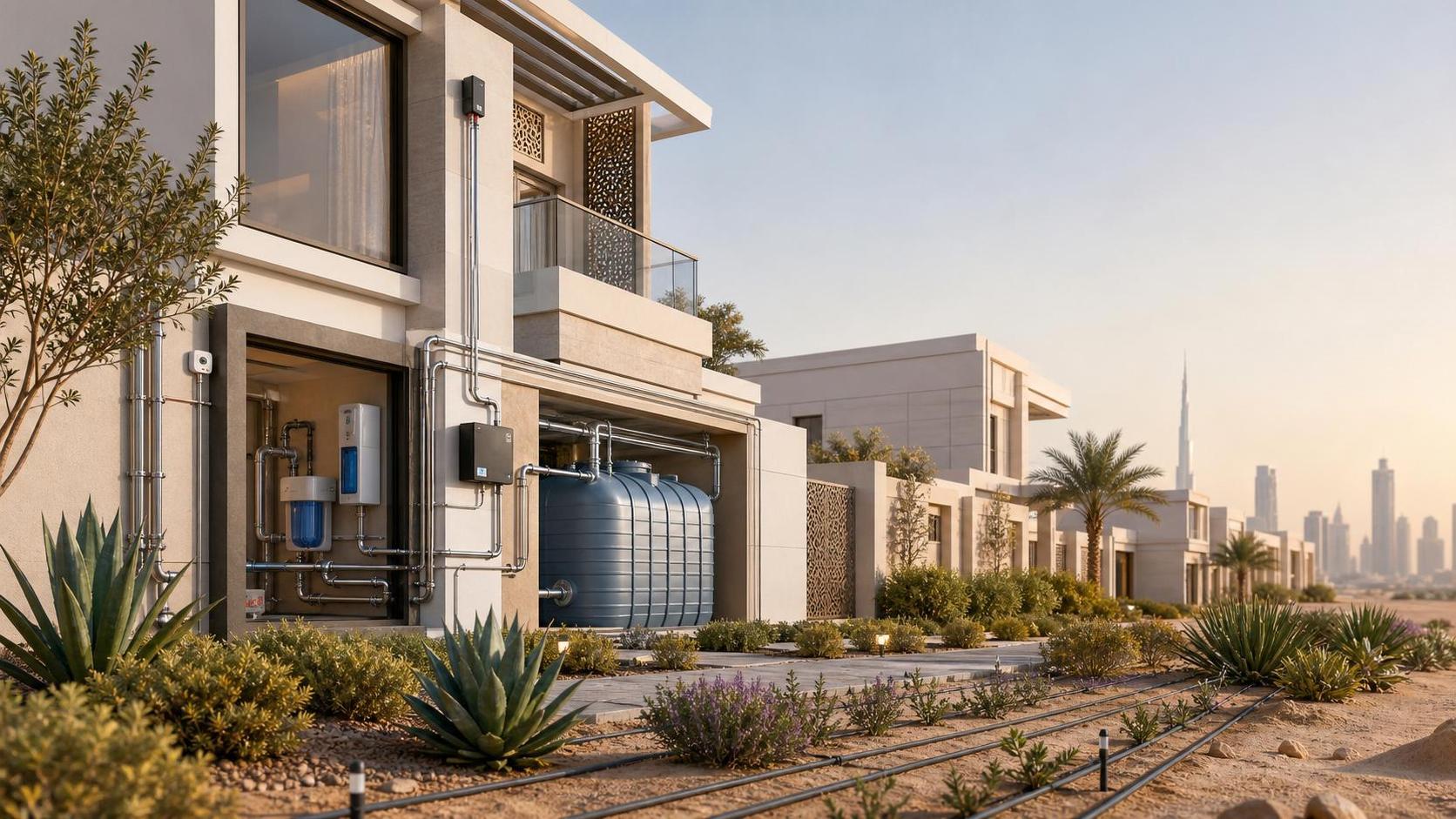
Water-Efficient Construction in the Middle East: Which Solutions Fit Residential Projects?
Water-efficient construction Middle East strategies are moving from optional upgrades to core project criteria.
Residential schemes now face tighter water stress, hotter climates, and stronger buyer expectations around comfort and operating cost.
That changes how technical teams should assess plumbing, fittings, cooling demand, landscape systems, and material durability.
The main question is not whether to improve water performance.
It is which solutions actually hold up in Middle Eastern housing, under real pressure, real maintenance patterns, and real budgets.
From recent project shifts, the stronger signal is clear.
Water-efficient construction Middle East planning works best when it combines fixture efficiency, leak control, reuse systems, and climate-sensitive design.
Used together, these measures reduce water demand without creating service headaches or poor user experience.
Why residential projects need a different solution set
Residential buildings in the region do not consume water in the same way as hotels, malls, or hospitals.
Peak use is concentrated in kitchens, bathrooms, cleaning routines, and outdoor irrigation.
In villas and low-rise compounds, landscaping can quietly become the largest avoidable load.
In apartments, inefficient fixtures and hidden leaks usually create the bigger problem.
This means water-efficient construction Middle East decisions should start with end-use mapping, not product catalogs.
Another regional factor is water quality.
High salinity, scaling, and heat can shorten the life of valves, aerators, seals, and meters.
So the best-fit solution is rarely the lowest-flow product alone. It is the one that maintains performance over time.
The most practical water-saving solutions for regional housing
For most residential developments, five solution groups deliver the strongest balance of savings, comfort, and maintainability.
1. High-efficiency sanitary fixtures
Low-flow faucets, dual-flush WCs, pressure-managed showerheads, and efficient mixers remain the fastest route to direct savings.
Still, regional fit matters more than headline numbers.
Products should be tested for pressure variation, easy cleaning, anti-clog behavior, and spare-part availability.
Water-efficient construction Middle East practice favors fittings that save water without weak spray patterns or flushing failures.
2. Leak detection and pressure control
In many housing projects, hidden leakage cancels out gains from premium fixtures.
Pressure-reducing valves, zoned metering, and smart leak alerts usually offer very strong payback.
This is especially true in towers, large villas, and mixed-density communities.
3. Greywater reuse for non-potable demand
Greywater from showers and basins can support irrigation or toilet flushing when local regulations and treatment design allow it.
This approach suits compounds, villa clusters, and mid-rise developments with stable occupancy patterns.
It is less attractive where maintenance responsibility is unclear.
4. Climate-appropriate landscaping
Outdoor water demand often gets underestimated during design review.
Native or adaptive planting, drip irrigation, soil moisture sensors, and shaded hardscape zones can cut consumption sharply.
For water-efficient construction Middle East housing, landscape strategy is often a core engineering issue, not a decorative afterthought.
5. Hot water system optimization
Long pipe runs waste both water and energy while users wait for delivery.
Compact layouts, insulated distribution, demand-based recirculation, and point-of-use heaters can reduce this loss.
This solution is highly relevant in larger homes and premium apartments with multiple wet areas.
How to match the right system to the right housing type
A useful evaluation framework starts with housing form, occupancy profile, and operating responsibility.
That keeps water-efficient construction Middle East planning grounded in actual use conditions.
In practice, simple systems usually outperform complex systems that no one wants to maintain.
That is why solution fit should always include the ownership and FM model.
Material and component choices that support long-term performance
Water-efficient construction Middle East success depends heavily on material resilience.
Aggressive water conditions and high service temperatures can undermine efficient systems faster than expected.
Technical review should check more than flow rates.
It should also assess corrosion resistance, scale tolerance, seal life, access for servicing, and filter replacement intervals.
- Choose cartridge and valve materials proven under hard-water conditions.
- Verify spare-part support in the target market, not only regional distributor claims.
- Prefer accessible inspection points for meters, filters, and pressure controls.
- Avoid designs that require specialist intervention for routine cleaning.
These details look small during specification, but they decide whether projected savings survive the first years of operation.
Common evaluation mistakes in water-efficient construction Middle East projects
Several mistakes appear repeatedly in residential reviews across the region.
They are usually not dramatic design failures.
They are smaller judgment errors that compound later.
- Selecting ultra-low-flow products without pressure and comfort testing.
- Treating irrigation as a landscape issue instead of a water infrastructure issue.
- Approving greywater systems without a clear maintenance owner.
- Ignoring hot water waiting time and dead-leg losses.
- Using first-cost comparison without lifecycle replacement and leakage risk.
More clearly now, buyers and regulators are looking beyond brochure efficiency claims.
They want performance that remains stable in occupied buildings, during long summers, under uneven user behavior.
A practical selection checklist for decision-making
To make water-efficient construction Middle East choices more reliable, a short decision checklist helps.
- Map water use by fixtures, irrigation, cleaning, and hot water losses.
- Match system complexity to the operating capability of owners and FM teams.
- Check local code acceptance for reuse, metering, and non-potable networks.
- Review durability under hard water, heat, and pressure fluctuation.
- Model lifecycle cost, including service parts and likely leakage reduction.
- Validate resident comfort before full specification lock-in.
This kind of review keeps selection disciplined and commercially realistic.
It also aligns with the broader market direction tracked by GIAM.
Across building materials, sanitary spaces, and smart kitchen and bath systems, the strongest value now comes from durable intelligence.
That means combining material science, hydraulic logic, and usable technology in one specification path.
For residential work, the best water-efficient construction Middle East approach is usually layered rather than singular.
Start with efficient fixtures and pressure control.
Then add leak visibility, irrigation discipline, and reuse where maintenance conditions support it.
That sequence gives residential projects a better chance of meeting water targets without sacrificing durability or daily comfort.
When evaluating the next housing scheme, the most effective move is to test every proposed measure against regional climate, service reality, and lifecycle performance together.
Industry Briefing
Get the top 5 industry headlines delivered to your inbox every morning.