
What industrial design intelligence improves product value?
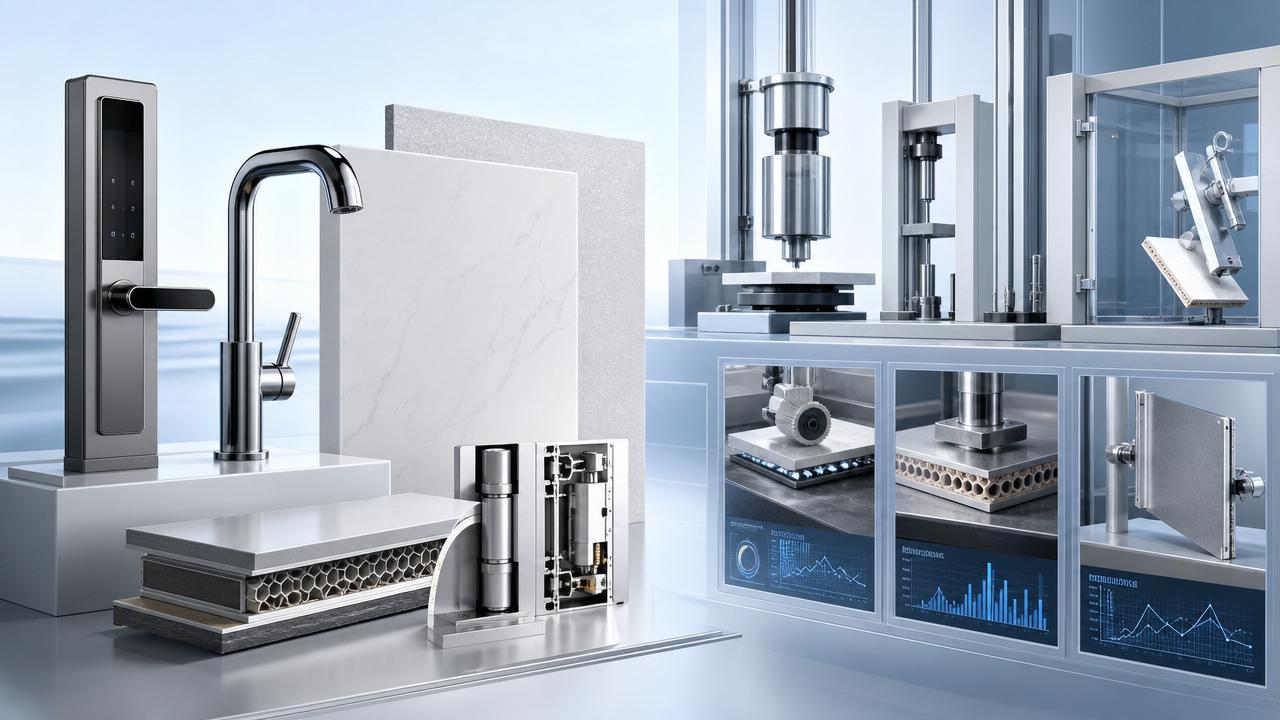
For technical evaluators, industrial design intelligence improves product value when it turns design decisions into measurable outcomes: better performance, lower lifecycle risk, faster manufacturability, stronger compliance readiness, and clearer market fit. In building materials, sanitary systems, and smart kitchen and bath products, its value is not theoretical. It appears in how a product survives use, integrates with systems, reduces cost-to-serve, and sustains premium positioning over time.
In practice, the core question is not whether design matters, but which kinds of design intelligence create value that can be verified. Technical evaluators usually need evidence, not branding language. They want to know what signals to assess, how design choices affect engineering and operations, and where product value becomes visible across durability, usability, compliance, and commercial performance.
That is the real search intent behind “industrial design intelligence.” Readers are looking for a practical framework to judge how design insight improves product value beyond appearance. They want to connect industrial design intelligence with material selection, manufacturing constraints, installation logic, maintenance requirements, user behavior, and market expectations. The strongest article, therefore, should focus less on broad creativity and more on decision criteria, evaluation methods, and high-impact use cases.
What technical evaluators really need to know about industrial design intelligence
Technical evaluators care about whether design intelligence changes product outcomes in measurable ways. Their concerns usually fall into five areas: functional performance, production feasibility, compliance exposure, lifecycle cost, and customer acceptance. If industrial design intelligence improves these areas, it improves product value. If it only changes styling, the value may be superficial.
Industrial design intelligence is best understood as the structured use of product, user, engineering, material, and market insight during design development. It combines data from testing, usage scenarios, manufacturing processes, regulations, and competitive benchmarking. The result is not just a better-looking product, but a product that performs better within real constraints.
For evaluators in construction-related industries, this matters because product value is often created at the intersection of technical reliability and spatial experience. A faucet, ceramic surface, cabinet system, smart lock, shower assembly, or ventilation-integrated appliance must satisfy both performance expectations and architectural integration demands. Industrial design intelligence improves value when it helps a product succeed in both dimensions.
How industrial design intelligence improves functional product value
The first and most direct contribution is improved functional performance. Industrial design intelligence helps teams understand how users interact with a product in real environments, not idealized ones. That means identifying stress points, misuse patterns, ergonomic failures, cleaning difficulties, moisture exposure, installation errors, and maintenance barriers before the product reaches the market.
In sanitary spaces and smart kitchen systems, function depends heavily on interface clarity and physical logic. A well-designed control surface reduces user error. A better valve housing layout can improve service access. A carefully shaped sink or drain area can reduce splash, residue buildup, and cleaning time. These are design outcomes, but they also create measurable technical value.
For technical evaluators, the key is to ask whether design intelligence has translated into reduced failure probability, improved test performance, or more stable user interaction. Products gain value when fewer variables are left to chance. Good design intelligence narrows the gap between intended use and actual use.
This is especially important in products that combine hardware and digital features. Smart locks, intelligent toilets, touchless fixtures, and connected kitchen devices depend on interface consistency. If users cannot intuitively understand the product, functional quality degrades even when the engineering is sound. Industrial design intelligence improves value by making technical capability accessible and reliable in daily operation.
Why material and manufacturing intelligence are central to design value
Another major source of product value comes from the way industrial design intelligence aligns materials and manufacturing methods with the intended use case. Evaluators often see value destroyed when a design is attractive but difficult to manufacture, sensitive to tolerances, vulnerable to wear, or incompatible with efficient assembly.
Design intelligence improves product value by selecting materials that fit the environment, the process, and the price position. In building materials and sanitary systems, that may involve anti-bacterial surfaces, corrosion-resistant alloys, engineered ceramics, composite panels, or water-resistant seal systems. The point is not to use advanced materials for their own sake, but to match performance properties to commercial and technical requirements.
Manufacturing intelligence matters equally. A product designed with assembly simplicity, tooling realism, and quality control in mind will usually achieve higher consistency and lower defect rates. Technical evaluators should pay attention to whether the design reduces part count, simplifies joining methods, improves tolerance management, or lowers rework risk. These factors directly affect product value even when customers never see them.
In premium architectural and interior markets, the best products often look refined because they were intelligently designed for process stability. Surface quality, fit, actuation feel, acoustic performance, and installation precision all depend on design decisions made upstream. Industrial design intelligence improves value when those upstream decisions support downstream reliability.
How design intelligence strengthens compliance and risk control
In many sectors, especially those tied to buildings and infrastructure, product value is inseparable from regulatory readiness. Industrial design intelligence contributes by anticipating compliance issues early rather than treating them as final-stage obstacles. This reduces redesign cycles, certification delays, and market entry risk.
For technical evaluators, this is a high-priority area. A product may appear innovative, but if its materials, electrical layout, water efficiency profile, fire behavior, hygiene performance, accessibility dimensions, or safety interfaces create compliance friction, its true value declines. Design intelligence helps teams integrate these constraints into the concept stage.
This is particularly relevant in globalized product development. Standards differ across regions, and products entering multiple markets must often satisfy overlapping or conflicting requirements. Industrial design intelligence improves value by creating adaptable design architectures, modular compliance strategies, and clearer documentation pathways. That reduces the cost of scaling a product internationally.
Risk control also extends beyond formal regulations. It includes service safety, installation mistakes, warranty exposure, and misuse scenarios. A technically intelligent design can reduce sharp edges, leakage points, contamination risks, inaccessible maintenance zones, or poor ventilation effects. These improvements protect brand reputation while increasing the product’s operational value.
The commercial value of industrial design intelligence in competitive markets
Technical evaluators are not always asked to judge market strategy, but their assessments often influence commercial outcomes. Industrial design intelligence improves product value because it helps products occupy stronger positions in competitive categories. It creates differentiation that is harder to copy than surface styling alone.
In sectors like premium fixtures, building materials, and smart kitchen and bath systems, customers increasingly compare products across design integration, sustainability claims, interface quality, ease of installation, and durability expectations. A product that combines technical strength with superior user fit can justify premium pricing more effectively than a product competing only on specification sheets.
Design intelligence also improves value by reducing friction for channel partners. Installers prefer products that are easier to fit correctly. Developers prefer products with fewer callback risks. Distributors prefer products with clearer positioning and lower return rates. Facility operators prefer products that simplify cleaning, replacement, and maintenance. These stakeholders all contribute to product value, even if they are not the end buyer.
For technical evaluators, this means product value should be viewed as ecosystem value. Industrial design intelligence is commercially powerful when it improves not only end-user satisfaction but also procurement confidence, project suitability, and service efficiency throughout the value chain.
How to evaluate whether industrial design intelligence is actually creating value
To assess the impact of industrial design intelligence, evaluators need a structured framework. One useful starting point is to review value creation across six dimensions: performance, usability, manufacturability, compliance, maintainability, and market relevance. If design choices produce gains in several of these areas, the product is likely benefiting from real design intelligence.
Begin with performance evidence. Look for test data, durability metrics, water or energy efficiency outcomes, tolerance stability, and field reliability indicators. Then examine usability evidence, such as ergonomic studies, installation feedback, interface clarity, or observed reduction in user error. Without evidence in these two areas, many design claims remain weak.
Next, review production and lifecycle indicators. Has the design reduced assembly complexity or service time? Does it improve spare part access, cleaning efficiency, or replacement logic? Are there fewer materials, fewer failure interfaces, or better standardization across components? Value increases when design intelligence lowers hidden operational costs.
Finally, examine market fit. Does the design support current architectural trends, sustainability targets, hygiene expectations, or smart-home integration patterns? Technical evaluators should not treat these as purely commercial topics. They are technical-commercial alignment issues, and they often determine whether a product can maintain relevance over its lifecycle.
Where industrial design intelligence matters most in building and smart space products
Its value is especially clear in products exposed to frequent human interaction, environmental stress, and system integration pressure. This includes sanitary hardware, faucets, flush systems, basins, shower components, cabinets, panels, smart locks, appliance interfaces, and modular kitchen systems. In these categories, product value depends on more than raw performance.
For example, a water-saving fixture gains more value when the flow-control design also preserves comfort, reduces noise, simplifies maintenance, and supports premium aesthetics. A smart lock becomes more valuable when its physical hardware, digital interface, battery access, and door compatibility are all intelligently resolved. A ceramic or composite surface gains value when its finish, cleanability, stain resistance, and fabrication limits are designed together.
These examples show why industrial design intelligence is increasingly strategic in the evolution of residential and commercial space systems. It helps products respond to long-term trends such as hygiene, sustainability, compact urban living, inclusive design, and connected environments. Evaluators who understand this can judge value more accurately and earlier in development.
Common mistakes when judging design-driven value
One common mistake is to treat industrial design as a late-stage styling layer. When that happens, evaluators may underestimate how deeply design intelligence influences engineering feasibility, maintenance logic, and compliance outcomes. Valuable design work often becomes invisible because it prevents problems before they emerge.
Another mistake is to focus too narrowly on launch specifications. Some of the strongest value effects appear later, in lower returns, smoother installation, fewer service issues, longer usable life, and better customer retention. Industrial design intelligence often creates value across the full product lifecycle, not just at the point of sale.
A third mistake is failing to distinguish novelty from intelligence. Not every visually distinctive product is intelligently designed. True industrial design intelligence creates coherent alignment among user needs, technical constraints, production realities, and strategic positioning. Evaluators should reward that coherence rather than visual difference alone.
Conclusion: product value rises when design intelligence becomes measurable
Industrial design intelligence improves product value when it transforms design from an aesthetic exercise into a disciplined system of technical and market decision-making. For technical evaluators, its importance lies in its ability to improve functional reliability, material suitability, manufacturing quality, compliance readiness, serviceability, and competitive positioning at the same time.
In industries tied to building materials and smart space systems, this intelligence is increasingly essential because products must satisfy users, installers, regulators, and commercial buyers together. The most valuable products are rarely those with the most features. They are the ones whose design intelligence reduces friction across the entire lifecycle.
That is the clearest judgment to carry forward: industrial design intelligence creates real product value when its benefits can be verified in performance, process, risk reduction, and market fit. For technical evaluators, that makes it not a soft attribute, but a practical and strategic assessment category.
Industry Briefing
Get the top 5 industry headlines delivered to your inbox every morning.