
Are prefab green building materials worth the switch?
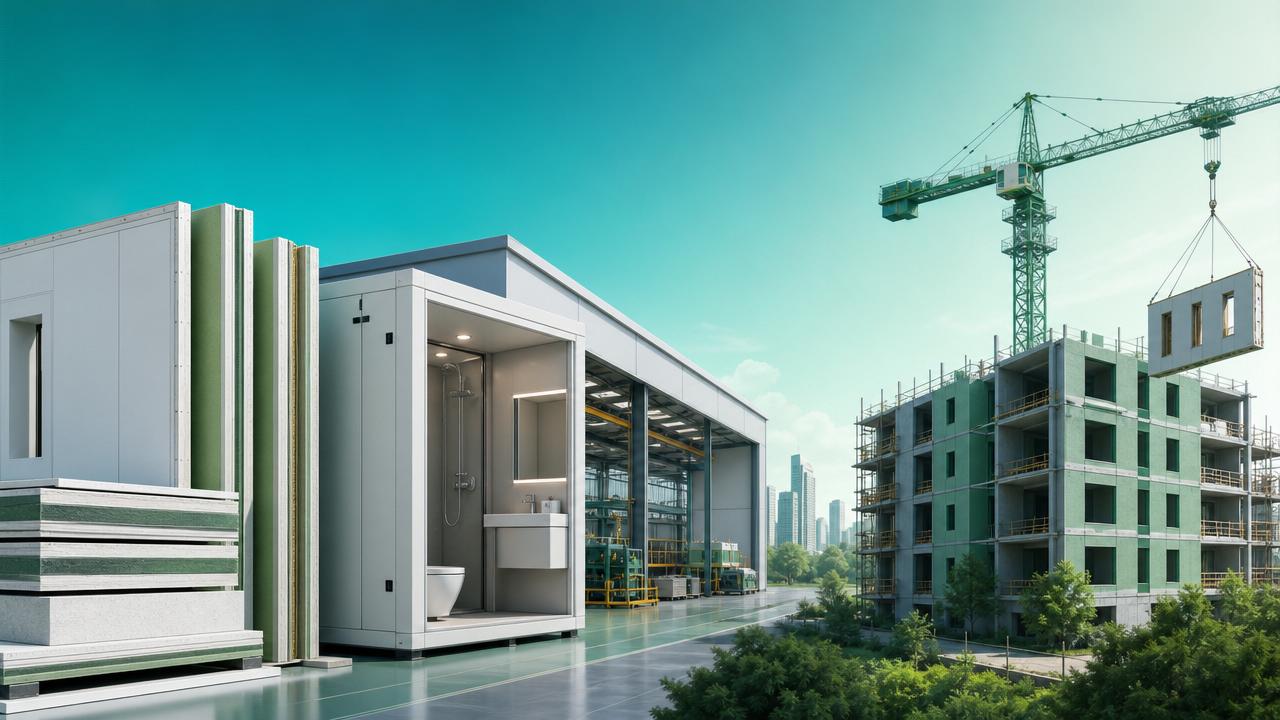
As procurement teams face tighter carbon targets, volatile material costs, and rising performance expectations, the shift toward prefab green building materials is becoming a strategic decision rather than a trend. These materials promise faster installation, reduced waste, and more predictable quality across residential and commercial projects. But are they truly worth the switch for buyers balancing budget, compliance, and long-term asset value? This article examines the practical benefits, sourcing considerations, and market signals shaping smarter purchasing decisions.
For purchasing managers, the question is not only whether prefab green building materials look sustainable on paper. The real issue is whether they can reduce procurement risk across 3 critical areas: cost control, schedule certainty, and regulatory alignment. In modern construction supply chains, a material decision can influence labor planning, site waste, transport frequency, installation accuracy, and the future marketability of the asset.
What Makes Prefab Green Building Materials Different?
Prefab green building materials are factory-produced components or material systems designed to reduce environmental impact while improving construction efficiency. They may include engineered wall panels, modular bathroom pods, low-carbon insulation boards, recycled-content flooring, precast façade elements, structural timber systems, or ready-to-install interior assemblies.
Unlike conventional materials delivered as separate units for on-site assembly, prefabricated systems move a larger portion of manufacturing into controlled production environments. This can reduce dimensional variation to ranges such as ±1 mm to ±3 mm, depending on material type, tooling, and supplier quality control.
The procurement value behind factory-controlled production
Buyers often focus on unit price, but prefab procurement requires a broader cost model. A panel that costs 8% more per square meter may still be economical if it reduces on-site labor, rework, waste disposal, and installation time. In many projects, the purchasing decision should compare installed cost rather than invoice price alone.
Factory-controlled production also supports batch traceability. For procurement teams managing multi-site residential, hospitality, healthcare, or commercial programs, consistent specification control across 50, 500, or 5,000 units can be more valuable than a small material discount.
Typical categories buyers should evaluate
- Structural systems: engineered timber, recycled steel frames, precast low-carbon concrete, and hybrid assemblies.
- Envelope systems: insulated panels, façade modules, vapor-control layers, and thermal bridge reduction components.
- Interior systems: modular partitions, acoustic panels, sanitary pods, raised floors, and low-emission finishing boards.
- Smart space integration: pre-routed plumbing, sensor-ready kitchens, smart locks, water-saving fixtures, and connected bathroom modules.
For platforms such as GIAM, this category is strategically important because it links material science, sanitary space design, digital interiors, and commercial building intelligence. Procurement teams increasingly need that cross-disciplinary view before approving large-volume sourcing decisions.
Cost, Carbon, and Schedule: Where the Business Case Works
The strongest argument for prefab green building materials is usually not a single benefit. It is the combined effect of lower site disruption, shorter installation windows, improved waste control, and better compliance documentation. For projects under carbon targets or green building certification pathways, these factors can materially influence procurement scoring.
A practical purchasing review should compare at least 5 dimensions: unit cost, installed cost, embodied carbon profile, lead time, and failure risk. Each dimension affects a different stakeholder, from finance and site management to design consultants and facility operators.
The table below outlines how prefab green building materials compare with conventional site-assembled alternatives in common procurement scenarios.
The table shows why the switch is rarely judged by purchase price alone. Prefab green building materials tend to create value when design is stable, project repetition is high, and installation efficiency is measurable through a clear site program.
When the switch is most financially defensible
The business case is strongest in repeatable layouts, such as hotels, student housing, hospitals, senior living, apartment towers, retail chains, and standardized commercial offices. In these settings, one approved component can be repeated across dozens or hundreds of rooms.
Projects with tight site conditions also benefit. Where urban logistics allow only limited deliveries per day, prefabricated assemblies can reduce handling cycles. If a site saves 1–2 delivery movements per floor, the operational advantage may offset higher initial material costs.
Cost items buyers should not overlook
- Engineering coordination before production, including shop drawings and interface details.
- Mock-up validation, typically requiring 1 full module or a 3–5 square meter sample area.
- Transport protection, especially for finished surfaces, glazed units, and sanitary modules.
- Site lifting equipment, access planning, and temporary storage controls.
- Replacement strategy for damaged or non-conforming components during installation.
How Procurement Teams Should Evaluate Suppliers
Selecting prefab green building materials requires a more technical procurement process than buying standard boards, tiles, fixtures, or loose components. The supplier is not only delivering a product; it is contributing to the building’s assembly logic, compliance trail, and long-term maintenance profile.
A disciplined sourcing process should include at least 6 checkpoints: specification alignment, factory capability, environmental evidence, tolerance control, logistics planning, and after-sales support. Buyers should document these checkpoints before price negotiation begins.
Technical documents that should be requested early
Early document review helps prevent costly substitutions later. For a commercial project, procurement teams should request product data sheets, fire performance classification, acoustic ratings where relevant, moisture resistance data, installation manuals, maintenance requirements, and applicable environmental declarations.
If the material integrates sanitary systems, smart locks, kitchen appliances, or water-saving fixtures, the review should also include pressure ratings, electrical interfaces, software compatibility, access panels, spare parts availability, and service response procedures.
The following checklist helps purchasing teams compare suppliers on practical, project-facing criteria rather than generic sustainability claims.
The key conclusion is simple: supplier selection must move beyond quotation comparison. A reliable provider of prefab green building materials should demonstrate manufacturing discipline, transparent environmental data, and practical support throughout installation and operation.
Questions purchasing managers should ask before awarding an order
- What is the minimum order quantity, and can it align with phased construction packages?
- How are color differences, surface defects, and dimensional deviations classified?
- What happens if site conditions differ from approved drawings by 5 mm or more?
- Are packaging materials reusable, recyclable, or returnable under the supply agreement?
- Can the supplier provide 2 alternative material options if regulations or tariffs change?
Compliance, Standards, and Risk Control
The switch to prefab green building materials can improve compliance readiness, but only when documentation is managed correctly. Green claims, fire performance, structural behavior, moisture resistance, acoustic ratings, and indoor air quality data must match the project jurisdiction and intended use.
Procurement teams should avoid assuming that one certificate applies globally. A material accepted for one residential market may require additional testing for a healthcare facility, high-rise building, or commercial kitchen area. Local code review should occur before purchase order release.
Common risk areas in green prefab sourcing
The most common issues are not caused by the concept of prefabrication itself. They usually arise from weak interface management, incomplete drawings, unverified substitutions, or logistics planning that does not reflect real site constraints.
- Specification drift: approved materials are replaced without equivalent testing or project approval.
- Interface conflict: panels, pipes, ducts, tiles, smart devices, or fixtures are not coordinated early.
- Moisture exposure: components are stored on site for more than 7–14 days without protection.
- Transport damage: finished surfaces are not protected against vibration, compression, or edge impact.
- Documentation gaps: carbon, fire, acoustic, or hygiene data cannot be traced to the delivered batch.
A 5-step control process for buyers
A reliable procurement workflow should start before tender release and continue through final handover. Buyers can use a 5-step process: define performance criteria, prequalify suppliers, validate samples, lock production drawings, and verify delivered batches against approved records.
For larger projects, procurement teams should schedule at least 2 review gates: one before manufacturing and one before bulk shipment. These gates reduce the chance of receiving materials that are technically compliant but operationally unsuitable.
Implementation: From Pilot Purchase to Full Project Rollout
The safest way to adopt prefab green building materials is not to convert every package at once. A staged rollout lets buyers evaluate supplier performance, site readiness, installation complexity, and user feedback before committing to full-scale procurement.
For many organizations, a pilot zone covering 5%–10% of the total project area is enough to identify interface problems. This approach is especially useful for bathroom pods, façade modules, interior wall systems, and prefinished kitchen or bath assemblies.
Recommended rollout sequence
- Map the project’s repeatable areas, such as rooms, corridors, wet zones, or façade grids.
- Select 1–3 material systems where repetition and installation savings are most visible.
- Conduct a mock-up review with procurement, design, engineering, and site teams present.
- Confirm lead time, packaging, delivery sequence, and replacement procedures in writing.
- Track installation time, defect rate, waste volume, and crew feedback during the pilot.
- Approve full rollout only after performance, documentation, and logistics meet project thresholds.
A pilot should be measured with practical indicators. Examples include installation minutes per unit, damage rate per shipment, number of non-conformance reports, packaging waste per delivery, and service response time within 24–72 hours.
Where GIAM’s intelligence approach adds value
GIAM’s role as an intelligence portal is relevant because procurement teams are not buying materials in isolation. They are responding to changing energy-saving standards, tariff movements, urbanization demand, water-saving technologies, antibacterial surfaces, and smart interior systems.
By connecting building materials, sanitary spaces, and smart kitchen and bath systems, GIAM helps buyers interpret not only what is available, but which material choices are likely to remain competitive over a 5-year to 10-year asset cycle.
Are They Worth the Switch for Procurement Teams?
Prefab green building materials are worth serious consideration when a project needs predictable quality, faster installation, reduced waste, and clearer environmental documentation. They are especially relevant for repeatable commercial and residential programs where standardized details can be replicated many times.
However, they are not automatically the right choice for every project. Highly customized designs, unstable specifications, limited site access, or uncertain approval pathways can reduce the expected benefits. Buyers should treat prefabrication as a strategic sourcing model, not a simple material substitution.
Best-fit buyer profile
- Developers seeking lower site waste and better schedule reliability across multi-unit projects.
- Contractors managing labor shortages, tight handover dates, or restricted urban logistics.
- Hospitality and healthcare buyers requiring consistent finishes, hygiene performance, and service access.
- Manufacturers aiming to position premium building materials within green and smart space markets.
The best procurement outcome comes from balancing 4 priorities: verified performance, realistic lead times, total installed cost, and long-term serviceability. When these are aligned, prefab green building materials can support both carbon reduction and commercial value.
Final Purchasing Guidance
For buyers under pressure to deliver greener, faster, and more reliable projects, prefab green building materials can be a worthwhile switch when supported by disciplined supplier evaluation and early technical coordination. The strongest results appear in projects with repetition, clear drawings, measurable installation targets, and documented compliance requirements.
Procurement teams should start with a pilot package, compare installed cost rather than unit price, and require transparent evidence for performance, sustainability, and delivery control. This approach protects budgets while improving confidence across design, construction, and facility operation.
To explore market signals, sourcing criteria, and smarter material strategies for green buildings, sanitary spaces, and intelligent interiors, consult GIAM’s industry intelligence resources or request tailored procurement insight for your next project.
Industry Briefing
Get the top 5 industry headlines delivered to your inbox every morning.