
Carbon Reduction in Europe: What Are the EU's Main Emissions Targets?
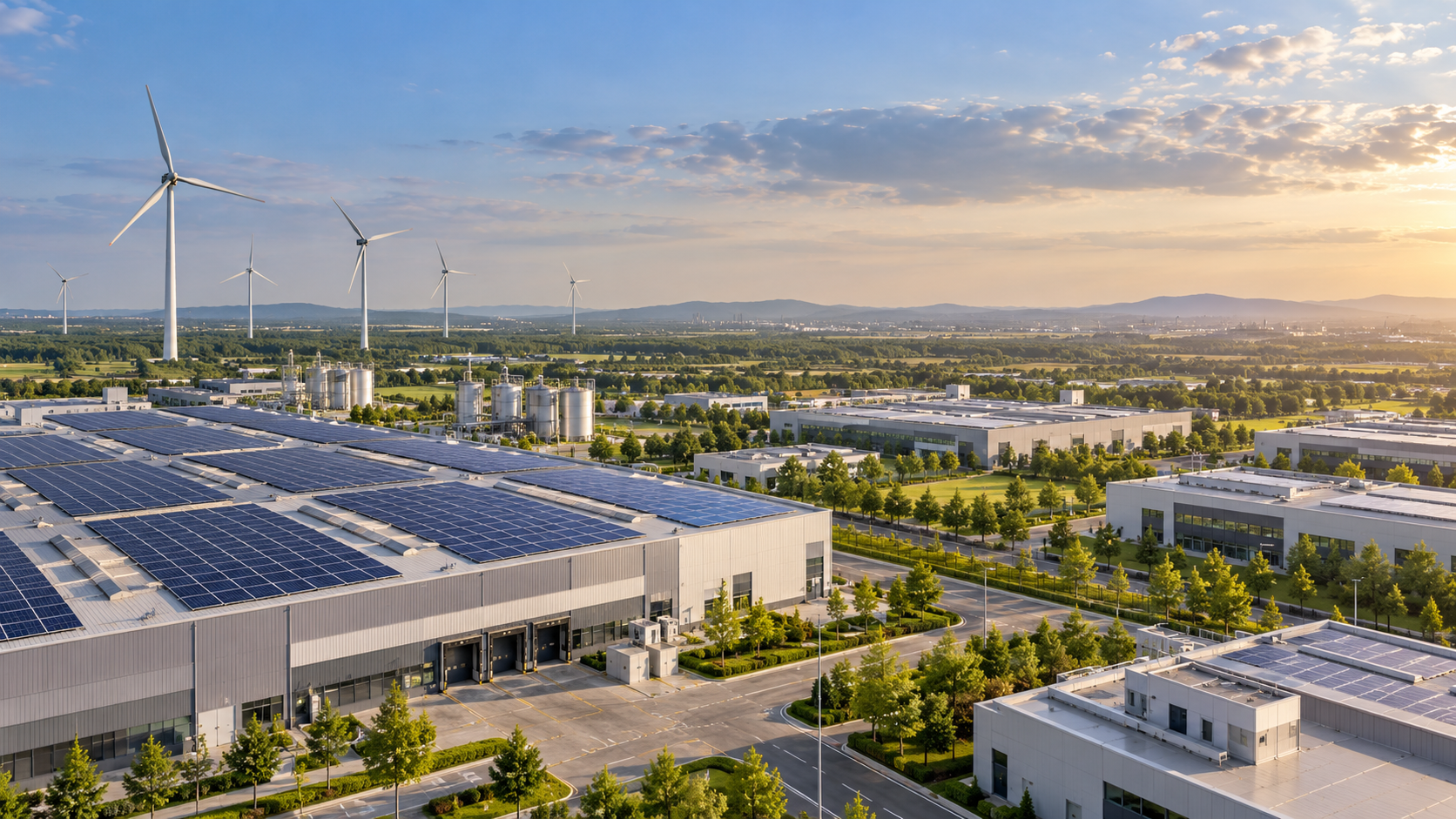
Carbon reduction in Europe is shaped by the EU’s goal of climate neutrality by 2050 and a legally binding target to cut net greenhouse gas emissions by at least 55% by 2030, compared with 1990 levels.
These are economy-wide targets, not identical obligations for every country or company. Their practical effects flow through legislation covering energy, industry, transport, buildings and land use.
For researchers and businesses, the key distinction is between the EU’s overall climate destination and the sector-specific rules that turn it into investment decisions, product requirements and reporting obligations.
What Are the EU’s Main Emissions Targets?
The European Climate Law establishes two central commitments: at least a 55% reduction in net greenhouse gas emissions by 2030 from 1990 levels, and EU-wide climate neutrality by 2050.
Climate neutrality means balancing remaining greenhouse gas emissions with removals within the EU. It does not mean that every activity must produce zero emissions or that all reductions are measured as carbon dioxide alone.
The targets cover greenhouse gases, including carbon dioxide, methane and nitrous oxide. “Net” emissions account for both emissions released and eligible removals, such as carbon absorbed by forests.
To ensure that actual emissions cuts drive progress, the Climate Law limits the contribution of net removals that can be counted toward the 2030 target to 225 million tonnes of carbon dioxide equivalent.
The EU also aims to achieve negative emissions after 2050. That would mean removing more greenhouse gases from the atmosphere than are emitted, although delivering this outcome depends on future action and removal capacity.
Is There an EU Emissions Target for 2040?
A 2040 milestone is intended to bridge the gap between the 2030 target and climate neutrality. Its precise legal status should be checked against the latest EU legislation.
In 2024, the European Commission recommended a 90% net emissions reduction by 2040 compared with 1990. A recommendation alone is not the same as a binding target adopted through EU law.
For long-lived assets such as factories and buildings, the direction of travel matters even while legislation evolves. Investment planning should nevertheless distinguish enacted requirements from proposals and political recommendations.
Researchers can verify the current position through the European Commission’s 2040 climate target page and the latest text published in EU legislation.
How Do EU Climate Targets Become Practical Rules?
The headline targets apply to the EU economy as a whole. They are implemented through a package of regulations and directives, rather than a single emissions limit imposed uniformly on all sectors.
Some measures set national targets, while others regulate energy suppliers, industrial installations, vehicle manufacturers or building performance. Together, they affect the cost and feasibility of lower-carbon choices.
Rules also differ in legal form. EU regulations generally apply directly, whereas directives usually require member states to incorporate their requirements into national law, sometimes with national flexibility.
This distinction matters when comparing projects across Europe. The same EU framework can produce different national deadlines, incentives, building regulations and enforcement procedures.
The “Fit for 55” package is the EU’s principal legislative response to the 2030 target. It revises existing climate and energy rules and introduces additional measures across several sectors.
How Does the EU Emissions Trading System Reduce Emissions?
The EU Emissions Trading System, or EU ETS, sets a cap on emissions from covered activities and requires participants to surrender allowances for their emissions.
Allowances can be traded, creating a carbon price. As the cap declines over time, the system is designed to reduce total emissions from the activities it covers.
The original system covers electricity generation and energy-intensive industries, including cement, steel and parts of the building-materials supply chain. It also covers certain aviation emissions and has been extended to maritime transport.
Coverage is defined by legislation and activity thresholds, so not every factory or transport operation participates directly. Some installations receive free allowances, subject to applicable rules and planned changes.
For manufacturers and construction buyers, the commercial effect can extend beyond regulated facilities. Carbon costs may influence prices for electricity, cement, metals and other materials used in buildings.
A separate system, commonly called ETS2, is designed to cover fuel suppliers for buildings, road transport and certain additional sectors. Its implementation timetable and national measures should be checked against current legislation.
ETS2 is not a requirement for each household or building owner to trade allowances. Its potential effects on fuel prices may nevertheless influence heating choices and renovation economics.
What Are National Targets Under the Effort Sharing Regulation?
The Effort Sharing Regulation assigns binding national emissions targets for sectors outside the original EU ETS and land-use framework, including much of road transport, building heating, agriculture and waste.
Collectively, these sectors must reduce emissions by 40% by 2030 compared with 2005 levels. Individual member-state targets differ, reflecting factors including relative economic capacity.
This is separate from the headline 55% target, which uses 1990 as its baseline and covers the wider economy. Comparing the two percentages without their baselines and scope can be misleading.
National governments choose policies to meet their commitments, subject to EU rules. These may include renovation support, cleaner transport, agricultural measures and incentives for lower-emission heating.
For an individual building project, the regulation does not itself prescribe a particular insulation product or heating system. The relevant requirements usually appear in national legislation and building-specific rules.
What Role Do Forests and Other Carbon Removals Play?
The EU’s land-use, land-use change and forestry framework covers emissions and removals associated with managed land, including forests, cropland and other land categories.
For 2030, the EU has set a net removal target of 310 million tonnes of carbon dioxide equivalent in this sector. Member states have national contributions toward that collective goal.
Land-based removals can help balance residual emissions, but they are not interchangeable with cutting fossil fuel use. Forest fires, drought, harvesting and land management can affect how much carbon remains stored.
Researchers should also distinguish the land-sector target from the smaller amount of net removals permitted to count toward the Climate Law’s 2030 headline target. They serve different accounting purposes.
What Do the Targets Mean for Buildings and Construction?
Buildings matter because emissions arise both while they are used and while their materials are manufactured, transported, installed and eventually replaced or disposed of.
Operational emissions come mainly from energy consumed for heating, cooling, hot water and electricity. Their scale depends on building efficiency, equipment choices, energy sources and local conditions.
Embodied emissions are associated with materials and construction processes across a product or building life cycle. Concrete, steel, insulation, finishes and building services can all contribute.
The distinction is important: an efficient building may have low operating emissions but still carry substantial embodied emissions. A credible assessment considers both rather than assuming one guarantees the other.
The recast Energy Performance of Buildings Directive, adopted in 2024, establishes a framework for improving building performance and moving toward a zero-emission building stock by 2050.
Under that directive, new buildings must generally be zero-emission buildings from 2030, with an earlier 2028 deadline for new buildings owned by public bodies. National implementation determines many practical details.
“Zero-emission building” is a defined regulatory concept, not necessarily a building with no life-cycle emissions. It focuses on very high energy performance and requirements concerning the energy used on site.
For existing residential buildings, member states must establish national trajectories to reduce average primary energy use. The directive does not impose the same renovation deadline on every individual home.
For non-residential buildings, the directive requires minimum energy performance standards targeting the worst-performing stock. Exemptions and implementation details depend on the directive and national rules.
The directive also introduces requirements for calculating and disclosing the life-cycle global warming potential of new buildings, phased in by building size and date. Researchers should check the national implementation timetable.
How Are Building Materials Affected?
Carbon-intensive materials face pressure from several directions: emissions trading, customer procurement standards, building regulations and growing interest in product-level environmental data.
Cement and steel are particularly relevant because their production can involve significant process emissions as well as energy use. Reductions may require changes in fuels, production processes and material design.
For tile, sanitary products, insulation and other building components, impacts vary with manufacturing energy, raw materials, transport, durability and installation. A generic low-carbon label cannot capture all of these differences.
An environmental product declaration, or EPD, can provide standardized information about a product’s environmental impacts. It is useful evidence, but it is not automatically proof that one product is preferable.
Before comparing EPDs, check that they use compatible calculation rules, system boundaries, declared units and life-cycle stages. Also consider expected service life and whether replacement or maintenance is included.
For example, comparing emissions per kilogram can be misleading if two products perform the same function at different weights or have different lifespans. Comparisons should reflect the intended application.
What Is the Carbon Border Adjustment Mechanism?
The Carbon Border Adjustment Mechanism, or CBAM, is an EU measure intended to address carbon leakage: the risk that production shifts to locations with less stringent carbon policies.
It applies to specified imported goods in sectors including cement, iron and steel, aluminium, fertilisers, electricity and hydrogen. Its scope is defined by product classifications, not broad marketing descriptions.
CBAM’s transitional reporting phase began in 2023, and its definitive regime began in 2026. Importers should check current rules on authorization, embedded emissions, certificates and applicable exemptions.
The mechanism is linked to the gradual phase-out of free EU ETS allowances for covered sectors. Its practical cost depends on the applicable rules, product emissions and carbon prices.
Not every imported finished construction product is automatically covered. Companies should verify the relevant customs classification and current legislation before drawing conclusions about a specific material or component.
How Do Renewable Energy and Efficiency Targets Support Carbon Reduction?
Emissions targets are supported by separate energy goals. These are not interchangeable with greenhouse gas targets, but they influence how quickly fossil fuel consumption can fall.
The revised Renewable Energy Directive sets a binding EU target of at least 42.5% renewable energy in gross final energy consumption by 2030, with an additional indicative ambition to reach 45%.
The Energy Efficiency Directive also establishes a binding EU-level 2030 energy consumption reduction target, expressed against a reference scenario. Its baseline differs from the emissions targets’ historical baselines.
For buildings, more renewable electricity can reduce emissions from electric heating and other equipment over time. Actual outcomes depend on the grid, equipment efficiency and when energy is consumed.
Efficiency remains important even as energy becomes cleaner. Insulation, efficient controls and well-designed systems can reduce demand, limit operating costs and ease pressure on energy infrastructure.
How Should Researchers Compare Claims About Europe’s Progress?
Start by checking the geography. The EU is not identical to Europe: European countries outside the EU may follow different climate laws, targets and reporting systems.
Next, identify the baseline year, gases covered and whether the figure is gross or net. A percentage reduction without these details is difficult to compare or interpret reliably.
Check whether a figure describes historical emissions, a projection under existing policies or a scenario that assumes additional measures. These answer different questions about progress.
For current data, consult the European Environment Agency and the European Commission. National inventories and government plans add country-specific detail.
Finally, separate legal requirements from market expectations. A buyer may request product carbon data before a specific regulation requires it, while national building codes may impose obligations beyond a general EU target.
Conclusion: What Matters Most for Carbon Reduction in Europe?
The EU’s central commitments are a net greenhouse gas reduction of at least 55% by 2030 from 1990 levels and climate neutrality by 2050. Sectoral legislation determines how those goals affect individual activities.
For the built environment, the clearest implications are stronger attention to building energy performance, industrial emissions and life-cycle carbon data. Requirements vary by product, project, country and implementation date.
The most useful approach is to track the headline targets alongside the actual rules applying to each decision. That keeps policy ambition, enforceable obligations and commercial opportunities in their proper context.
Industry Briefing
Get the top 5 industry headlines delivered to your inbox every morning.