
North American Smart Kitchen Technology: Adoption Trends and Market Opportunities
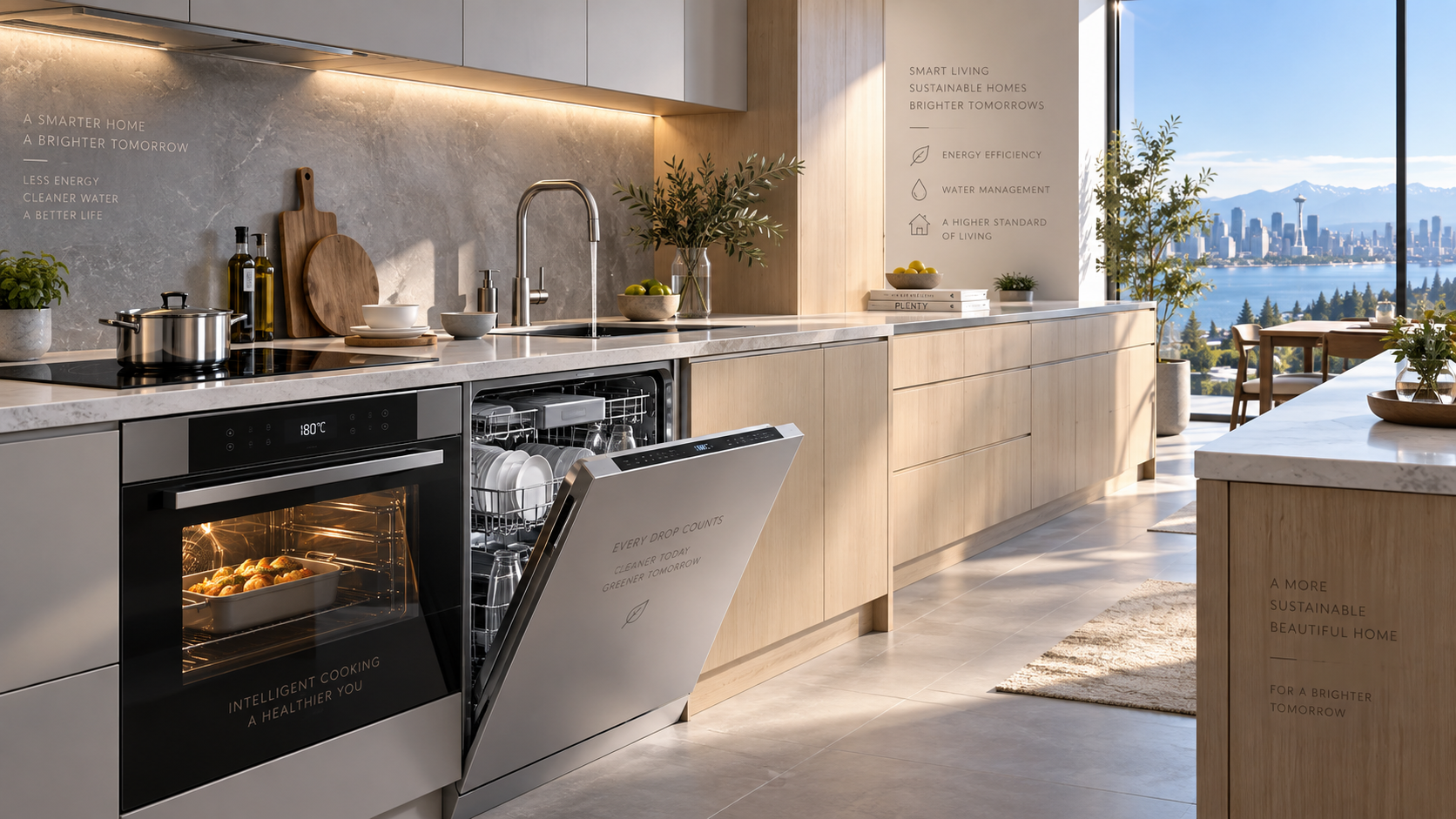
In North America, the kitchen is becoming less of a fixed room and more of an operating environment. A homeowner checking oven status from a phone, a multifamily operator monitoring water use across units, and a foodservice manager using connected equipment to reduce downtime are all responding to the same shift: kitchen performance is increasingly visible, measurable, and connected.
That shift is changing how developers, appliance brands, distributors, designers, and investors assess the category. Smart kitchen technology North America is no longer defined only by a refrigerator with a touchscreen or a voice-controlled faucet. The more consequential opportunity lies in systems that simplify daily use, improve energy and water management, support maintenance decisions, and fit credibly into residential and commercial space planning.
For business evaluators, the central question is not whether smart kitchens will grow. Connected functionality is already moving through the market. The more useful question is where adoption will be durable, which features create a defensible value proposition, and what conditions must be in place for a connected kitchen offer to scale without creating support, privacy, or interoperability burdens.
Adoption is becoming practical rather than purely aspirational
Early smart-kitchen marketing often centered on novelty: screens, recipes, voice commands, and appliances that appeared to “think” for the user. Those features helped introduce consumers to connected living, but they did not always translate into frequent use. The current market is more pragmatic. Buyers increasingly ask whether a feature saves time, prevents a problem, lowers consumption, or makes the kitchen easier to manage.
This is especially evident in functions that work quietly in the background. Remote diagnostics can alert a service team before a failure becomes disruptive. Leak detection and automatic shutoff functions can address one of the most expensive risks in residential and hospitality environments. Induction cooking offers a combination of precise control, safety, and easier cleaning that appeals to both households and project planners. Connected ventilation can respond to cooking activity, while smart dishwashers and water fixtures can make resource use more visible.
The implication for the market is important: adoption does not depend on consumers wanting more technology in every interaction. In many cases, it depends on technology becoming less intrusive. A successful smart kitchen system usually feels like a well-designed kitchen first and a digital interface second.
A region of several markets, not one uniform demand pattern
North America should not be treated as a single adoption environment. The United States, Canada, and Mexico share supply relationships and broad consumer exposure to global appliance brands, yet their housing stock, energy systems, building practices, purchasing power, and regulatory priorities vary significantly. Even within the United States, demand in urban multifamily projects differs sharply from demand in suburban renovation, luxury custom homes, senior living, hospitality, and quick-service food environments.
In higher-end residential projects, smart kitchen features are often bundled into a wider expectation of integrated living: connected lighting, climate control, security, shading, and entertainment. Here, aesthetic consistency and ecosystem compatibility may matter as much as any individual appliance function. Buyers are less interested in managing five separate applications than in having a coherent home-control experience.
For mainstream households, replacement cycles remain a major gateway. A consumer may not set out to build a smart kitchen, but may choose a connected range, dishwasher, or refrigerator when an existing appliance fails. The purchase decision can be influenced by rebates, energy features, installation simplicity, warranty confidence, and retailer explanation. This makes channel education as important as product innovation.
Canada presents particularly strong relevance for energy-conscious appliances, cold-climate performance considerations, and water-efficiency discussions. In Mexico, urban residential growth, hospitality investment, and expanding modern retail channels can create opportunities, although product positioning must be calibrated to local price sensitivity, electrical infrastructure, service networks, and household preferences. A North American strategy that ignores these differences may achieve visibility without achieving conversion.
The strongest demand drivers are built into the surrounding space
Smart kitchen adoption is often described as a consumer-electronics trend, but the built environment has equal influence. Kitchen technology is installed into cabinetry, plumbing, ventilation, electrical systems, countertops, and digital networks. Its value therefore rises or falls with coordination among architects, interior designers, contractors, developers, and facility operators.
Electrification is one of the clearest forces reshaping the category. As building owners explore alternatives to gas cooking and seek more efficient equipment, induction appliances are gaining attention. Their appeal is not solely environmental. They can support faster response, cooler surrounding surfaces, easier cleaning, and a more contemporary kitchen aesthetic. Yet adoption depends on practical details: electrical capacity, panel upgrades, cookware compatibility, installer familiarity, and user education all affect the outcome.
Water management is another important opening. Connected faucets, filtration systems, dishwashers, and leak-monitoring devices can support conservation goals while addressing property risk. In drought-affected areas and large residential portfolios, water intelligence has a clearer business case than a decorative digital display. The value conversation shifts from “smart feature” to avoided loss, lower operating pressure, and more informed maintenance.
Then there is the aging housing stock across many North American markets. Renovation projects create a large but complicated opportunity. Retrofitting a smart kitchen may require upgraded electrical circuits, stronger Wi-Fi coverage, revised cabinet dimensions, or plumbing modifications. Products designed with flexible installation requirements and clear compatibility guidance will be better positioned than solutions that assume a new-build environment.
Where the market opportunity is likely to concentrate
Not every connected appliance deserves equal commercial attention. Business evaluators should separate broad consumer interest from categories that can generate repeatable project demand, service revenue, or meaningful differentiation.
Multifamily residential and build-to-rent
Multifamily projects offer scale, but they also impose discipline. Developers need features that support leasing appeal without increasing turnover complexity or resident support calls. Smart locks, package systems, thermostats, and leak sensors have already made connectivity familiar in many properties. Kitchens can become the next integration point when connected appliances and water controls contribute to asset protection, energy positioning, or a higher-quality resident experience.
The strongest propositions are likely to be those that can be centrally commissioned, reset securely between tenants, and serviced without specialized intervention. A premium connected oven may help market a unit; a leak-alert system may protect the entire asset. These are different value stories and should be evaluated differently.
Kitchen renovation and premium replacement
Renovation remains emotionally driven. Homeowners often see the kitchen as the room where practical investment and personal identity meet. This creates room for connected products that combine visual refinement with clearly understood benefits: steam ovens with guided cooking, intelligent ventilation, water filtration monitoring, induction cooktops, or appliances that provide maintenance alerts.
However, installers and kitchen designers strongly influence these purchases. If they perceive a product as difficult to configure, unreliable after a network change, or unclear in its warranty responsibilities, they may steer clients elsewhere. Brands seeking growth in this segment need to treat trade partners as part of the product experience, not merely as a sales channel.
Hospitality, senior living, and managed food environments
Commercial kitchens are not simply larger residential kitchens, but several smart-kitchen principles transfer well. Equipment monitoring, predictive maintenance, temperature control, usage tracking, and energy management can be meaningful where downtime affects revenue, compliance, or guest service. Senior living settings may also value safer cooking environments, remote oversight, and interfaces designed for varied physical abilities.
The commercial opportunity requires a higher threshold of reliability. Operators will scrutinize cybersecurity, support response, data ownership, integration with existing facility systems, and the availability of replacement parts. A connected feature that is attractive in a showroom can become a liability if it complicates a busy operating environment.
The friction points behind slower adoption
Smart kitchen technology in North America still faces practical resistance. Privacy is one concern. A kitchen appliance may collect usage patterns, account information, or voice data, depending on its functions. Consumers and procurement teams increasingly want to know what is collected, how long it is retained, who can access it, and whether core appliance functions remain available if the user declines optional data sharing.
Interoperability is another obstacle. A kitchen may contain products from different brands, each using its own app, cloud platform, and support process. Standards and major smart-home ecosystems are improving the situation, but compatibility claims should be reviewed carefully. Being able to connect is not the same as being able to deliver a stable, useful, cross-device experience.
Connectivity itself can be fragile. Kitchens contain metal surfaces, enclosed cabinetry, high heat, moisture, and appliances with long replacement cycles. Wi-Fi configuration may be easy at installation but difficult after a router replacement, tenant turnover, or software update. Products should be assessed for offline functionality, local controls, firmware support policies, and recovery procedures—not just their launch-day feature list.
Finally, the market must avoid confusing automation with usefulness. A connected kitchen that creates extra notifications, requires constant account management, or makes manual operation difficult can erode trust quickly. Convenience has to be earned through thoughtful design.
A more disciplined evaluation framework
For investors, developers, procurement teams, and market-entry planners, a smart-kitchen opportunity should be tested across more than consumer appeal. The following questions help distinguish a durable offering from a short-lived feature trend:
- What problem is being solved? Is the solution addressing safety, energy use, water risk, maintenance, accessibility, food management, or simple entertainment?
- Who receives the economic benefit? The homeowner, property manager, installer, utility partner, retailer, or service provider may value the product for different reasons.
- Can the system work across real building conditions? Review electrical needs, plumbing interfaces, network requirements, cabinet fit, ventilation constraints, and retrofit feasibility.
- What happens after installation? Consider onboarding, software updates, customer support, warranty handling, spare parts, and device transfer when a property changes hands.
- Does data create operational value? Data should support a decision—such as detecting a leak or scheduling service—not merely generate a dashboard.
- Is the value proposition credible without connectivity? Core cooking, cleaning, storage, and safety performance should remain strong even when smart functions are unavailable.
This framework is particularly useful because the category sits at the intersection of construction products, consumer appliances, and digital services. Each sector has different expectations about product life cycles, update frequency, liability, and user support. The winning market models will respect all three.
What to watch over the next planning cycle
The next stage of smart kitchen development will likely be shaped less by dramatic new interfaces than by deeper integration. Expect greater attention to energy-aware appliance operation, load management, water monitoring, induction-oriented kitchen design, and better coordination between kitchen devices and whole-building systems. Artificial intelligence may improve recommendations, diagnostics, and automation, but its acceptance will depend on transparency and whether it reduces genuine friction.
Material innovation will also matter. Antibacterial surfaces, durable low-maintenance finishes, improved insulation, recyclable components, and water-saving hardware are not separate from smart living; they are part of a broader definition of kitchen intelligence. A digitally connected appliance placed within a poorly planned, resource-intensive kitchen is only a partial solution.
For GIAM, this is where market intelligence becomes essential. Tracking appliance innovation alone is insufficient. Decision-makers need to read connected kitchen demand alongside energy codes, trade conditions, water-efficiency priorities, housing formats, material trends, and the evolving expectations of people who live and work in these spaces.
From connected products to connected value
The North American smart kitchen market is moving beyond the question of whether consumers enjoy technology. The more meaningful issue is whether technology can make kitchens safer, more resource-aware, easier to maintain, and more adaptable to changing patterns of living.
Opportunities will be strongest where digital functionality is tied to a visible outcome: lower risk for a property owner, more confidence for a homeowner, easier commissioning for an installer, or better operational control for a commercial operator. For business evaluators, the most promising path is not to pursue connectivity for its own sake. It is to identify the moments where intelligent kitchen systems strengthen the long-term value of the space around them.
Industry Briefing
Get the top 5 industry headlines delivered to your inbox every morning.