
Smart Spaces Technology Trends: What Building Managers Should Track in Energy, Access, and IoT
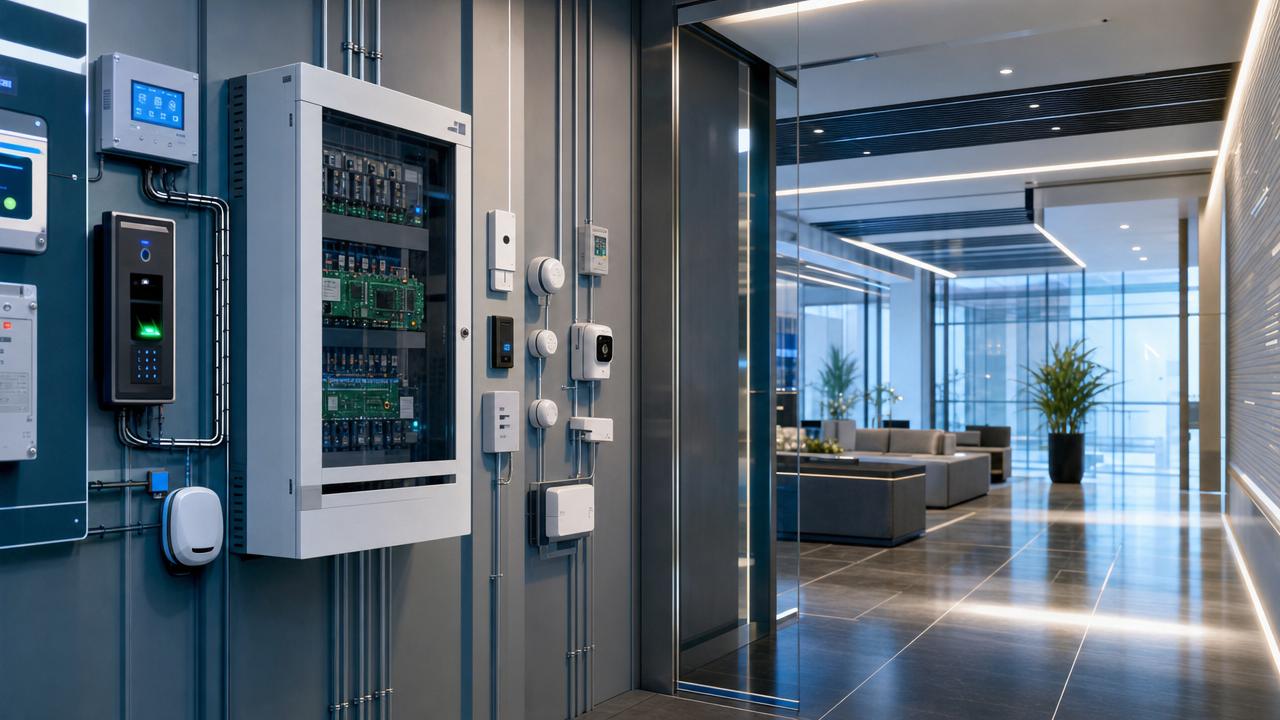
Smart spaces technology trends are moving from isolated upgrades to operating strategy
Connected buildings are no longer defined by one smart device or one automation platform.
The stronger shift is operational. Energy, access, and IoT data are being treated as one management layer.
That change matters because buildings now face pressure from three directions at once.
Energy costs remain volatile, compliance standards are tightening, and occupants expect spaces to feel responsive and secure.
In this context, smart spaces technology trends are less about novelty and more about resilience.
A building that cannot connect systems, verify performance, and adapt in real time becomes more expensive to operate.
It also becomes harder to position in a market where asset value increasingly reflects operational intelligence.
This is why GIAM’s view of spatial evolution is useful.
Across building materials, sanitary spaces, and smart kitchen and bath systems, the same pattern appears.
Digital intelligence is no longer a separate layer. It is shaping how physical space is specified, maintained, and monetized.
The most visible signal is convergence between energy controls, access systems, and IoT networks
A few years ago, these systems were often procured and managed independently.
Now the market is moving toward shared platforms, shared data models, and cross-system automation.
That is one of the clearest smart spaces technology trends in both commercial and mixed-use environments.
When occupancy data from access control can influence HVAC schedules, lighting intensity, and cleaning workflows, efficiency improves in a measurable way.
When leak sensors, water-saving devices, and indoor air monitors are linked to a central dashboard, risk becomes easier to detect early.
This is especially relevant in spaces where interior quality, hygiene, and utility performance are now part of brand perception.
From recent project behavior, the demand is shifting from device quantity to integration quality.
That means the winning question is no longer, “How many systems are smart?”
It is, “Which systems can exchange usable data without raising complexity?”
Why this convergence is accelerating
- Building performance targets now depend on real operational data, not design assumptions alone.
- Hybrid occupancy patterns make fixed schedules inefficient for lighting, ventilation, and security staffing.
- Insurance and compliance reviews increasingly favor traceable access logs and environmental monitoring records.
- Open protocol expectations are rising because closed systems create upgrade bottlenecks and higher lifecycle costs.
- Retrofit economics are improving, making selective digital upgrades more attractive than full replacement cycles.
Energy management is becoming more predictive, not just more efficient
Among all smart spaces technology trends, the energy shift is the most financially visible.
Yet the market is moving beyond simple automation such as scheduled shutdowns or occupancy-triggered lighting.
More advanced buildings are using layered data to predict demand, identify anomalies, and coordinate distributed assets.
This includes HVAC optimization, water heating control, peak-load management, and smarter use of battery or solar inputs where available.
The reason is practical. Static controls save energy only when building behavior remains stable.
But operating conditions now shift daily because of weather volatility, flexible occupancy, and changing utility pricing.
Predictive control creates value by reducing unnecessary runtime and by revealing where physical infrastructure underperforms.
In GIAM’s wider construction view, this matters because intelligent operations increasingly influence material and fixture choices as well.
Water-saving fittings, anti-bacterial surfaces, and efficient sanitary systems perform better when they are connected to measurable operational goals.
Access control is shifting from perimeter security to identity-aware space management
Access used to be judged mainly by whether entry points were secure.
Today, one of the more important smart spaces technology trends is the expansion of access data into broader operational decisions.
Mobile credentials, biometric verification, and cloud-based permissions are changing how space usage is understood.
This does not just affect security policy. It influences visitor flow, after-hours energy use, maintenance timing, and compliance evidence.
More notably, access systems now shape the user experience of a building from the first interaction.
A friction-heavy entry process suggests outdated operations, even if the interior design is premium.
A seamless but auditable entry model supports both trust and efficiency.
Smart locks and connected entry hardware, long discussed in residential settings, are also influencing expectations in hospitality, office, healthcare, and shared commercial assets.
The key issue is not the hardware alone. It is whether identity, permissions, and event logs can connect cleanly with the wider building stack.
What deserves closer attention
- Credential flexibility across employees, visitors, service teams, and temporary contractors
- Cybersecurity controls for cloud-managed entry and remote permission changes
- Interoperability between smart locks, elevators, parking systems, and emergency protocols
- Data governance rules for identity information, retention, and audit access
IoT expansion is now judged by data usefulness, not sensor volume
Another strong signal in smart spaces technology trends is a more selective attitude toward IoT rollouts.
Early smart building programs often equated progress with adding more endpoints.
In practice, large sensor networks created new noise, integration burden, and maintenance complexity.
The better current approach starts with decisions that must be improved.
Only then does it define which devices, data intervals, and analytics models are worth deploying.
This changes investment logic. Instead of asking whether a building is IoT-enabled, stakeholders ask whether IoT data shortens response time or improves capital planning.
That distinction is crucial in retrofit-heavy portfolios where every new layer must justify itself.
It also explains why edge processing, data normalization, and platform interoperability are drawing more attention than sensor counts.
Buildings need fewer blind spots, not more disconnected dashboards.
The impact is spreading across design choices, asset value, and occupant trust
Smart spaces technology trends no longer sit only with facility operations.
They increasingly shape investment decisions, renovation priorities, and even material specification.
If a building aims to reduce water, energy, and hygiene risk together, then sanitary fixtures, surface materials, and connected controls must align.
If a premium kitchen or bath environment is part of the user experience, uptime and data visibility become part of the value proposition.
This broader view mirrors GIAM’s focus on linking hard construction systems with modern interior expectations.
The physical and digital layers of space are converging in visible ways.
Asset valuation is also starting to reflect that convergence.
Buildings with stronger monitoring, adaptive control, and compliance-ready data can present a clearer operational story.
That story supports occupancy confidence, financing discussions, and long-term retrofit planning.
A practical reading of the next phase
The next wave of smart spaces technology trends is unlikely to reward the most complex architecture.
It is more likely to reward clarity.
Clear data ownership, clear integration priorities, and clear definitions of which building outcomes matter most.
In many cases, the strongest move is not full-scale digital expansion.
It is targeted modernization around high-impact points such as HVAC control, access orchestration, water monitoring, and critical indoor environment data.
Short-term attention should stay on open standards, cybersecurity resilience, and measurable performance baselines.
Longer term, the market should watch how regulations, utility pricing, and health-focused building expectations reshape integration priorities.
A sensible next step is to map where energy, access, and IoT data already exist, where they remain isolated, and which decisions would improve if those streams were connected.
That approach keeps smart spaces technology trends grounded in business outcomes rather than technology theater.
Industry Briefing
Get the top 5 industry headlines delivered to your inbox every morning.