
Water-Efficient Construction Methods: How to Meet Green Building Goals Without Rework
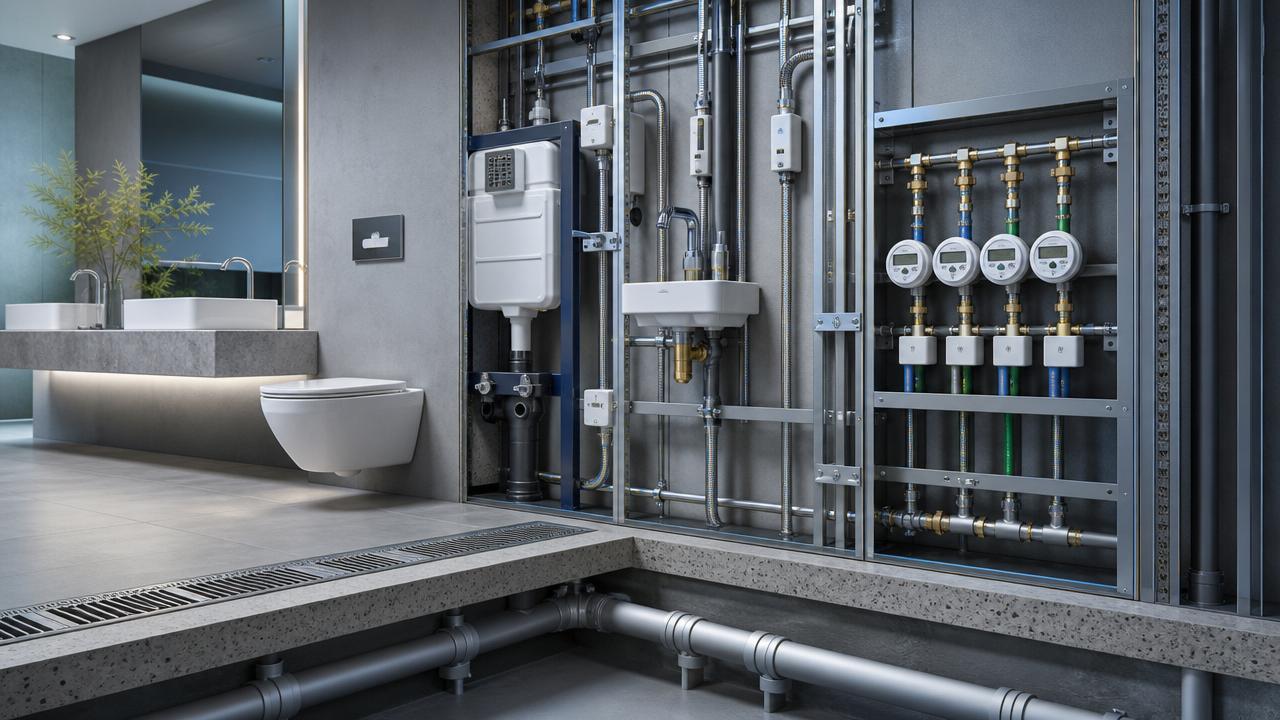
Water-efficient construction is no longer a side topic in green building. It now affects compliance, operating cost, material choices, and how much rework a project absorbs later.
The real challenge is not finding water-saving products. It is choosing water-efficient construction methods that perform well on site, match local standards, and stay buildable under schedule pressure.
That is where early technical evaluation matters. When teams review fixtures, pipe routing, drainage logic, commissioning steps, and maintenance access together, green targets become far easier to hit.
GIAM follows this shift closely through its Strategic Intelligence Center, where material science, hydraulic design, and market analysis connect practical construction needs with evolving water-saving expectations.
Start with the systems that lock in water performance
The biggest gains usually come from decisions made before installation starts. If the wrong system logic is approved early, even premium products will struggle to deliver reliable water-efficient construction outcomes.
- Map water demand by zone, not by building average. Wet areas, public washrooms, kitchens, and service spaces all need separate assumptions for realistic fixture sizing and control selection.
- Choose fixtures using verified flow rates under actual pressure conditions. Catalog values alone can mislead when site pressure, simultaneous use, and local code requirements change performance.
- Review pipe layout for dead legs and overlong branches. Shorter, cleaner routing reduces wasted purge water, stabilizes temperature response, and improves maintenance access after handover.
- Align sanitary ware, valves, and controls early. Mixed specifications from separate vendors often create fit issues, hidden leaks, or commissioning delays that erase expected water savings.
- Check maintenance replacement cycles before approval. Water-efficient construction performs better over time when cartridges, sensors, and seals can be sourced and changed without opening finished surfaces.
- Use mock-ups to test user interaction in high-traffic areas. Controls that save water on paper may fail in practice if response time, sensor range, or reset logic feels awkward.
A common miss is treating fixture efficiency as a standalone decision. In practice, valves, pressure balance, drainage slope, and access panels all shape whether water-efficient construction works smoothly or creates callbacks.
What to confirm before technical approval
A quick approval meeting should still answer a few basic questions. Does the system save water under real occupancy patterns? Can it be installed without trade clashes? Can it be tested clearly before finishes close?
Reduce rework by coordinating materials and wet-zone details early
Many water-saving failures start as coordination failures. Rework often happens because hydraulic design, waterproofing, wall build-up, and finish dimensions were reviewed too late or in isolation.
- Freeze wet-zone dimensions before ordering concealed systems. Small shifts in wall thickness or floor build-up can disrupt cistern depth, pipe alignment, and inspection panel placement.
- Pair water-saving fixtures with compatible waterproofing and substrate systems. Installation stress, anchor movement, or poor sealing can create leaks that completely undermine water-efficient construction goals.
- Standardize connection details across similar room types. Repetition reduces installation error, simplifies quality checks, and gives commissioning teams a cleaner path to consistent water performance.
- Review prefabrication potential for risers and bathroom modules. Factory-controlled assemblies often improve precision, reduce waste, and lower the chance of hidden leaks inside finished spaces.
- Check material tolerances where smart controls meet hard finishes. Tight margins around sensor faucets, flush plates, or mixing valves can affect activation and serviceability.
- Demand clear installation sequences from suppliers. Water-efficient construction is easier to protect when teams know exactly when testing, sealing, and finish closure must occur.
In hospitality, healthcare, and premium residential projects, these details matter even more. The more integrated the sanitary space is, the more expensive it becomes to reopen walls or replace concealed parts.
GIAM regularly tracks how global bathroom systems, anti-bacterial materials, and smart kitchen-bath products are converging. That matters because water-efficient construction is increasingly tied to total space performance, not isolated components.
A practical scenario: high-use commercial washrooms
In commercial washrooms, low-flow fixtures alone rarely solve the full problem. Traffic intensity, cleaning methods, user behavior, and maintenance speed all affect actual water use.
The useful check is simple: test sensor response, flush consistency, refill timing, drainage speed, and replacement access before scale-up. That short step can prevent wide-area corrections later.
Use controls, metering, and commissioning to prove performance
Good design intent still needs proof. Without commissioning and post-install validation, water-efficient construction remains a specification claim rather than a measurable project result.
- Install sub-metering where usage patterns differ clearly. Kitchens, public washrooms, irrigation, and staff areas generate better water-saving insights when tracked separately.
- Commission flush volumes, sensor timing, and mixing temperatures together. Isolated checks miss the interaction between user comfort, hygiene demands, and water-saving targets.
- Set acceptable variance limits before testing begins. Teams move faster when pass-fail thresholds for pressure, flow, leakage, and reset behavior are defined in advance.
- Verify concealed connections before finish closure with documented testing. Photos, pressure records, and sign-offs reduce dispute risk if leaks appear after occupancy.
- Link controls to realistic operating schedules. Smart systems save more water when sleep mode, purge cycles, and occupancy logic reflect actual building use.
- Plan a short post-handover review window. Early live-use data often reveals tuning needs that are cheaper to correct before defects become embedded habits.
One overlooked issue is over-automation. Smart controls can improve water-efficient construction, but only when they are stable, serviceable, and easy to recalibrate without specialist intervention.
A practical scenario: mixed-use residential towers
Mixed-use towers often combine residential units, retail, amenities, and back-of-house functions. That creates very different water profiles inside one envelope, which makes generic assumptions risky.
The useful move is to separate baseline calculations, meter by function, and confirm pressure behavior across peak periods. That protects both compliance and occupant experience.
Watch the standards, but also the market signals behind them
Standards shape approval, but supply conditions shape delivery. A strong water-efficient construction strategy checks both technical compliance and the practical availability of compliant systems.
- Track local water-use regulations alongside international green benchmarks. A system that scores well in one framework may still create approval friction in another jurisdiction.
- Review tariff exposure and sourcing stability for key hydraulic components. Delays in valves, controls, or sanitary hardware can force substitutions that damage water-saving intent.
- Prefer products with transparent test data and service documentation. Reliable evidence shortens technical evaluation and lowers the risk of unsupported performance claims.
- Check how antibacterial surfaces, low-flow technologies, and smart controls interact. Water-efficient construction works best when hygiene, durability, and digital features support each other.
- Use market intelligence to avoid short-lived specification trends. A fashionable product without stable support can create expensive replacement issues within a few years.
- Benchmark premium systems by lifecycle value, not only upfront cost. Lower water use, fewer failures, and easier maintenance often justify better initial selections.
This is one reason GIAM’s intelligence model is useful in practice. It does not stop at product news. It connects evolving standards, trade shifts, and spatial design trends that influence specification quality.
Common misses that create hidden water waste
Several issues tend to escape early review: oversized pipe runs, poor pressure balancing, inaccessible shutoff points, and sensor settings copied from another project without adjustment.
None of these look dramatic during procurement. But once the building is operating, they can quietly weaken water-efficient construction performance and trigger repeated maintenance visits.
Turn evaluation into a repeatable decision process
The most reliable projects treat water-efficient construction as a coordinated decision chain. They do not leave performance to product labels or late-stage site fixes.
A practical next step is to build a short review path: confirm demand assumptions, validate compatible systems, test mock-ups, document commissioning criteria, and track early operational data.
That approach supports green building goals without inviting rework. It also creates clearer technical comparisons when selecting sanitary systems, wet-zone materials, and smart control packages.
As standards tighten and water-saving expectations rise, water-efficient construction becomes less about a single product and more about disciplined coordination. That is where durable project value is created.
Industry Briefing
Get the top 5 industry headlines delivered to your inbox every morning.