
What really works for construction carbon reduction today
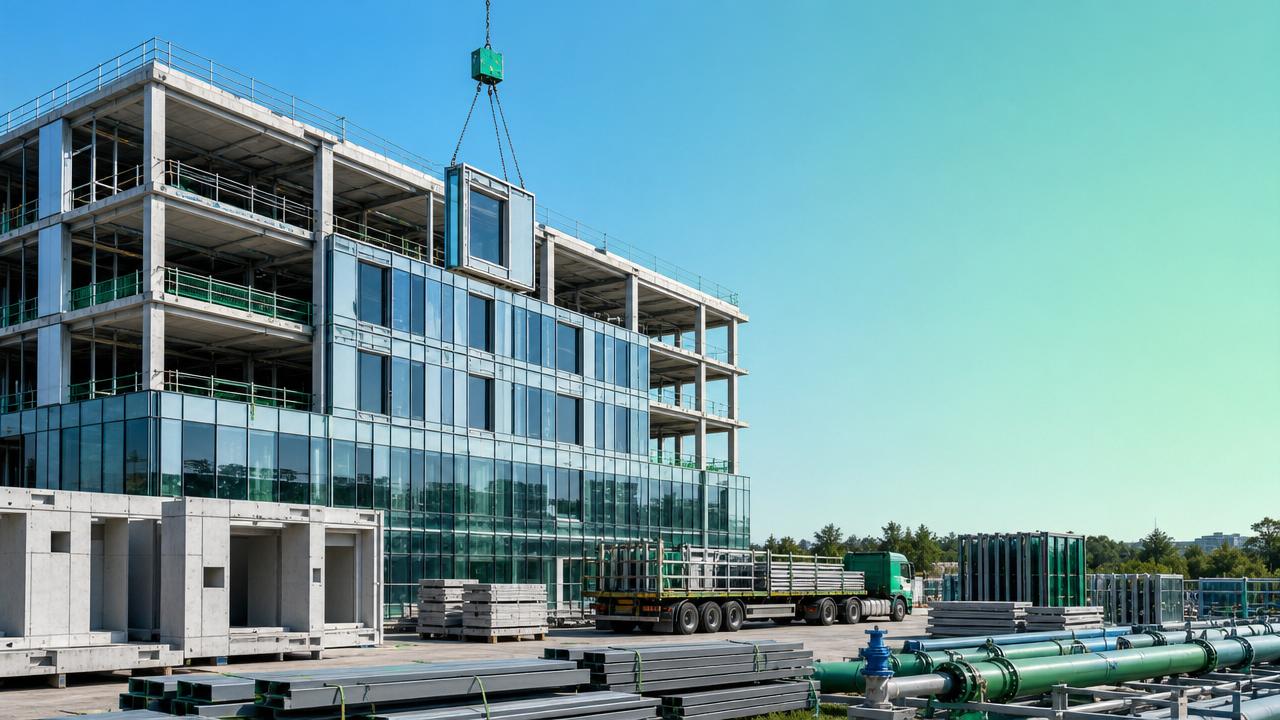
Construction carbon reduction is no longer a future target—it is a practical priority for project leaders facing tighter standards, rising material costs, and stronger client demands. What really works today is a mix of measurable design choices, low-carbon materials, smarter procurement, and data-backed site management. This article explores the most effective strategies helping construction teams cut emissions without sacrificing delivery, compliance, or commercial value.
For project managers and engineering leaders, the challenge is rarely a lack of ambition. It is usually the gap between carbon goals and day-to-day delivery pressures. Program schedules still need to hold, suppliers still need to perform, and design changes still need to stay within cost limits.
In today’s market, effective construction carbon reduction depends on decisions made across 4 linked areas: early design, material selection, procurement control, and site execution. Intelligence platforms such as GIAM help teams connect these decisions with evolving standards, material innovation, and commercial demand across residential and commercial space projects.
Why construction carbon reduction has become a delivery issue, not just a sustainability issue
A few years ago, many firms treated carbon reduction as a reporting exercise. Today, it directly affects bid competitiveness, planning approval, product specification, and owner expectations. On many projects, carbon performance is now reviewed alongside cost, safety, and schedule during the first 30 to 90 days of project definition.
For project leaders, that shift changes the conversation. The question is no longer whether carbon matters. The question is which actions reduce embodied and operational emissions fast enough to influence procurement packages, subcontractor coordination, and completion milestones.
The two carbon categories that matter on active projects
Construction teams usually work with 2 practical categories. Embodied carbon covers emissions from extraction, manufacturing, transport, installation, repair, and replacement of materials. Operational carbon covers the energy and water performance of the finished building over 10, 20, or 30 years of use.
The biggest mistake is treating these categories separately. A low-carbon envelope that reduces HVAC loads by 15% to 25% may justify a higher upfront material premium. By contrast, a poorly coordinated material substitution can lower embodied carbon but create maintenance, moisture, or durability risks later.
What project managers are being asked to control
- Carbon impact during concept, design development, and tender stages
- Material substitutions with verified environmental data
- Waste, energy use, and logistics performance on site
- Compliance with changing client, city, or investor requirements
This is where GIAM’s intelligence value becomes practical. Project teams need current visibility into energy-saving standards, tariff changes, water-saving technologies, anti-bacterial materials, and smart space systems because these factors influence both specification and commercial viability.
Where teams lose carbon performance in real projects
Losses usually happen in 3 predictable places: late design revisions, incomplete supplier data, and fragmented site control. If carbon review starts after major package tendering, teams often default to conventional products because lead times are already locked at 6 to 12 weeks.
Another common issue is focusing only on flagship materials such as concrete or steel while ignoring interiors, sanitary systems, kitchens, locks, adhesives, partitions, and tiles. In fit-out heavy projects, those packages can meaningfully affect transport loads, water efficiency, indoor durability, and replacement cycles.
The table below shows how construction carbon reduction typically shifts from strategy to execution across major project phases.
The key conclusion is simple: the earlier carbon is linked to package-level decisions, the better the commercial result. Waiting until site mobilization limits the number of viable reductions and usually increases the cost of change.
What really works today: practical levers with measurable impact
Effective construction carbon reduction is not based on one breakthrough product. It comes from combining several realistic levers that can be implemented within current procurement and construction systems. The most successful teams usually focus on 5 to 7 high-impact decisions rather than 20 minor gestures.
1. Reduce demand through smarter design before buying greener products
The fastest carbon gain often comes from using less material, not just switching materials. Structural optimization, modular coordination, façade rationalization, and service zone alignment can remove unnecessary volume before any procurement begins. Even a 5% to 10% reduction in material quantity can outperform small changes in recycled content.
For interior and commercial space projects, standardizing module sizes for tiles, panels, sanitary layouts, and kitchen systems also reduces off-cuts and replacement waste. That matters when fit-out programs run on compressed 8 to 16 week schedules.
2. Prioritize materials with verified environmental data and long service life
Low-carbon procurement works best when teams compare products using the same evaluation lens. Instead of relying on generic sustainability claims, ask suppliers for verifiable environmental declarations, expected service life, maintenance frequency, transport origin, and installation waste assumptions.
This approach is especially important for core building materials, sanitary products, and kitchen and bath systems. A water-saving fixture, durable tile, or smart control system can affect both embodied and operational outcomes over a 10 to 20 year period.
Material categories worth reviewing first
- Concrete mixes with optimized cement content
- Recycled or responsibly sourced steel and aluminum components
- High-durability finishes with lower replacement frequency
- Water-saving sanitary systems and leak-control fittings
- Smart locks, sensors, and controls that reduce energy and maintenance visits
The following table helps project teams compare common carbon reduction actions using delivery-friendly criteria.
The most reliable path is a hybrid one. Reduce demand first, then improve what remains through material and system upgrades. This sequence usually preserves schedule certainty better than late-stage product swaps.
3. Use procurement as a carbon control system
Many firms still overlook procurement as one of the strongest construction carbon reduction tools. Tender documents should define not only technical compliance, but also data requirements, approved alternatives, transport assumptions, packaging expectations, and waste take-back options where available.
A practical bid review often includes 4 scoring dimensions: technical fit, carbon evidence, cost impact, and lead-time risk. If a lower-carbon option adds 2 weeks to a critical package, the schedule effect must be visible early rather than discovered during subcontract award.
Procurement questions that improve results
- Can the supplier provide product-level environmental documentation?
- What is the realistic lead time: 2 weeks, 6 weeks, or 12 weeks?
- How far will the product travel, and in what shipment format?
- What is the expected wastage rate during installation?
- How often will the product require replacement or intensive maintenance?
For GIAM’s audience, this is where market intelligence becomes commercially useful. Tracking tariff movement, regional supply conditions, and demand for premium materials helps buyers avoid carbon-positive choices that later become cost-negative because of sourcing disruption.
4. Manage the site with the same discipline used for safety and cost
On-site performance still matters. Energy for temporary power, generator use, idle equipment, poor sequencing, over-ordering, and rework can erode carefully planned savings. Weekly tracking is usually enough to identify whether waste skips, delivery frequencies, and fuel use are moving in the wrong direction.
Project teams do not need a complex digital twin to start. A 5-step control routine can deliver useful results: set package targets, log deliveries, monitor waste streams, review rework incidents, and update subcontractors every 7 days. Consistency matters more than software complexity in the first phase.
How to implement construction carbon reduction without slowing delivery
The main concern among project managers is practical: will carbon targets delay procurement, increase variation orders, or create approval bottlenecks? In most cases, the answer depends on sequencing. When carbon review is embedded into standard project controls, delivery risk stays manageable.
Build a simple implementation framework
A workable framework does not need dozens of indicators. Start with 6 control items: material quantity, supplier evidence, transport distance, expected service life, site waste rate, and water or energy performance of key systems. These six items are enough to improve decisions on most building and interior packages.
Assign ownership clearly. Design managers handle quantity and specification logic. Procurement leads validate supplier data and lead times. Site managers track waste, sequencing, and installation loss. Without role clarity, carbon responsibility becomes too diffuse to enforce.
Suggested implementation sequence
- Set carbon priorities during pre-construction, ideally 8 to 12 weeks before major procurement.
- Identify the top 5 emission-sensitive packages such as structure, façade, sanitary systems, finishes, and MEP controls.
- Request comparable supplier data during tender, not after award.
- Approve substitutions only after technical, cost, and lifecycle review.
- Track site waste and rework at least every 1 to 2 weeks.
Avoid common mistakes that weaken carbon outcomes
One mistake is assuming every imported premium product has a worse carbon profile. In reality, a longer-life product with lower water use, fewer replacements, and better maintenance performance may produce a better whole-life result than a cheaper local alternative.
Another mistake is ignoring interiors and smart systems. In hospitality, residential, healthcare, and office developments, kitchen and bath systems, anti-bacterial surfaces, water controls, and access technologies affect how spaces perform after handover. Construction carbon reduction should therefore include operational resilience, not only initial material totals.
Where GIAM adds decision value for project leaders
Project decisions improve when teams can read the market clearly. GIAM’s strength lies in connecting core building materials with sanitary spaces, smart kitchen and bath systems, and the broader evolution of residential and commercial space standards. That connection is important because project emissions are shaped by both structural choices and user-facing systems.
Its Strategic Intelligence Center is particularly relevant for teams balancing carbon reduction with business reality. Updates on global energy-saving building standards, trade tariffs, material science developments, and commercial demand help decision-makers judge whether a specification is only technically attractive or also realistically deliverable.
Best-fit use cases for intelligence-led project planning
- Commercial projects comparing premium materials across multiple supply regions
- Residential programs needing scalable water-saving and smart living solutions
- Fit-out heavy developments where replacement cycles strongly affect lifecycle carbon
- Manufacturers and contractors seeking premium positioning through green material strategies
A realistic path forward for project teams
What really works for construction carbon reduction today is not theory, but disciplined coordination. Start early, reduce material demand where possible, choose products with credible data, align procurement with carbon goals, and manage site performance with measurable routines. These steps are practical, scalable, and compatible with commercial delivery pressures.
For project managers, engineering leaders, developers, and supply chain decision-makers, the advantage is clear: lower carbon risk increasingly supports better compliance, stronger bid positions, and more durable project value. In sectors shaped by green materials and smart spaces, informed choices create both environmental and business returns.
If you are evaluating construction carbon reduction strategies for upcoming residential, commercial, sanitary, or smart kitchen and bath projects, GIAM can help you connect market intelligence with actionable specification and procurement decisions. Contact us today to explore tailored insights, compare solution pathways, and learn more about practical low-carbon strategies for your next project.
Industry Briefing
Get the top 5 industry headlines delivered to your inbox every morning.