
Building Material Trends That Are Reshaping Interior Specs
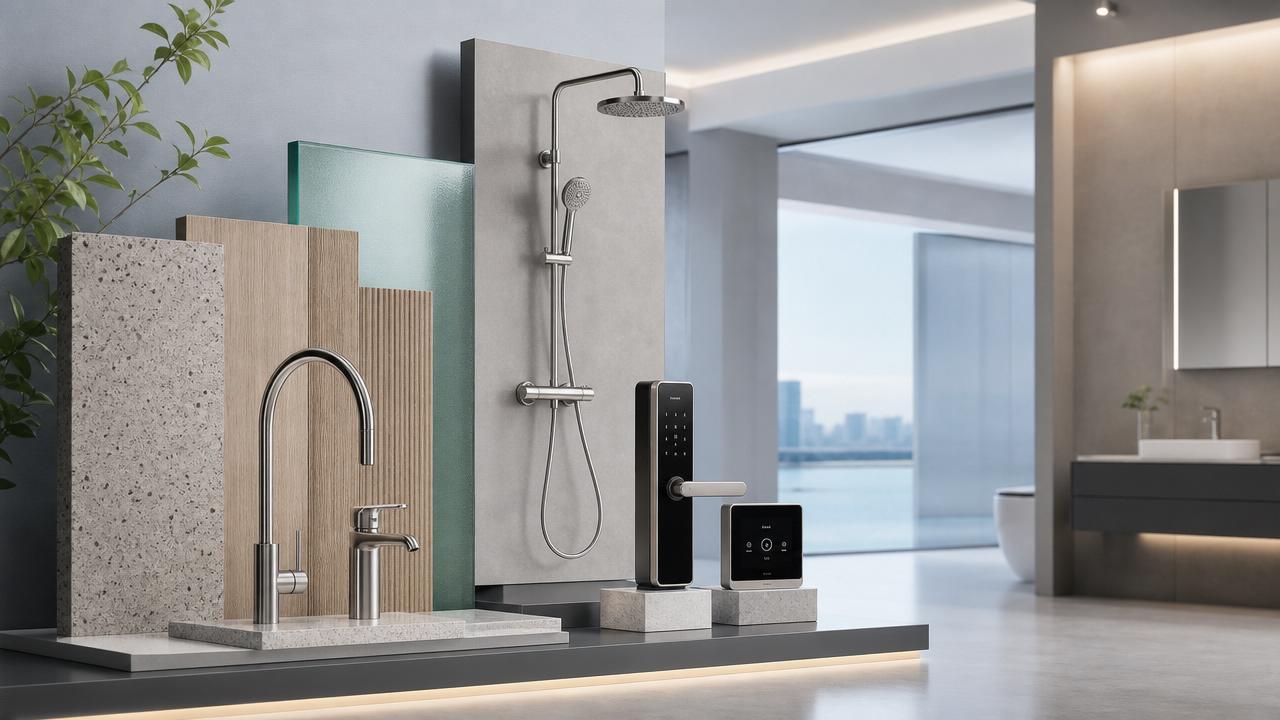
Building material trends are no longer just product updates—they are strategic signals shaping project value, compliance, and long-term market positioning. For enterprise decision-makers, understanding how sustainable surfaces, water-saving systems, and smart interior technologies are redefining interior specifications is essential to staying competitive in a rapidly evolving global construction landscape.
Why building material trends now influence boardroom decisions
For developers, manufacturers, distributors, and procurement leaders, building material trends now affect far more than finish selection. They shape capital planning, tender strategy, compliance risk, and brand positioning across residential and commercial projects.
Interior specifications used to be updated late in the project cycle. Today, they are reviewed earlier because regulations, utility costs, user expectations, and trade conditions can shift project economics before a contract is signed.
This is where GIAM creates practical value. Its Strategic Intelligence Center connects material science, hydraulic design, and industrial economics, helping decision-makers read market signals instead of reacting after costs, standards, or supply chains have already changed.
- Sustainable materials are increasingly linked to carbon goals, lifecycle cost, and project eligibility in green procurement frameworks.
- Water-saving systems have moved from optional upgrades to specification priorities in hospitality, residential towers, healthcare, and public buildings.
- Smart kitchen and bath systems now influence user experience, maintenance visibility, and premium positioning in competitive developments.
- Trade tariffs and regional standards can quickly change landed cost, approved vendor lists, and substitution feasibility.
Which building material trends are reshaping interior specs most rapidly?
1. Low-carbon and recycled-content surfaces
Tiles, panels, countertops, and decorative surfaces are being assessed not only for appearance and durability, but also for embodied carbon, recycled input, and responsible manufacturing. This changes how specifiers compare suppliers in early-stage project reviews.
2. Anti-bacterial and easy-maintenance materials
In sanitary spaces, healthcare, education, and high-traffic commercial interiors, surfaces that support hygiene and reduce maintenance intensity are becoming more relevant. The key is not marketing language, but how the material performs in the intended cleaning regime.
3. Water-saving sanitary systems
Water efficiency is now a specification issue tied to operating expenditure and environmental compliance. Faucets, shower systems, flush solutions, and concealed hydraulic components are increasingly evaluated as long-term cost controls rather than isolated fixtures.
4. Smart access and connected interiors
Smart locks, sensor-based controls, leak alerts, and app-connected kitchen and bath systems are expanding from luxury niches into mainstream premium projects. Their value lies in security, resource monitoring, and service efficiency.
The table below shows how major building material trends translate into specification criteria that enterprise teams can actually use during evaluation.
The practical message is clear: building material trends now affect technical documents, procurement scoring, and the total business case. If a material trend cannot be translated into a measurable project outcome, it should not dominate specification decisions.
How do these trends change procurement priorities?
Procurement teams are under pressure from all directions. They must control costs, avoid supply disruption, meet sustainability targets, and still deliver on design intent. This is why the old habit of buying by unit price alone is losing credibility.
The shift from price-first to risk-adjusted buying
When evaluating building material trends, enterprise buyers should ask whether a product reduces installation risk, maintenance burden, or future replacement frequency. A lower invoice price can still produce a higher total cost if failures, delays, or incompatibility emerge later.
Why specification clarity matters
Many procurement failures come from vague technical requirements. Words like premium, eco-friendly, or smart are too broad to protect project outcomes. Clear specification language should define expected performance, compatibility, service conditions, and approval documents.
- Confirm the actual use environment: wet area, high traffic, healthcare, hospitality, multifamily, or office.
- Map trend claims to performance needs: water efficiency, durability, hygiene, connectivity, or maintenance access.
- Review regional compliance expectations, especially where energy, water, and safety requirements vary.
- Check supply stability, lead time sensitivity, and substitution rules before tender finalization.
Application scenarios: where building material trends matter most
Not every trend has equal value in every project. Decision-makers gain more by matching material direction to operating reality than by copying the latest design narrative.
The following scenario table helps teams prioritize building material trends by project type and operational objective.
This comparison shows why a uniform specification strategy often fails. A hospitality operator may prioritize room uptime and aesthetic consistency, while a healthcare project may focus more on cleaning compatibility and reliable hydraulic performance.
What should enterprise buyers compare before approving a material?
Performance fit
Review whether the material suits actual traffic, humidity, cleaning chemicals, impact exposure, and expected service life. A trend-led choice is only useful if it holds up in routine use.
System compatibility
In kitchen, bath, and sanitary spaces, components do not perform in isolation. Concealed systems, visible fittings, wall substrates, drainage design, and access panels must work together to avoid hidden failure costs.
Compliance and documentation
Where projects involve green targets, water restrictions, or public-sector review, documentation matters. Product literature, installation guidance, and test-related support can affect approvals and avoid dispute during handover.
Supply resilience
A promising product can still be a weak specification choice if lead times are unstable or if regional replacement support is unclear. This is especially important in phased developments and cross-border procurement.
A practical procurement guide for trend-driven interior specifications
Enterprise decision-makers often need a repeatable method rather than more inspiration. The checklist below turns building material trends into a controlled evaluation process.
- Define the business objective first: lower operating cost, improve premium positioning, meet sustainability expectations, or reduce service calls.
- Separate must-have requirements from nice-to-have features. This avoids overpaying for functions that users will not value.
- Request use-case evidence, installation guidance, and maintenance considerations during technical review, not after purchase approval.
- Compare alternatives by total project impact, including replacement complexity, utility savings, and service access.
- Build substitution logic into procurement planning in case tariffs, freight, or standards force a regional change.
GIAM supports this process by turning fragmented sector signals into decision-ready intelligence. Instead of scanning isolated product announcements, enterprises can track broader trend evolution across materials, sanitary systems, and smart interior categories.
Standards, certification, and compliance: what cannot be ignored?
Building material trends become commercially relevant only when they survive compliance review. In many regions, water use, safety, emissions, and installation rules shape what can actually be specified and approved.
Key compliance checkpoints
- Water-related products should be reviewed against local flow, performance, and plumbing expectations.
- Interior surfaces may require attention to safety, durability, emissions, or hygiene claims depending on project type.
- Smart products should be checked for integration feasibility, maintenance access, and data-related operating implications.
- Imported materials may need additional document control where customs, tariffs, or regional specifications differ.
A common mistake is assuming one approval path fits every market. GIAM’s intelligence approach is useful here because trade shifts and standard updates often arrive faster than procurement manuals can be revised internally.
Common mistakes when interpreting building material trends
Mistake 1: Treating trend language as technical proof
Terms such as green, antibacterial, premium, and intelligent may be directionally useful, but they are not evaluation criteria on their own. Procurement teams need measurable relevance to the project.
Mistake 2: Ignoring downstream maintenance
A visually strong specification may create service headaches if replacement parts, cleaning methods, or installer familiarity are weak. Trend adoption should simplify operations, not complicate them.
Mistake 3: Copying another project’s specification
Even similar-looking projects can have very different usage intensity, climate conditions, regulatory limits, and cost structures. Benchmarking is helpful, but direct copying often leads to mismatch.
FAQ: what enterprise decision-makers ask most often
How should we evaluate building material trends without over-specifying?
Start from project objectives and operating risks. If a trend does not improve compliance readiness, maintenance cost, user appeal, or resource efficiency, it may not justify a higher specification level. Use a scorecard with technical fit, cost impact, supply stability, and long-term value.
Which trends usually matter most in kitchen and bath systems?
Water-saving performance, serviceable concealed systems, hygiene-oriented surfaces, and smart monitoring functions are currently among the most influential. Their relevance is strongest where projects need operational control and premium differentiation at the same time.
Are sustainable materials always more expensive?
Not necessarily. Some sustainable options may cost more upfront, but the decision should include durability, maintenance burden, and market positioning. In some bids, sustainability alignment also strengthens approval potential or tenant attractiveness.
What is the biggest risk in trend-led procurement?
The biggest risk is specifying fashionable features without checking compatibility, documentation, and service conditions. That creates cost later through redesign, delayed approvals, or operational inconsistency across sites.
Trend outlook: what to watch next
Building material trends will continue moving toward measurable efficiency, health-oriented functionality, and integrated digital control. The most valuable products will not simply look modern; they will help projects perform better over time.
Expect stronger convergence between low-carbon materials, water intelligence, and connected interior systems. This convergence will matter most in urban projects where operating cost pressure, compliance complexity, and user experience are all intensifying.
Why choose us for strategic insight on building material trends?
GIAM helps enterprise teams translate building material trends into specification decisions that are commercially realistic and technically grounded. Our focus spans core materials, sanitary spaces, and smart kitchen and bath systems, with close attention to evolving standards, tariffs, and market demand.
You can consult us on material parameter confirmation, product selection logic, delivery-cycle concerns, alternative sourcing paths, certification-related questions, and project-oriented market direction. We also support discussions around sample evaluation, specification refinement, and quotation communication for competitive project planning.
If your team is reviewing interior specifications for upcoming residential or commercial developments, now is the right time to align design intent with data-driven material intelligence. A well-timed conversation can reduce procurement uncertainty before it becomes a cost issue.
Industry Briefing
Get the top 5 industry headlines delivered to your inbox every morning.