
Industrial Equipment Standards Explained: Which Certifications Matter for Product Quality?
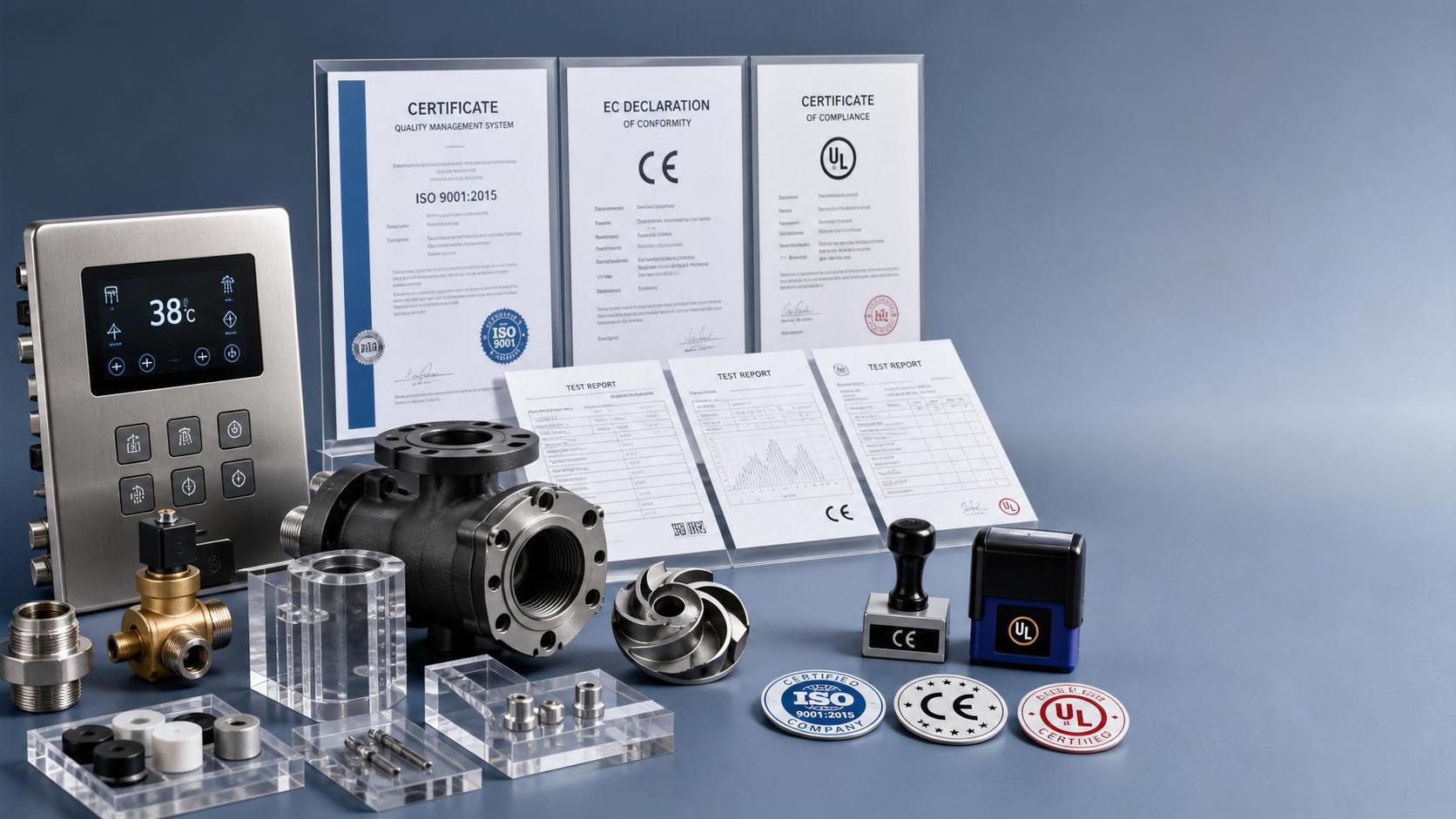
Industrial equipment standards sit at the center of product quality because they translate broad safety and performance expectations into measurable requirements. In sectors tied to buildings, sanitary systems, and smart kitchen and bath equipment, those requirements shape design choices, supplier approval, testing plans, and market access.
That matters more now because products are crossing more borders, combining more electronics, and facing tighter scrutiny on energy use, hygiene, and lifecycle risk. A certification mark can look simple on a label, yet the standard behind it often determines whether quality is proven, assumed, or vulnerable.
What industrial equipment standards really cover
At a practical level, industrial equipment standards define the baseline for consistency. They describe how a product should be designed, tested, documented, installed, or maintained under specific conditions.
Some standards focus on management systems. Others address electrical safety, pressure integrity, material composition, sanitation, electromagnetic compatibility, or environmental performance. The certification only has meaning when its scope matches the actual product risk.
This is why industrial equipment standards should never be treated as a generic checklist. A pump, an antimicrobial surface panel, a smart faucet controller, and a commercial kitchen appliance may share quality goals, but they do not face the same hazards.
Why certification decisions affect product quality
The quality impact begins long before final inspection. Standards influence tolerances, raw material selection, component traceability, validation methods, and even packaging instructions.
When the right certifications are built into development, quality teams gain a clearer decision framework. Nonconformities become easier to identify because acceptance criteria are already defined by recognized industrial equipment standards.
The reverse is also true. When a product carries incomplete or irrelevant certifications, quality risk often shifts downstream. Failures then appear during commissioning, customs review, warranty claims, or third-party audits.
The certifications that matter most
Not every mark has equal value. The strongest certifications are those tied to legal access, verified safety performance, and repeatable manufacturing control.
ISO standards for system discipline
ISO 9001 remains a core reference because it supports process control, corrective action, document discipline, and supplier management. It does not certify a product itself, but it strengthens the system producing it.
In building-related manufacturing, ISO 14001 and ISO 45001 also matter. They support environmental control and workplace safety, which increasingly influence customer qualification and project tender review.
CE marking for European market compliance
CE marking is essential for many products sold in the European Economic Area. It signals conformity with applicable directives or regulations, such as machinery, low voltage, EMC, or construction product requirements.
The important point is that CE is not a universal quality seal. Its value depends on technical documentation, risk assessment, test evidence, and the correct conformity route.
UL and related electrical safety marks
UL certification is widely recognized in North America for electrical and fire safety. It is especially relevant for powered devices, controls, smart fixtures, connected kitchen systems, and equipment installed in occupied spaces.
For smart building products, electrical reliability is not only about shock protection. It also includes overheating behavior, enclosure design, abnormal operation, and long-term component compatibility.
Sector-specific and material-specific approvals
Many products need narrower certifications to demonstrate actual fitness for use. Examples include NSF for food-contact or water systems, RoHS for restricted substances, and WRAS for water fittings in certain markets.
In architectural and sanitary applications, antimicrobial claims, water efficiency labels, slip resistance data, and corrosion testing can also become decisive. These are often more relevant than broad corporate certificates.
Where the current industry pressure is coming from
Several trends are reshaping how industrial equipment standards are evaluated. One is the convergence of mechanical products with sensors, software, and remote control functions.
Another is the growing link between standards and sustainability. Energy-saving building codes, water conservation targets, and carbon-related procurement rules now affect certification priorities across global construction supply chains.
This is where GIAM’s market intelligence context becomes useful. In building materials, sanitary spaces, and smart interior systems, standards are no longer isolated technical documents. They are market signals tied to urbanization demand, premium positioning, and cross-border project qualification.
The shift toward antibacterial materials, smart locks, and water-saving technologies also means certification review must extend beyond static product safety. It now includes performance claims, data interfaces, and long-term user environment exposure.
How to interpret certifications in real projects
The most useful question is not whether a product has certifications. It is whether those certifications align with the product’s function, destination market, and actual risk profile.
For example, a smart shower system may require attention to electrical enclosure safety, EMC behavior, water-contact material compliance, and water efficiency performance. A single certificate will not cover all of that.
A wall panel used in healthcare interiors may need a different evidence set, including fire behavior, cleanability, chemical resistance, and validated antimicrobial claims. Generic industrial equipment standards would not be enough on their own.
Useful checkpoints during evaluation
- Confirm the exact standard number and revision date, not just the logo.
- Check whether the certification covers the full product or only selected components.
- Review test conditions and any limitations on installation or operating environment.
- Verify certificate validity through the issuing body when risk is significant.
- Match claims on catalogs and packaging with technical file evidence.
Common mistakes behind certification gaps
One common mistake is assuming ISO certification proves end-product performance. It proves management discipline, which is valuable, but it does not replace product-specific verification.
Another is confusing self-declaration with independent certification. In some regulatory systems, self-declaration is legitimate. In others, third-party testing or notified body involvement is necessary.
A third issue appears when suppliers present outdated certificates after a design revision. Any change in electronics, materials, software logic, or pressure-bearing parts may affect certification relevance.
Industrial equipment standards also lose practical value when document control is weak. Missing declarations, untranslated reports, and inconsistent model codes often become audit findings before any physical defect is discovered.
Building a stronger internal standard review process
A reliable process starts with product mapping. Separate products by hazard type, intended market, user environment, and regulatory exposure. Then assign the industrial equipment standards that actually govern each category.
It also helps to connect standards review with supplier onboarding and engineering change control. That reduces the gap between what was certified at launch and what is still compliant after sourcing or design changes.
In many organizations, the best results come from combining technical standards tracking with broader intelligence on trade tariffs, building codes, energy policy, and demand shifts. GIAM’s approach reflects that wider view: standards are part of strategic product positioning, not just regulatory paperwork.
A practical next step
A useful next move is to review one active product line and list every claimed certification beside its target market, core risks, and current technical file. That simple comparison often reveals overlaps, gaps, or outdated assumptions.
From there, industrial equipment standards become easier to use as decision tools. The goal is not to collect more marks than necessary. It is to choose the certifications that prove product quality, support safe use, and hold up under real commercial scrutiny.
Industry Briefing
Get the top 5 industry headlines delivered to your inbox every morning.