
Industrial Foundations: When Lower Upfront Cost Becomes a Site Risk
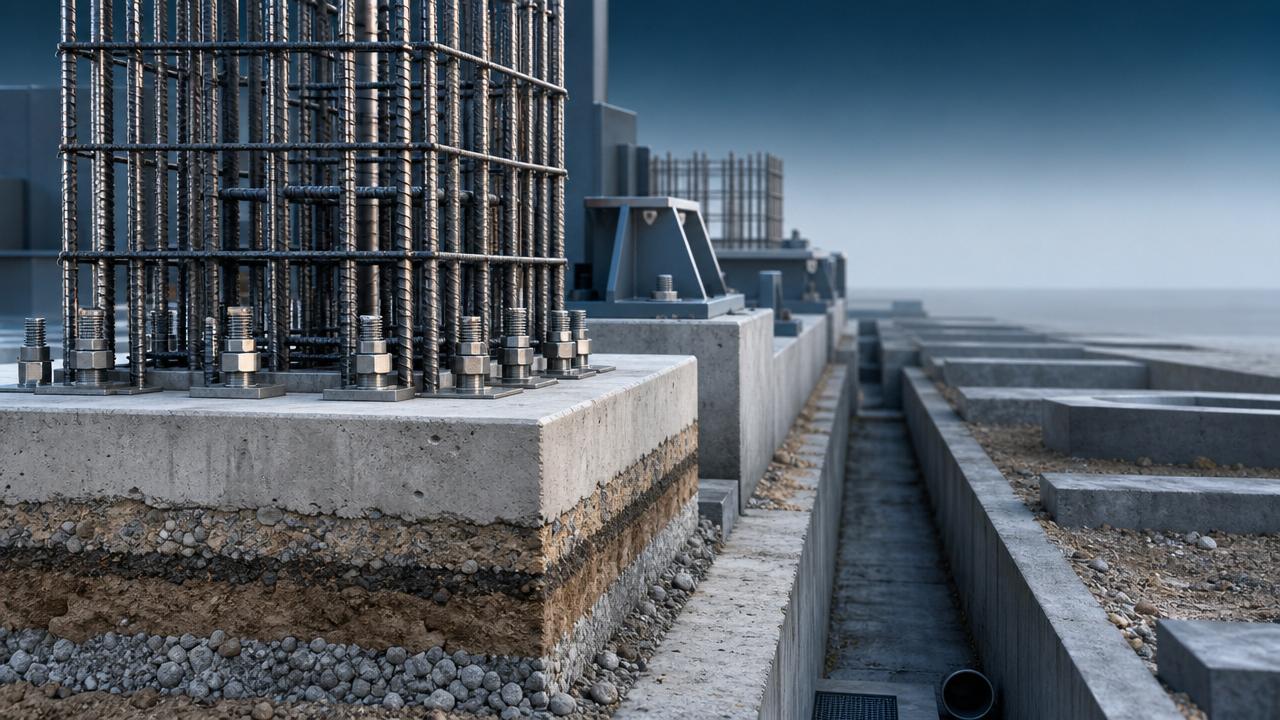
Industrial foundations may look like a cost-saving win at the bid stage, but for quality control and safety teams, lower upfront pricing can conceal long-term site risks. From load instability and material failure to compliance gaps and operational delays, the real cost often appears after installation. This article explores how smarter evaluation of industrial foundations helps prevent hidden liabilities and protects project performance.
Why low-price industrial foundations often create high-risk outcomes
In procurement reviews, industrial foundations are often treated as a civil package line item rather than a strategic risk point. That is where many projects go wrong. A lower quote can reflect thinner reinforcement planning, weaker concrete quality control, limited subgrade investigation, reduced corrosion protection, or incomplete documentation for inspection and handover. For quality and safety managers, these gaps do not stay on paper. They become real site exposure.
Across industrial, commercial, and mixed-use construction, foundations carry more than dead load. They influence equipment alignment, vibration behavior, drainage reliability, waterproofing continuity, and safe maintenance access. When industrial foundations are under-specified or poorly executed, the effect spreads upward into steel structures, prefabricated modules, sanitary zones, utility shafts, smart kitchen systems, and interior fit-out tolerance.
This is especially important in GIAM’s field of observation, where core building materials, water systems, and intelligent spatial products interact inside increasingly performance-driven projects. A cheap base under a smart, premium, or hygienic space can undermine the entire value chain. That is why industrial foundations should be evaluated not only by initial cost, but by life-cycle risk, compliance burden, and installation resilience.
- Lower initial cost may hide reduced geotechnical assessment, leading to uneven settlement and future rework.
- Material substitutions can weaken durability in wet, chemical, or vibration-prone environments.
- Incomplete records make inspection, root-cause tracing, and claims management much harder after defects appear.
- Tolerance issues at the foundation stage often disrupt downstream installation of sanitary equipment, partitions, machinery, and smart systems.
What quality and safety teams should inspect before approval
A sound decision on industrial foundations starts before concrete is poured. Site teams should review design assumptions, soil data, environmental exposure, groundwater conditions, and the expected interaction between the foundation and the systems above it. This matters in warehouses, production halls, food-service back-of-house zones, utility platforms, and commercial developments where heavy traffic and moisture cycles are common.
Key pre-approval checkpoints
- Verify whether the geotechnical report matches actual site conditions, including fill depth, bearing capacity, groundwater variation, and contamination risk.
- Check whether the industrial foundations design reflects equipment loads, impact loads, dynamic loads, and future expansion loads instead of only nominal static loads.
- Review concrete mix design, curing plan, rebar grade, anchor system details, and moisture protection measures.
- Confirm tolerances for levelness, bolt positioning, penetrations, embedded parts, and drainage falls that affect downstream installation.
- Ask for inspection and test records, including cube or cylinder strength records where relevant, compaction evidence, and hold-point signoff.
For quality control personnel, the goal is not to reject low cost automatically. It is to determine whether the low price results from efficiency or from risk transfer. Efficient design optimization is acceptable. Hidden degradation of structural margin, durability, or compliance is not.
Comparison table: low-bid industrial foundations vs risk-controlled foundations
The table below helps procurement, QC, and EHS teams compare industrial foundations beyond the contract sum. It focuses on factors that usually drive future defects, shutdowns, or claims.
The difference is rarely visible at handover day. It becomes visible months later through floor movement, mounting difficulty, drainage defects, maintenance hazards, and warranty disputes. That is why industrial foundations should be screened like a risk asset, not a commodity line item.
Which site scenarios make cheaper industrial foundations especially dangerous?
Not every project carries the same foundation risk. Some settings amplify the consequences of underperformance. Safety managers should flag these scenarios early because a minor design shortcut can trigger disproportionate operational disruption.
High-exposure application scenarios
- Equipment-heavy production areas where vibration, anchor precision, and slab flatness directly affect uptime.
- Sanitary and wet-service areas where water migration can accelerate deterioration, mold risk, or hygiene nonconformance.
- Mixed commercial spaces using premium finishes or smart systems that require tight substrate tolerance.
- Outdoor logistics and loading zones exposed to freeze-thaw cycles, vehicle loads, and drainage stress.
- Retrofit projects where unknown existing conditions increase the chance of mismatch between old and new structural behavior.
GIAM’s cross-sector view is useful here because site risk rarely sits in one discipline. Foundations influence water management, equipment installation, material durability, and interior performance at the same time. A narrow structural review can miss these system interactions.
Procurement guide: how to evaluate industrial foundations without overpaying
The right procurement method is not “buy the most expensive.” It is “buy the most controllable risk profile.” Quality teams should create a review structure that separates genuine value engineering from hidden defect exposure. A disciplined bid review often saves more money than a late-stage repair budget.
A practical evaluation framework
- Map the load case clearly. Include current use, maintenance traffic, possible equipment upgrades, and shock or vibration conditions.
- Define exposure class assumptions. Moisture, salts, chemicals, thermal movement, and washdown routines matter as much as load.
- Set measurable acceptance criteria for levelness, anchor location, curing duration, and documentation completeness.
- Require method statements and inspection test plans before award, not after mobilization.
- Compare bids by normalized scope. Remove the illusion of savings caused by exclusions, assumptions, or deferred responsibilities.
The following selection table can support internal review meetings for industrial foundations when bids appear close in price but differ significantly in controllability.
This kind of structured review protects budgets as well as safety. It reduces the chance that a contractor wins on price by shifting investigation, correction, or downtime costs to the owner later.
Standards, compliance, and documentation: where hidden risk usually appears
For safety managers, documentation quality is often the fastest way to detect whether industrial foundations are being treated seriously. Sound projects usually show traceable submittals, inspection records, deviation logs, and clearly assigned responsibilities. Weak projects rely on verbal assurances and fragmented records.
Compliance areas worth checking
- Applicable structural and concrete codes used in design assumptions and site execution.
- Health and safety procedures for excavation, formwork, lifting, and temporary stability.
- Moisture control, waterproofing interfaces, and drainage detailing where sanitary or utility systems are involved.
- Inspection and handover records that prove what was installed, when it was checked, and what deviations were accepted.
GIAM’s intelligence model is valuable because compliance does not stand still. Building standards, trade tariffs, energy regulations, and material sourcing conditions continue to shift. A foundation package that seems cheap today may become operationally expensive if it creates rework under updated site requirements or material substitution pressures.
Common misconceptions about industrial foundations
“If it passes initial strength tests, it is good enough”
Not necessarily. Initial strength is only one aspect. Durability, alignment, curing quality, reinforcement placement, and interface detailing all affect long-term performance. Many failures emerge from moisture ingress, movement, or tolerance issues rather than compressive strength alone.
“Foundation risk belongs only to structural engineers”
That is too narrow. Industrial foundations affect safety access, equipment mounting, interior finish life, water management, and sanitation performance. QC personnel, EHS teams, MEP reviewers, and operations managers all have a stake in getting the base right.
“Cheaper now is acceptable because we can repair later”
Repair is rarely simple. Remediation can interrupt production, delay fit-out, trigger warranty disputes, and create secondary defects in finishes or utilities. The total cost often exceeds the original savings several times over, even before considering reputational damage inside project governance.
FAQ: practical questions from QC and safety teams
How do I know whether low-cost industrial foundations are a real bargain or a future liability?
Review what has been removed to achieve the lower price. Check investigation scope, reinforcement detail, curing provisions, survey control, moisture detailing, and inspection records. If the discount comes from process efficiency or smart sequencing, it may be valid. If it comes from uncertainty, missing scope, or weak verification, it is a liability in disguise.
Which projects should apply stricter review to industrial foundations?
Use stricter review for wet zones, heavy-load areas, vibration-sensitive machinery bases, retrofit conditions, premium finish projects, and sites with uncertain ground history. In these environments, small foundational defects often multiply into expensive operational or compliance problems.
What documents should be mandatory before installation approval?
At minimum, ask for design assumptions, relevant site investigation references, material submittals, method statements, inspection and test plans, survey control records, and deviation management procedures. If embedded items or equipment anchors are involved, insist on dimensional verification steps before and after placement.
Can GIAM support decision-making if we are comparing multiple suppliers or project approaches?
Yes. GIAM’s strength is in connecting material science, hydraulic logic, market shifts, and project-value implications. That helps teams compare industrial foundations not only by structural intent, but also by downstream impact on sanitary systems, smart spatial products, premium materials, and long-term commercial competitiveness.
Why choose us for industrial foundations insight and decision support
GIAM is positioned for teams that need more than generic commentary. We track how material performance, spatial intelligence, water-saving systems, sanitary requirements, and market dynamics interact across the built environment. For quality control and safety managers, that means sharper judgment on where a low price is reasonable and where it introduces hidden site risk.
You can contact us for practical support on industrial foundations and adjacent project decisions, including parameter confirmation for use conditions, supplier and solution comparison, delivery-cycle review, compliance and documentation checkpoints, sample evaluation logic, and quotation discussion from a life-cycle risk perspective. If your project also involves premium building materials, sanitary areas, or smart kitchen and bath systems, we can help connect foundation decisions to the broader performance of the space.
When the base is wrong, every layer above it pays the price. When the base is reviewed intelligently, project safety, installation quality, and operational value become much easier to protect. That is the difference between buying a lower number and building reliable industrial foundations.
Industry Briefing
Get the top 5 industry headlines delivered to your inbox every morning.