
Material Science Trends in Building Products: Which Innovations Are Ready for Commercial Use?
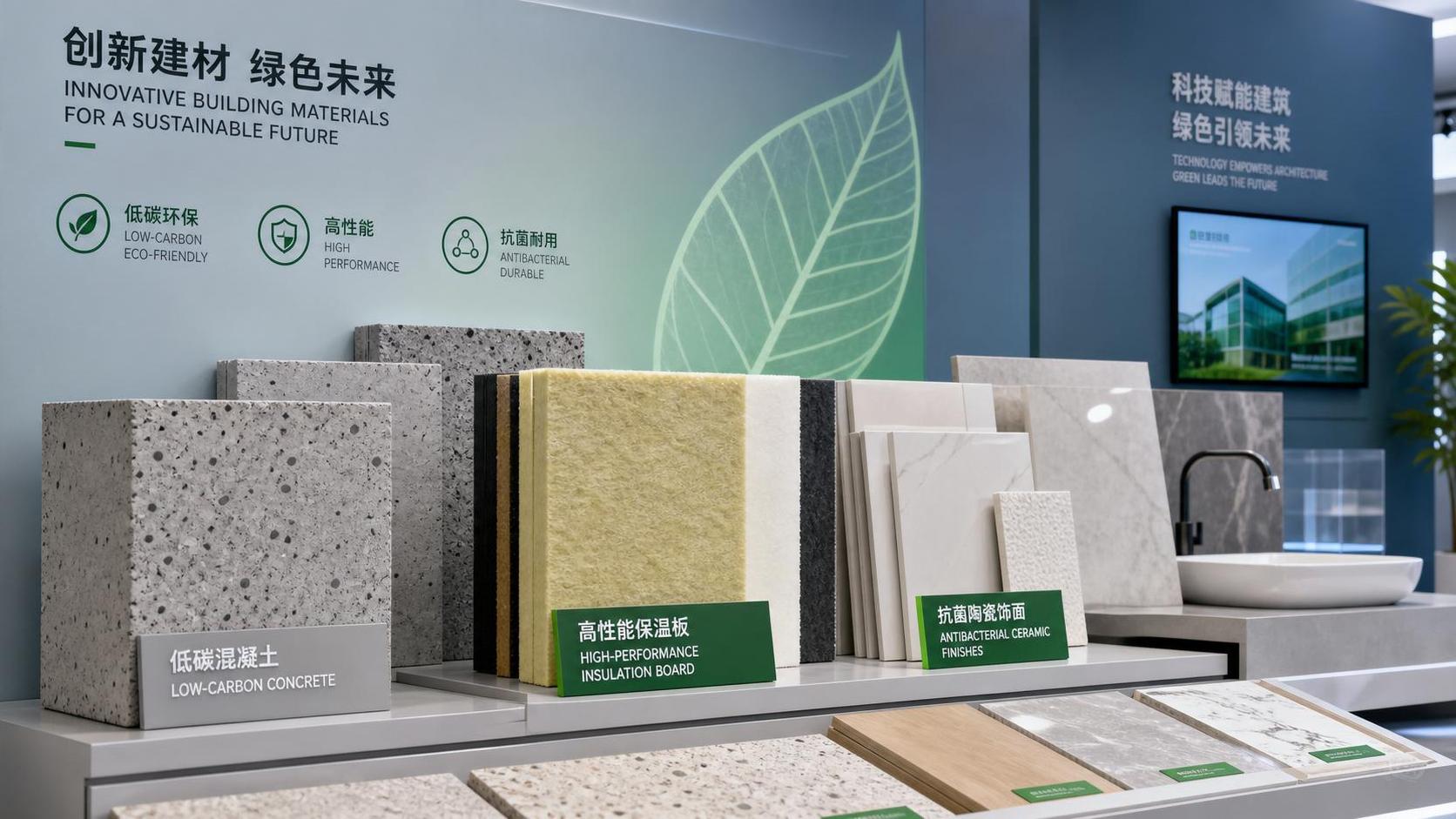
Material science trends are changing building products faster than many procurement cycles can absorb. Low-carbon panels, antimicrobial finishes, bio-based composites, and advanced insulation are no longer niche ideas, yet commercial readiness still varies widely across categories.
That distinction matters across residential projects, hospitality, healthcare interiors, office retrofits, and public infrastructure. A material may perform well in pilot testing, but scale, certification, maintenance, and price stability decide whether it belongs in a live specification.
For platforms such as GIAM, where building materials, sanitary systems, and smart kitchen and bath products are tracked together, the useful question is practical: which innovations can already support safer, lower-carbon, and more intelligent spaces without introducing avoidable delivery risk?
What commercial readiness really means
In building products, innovation is not judged by novelty alone. Commercial use starts when a material can meet repeatable performance targets, pass required standards, fit existing manufacturing methods, and remain available across multiple markets.
This is why material science trends should be read through a systems lens. Product chemistry, fabrication, logistics, installation skill, cleaning protocols, lifecycle cost, and trade policy all influence whether a promising material becomes a viable business option.
In practice, commercially ready innovation often looks less dramatic than laboratory headlines suggest. It may be a reformulated adhesive, a recycled-content ceramic body, or a coating that improves hygiene without changing the installer workflow.
Why the market is paying closer attention
Several pressures are converging. Carbon accounting is reaching the material level. Energy codes are tightening. Water efficiency is becoming a baseline expectation. Indoor health standards are being discussed alongside aesthetics and durability.
At the same time, tariffs, regional sourcing strategies, and volatile transport costs are changing the economics of material substitution. A technically strong product can still fail commercially if it depends on fragile supply chains or inconsistent raw inputs.
GIAM’s intelligence model is relevant here because material science trends do not sit in isolation. Antibacterial surfaces, water-saving fixtures, smart locks, and premium finishing systems increasingly enter the same project brief and compete for the same budget.
The innovations already crossing into mainstream use
Low-carbon cement and concrete alternatives
Among current material science trends, lower-carbon binders are moving fastest into commercial use. Blended cements, supplementary cementitious materials, and optimized mix designs are already appearing in large projects where embodied carbon targets are formalized.
The key advantage is compatibility. Many options reduce emissions while staying close to established casting, curing, and testing routines. Performance verification is still essential, especially for structural timing and regional code acceptance.
High-performance insulation systems
Advanced insulation is another category with clear commercial traction. Aerogel-enhanced products, vacuum insulated panels in selected assemblies, and improved mineral wool systems are being used where space efficiency and thermal performance justify the premium.
This matters in dense urban retrofits, facades, roofs, and premium interiors. When energy codes tighten and floor area is valuable, thermal performance per millimeter becomes a stronger purchasing factor than headline material novelty.
Antimicrobial and easy-clean surfaces
Surface technologies have matured quickly after the global focus on hygiene. Antimicrobial laminates, treated ceramics, copper-alloy touchpoints, and non-porous engineered surfaces are now common in healthcare, hospitality, transport, and sanitary environments.
Commercial readiness is strongest where the claim is narrow and testable. Products positioned as easier to clean, stain resistant, or microbial growth resistant tend to succeed more often than broad, difficult-to-verify health claims.
Recycled-content and circular finish materials
Tiles, panels, countertops, acoustic boards, and decorative surfaces with recycled content are steadily moving into specification lists. This reflects one of the most visible material science trends: improving circularity without compromising visual quality.
Commercial adoption increases when manufacturers can document feedstock consistency, emissions profile, and end-of-life logic. In interior products, appearance remains decisive. Sustainable content is rarely enough if shade variation or surface stability becomes unpredictable.
Promising categories that still need caution
Bio-based composites
Bio-based panels, fibers, and resins are attracting attention because they align with carbon reduction and renewable sourcing goals. Yet commercial readiness varies sharply depending on moisture resistance, fire performance, dimensional stability, and regional certification.
They can work well in non-structural interiors, acoustic applications, and decorative components. Wider rollout still depends on proving durability under real cleaning cycles, humidity shifts, and long replacement intervals.
Phase-change materials and smart thermal skins
These solutions are technically compelling because they promise dynamic thermal regulation. However, the business case often remains difficult outside premium or highly engineered projects. Installation complexity and uncertain payback slow broader adoption.
Self-healing and highly responsive coatings
Self-healing materials generate strong interest in infrastructure and facade maintenance. Still, many products remain in demonstration or narrow commercial phases. Buyers need long-term evidence, not only accelerated lab performance data.
Where these material science trends create business value
The value case is different across product families. In sanitary spaces, antimicrobial surfaces and water-saving materials can support hygiene, maintenance efficiency, and environmental positioning at the same time.
In kitchens and bath systems, material science trends increasingly overlap with smart functionality. Heat resistance, chemical durability, sensor integration, and low-porosity finishes shape product performance as much as visual design.
In facades and envelope systems, insulation innovation has direct operational impact. In interior finish packages, recycled content and low-emission formulations affect both compliance and brand perception. In every case, value comes from measurable fit, not trend alignment alone.
How to judge a material beyond the launch claim
A useful review process compares product narratives with operating realities. Material science trends often sound strongest at launch, but reliable screening comes from asking what happens after installation, during maintenance, and across repeat orders.
- Check whether test data comes from recognized standards and relevant use conditions.
- Compare embodied carbon claims with transport distance and likely replacement cycles.
- Review whether installers need new tools, new curing steps, or new surface preparation.
- Look for batch consistency, not only one successful prototype run.
- Confirm that cleaning agents, moisture exposure, and abrasion patterns match the intended setting.
- Track tariff exposure and raw material dependency for products with global sourcing.
This is where GIAM-style market intelligence becomes more useful than isolated product brochures. Combining materials data, regulatory changes, and commercial signals gives a clearer view of which material science trends are moving from interest to dependable demand.
What to watch over the next planning cycle
The next wave of commercially relevant material science trends will likely be defined by integration. Materials will not be judged only on sustainability or strength. They will be judged on how well they support water efficiency, smart controls, hygiene, and long-term asset performance together.
For that reason, the strongest opportunities may come from adjacent upgrades rather than radical substitution. A lower-carbon ceramic line with better antimicrobial performance, or an insulation package designed for retrofit speed, often has a faster route to market than a fully unfamiliar material family.
A sensible next step is to map innovation against real project conditions: compliance demands, climate exposure, maintenance routines, sourcing risk, and budget tolerance. That approach turns material science trends from abstract signals into a working shortlist for specification, comparison, and ongoing market tracking.
Industry Briefing
Get the top 5 industry headlines delivered to your inbox every morning.