Modern sanitary trends buyers should watch this year
For business evaluators tracking product viability, compliance, and market demand, modern sanitary trends are becoming a critical signal of where construction and interior investment is heading. From water-saving systems and antibacterial materials to smart touchless solutions, this year’s shifts are reshaping procurement standards, project value, and brand positioning across residential and commercial spaces.
Why modern sanitary trends matter more in this year’s procurement decisions
Modern sanitary trends are no longer a surface-level design topic. For evaluators in building materials, hospitality, healthcare, retail, office fit-outs, and residential development, they now influence compliance risk, lifecycle cost, maintenance planning, water efficiency targets, and end-user expectations.
The strongest market shift is convergence. Sanitary products are being judged not only by aesthetics, but also by hygiene performance, sensor reliability, installation flexibility, sustainability value, and compatibility with broader smart space systems.
This is especially relevant in cross-border sourcing and project evaluation. Tariff changes, evolving energy-saving rules, and tighter health expectations mean buyers cannot rely on old sanitary specifications. They need updated intelligence and scenario-based assessment.
- Residential projects are prioritizing comfort, lower utility consumption, and easier maintenance.
- Commercial spaces are under pressure to improve hygiene perception and reduce operating costs.
- Public and healthcare environments increasingly require durable surfaces and touchless functionality.
- Premium developments are using modern sanitary trends to support brand positioning and asset value.
Which modern sanitary trends are shaping market demand right now?
For business evaluators, the key question is not which trend looks attractive, but which trend has measurable procurement relevance. The most important modern sanitary trends this year combine user health, resource efficiency, and digital integration.
1. Water-saving systems are becoming a baseline, not a premium add-on
Low-flow faucets, dual-flush toilets, pressure-optimized shower systems, and leak-control components are moving into mainstream specifications. Buyers are increasingly comparing projected water savings against capital cost and maintenance complexity.
2. Antibacterial and easy-clean materials are gaining commercial value
Surfaces that resist staining, microbial buildup, and chemical degradation are attracting attention in hotels, healthcare, education, and high-traffic mixed-use projects. The benefit is not only hygiene perception but also lower cleaning labor and longer visual appeal.
3. Touchless operation is expanding beyond luxury applications
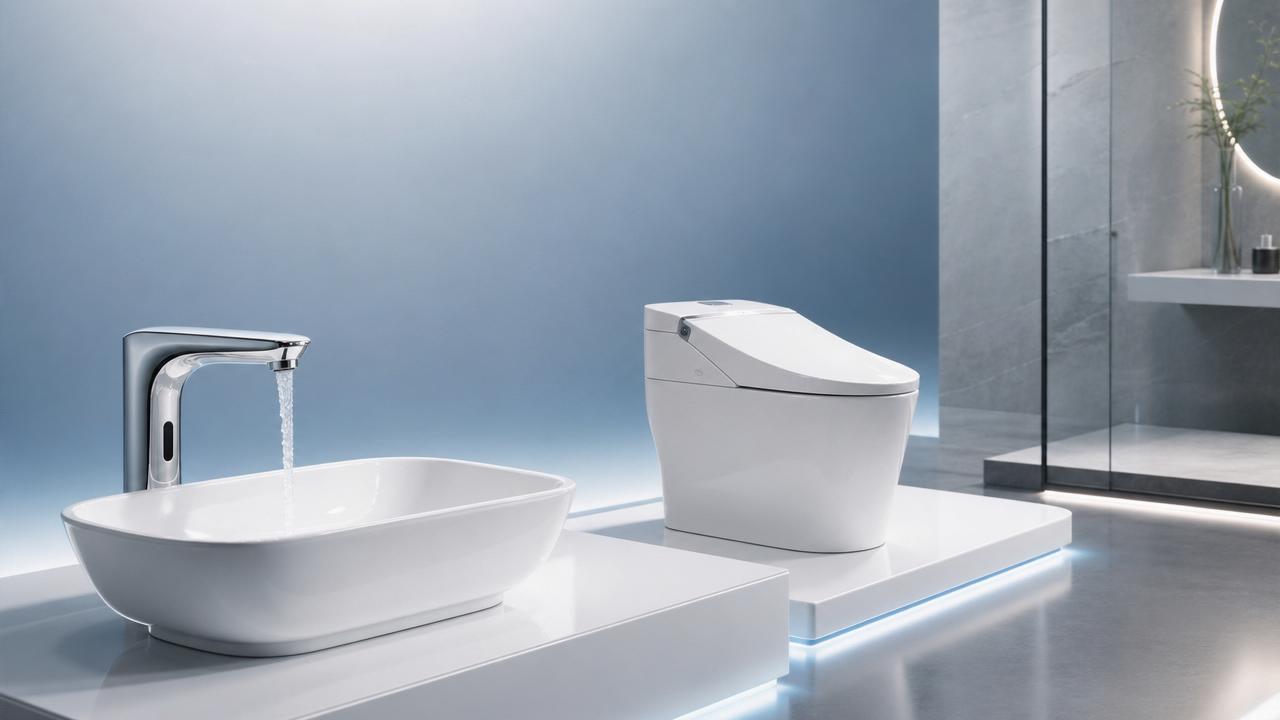
Sensor faucets, automatic flushing, touch-free soap dispensers, and integrated access controls are increasingly evaluated as practical risk-reduction tools. In commercial spaces, touchless systems also support brand messaging around safety and modernity.
4. Smart integration is entering the sanitary category
Connected monitoring, usage tracking, temperature control, occupancy-based operation, and compatibility with building management systems are becoming differentiators. Evaluators should check where digital features create actual operating value rather than unnecessary cost.
5. Minimalist forms with hidden performance upgrades are in demand
Many buyers now prefer designs that look simple but offer stronger concealed engineering: quieter flushing, better sealing, anti-limescale internal channels, modular cartridges, and easier service access. This trend matters because maintenance teams often inherit the consequences of poor hidden design.
How should buyers compare modern sanitary trends across project types?
The table below translates modern sanitary trends into practical evaluation criteria across major project environments. It helps business evaluators avoid one-size-fits-all selection logic.
The comparison shows that modern sanitary trends should be read through use intensity and lifecycle implications. A residential buyer may prioritize cost-balanced efficiency, while a hospital evaluator must prioritize hygiene continuity and maintenance predictability.
What technical indicators should business evaluators check first?
A visually attractive sanitary product can still become a weak investment if technical indicators are poorly matched to the project. Modern sanitary trends should therefore be tested against measurable procurement criteria, not presentation alone.
The table below highlights practical indicators that often determine whether a sanitary solution performs well after handover.
For evaluators, the strongest approach is to build a weighted scoring model. Water use, material durability, and serviceability should usually carry more weight than visual novelty when projects face high occupancy or tight maintenance budgets.
A practical checklist before approving specification
- Confirm whether the sanitary system is aligned with local plumbing conditions and pressure behavior.
- Review cleaning chemical compatibility for coatings, seals, and sensor windows.
- Ask how spare parts, cartridges, valves, or batteries will be supported after project completion.
- Verify whether touchless and smart units can be serviced without disrupting wall or countertop finishes.
How do cost, alternatives, and total value compare?
One of the biggest pain points for business evaluators is budget pressure. Modern sanitary trends often appear to raise upfront cost, but the right question is whether they reduce lifecycle expense, improve occupancy appeal, or support compliance-driven asset value.
The table below compares common sanitary solution paths from a decision-making perspective.
This comparison makes one point clear: not every project needs the most advanced configuration. The strongest value often comes from matching modern sanitary trends to traffic profile, cleaning model, energy targets, and brand positioning rather than simply selecting the newest option.
What standards and compliance points should not be overlooked?
Compliance is where many sanitary evaluations become complicated. Requirements vary by market, project type, and import route. Business evaluators should review performance claims with attention to local plumbing codes, water efficiency schemes, material safety expectations, and electrical safety where smart or sensor-based products are involved.
Common areas to verify
- Water efficiency labeling or relevant regional consumption criteria.
- Material suitability for potable water contact, where applicable.
- Electrical and ingress protection considerations for sensor-operated products.
- Accessibility expectations in public or institutional sanitary spaces.
- Cleaning and hygiene protocol compatibility for healthcare and high-traffic environments.
This is where GIAM’s intelligence-led approach is especially useful. By tracking shifts in global energy-saving building standards, trade tariffs, and evolving sanitary technologies, GIAM helps decision teams connect technical selection with market-entry and compliance realities.
How can GIAM support better sanitary evaluation and sourcing strategy?
Modern sanitary trends are moving quickly, and isolated product comparison is no longer enough. Buyers need context: which trends are becoming specification norms, which upgrades are commercially justified, and which supply-side signals may affect availability or cost.
GIAM is positioned around exactly that need. Its Strategic Intelligence Center combines expertise from material science, hydraulic design, and industrial economics to turn fragmented sector developments into usable procurement insight.
What this means for evaluators
- You can assess sanitary products not just by catalog claims, but by how they fit future building standards and urban demand patterns.
- You can compare water-saving technologies, antibacterial materials, and smart systems within a wider commercial and regulatory landscape.
- You can better identify where premium specification creates measurable competitive advantage in project bidding or brand positioning.
For firms evaluating sanitary categories across borders or sectors, this broader intelligence reduces the risk of short-term buying decisions that become costly under new standards, tariff changes, or user expectations.
FAQ: practical questions buyers ask about modern sanitary trends
Are modern sanitary trends mainly relevant to premium projects?
No. Some trends, such as touchless controls or connected systems, may enter the market first through premium projects. However, water-saving fixtures, easy-clean surfaces, and improved hygiene design are now relevant across budget levels because they influence operating cost, maintenance labor, and user perception.
How should buyers balance design appeal and technical performance?
Start with use conditions. In high-traffic or compliance-sensitive spaces, technical resilience should lead the decision. In branded hospitality or luxury residential settings, design carries more weight, but performance still needs to support cleaning routines, spare-part access, and water efficiency goals.
Which modern sanitary trends usually deliver the fastest measurable return?
Water-saving fixtures often provide the clearest early return because reduced consumption can be tracked directly. In commercial settings, touchless systems may also show fast value through lower contact concerns, stronger user confidence, and better control of resource use.
What is the most common procurement mistake?
A frequent mistake is approving modern sanitary trends based on appearance or showroom experience without checking serviceability, local compatibility, and maintenance burden. Another is treating all smart features as equally valuable, even when the site cannot support them operationally.
Why choose us for sanitary trend intelligence and evaluation support?
If your team is reviewing modern sanitary trends for sourcing, project specification, or market positioning, GIAM can help you move from broad trend awareness to decision-ready evaluation. Our focus is not generic content. It is actionable intelligence for core building materials, sanitary spaces, and smart kitchen and bath systems.
You can contact us to discuss specific procurement questions, including parameter confirmation for water-saving and touchless products, sanitary material selection by project scenario, delivery cycle concerns under changing trade conditions, certification and compliance review, sample support planning, custom specification strategy, and quotation communication aligned with your target market.
For business evaluators under pressure to justify cost, reduce risk, and improve specification accuracy, GIAM provides the market visibility and technical perspective needed to evaluate modern sanitary trends with greater confidence and commercial clarity.
Industry Briefing
Get the top 5 industry headlines delivered to your inbox every morning.