
SAMR to Complete 1,800+ Standard Revisions by 2026 for Ceramics, Sanitaryware & Hardware
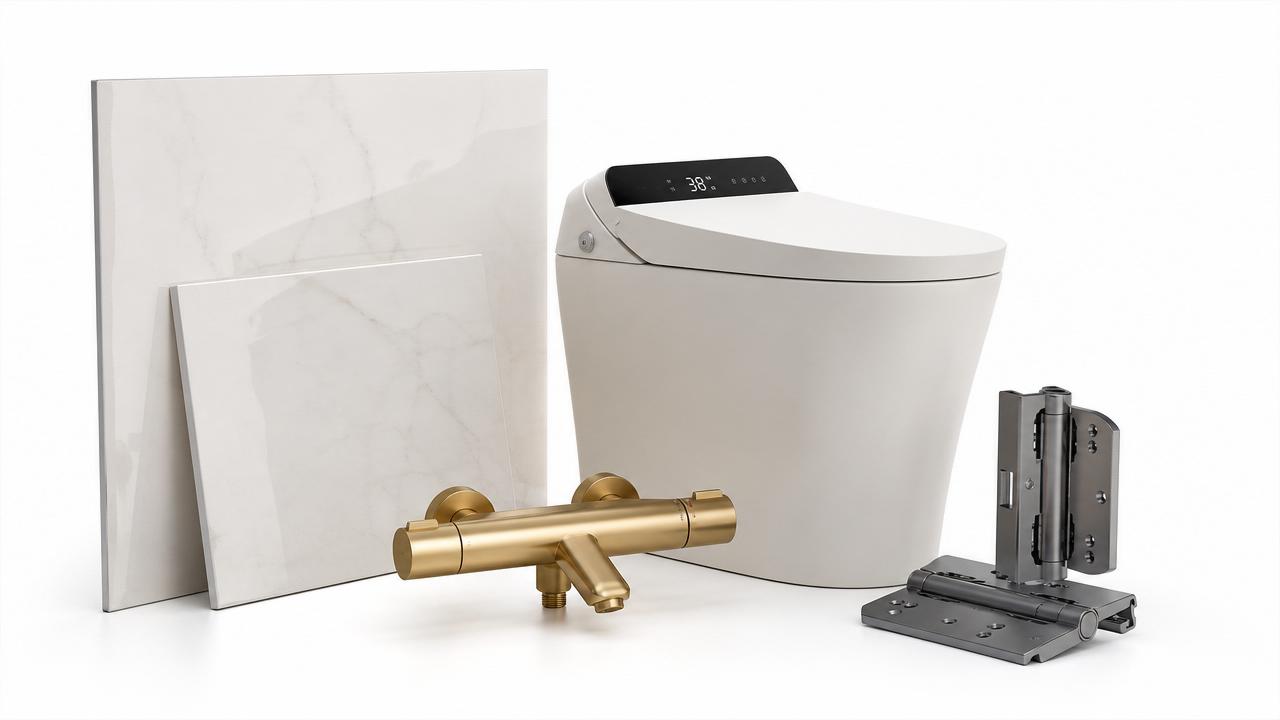
On May 14, 2026, China’s State Administration for Market Regulation (SAMR) announced a targeted standardization initiative covering ten traditional industries—including petrochemicals, building materials, and hardware—with a goal of completing over 1,800 national standard (GB) revisions and new formulations in 2026. Notably, mandatory GB standards for export-critical products—such as architectural ceramics, smart toilets, faucets, and door/window hardware—will undergo upgrades. Multiple standards are slated for accelerated alignment with IEC/ISO international references, aiming to strengthen global market acceptance and regulatory consistency of Chinese-made goods. This development directly affects enterprises engaged in production, export, and supply chain management across these high-volume export categories.
Event Overview
On May 14, 2026, the State Administration for Market Regulation (SAMR) issued an official notice stating that, in 2026, it will focus on ten traditional industrial sectors—including petrochemicals, building materials, and hardware—and advance the formulation or revision of more than 1,800 national standards. Among these, mandatory GB standards for key export products—including architectural ceramics, smart toilets, faucets, and door/window hardware—are explicitly prioritized for upgrading. The notice further specifies that several of these standards will be expedited toward convergence with IEC and ISO international standards to improve international recognition and compliance alignment.
Industries Affected
Direct Exporters and Trading Enterprises
These enterprises face direct compliance implications, as upgraded mandatory GB standards may precede or inform import requirements in key overseas markets (e.g., EU CE marking updates, U.S. DOE efficiency rules, or ASEAN mutual recognition protocols). Changes in GB test methods, labeling, or safety thresholds could trigger re-certification needs or documentation adjustments for existing product lines.
Manufacturers and Contract Producers
Production facilities supplying ceramics, sanitaryware, and hardware components must adapt to revised technical specifications—including material composition limits, performance benchmarks (e.g., water efficiency for faucets), and electromagnetic compatibility (EMC) requirements for smart toilets. Upgraded standards may necessitate process recalibration, updated testing protocols, or revised quality control checkpoints before shipment.
Raw Material and Component Suppliers
Suppliers of glazes, ceramic bodies, electronic modules for smart toilets, or corrosion-resistant alloys for faucets may encounter tightened traceability or conformity requirements. Revised GB standards often cascade upstream: e.g., a new GB for lead content in ceramic glazes may require certified supplier declarations or batch-level analytical reports.
Distribution and Channel Operators
Importers, distributors, and e-commerce platforms handling these products in domestic or cross-border channels must verify updated GB labeling, packaging, and user manual language requirements. Non-compliant inventory—even if produced prior to the effective date—may face restrictions on sale or recall obligations once revised standards enter enforcement phases.
Key Focus Areas and Practical Responses for Enterprises
Monitor Official Implementation Timelines and Transitional Arrangements
SAMR’s notice signals intent but does not specify effective dates, grace periods, or phased enforcement. Enterprises should track subsequent announcements from SAMR, SAC (Standardization Administration of China), and provincial market regulation bureaus—particularly for draft public consultations and final promulgation notices.
Prioritize Review of Standards Listed for IEC/ISO Alignment
Standards explicitly flagged for international harmonization (e.g., those referencing IEC 62368-1 for smart toilet electronics or ISO 6508 for hardness testing of hardware components) warrant early technical review. Cross-referencing draft GB versions against current IEC/ISO editions helps identify gaps in test capability, documentation, or certification scope.
Distinguish Between Policy Signal and Operational Impact
This is a planning-level announcement—not yet an enforcement mandate. While 1,800 items are targeted for 2026, only a subset will reach final publication this year; others may remain in draft or consultation stages. Enterprises should avoid premature capital expenditure and instead prioritize scoping exercises and internal gap assessments.
Prepare for Documentation and Traceability Updates
Revised mandatory standards frequently introduce new recordkeeping obligations—e.g., extended retention periods for factory test reports, mandatory third-party verification for specific sub-assemblies, or bilingual technical files. Procurement and QA teams should begin mapping current documentation workflows against likely new requirements.
Editorial Perspective / Industry Observation
Observably, this SAMR initiative functions primarily as a policy signal—not an immediate regulatory shift. Its significance lies in its explicit linkage between domestic standardization and international market access: by naming ceramics, sanitaryware, and hardware as priority areas for GB–IEC/ISO convergence, SAMR underscores their strategic role in trade resilience and quality branding. Analysis shows the volume (1,800+ items) reflects systemic capacity-building rather than isolated updates; however, actual implementation pace remains subject to SAC working group bandwidth and inter-ministerial coordination. From an industry perspective, this is less about imminent compliance deadlines and more about reinforcing long-term standard-setting discipline—especially for SMEs historically underrepresented in standard-drafting processes.
Consequently, stakeholders should treat this as a medium-term calibration point: not a trigger for emergency action, but a cue to strengthen engagement with standardization channels (e.g., SAC technical committees), audit existing GB compliance infrastructure, and assess readiness for future alignment-driven audits or buyer-led due diligence.
In summary, SAMR’s 2026 standardization roadmap signals institutional commitment to elevating technical credibility for key export categories—but its operational impact will unfold incrementally across 2026–2027. Current interpretation should emphasize preparedness over urgency: enterprises benefit most by treating this as a structured opportunity to align internal quality systems with internationally referenced benchmarks, rather than reacting to discrete regulatory events.
Source: State Administration for Market Regulation (SAMR), official notice issued May 14, 2026.
Note: Specific standard numbers, effective dates, and transitional provisions have not yet been published and remain subject to ongoing consultation and official release.
Industry Briefing
Get the top 5 industry headlines delivered to your inbox every morning.