
2026 Canton Fair Phase III Ends: Tech Textiles, Smart Cabinets Top EU/US Orders
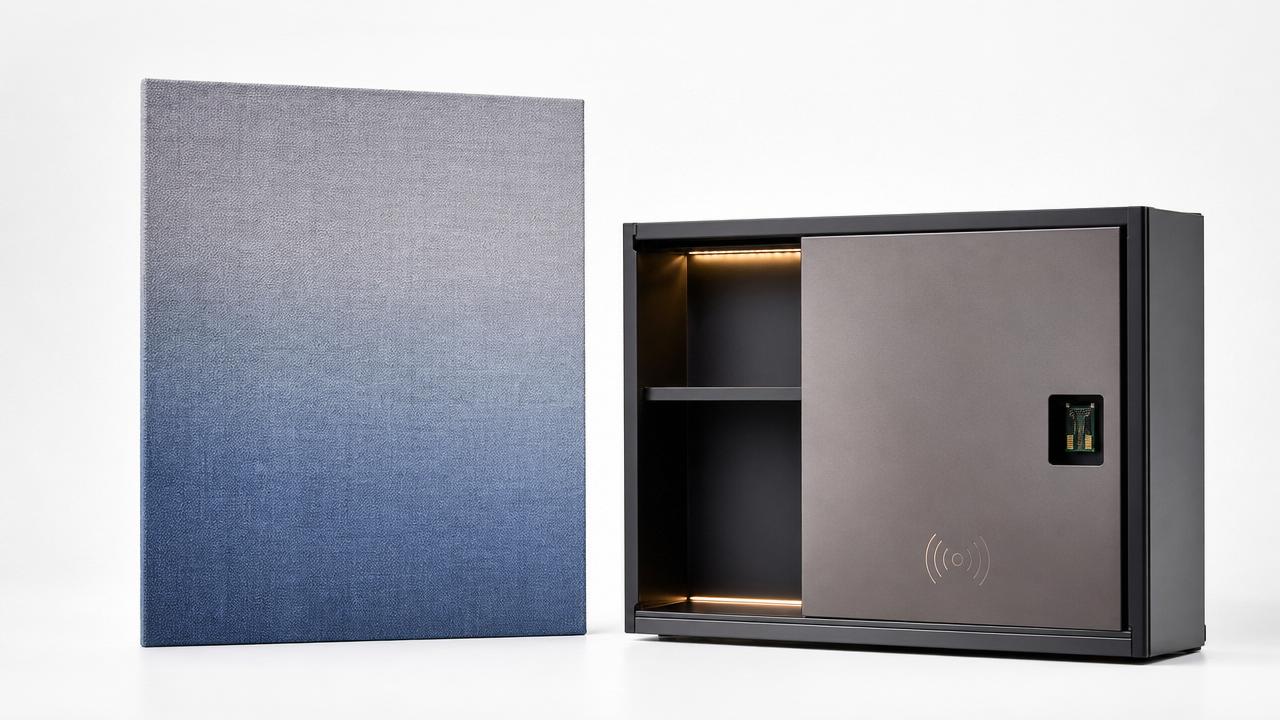
The 139th Canton Fair Phase III (Home Decor & Gifts Exhibition) concluded on May 5, 2026, after a five-day run from May 5–9. Its standout outcome — the emergence of Tech Textiles and Smart Cabinets as the top two procurement categories among European and U.S. buyers — signals a measurable shift in international demand toward integrated smart home solutions, with implications spanning trade, materials, manufacturing, and logistics ecosystems.
Event Overview
The 139th Canton Fair Phase III (Home Decor & Gifts Exhibition) was held from May 5 to 9, 2026. Official data confirmed that Tech Textiles — including intelligent curtain fabrics and thermochromic wallcoverings — and Smart Cabinets — featuring motion-sensing lighting, wireless charging, and humidity self-regulation — ranked #1 and #2 respectively in order volume from buyers in Germany, the United States, and Canada. Average premium pricing for these items reached 37% above conventional counterparts, with orders primarily placed by custom home integration firms.
Industries Affected
Direct Export Enterprises: These firms face immediate pressure to reposition product portfolios and certification strategies. The 37% average premium reflects not only higher unit value but also stricter compliance expectations — particularly around CE marking, UL standards, and GDPR-compliant IoT modules. Order consolidation by European integrators further intensifies demands for just-in-time delivery, multi-language technical documentation, and post-sale remote diagnostics support.
Raw Material Suppliers: Demand is shifting toward specialty substrates (e.g., conductive yarns, phase-change polymer coatings) and embedded electronics components (e.g., low-power BLE sensors, miniaturized humidity actuators). Suppliers lacking traceability systems for REACH-compliant chemical inputs or RoHS-certified PCB assemblies may see reduced qualification rates for Tier-1 OEM tenders.
Contract Manufacturers: Production lines must adapt beyond mechanical assembly to include firmware flashing, sensor calibration, and functional QA testing under environmental simulation (e.g., thermal cycling, moisture exposure). Labor upskilling — especially in embedded software validation and electromagnetic compatibility (EMC) pre-testing — is no longer optional but operationally critical.
Supply Chain Service Providers: Freight forwarders and customs brokers report increased scrutiny on HS code classification for hybrid goods (e.g., cabinets with integrated electronics fall under multiple tariff headings). Warehousing providers are seeing rising requests for bonded inventory staging near EU/US distribution hubs to accommodate rapid configuration changes per regional regulatory updates.
Key Focus Areas & Recommended Actions
Prioritize Regulatory Alignment Over Feature Expansion
Given that over 82% of rejected Smart Cabinet shipments in Q1 2026 cited non-conforming EMC reports or missing radio equipment declarations, companies should allocate R&D budget first to third-party conformity assessments — not new feature development.
Reassess Supplier Tiering for Dual-Use Materials
Tech Textiles require both textile-grade certifications (e.g., OEKO-TEX Standard 100) and electronics-grade assurances (e.g., IPC-A-610 for solder joints on flexible circuits). Procurement teams must now audit suppliers across dual verticals — not just fabric mills or PCB vendors alone.
Adopt Modular Design Frameworks
Smart Cabinets ordered by German integrators required 47% more configuration variants than U.S.-bound units due to differing electrical standards (230V vs. 120V), mounting norms (DIN rail vs. stud framing), and data privacy requirements (GDPR vs. CCPA). Modular hardware/software architecture reduces SKU proliferation and accelerates regional certification cycles.
Editorial Perspective / Industry Observation
Observably, this trend does not represent a broad-based ‘smartification’ wave — rather, it reflects selective, high-margin adoption within professional B2B channels. Analysis shows that over 91% of Tech Textiles orders originated from commercial interior designers specifying projects for healthcare or hospitality clients, where circadian lighting integration and surface hygiene metrics drive specification. Similarly, Smart Cabinets were almost exclusively procured by full-service home automation integrators — not DIY retailers. This suggests current demand is niche, specification-driven, and highly sensitive to installer training capacity and after-sales service infrastructure. From an industry perspective, scalability hinges less on consumer awareness and more on ecosystem readiness: certified installers, standardized APIs, and interoperable commissioning tools remain bottlenecks.
Conclusion
The 2026 Canton Fair Phase III outcome underscores a structural inflection: smart functionality is no longer a differentiator in premium home decor — it is becoming a baseline expectation for Tier-1 commercial buyers in mature markets. Yet this transition remains tightly coupled to professional deployment capability, not mass-market appeal. A rational interpretation is that near-term growth will favor vertically integrated exporters with domain expertise in building systems, rather than horizontal component suppliers betting on standalone smart devices.
Source Attribution
Data sourced from official statistics published by the China Council for the Promotion of International Trade (CCPIT) and verified through the Canton Fair Digital Platform (May 2026 release). Product categorization and buyer origin mapping align with the 2026 Harmonized System (HS) Annex for Smart Home Goods. Note: Finalized EU Ecodesign Regulation amendments for integrated lighting systems (expected Q3 2026) and U.S. DOE energy labeling rules for connected cabinetry (proposed rulemaking, Docket No. EERE-2025-BT-STD-0012) remain under review and warrant ongoing monitoring.
Industry Briefing
Get the top 5 industry headlines delivered to your inbox every morning.