
How to Choose Anti-Bacterial Materials for Healthcare Facilities Without Missing Key Standards
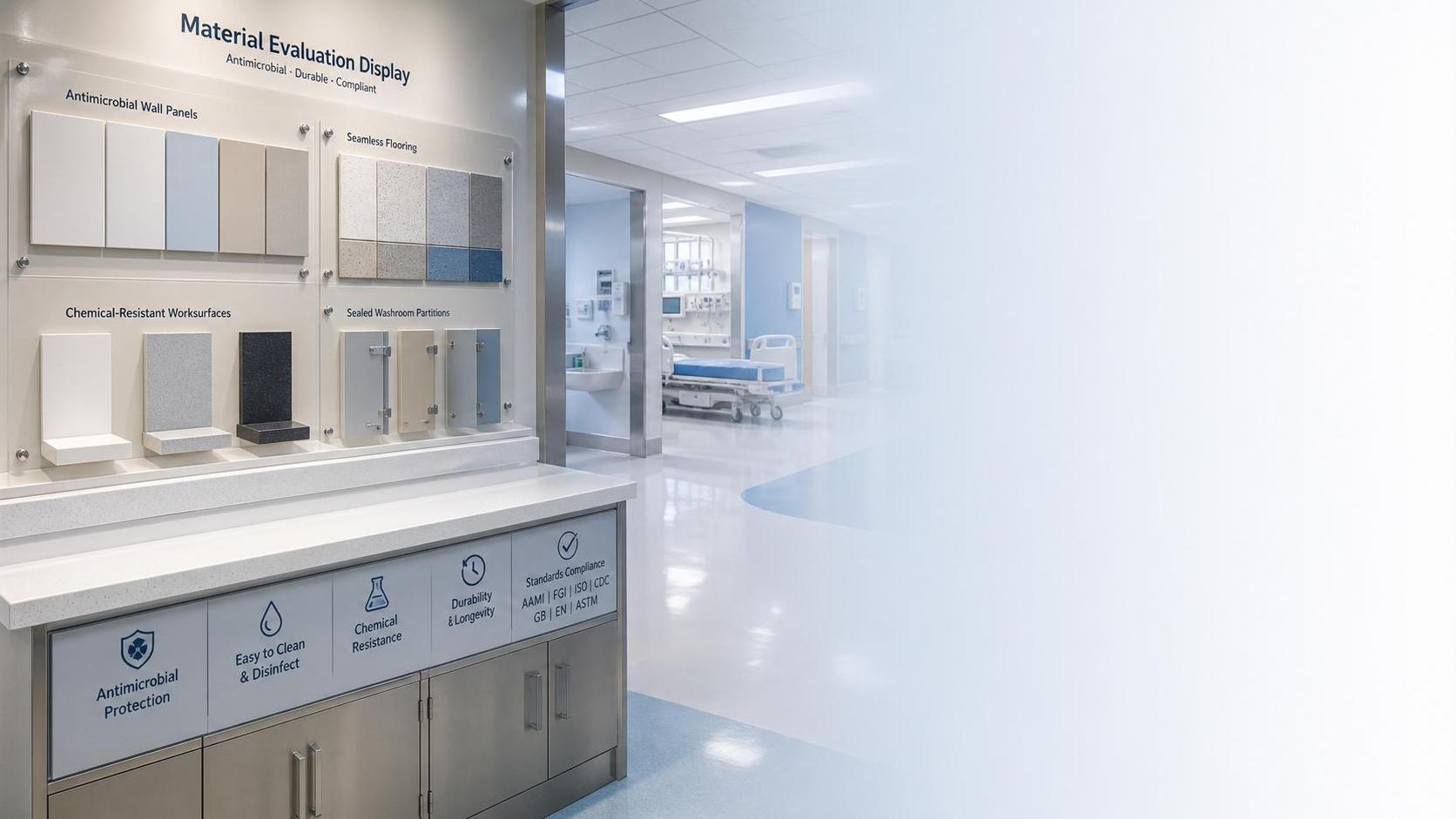
How should anti-bacterial materials for healthcare facilities really be evaluated?
Choosing anti-bacterial materials for healthcare facilities starts with a simple truth.
A surface can claim hygiene benefits and still fail a hospital environment.
In practice, infection control is only one part of the decision.
The material also needs proven safety, cleaning compatibility, durability, and regulatory alignment.
That is why anti-bacterial materials for healthcare facilities are judged by performance evidence, not marketing language.
A useful review usually covers wall panels, worktops, flooring, touch surfaces, sanitary partitions, and wet-area finishes.
The more demanding the zone, the less room there is for vague claims.
GIAM often frames this as a broader building-material intelligence issue.
Material science, sanitation design, and long-term operating standards must be read together.
That perspective matters because healthcare interiors now sit between clinical safety and modern built-environment expectations.
What counts as real anti-bacterial performance, and what is often misunderstood?
The first mistake is treating “anti-bacterial” as a complete answer.
It is only one functional property within a larger material specification.
Some products reduce bacterial growth on the surface.
Others only resist staining, moisture, or chemical attack.
Those features are helpful, but they are not interchangeable.
A stronger assessment asks several questions together.
- Was the anti-bacterial effect tested under a recognized method such as ISO 22196 or JIS Z 2801?
- Is the performance embedded in the material, coated on the surface, or dependent on special maintenance?
- Does repeated cleaning reduce the claimed effect?
- Does the material remain non-porous, smooth, and cleanable after wear?
This is where many selections go off track.
A high lab result may not reflect actual hospital cleaning cycles.
More common problems appear after abrasion, seam failure, or disinfectant damage.
For that reason, anti-bacterial materials for healthcare facilities should be reviewed as part of a system.
Surface chemistry, substrate stability, joint detail, and maintenance protocol all affect the final hygiene outcome.
Which standards matter most before a material is approved?
There is no single universal checklist for every healthcare space.
Still, several standard groups appear again and again in serious evaluations.
The goal is not to collect certificates blindly.
The goal is to confirm that each certificate matches the real use case.
Needless to say, local code remains decisive.
A material can be technically strong and still unsuitable in a specific jurisdiction.
The more reliable approach is to combine global benchmarks with site-level regulation.
That mirrors how GIAM tracks building standards, trade shifts, and material evolution across regions.
For anti-bacterial materials for healthcare facilities, standard alignment is never just paperwork.
It directly affects approval speed, replacement risk, and lifecycle consistency.
Are all healthcare spaces judged the same way?
Not at all, and that distinction is often missed.
An outpatient corridor does not carry the same exposure profile as a treatment room.
A hand-wash zone behaves differently from a nurse station counter.
Better selection begins with zoning.
- High-touch areas need surface integrity, abrasion resistance, and easy disinfection.
- Wet zones need moisture resistance, sealed joints, and mold control.
- Critical care zones need stronger evidence, lower failure tolerance, and simpler cleaning geometry.
- Public-facing areas may require a balance between aesthetics, impact resistance, and hygiene support.
This is why comparing products by brochure alone rarely works.
The same anti-bacterial material may perform well on vertical wall cladding but poorly on a heavily used horizontal surface.
In actual projects, edge detail and installation quality can matter as much as the material core.
Anti-bacterial materials for healthcare facilities should therefore be matched to cleaning frequency, contact intensity, and failure consequence.
Where do teams usually make the wrong call?
The most common error is buying the claim, not the evidence.
Another is focusing on a single test report while ignoring the maintenance regime.
Some materials lose their finish under aggressive disinfectants.
Others trap contamination around seams, trims, or damaged corners.
A few warning signs deserve extra attention.
- Test data does not show conditions, organisms, or durability after cleaning cycles.
- Compliance documents are outdated or unrelated to the exact product version.
- The anti-bacterial layer is only topical, with unclear wear performance.
- Maintenance guidance conflicts with hospital-grade disinfectant practice.
- Replacement parts, matching sealants, or installation controls are not clearly defined.
There is also a cost misconception.
Lower initial price can become expensive when inspection failures, early repairs, or deep cleaning interventions appear.
A sensible review looks at acquisition cost, expected service life, downtime impact, and cleaning chemistry exposure together.
That broader lens is increasingly relevant as healthcare projects also pursue carbon reduction and longer material cycles.
What is a practical way to compare anti-bacterial materials for healthcare facilities before approval?
A structured comparison saves time and reduces surprises later.
Rather than debating claims in the abstract, build a short decision matrix.
The matrix should reflect the space, not just the product category.
This kind of review keeps the discussion grounded.
It also helps separate useful innovation from short-lived specification trends.
Where GIAM’s market intelligence is helpful is in spotting how material claims evolve across regions and categories.
That makes benchmarking easier when the supply chain changes or imported certifications need closer reading.
What should happen next once a material looks acceptable on paper?
Paper approval should be the midpoint, not the finish line.
Before final selection, confirm the sample, the installation method, and the maintenance instructions as one package.
If possible, review mock-up conditions that reflect real cleaning exposure.
That step often reveals issues hidden by test summaries.
- Check whether the approved sample matches the delivered batch.
- Verify sealants, trims, adhesives, and backing materials.
- Align cleaning instructions with the facility’s real disinfectant list.
- Record replacement criteria before wear becomes a hygiene issue.
The best anti-bacterial materials for healthcare facilities are not just compliant on day one.
They remain cleanable, safe, and consistent throughout repeated use.
If the next step is still unclear, narrow the review to three points.
Map the zone risk, match the standards, and test the maintenance reality.
That is usually enough to avoid the costly gaps that matter most.
Industry Briefing
Get the top 5 industry headlines delivered to your inbox every morning.