
Which building materials hold up best in wet wall areas?
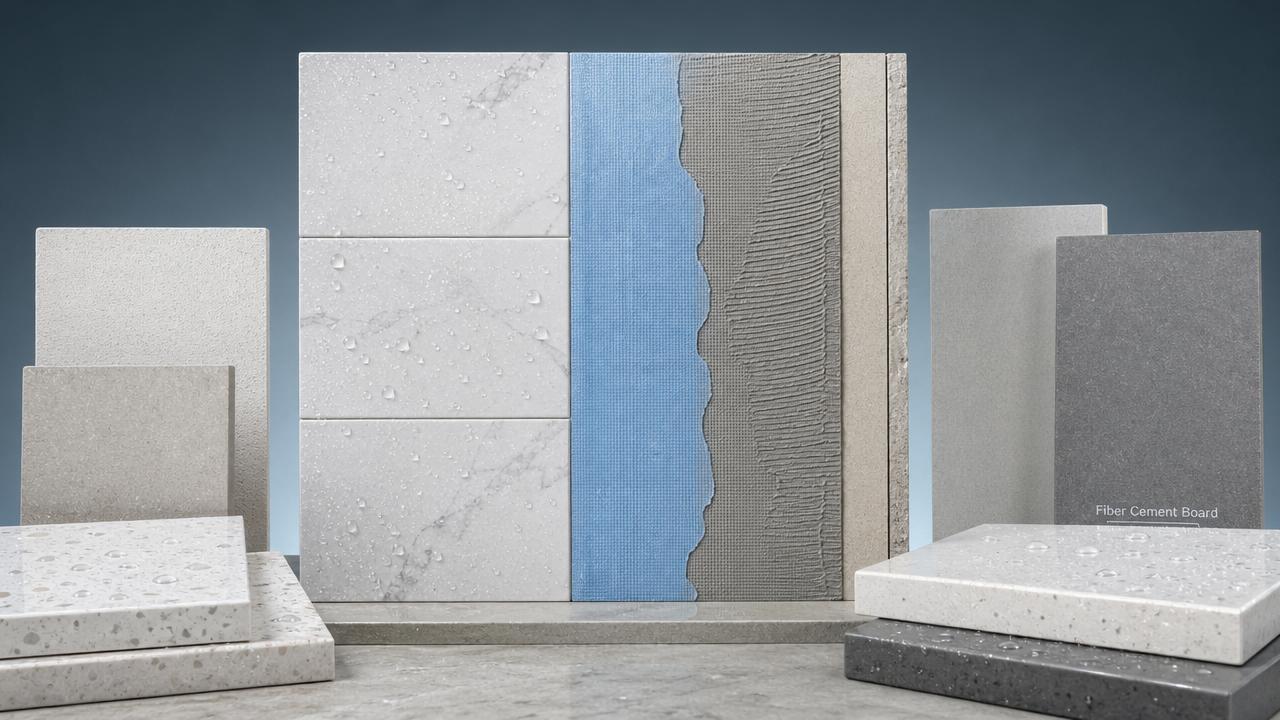
In wet wall areas, choosing the right building materials is critical to long-term durability, hygiene, and maintenance costs. From cement boards and porcelain tiles to waterproof membranes and moisture-resistant panels, each option performs differently under constant humidity and water exposure. This guide explores which materials hold up best, helping researchers and decision-makers compare practical performance, resilience, and value in modern residential and commercial spaces.
Why a checklist approach works better for wet wall material decisions
When researchers, specifiers, and sourcing teams compare building materials for wet wall areas, the biggest mistake is judging by appearance alone. A clean finish may still fail if the substrate absorbs moisture, if joints are poorly managed, or if the wall system cannot handle repeated cleaning cycles. In bathrooms, shower rooms, utility walls, spa zones, and commercial washrooms, failure often starts behind the visible surface within 6 to 24 months rather than on day one.
A checklist-based review helps separate cosmetic preference from performance requirements. Instead of asking which material looks premium, the better sequence is: what is the exposure level, what is the wall build-up, how often is the area cleaned, what maintenance access exists, and what replacement cost is acceptable over a 10- to 15-year service window. This method is especially useful in mixed-use projects where residential and commercial expectations differ.
For information researchers, a structured comparison also supports better communication with contractors, manufacturers, and project owners. Wet wall performance is rarely determined by one layer alone. It depends on the combined behavior of the finish surface, adhesive, grout or sealant, backer board, membrane, and detailing at corners and penetrations. Good building materials perform best when the complete assembly is compatible.
First five checks before comparing products
- Confirm the wetness category: splash-only walls, frequent wash-down walls, or constant high-humidity walls above 70% RH.
- Identify whether the wall is in a residential bathroom, hotel room, healthcare wash area, or commercial sanitary space, because cleaning intensity can vary 3 to 5 times.
- Check substrate stability and load-bearing needs, especially if large-format tiles, stone, or heavy wall panels are planned.
- Review chemical exposure from detergents, disinfectants, hard water, or steam.
- Set a maintenance target, such as annual resealing, 5-year refresh cycles, or minimal intervention over 10 years.
Using these checks early reduces false comparisons. A decorative wall panel suitable for a guest bathroom may not be appropriate for a gym shower block. Likewise, robust building materials for commercial sanitary facilities may exceed the budget or design needs of a low-use residential project. The right answer depends on the wall’s exposure profile, not on one universal ranking.
Core checklist: which building materials hold up best in wet wall areas
The most reliable building materials for wet wall applications usually fall into system categories rather than single-product categories. Researchers should evaluate surface durability, water resistance, mold risk, joint behavior, repair difficulty, and installation sensitivity together. In practice, porcelain tile over cementitious backer board and waterproof membrane remains one of the most dependable assemblies for moderate to high water exposure.
Other strong performers include vitrified tile systems, solid surface wall cladding, fiber cement boards with approved finishes, and certain compact laminate or composite panels in controlled commercial interiors. Natural stone can work, but only when porosity, sealing frequency, and cleaning chemistry are properly managed. Standard gypsum board, untreated MDF, and low-grade decorative laminates generally rank poorly in direct wet zones.
The table below offers a practical comparison for researchers assessing common building materials in shower walls, bathroom enclosures, wash areas, and other wet partitions. It focuses on what decision-makers usually need first: exposure suitability, maintenance pattern, and common failure points.
The table shows why porcelain-based systems are often preferred when long-term resilience matters most. Their performance advantage comes not only from the tile body but also from the full assembly. By contrast, some attractive wall panels can perform well in low- to medium-moisture spaces but may become risky where direct spray, heavy detergents, or trapped vapor are common.
Priority ranking by practical durability
- Porcelain tile systems with membrane and cementitious backing for consistent high-moisture performance.
- Solid surface or engineered waterproof panel systems where joint reduction and cleaning speed are priorities.
- Fiber cement or cement board assemblies with suitable coatings or tile finishes for serviceable durability.
- Natural stone only when porosity class, sealers, and upkeep responsibilities are clearly defined.
- Decorative moisture-resistant boards only outside direct wet zones or in low-exposure interiors.
What usually determines the winner
In procurement reviews, the winning building materials are usually those that balance three factors: low absorption, stable substrate behavior, and manageable joints. Even a highly water-resistant surface can fail if the backing board swells or if sealant breaks down at movement points. For this reason, the best wet wall decisions are system decisions first and decorative decisions second.
How to judge material suitability by wet wall scenario
Not all wet wall areas are equally demanding. A guest bathroom vanity splash wall has a different risk profile from a hotel shower enclosure or a commercial locker-room partition. Researchers should separate spaces by exposure duration, cleaning frequency, and consequence of leakage. This avoids overbuilding in low-risk zones and under-specifying in critical zones.
A simple scenario method uses three bands: low exposure, medium exposure, and high exposure. Low exposure includes intermittent splash areas cleaned weekly. Medium exposure includes family bathrooms or light commercial washrooms cleaned daily. High exposure includes direct spray areas, wellness rooms, healthcare sanitary spaces, and heavy-use commercial areas where moisture and cleaning chemicals are present 7 days a week.
The next table helps researchers map building materials to typical use cases. It is not a brand ranking. Instead, it shows where each material family generally fits best and what additional checks should be built into the decision process.
This comparison highlights an important pattern: the best building materials often change with cleaning intensity and maintenance strategy. In a 200-room hospitality project, even a small reduction in grout cleaning time can influence operational cost. In a family bathroom, visual preference and easier local repairs may carry more weight than industrial durability.
Scenario-specific checks researchers should not skip
- For residential projects, confirm whether the user values low maintenance or high customization more over a 5- to 10-year period.
- For hospitality projects, compare replacement logistics, spare matching, and cleaning labor over large room counts.
- For healthcare or wellness spaces, prioritize hygienic detailing, fewer dirt-trapping joints, and compatibility with frequent disinfecting.
- For commercial wash-down zones, check not only moisture resistance but also impact resistance and fast repair procedures.
When these scenario checks are included, material comparisons become more useful for real project decisions. This is where intelligence-led evaluation matters: not just identifying building materials that survive water, but selecting those that support the full operational model of the space.
Common blind spots that cause early wet wall failure
Many wet wall failures are not caused by the face material itself. They come from weak detailing, incompatible products, or unrealistic maintenance assumptions. This matters for researchers because a material that performs well in manufacturer literature may underperform in the field if the surrounding system is incomplete. Early review of these blind spots can prevent expensive specification errors.
One common issue is overreliance on “moisture-resistant” labels. Moisture-resistant does not mean waterproof, and it does not automatically mean suitable for direct spray areas. Another issue is underestimating joint behavior. Grout, sealants, and edge trims are often the first points of breakdown, especially where temperature swings and movement occur over daily cycles.
A third blind spot is ignoring the back-of-wall environment. Ventilation quality, vapor control, plumbing penetrations, and drying time between use cycles can change the performance of building materials dramatically. In high-use spaces, even 2 to 3 hours less drying time per day can increase the risk of mold or hidden substrate deterioration.
Risk reminder checklist
- Do not specify standard drywall behind direct wet finishes unless the assembly is clearly approved for that condition.
- Verify that adhesives, grout, and membranes are compatible rather than assuming cross-brand interchangeability.
- Allow for movement joints at corners, long runs, and transitions to reduce cracking risk over seasonal expansion cycles.
- Check cleaning chemical exposure, especially in public facilities where stronger disinfectants may be used daily.
- Plan for inspection of sealant and grout at regular intervals, often every 6 to 12 months in heavy-use areas.
Maintenance planning is part of material selection
The most durable building materials still need a realistic maintenance plan. Porcelain tile may hold up extremely well, but neglected grout joints can still become a hygiene issue. Stone can retain prestige, but only if resealing and cleaning chemistry are properly managed. Waterproof wall panels may reduce joints, but damaged panels can require larger replacement sections. Durability should therefore be measured together with inspectability and repair practicality.
For decision-makers comparing lifecycle value, it is useful to ask how a wall system behaves at year 1, year 5, and year 10. Some building materials cost less at installation but create more downtime later. Others have a higher initial budget but reduce intervention frequency. In operational environments, those service intervals often matter as much as the original purchase price.
Practical selection steps for researchers, buyers, and project teams
A reliable wet wall selection process does not need to be complicated, but it should be disciplined. Start by narrowing the shortlist to 3 to 4 building materials or system types that match the exposure category. Then compare them using the same criteria: substrate compatibility, water resistance, hygiene, maintenance interval, replacement complexity, installation sensitivity, and cost over time.
Next, request technical data in practical terms rather than marketing language. Ask about recommended substrates, sealing points, joint treatment, cleaning limitations, expected maintenance tasks, and sample lead times. For project planning, researchers should also note whether mock-up review is needed, as wet wall detailing can reveal design issues before full installation. A sample and mock-up phase of 1 to 3 weeks is often worthwhile for higher-value interiors.
Finally, evaluate the wall as an assembly. The best building materials can still disappoint if paired with an unsuitable backing system or rushed installation. For hospitality, healthcare, and commercial sanitary projects, procurement teams should align materials with maintenance staff early, since cleaning methods and replacement access often shape long-term success more than initial design intent.
Execution checklist before final approval
- Define the wetness level and cleaning frequency for each wall zone, not just for the room overall.
- Confirm the full layer build-up from finish surface to substrate and membrane.
- Review joints, corners, penetrations, and transitions as separate risk items.
- Compare maintenance intervals, likely spare needs, and replacement disruption.
- Check sample availability, lead time, and whether custom color or finish affects delivery by 2 to 6 weeks.
- Document cleaning instructions and inspection frequency before handover.
Why informed sourcing matters
For a platform focused on building intelligence, the value is not only identifying durable building materials but helping teams interpret them in context. Wet wall performance sits at the intersection of material science, sanitary space planning, and lifecycle economics. Better sourcing decisions emerge when researchers combine technical durability with operational realities such as cleaning labor, replacement access, and compliance expectations.
GIAM’s perspective is built around that wider view. By tracking changes in core building materials, sanitary environments, and smart interior systems, decision-makers can compare options with more confidence and less guesswork. That is especially useful when wet wall choices affect broader project goals such as hygiene, carbon-conscious refurbishment, durability, and premium spatial positioning.
Contact us to confirm the right wet wall solution
If you are comparing building materials for bathrooms, shower walls, commercial wash areas, or other wet wall applications, we can help you organize the decision around practical checks rather than assumptions. Our research-oriented approach is designed for information seekers who need clarity on technical fit, lifecycle value, and sourcing direction.
You can contact us to discuss product selection, assembly compatibility, expected delivery cycle, sample support, maintenance considerations, or certification-related questions typically raised during project review. We can also help you structure a shortlist based on exposure level, budget range, design intent, and replacement strategy.
Why choose us: GIAM connects building materials intelligence with real interior and architectural use cases. That means your inquiry can move beyond surface-level comparison into actionable evaluation criteria for residential, hospitality, and commercial sanitary spaces. If you are ready to confirm parameters, compare options, request samples, or discuss a custom material direction, contact us for a focused next-step conversation.
Industry Briefing
Get the top 5 industry headlines delivered to your inbox every morning.