
Residential Design Innovation Ideas for Better Small Bathroom Layouts
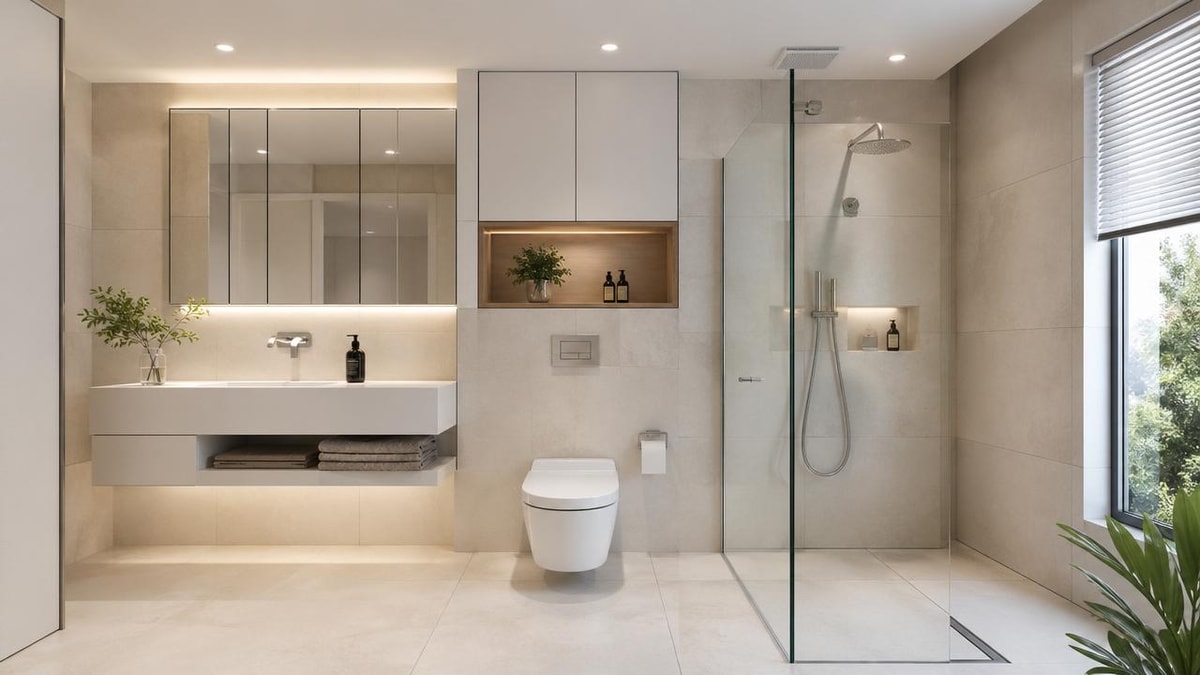
Small bathrooms demand smart thinking, and residential design innovation is reshaping how homeowners create comfort, storage, and style in limited space. From space-saving fixtures to better lighting and flexible layouts, the right ideas can make even the most compact bathroom feel functional and inviting. This guide explores practical innovation strategies that help consumers improve everyday living while adding lasting value to the home.
Why Better Small Bathroom Layouts Are Becoming a Bigger Residential Priority
Across urban apartments, compact townhomes, aging family houses, and even vacation properties, the bathroom is under new pressure to do more in less space. One clear trend in residential design innovation is the shift from treating the small bathroom as a secondary room to treating it as a high-use performance zone. In many homes, a bathroom of roughly 30 to 50 square feet now needs to support storage, hygiene, easy cleaning, visual calm, and sometimes accessibility planning for the next 10 to 15 years.
This change is not only about style. It reflects broader housing realities: smaller urban footprints, rising renovation costs, more multigenerational living, and stronger expectations around water efficiency and healthier materials. Homeowners are asking smarter questions before remodeling. They want to know which layout changes improve daily convenience, which products actually save space, and which upgrades add long-term value instead of creating clutter or maintenance issues.
For consumers, residential design innovation in small bathrooms now means combining technical decisions with lifestyle needs. A wall-hung vanity can free floor area, but only if plumbing conditions allow it. A frameless shower can visually open the room, but only if drainage and splash control are planned early. Better layouts are no longer the result of one attractive fixture; they come from coordinated decisions about circulation, storage, ventilation, lighting, and durable materials.
Key signals shaping current layout decisions
- Homeowners increasingly prefer multi-function fixtures that combine storage, lighting, and reduced cleaning effort.
- Water-saving expectations are influencing toilet, faucet, and shower selection during renovation planning.
- Compact bathrooms are being designed for both current comfort and future mobility needs, especially in households planning to stay in the same home for 8 to 20 years.
- Visual spaciousness matters more than square footage alone, making mirror placement, glass partitions, and light reflectance important design tools.
These signals explain why residential design innovation is becoming more visible not just in luxury homes, but in mainstream renovation projects. What used to be considered premium design thinking is now practical planning. Consumers are looking for bathrooms that feel larger, stay cleaner, use less water, and support everyday routines without wasted movement.
The Strongest Innovation Trends Changing Small Bathroom Planning
The most important changes in small bathroom design are not random trends. They are responses to clear household needs: less available space, higher storage demand, faster cleaning routines, and stronger interest in wellness-oriented environments. In residential design innovation, the best ideas are those that reduce friction in daily use. That includes improving movement between the sink, toilet, and shower, while also reducing visual crowding.
One major trend is the move toward “quiet efficiency.” This means hiding storage inside mirrored cabinets, recessing shelves into wall cavities, using floating furniture, and selecting slimmer-profile products. A small bathroom may only gain 3 to 6 inches in a few places, but those inches can meaningfully improve comfort. For example, trimming vanity depth from 24 inches to 18 or 20 inches can create better door clearance and smoother circulation in narrow layouts.
Another strong trend is integrated performance. Instead of choosing each item separately, homeowners are evaluating how products work together: anti-slip floor surfaces with low-maintenance grout lines, moisture-resistant finishes paired with stronger ventilation, and layered lighting combined with mirror placement. Residential design innovation is increasingly about system thinking rather than isolated upgrades.
The following table summarizes the trend shifts now influencing better small bathroom layouts and what they mean for consumers.
These changes show that residential design innovation is increasingly practical. Consumers do not need oversized bathrooms to benefit from better planning. They need a layout that reduces daily inconvenience, supports easier cleaning, and improves comfort through coordinated design choices.
Why visual space matters as much as physical space
In compact bathrooms, perceived spaciousness can improve satisfaction almost as much as actual square footage. A large mirror, consistent tile lines, clear shower glass, and lighter reflectance levels can visually extend the room. Even when the structural footprint remains unchanged, these moves often make a bathroom feel 10% to 20% calmer and less crowded in everyday use.
That is why many residential design innovation ideas focus on sightlines. The first view from the doorway should ideally feel open, not blocked by a deep vanity edge or opaque partition. Keeping the floor plane visually continuous also helps. Large-format tiles, compact drains, and reduced threshold transitions can all support a cleaner visual rhythm.
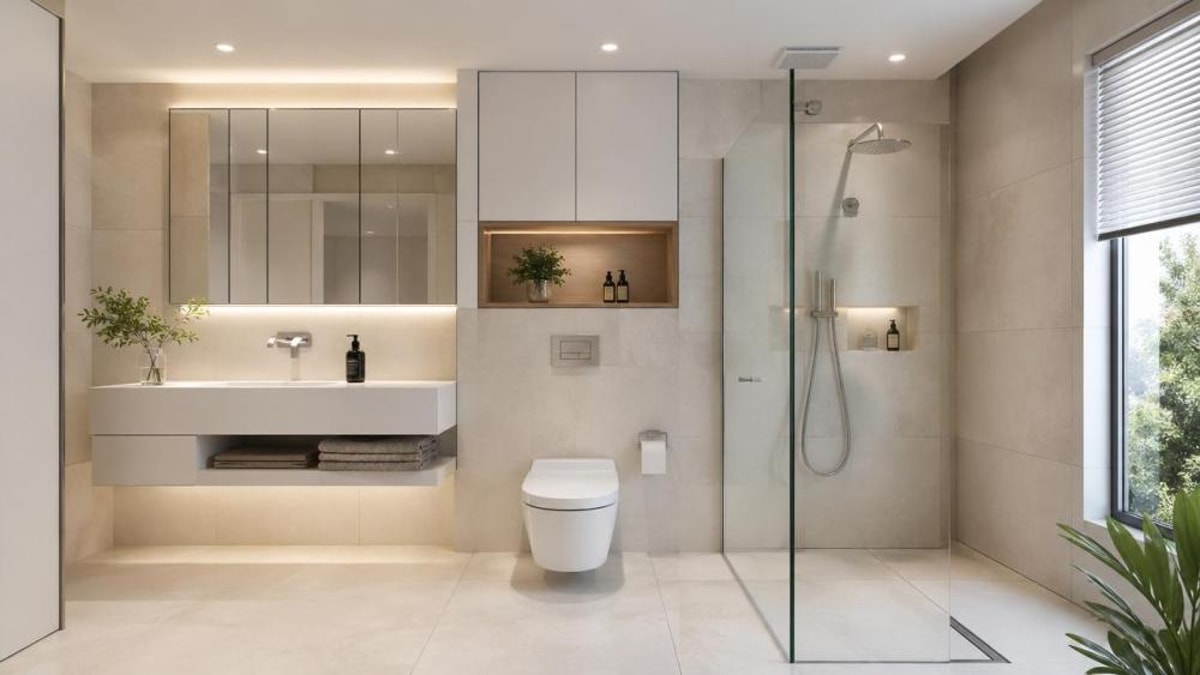
These details matter because small bathrooms are experienced at close range. Every hinge swing, shelf depth, and lighting angle becomes more noticeable. Smart design therefore aims to remove visual noise while preserving essential function.
What Is Driving Residential Design Innovation in Bathrooms
Several forces are accelerating change in this category. First is the cost of space itself. In dense residential markets, homeowners cannot simply build larger bathrooms, so they ask design to work harder. Second is product innovation. More sanitaryware, hardware, storage systems, and moisture-resistant finishes are now engineered specifically for compact applications. Third is growing awareness around health, safety, and sustainability, especially in spaces exposed to humidity and frequent touch.
Another driver is demographic change. Households increasingly include children, older adults, remote workers, and short-term guests using the same bathroom at different times of day. This raises demand for layouts that can serve multiple routines within a narrow time window, such as the 6:30 to 8:30 a.m. morning rush. Better mirror lighting, organized storage, and more efficient sink placement all become more valuable in that context.
Technology also plays a role, though not always in the form of complex smart systems. In small bathrooms, “smart” often means friction reduction: touch-friendly finishes, improved flush efficiency, humidity-sensing ventilation, anti-fog mirror features, and better leak-prevention planning. Residential design innovation is strongest when these functions support daily life without making the room harder to maintain.
Main drivers behind the shift
The next table groups the most common drivers influencing small bathroom decisions and shows how each one changes homeowner priorities.
For consumers, the lesson is straightforward: the best small bathroom layout is not only the one that looks modern today, but the one that stays convenient under changing household needs. Residential design innovation succeeds when it responds to space limits, usage patterns, maintenance expectations, and future flexibility all at once.
Planning horizons are getting longer
Many bathroom renovations are expected to perform well for 7 to 15 years before major replacement. That makes early decisions about waterproofing, ventilation, fixture spacing, and material durability more significant than decorative choices alone. Homeowners are increasingly willing to invest in invisible improvements if those upgrades reduce moisture risk, simplify cleaning, or support later adaptation.
This longer planning horizon is a core reason residential design innovation continues to move beyond trend aesthetics. Consumers want bathrooms that remain useful, safe, and attractive across life stages, not only during the first year after renovation.
How These Changes Affect Homeowners Making Real Renovation Decisions
The rise of residential design innovation gives homeowners more options, but it also makes decision-making more complex. A beautiful product may not fit the room’s turning radius. A compact vanity may solve circulation issues but create storage loss unless paired with a mirror cabinet or recessed shelf. A larger walk-in shower may improve comfort but require careful waterproofing and floor slope planning. Better outcomes depend on evaluating trade-offs clearly.
Consumers should pay close attention to sequence. The first stage is measurement and layout testing. The second is functional prioritization: shower size, sink usability, storage volume, and door swing. The third is product coordination, where dimensions, mounting conditions, and maintenance needs are checked together. Skipping these steps often leads to expensive corrections during installation or disappointing results after handover.
In practical terms, residential design innovation often creates the biggest value in three areas: movement efficiency, visible order, and moisture control. If a homeowner can enter the room, reach storage easily, use the sink without crowding, and keep surfaces dry with reliable ventilation, the bathroom will feel better every day regardless of its size.
Priority checklist for evaluating a compact layout
- Confirm clear circulation paths of roughly 24 to 30 inches wherever possible, especially in front of the vanity and shower entry.
- Check vanity depth, not just width; reducing depth by 4 to 6 inches can materially improve movement.
- Assess vertical storage potential up to door-head height if daily-use items can still be accessed safely.
- Review moisture management, including extraction performance, splash zones, and drying time after use.
- Choose surfaces and fittings based on cleaning frequency, not only showroom appearance.
This is where small bathrooms differ from larger rooms. In a spacious layout, design errors may be tolerated. In a tight footprint, every misplaced inch affects comfort. Residential design innovation helps homeowners avoid those errors by focusing on measurable performance rather than trend imitation.
Common layout choices and when they make sense
The best layout depends on room shape, plumbing position, and household habits. The table below compares common small bathroom approaches and the situations where each tends to work best.
This comparison helps show how residential design innovation should be interpreted: not as a fixed style, but as a set of choices matched to household realities. The right answer is the layout that balances comfort, cleaning, storage, and future use within the actual room envelope.
What to Watch Next: The Future Direction of Better Small Bathroom Design
Looking ahead, several directions are likely to matter more. The first is customization without excess. Consumers want tailored storage, adaptable accessories, and cleaner detailing, but they are less interested in oversized features that waste space. The second is invisible performance: better ventilation, quieter hardware, easier-to-clean coatings, and plumbing coordination that supports reliability over time.
A third direction is wellness-focused compact design. This does not necessarily mean luxury spa features. In many homes, it means glare-free mirror lighting, better acoustics, slip-resistant flooring, healthier material choices, and a sense of order that reduces morning stress. In a room used several times a day, these improvements can have a meaningful lifestyle impact over months and years.
Residential design innovation will also continue to align with more sustainable living patterns. Homeowners increasingly value products that reduce water use, last longer, and require fewer replacements. When selecting fixtures and finishes, consumers should think beyond upfront appearance and ask how each choice performs over a typical 5-year, 10-year, or 15-year ownership period.
Practical signals worth monitoring before you renovate
- More compact products are being designed with full-function storage rather than reduced usability.
- Curbless and low-threshold shower concepts are moving from niche applications into standard residential planning.
- Integrated mirror-light-storage systems are becoming a more efficient solution for bathrooms below 45 square feet.
- Consumers are asking earlier about ventilation, waterproofing, and moisture durability instead of treating them as back-end technical matters.
These signals suggest that the next phase of residential design innovation will reward homeowners who plan holistically. The most successful projects will be those that connect layout logic, product compatibility, material durability, and long-term comfort from the start.
Why Choose Us for Small Bathroom Planning Insight and Product Direction
At GIAM, we track the evolving relationship between building materials, sanitary spaces, and smarter living systems. That perspective helps us translate residential design innovation into useful guidance for real renovation decisions. Instead of looking only at surface trends, we focus on how layout choices, material performance, water-saving solutions, storage systems, and future-ready bathroom planning connect within the broader construction and interior ecosystem.
For homeowners, designers, and sourcing teams, this means clearer support when evaluating compact bathroom strategies. We can help you compare fixture configurations, review small bathroom layout options, understand typical product dimensions, assess delivery timing expectations, and narrow down practical solutions based on space limits, maintenance goals, and visual preferences. If your project also involves green materials, sanitaryware selection, or smart kitchen and bath systems, our intelligence-driven approach can support more confident planning.
If you want to understand how residential design innovation applies to your bathroom project, contact us to discuss key details such as layout parameters, product selection, customization options, expected lead times, sample support, quotation planning, and material compatibility. A better small bathroom starts with better judgment, and the right information at the right stage can save both space and costly revisions.
Industry Briefing
Get the top 5 industry headlines delivered to your inbox every morning.