
China Customs Registration Rule Reaches Smart Toilets, Digital Locks
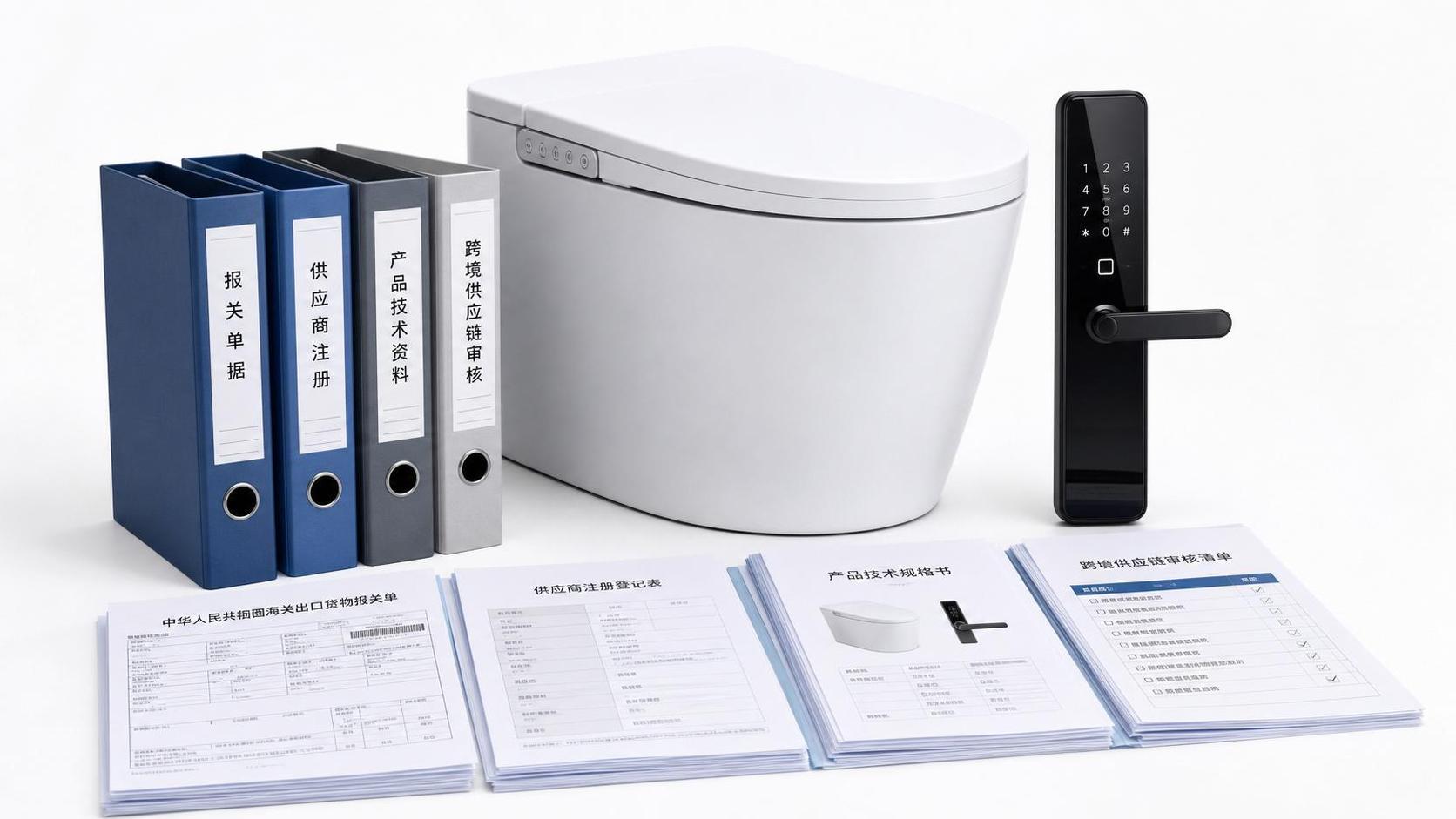
On June 1, 2026, a new customs compliance requirement took effect for Smart Toilets, Digital Locks and related products shipped to China: overseas manufacturers must have completed registration or obtained automatic renewal under General Administration of Customs Order No. 280 and Announcement No. 27 of 2026. For the industry, this is not just an administrative update. It directly affects customs declaration eligibility, supplier continuity, shipment scheduling and document readiness across import trade, procurement and cross-border supply chains.
What the June 1 change confirms
The confirmed information is limited but clear. Order No. 280 of the General Administration of Customs and Announcement No. 27 of 2026 came into effect on June 1, 2026.
Under the implemented requirement, all overseas manufacturers of Smart Toilets, Digital Locks and other covered products exported to China must complete registration or automatic renewal.
According to the provided event summary, 95% of existing registered companies can be renewed automatically. For new applications and companies not covered by automatic renewal, technical documents and production process descriptions must be submitted.
The same summary also states that goods from unregistered manufacturers will not be accepted for customs declaration.
Where the immediate pressure may appear
Supplier qualification becomes a shipping prerequisite
From an industry perspective, the most direct impact falls on importers, traders and buyers that rely on overseas manufacturing resources. If customs declaration depends on the manufacturer having completed registration or renewal, supplier qualification moves from a background compliance item to a front-end shipment condition. What deserves closer attention is whether procurement teams, sourcing managers and import operations have verified the registration status of each relevant factory before shipment arrangements are finalized.
New entrants and non-automatic cases face heavier document work
Analysis shows that the burden is likely to be higher for newly applying manufacturers and for companies that do not fall within automatic renewal. The requirement to submit technical documentation and production process descriptions means document preparation may become a practical checkpoint affecting onboarding, quotation timelines and delivery readiness. For supply chain service providers and export-side coordinators, this raises the importance of document completeness and consistency before goods move.
Customs clearance risk shifts upstream in the supply chain
For distributors, project buyers and channel operators, the key issue is not only customs clearance itself but whether upstream factories remain eligible to support ongoing orders. If unregistered manufacturers' goods are not accepted for declaration, the operational risk can surface earlier in supplier selection, purchase order release, production scheduling and delivery commitment. This makes manufacturer status a relevant control point for both procurement and fulfillment teams.
What companies should review now
Check factory registration status by product line
Observably, companies involved in China-bound shipments should first confirm which overseas factories supplying Smart Toilets, Digital Locks or similar covered products have completed registration, qualify for automatic renewal, or still require manual submission. This is a practical compliance check tied directly to shipment eligibility.
Prepare supporting files for non-automatic renewal cases
Where automatic renewal does not apply, the immediate focus should be on technical documents and production process descriptions referenced in the event summary. The current information does not provide detailed filing standards or review timing, so it is more appropriate to treat documentation readiness as an active risk-control task rather than assume uniform execution outcomes.
Revisit procurement timing and delivery commitments
For buyers and import-side operations teams, this development may require a closer review of order timing, supplier approval steps and delivery promises. Analysis shows that any mismatch between shipment plans and manufacturer registration status could create avoidable customs declaration disruption, especially where supply arrangements depend on newly added or substitute factories.
Watch for follow-up wording and execution practice
The confirmed facts establish the effective date and the basic registration requirement, but they do not fully describe detailed implementation practice. Companies should therefore continue monitoring official wording, practical filing expectations and any changes reflected in trade documents, compliance reviews or supplier qualification procedures.
Why this looks more like an execution signal than a policy headline
Analysis shows that this update is better understood as a rule now entering the execution stage rather than a distant policy direction. The reason is straightforward: the consequence described in the event summary is operational, not abstract, because unregistered manufacturers' goods will not be accepted for customs declaration.
At the same time, it would be premature to overstate the broader market outcome. The available information confirms the rule, the effective date, the automatic renewal feature for most existing companies, and the filing requirement for certain cases. It does not by itself confirm how quickly every affected supply chain participant will adjust, how documentation review will work in practice, or what variation may emerge across specific business scenarios. Those points still require observation.
How this update is best understood now
At this stage, the development is best read as a compliance gate that has already taken effect for covered products shipped to China. Its practical significance lies in customs declaration access, supplier continuity and document preparedness rather than in broad market claims.
For industry participants, the most rational takeaway is to treat overseas manufacturer registration status as an immediate transaction-level requirement. Further impact on procurement rhythm, supplier substitution and delivery coordination should be assessed cautiously as implementation details and market feedback become clearer.
About the basis of this article
This article is generated from the user-provided news title, event date and event summary. It also reflects the types of sources normally relevant to such developments, including official announcements, customs or trade authority releases, industry association information, standard-setting materials and reporting by authoritative media.
No specific official source link was provided in the input, so the exact source link still needs to be independently verified. Observably, the points that merit continued follow-up include detailed implementation wording, registration and renewal practice, document review expectations, changes in procurement or tender documentation, industry feedback and the actual execution status among affected companies.
Industry Briefing
Get the top 5 industry headlines delivered to your inbox every morning.