
UAE ESMA Mandates EMC+RFID Dual Certification for Imported Building Hardware from June 2026
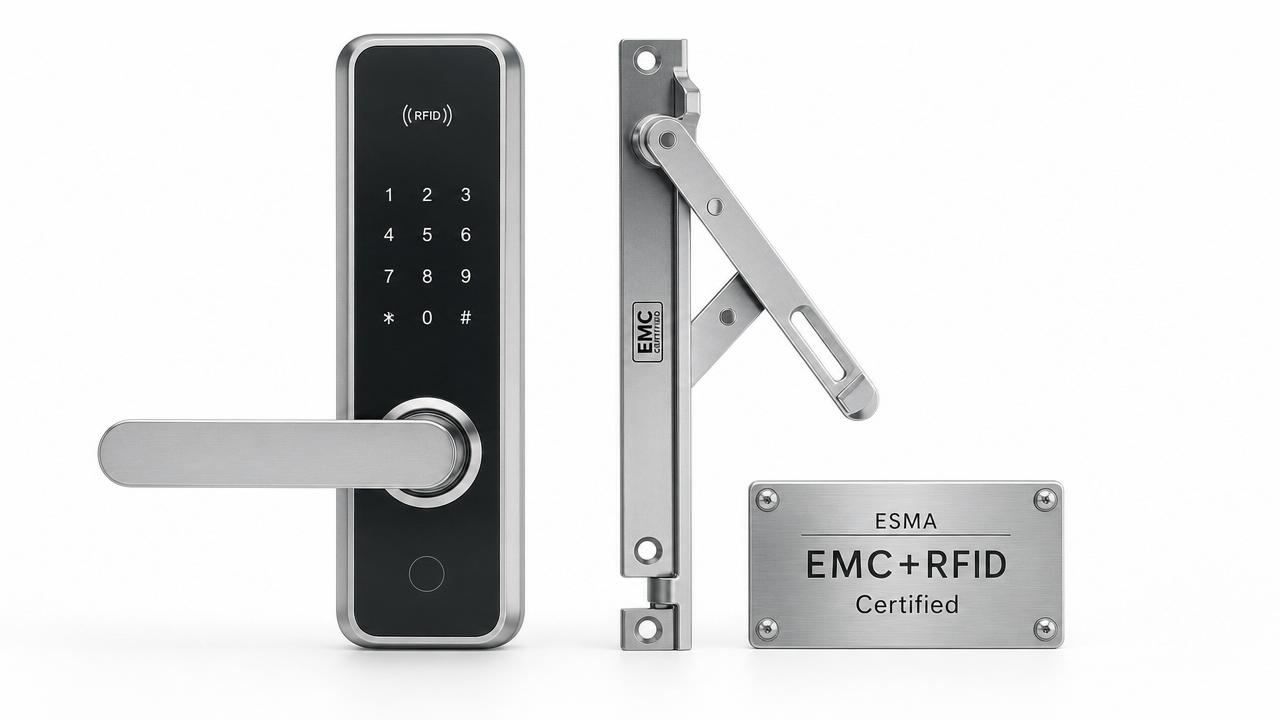
On May 12, 2026, the Emirates Authority for Standardization and Metrology (ESMA) issued Circular No. ESMA/2026/08, mandating that all imported door systems, window fittings, and digital locks entering the UAE must comply with both electromagnetic compatibility (EMC) requirements and a new RFID certification requirement—effective June 1, 2026. This regulation affects manufacturers, exporters, distributors, and importers active in the building hardware supply chain to the UAE market, with no transitional period granted.
Event Overview
On May 12, 2026, ESMA published Circular No. ESMA/2026/08. It stipulates that, starting June 1, 2026, all imported door systems, window fittings, and digital locks must: (1) retain compliance with existing EMC standards; and (2) incorporate an RFID chip conforming to ETSI EN 302 208, verified by ESMA-designated laboratories for both read/write performance and data encryption strength. The requirement applies across all distribution channels in the UAE and includes no grace period or phase-in timeline.
Industries Affected
Direct Trading Enterprises (Exporters & Importers)
These entities are directly responsible for customs clearance and regulatory compliance at UAE entry points. Under the new rule, they must ensure product-level conformity—not just documentation—before shipment. Non-compliant consignments risk rejection at port, leading to delays, rework costs, or destruction of goods.
Manufacturing Enterprises (OEMs & Contract Manufacturers)
Producers supplying door systems, window fittings, or digital locks for UAE-bound export must integrate certified RFID chips into product design and assembly lines. This requires revision of bill-of-materials, firmware updates (where applicable), and validation testing—impacting lead times and unit cost structures.
Distribution & Channel Operators (Wholesalers, Distributors, Retailers)
Entities managing UAE-based inventory or last-mile delivery must verify incoming stock against the dual-certification requirement. Existing stock without embedded RFID chips will not be eligible for resale after June 1, 2026—even if EMC-certified—unless retrofitted and re-validated (a process not currently permitted under the circular).
Supply Chain Support Providers (Testing Labs, Certification Bodies, Logistics Partners)
Third-party labs authorized by ESMA will face increased demand for RFID-specific verification. Non-accredited providers cannot issue valid reports for UAE market access. Logistics partners must adapt documentation workflows to include RFID test reports alongside EMC certificates in customs submissions.
Key Focus Areas and Immediate Actions for Stakeholders
Monitor official ESMA guidance on implementation details
While the circular is effective June 1, 2026, ESMA has not yet published technical implementation guidelines—for example, acceptable chip mounting positions, minimum read-range thresholds, or encryption key management protocols. Stakeholders should track ESMA’s official portal and subscriber notifications for updates.
Identify high-priority SKUs and assess retrofit feasibility
Companies should map current UAE-bound product lines against the three covered categories (door systems, window fittings, digital locks). For legacy models lacking RFID integration, analysis shows retrofitting post-manufacture is unlikely to satisfy ESMA’s requirement for built-in, lab-verified chips—making redesign or replacement the more viable path.
Distinguish between policy signal and operational readiness
The issuance of Circular No. ESMA/2026/08 signals formal regulatory intent—but does not confirm full laboratory capacity, accreditation timelines for new RFID testers, or enforcement procedures. Observably, early engagement with ESMA-designated labs is advisable to gauge testing availability and turnaround windows ahead of Q2 2026.
Update procurement and supplier communication protocols
Importers and distributors should revise purchase orders and supplier agreements to explicitly require proof of RFID chip integration and ESMA lab validation reports. Contracts signed before June 2026 must include clauses addressing non-compliance liability and remediation responsibilities.
Editorial Perspective / Industry Observation
This circular is better understood as a regulatory hardening step rather than an isolated technical update. Analysis shows it reflects ESMA’s broader strategic shift toward traceability, cybersecurity, and product lifecycle accountability in construction-related imports. From an industry perspective, it signals growing convergence between physical hardware standards and digital identity requirements—a trend already visible in EU CE marking updates and Singapore’s BCA SmartBuild initiatives. However, the absence of a transition period makes this directive unusually stringent by regional regulatory norms. Current observation suggests it functions less as a warning and more as an enforceable baseline—meaning market access now hinges on verifiable, built-in digital functionality, not just electromagnetic safety.
Conclusion
ESMA’s dual-certification mandate marks a structural change in UAE market access criteria for building hardware—not merely an incremental compliance update. It elevates RFID integration from an optional value-add to a mandatory, lab-verified feature. For stakeholders, this is best interpreted not as a temporary hurdle but as a permanent recalibration of product specifications required for the UAE. Preparedness depends less on timing and more on technical alignment: verifying chip selection, validating integration integrity, and securing accredited verification well ahead of the June 2026 deadline.
Source Attribution
Main source: Emirates Authority for Standardization and Metrology (ESMA), Circular No. ESMA/2026/08, issued May 12, 2026.
Note: Technical implementation guidance—including lab accreditation status, test report format, and enforcement protocols—remains pending and is subject to ongoing monitoring.
Industry Briefing
Get the top 5 industry headlines delivered to your inbox every morning.