
CPSC Flags 18.7% Failure Rate in Composite Panels
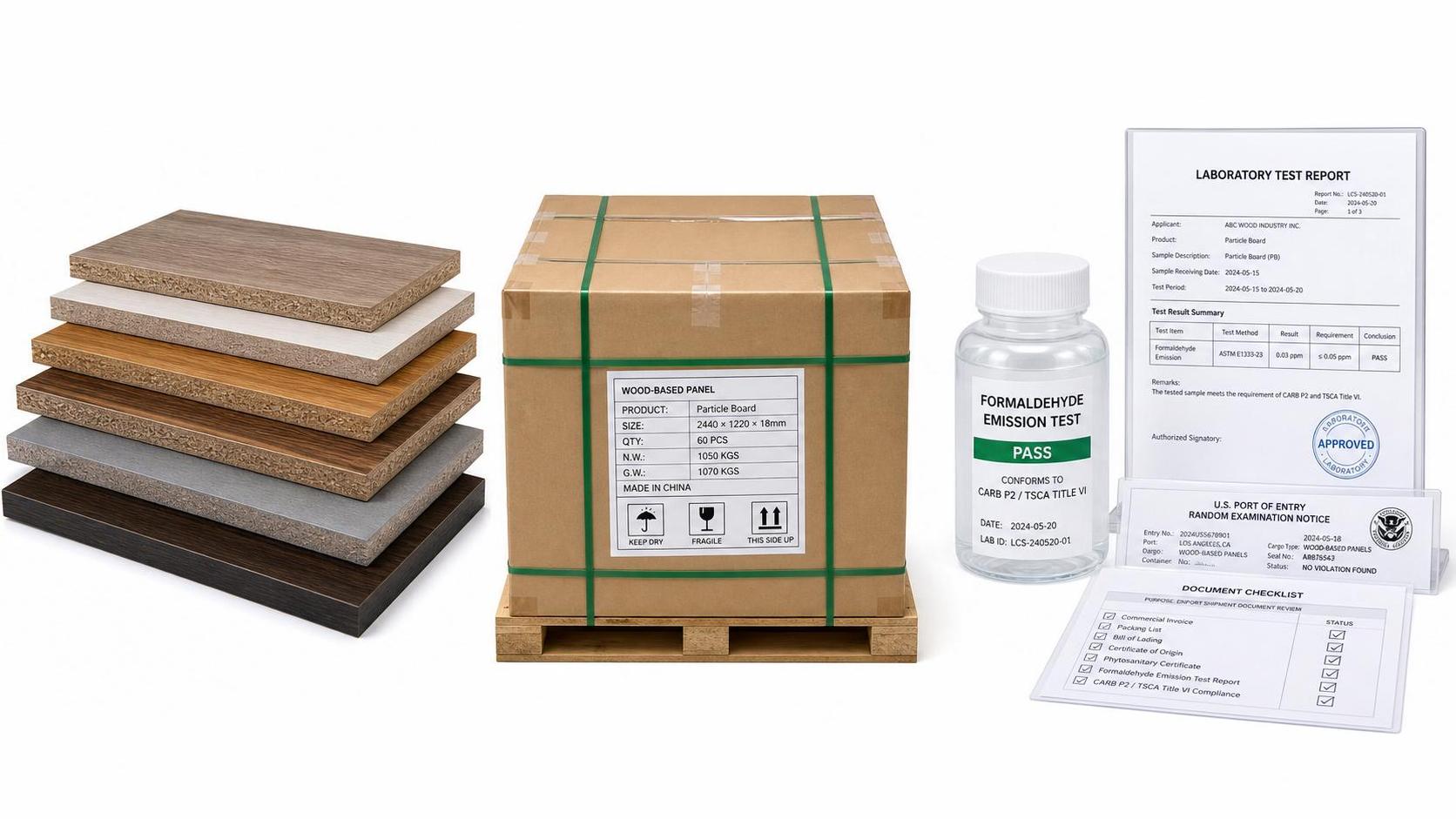
The timing of the underlying incident is not clearly specified in the provided information, but the latest regulatory release is clear: on June 19, 2026, the U.S. Consumer Product Safety Commission (CPSC) reported that composite panels sampled at U.S. ports showed an 18.7% non-compliance rate for formaldehyde emissions, up 5.2 percentage points year on year. For importers, manufacturers, sourcing teams, and supply chain operators tied to the U.S. market, this is worth close attention because it links product compliance directly to customs disruption, review risk, and delivery timing.
What the latest CPSC update confirms
According to the information provided, CPSC released updated monitoring data on June 19, 2026 showing that the share of composite panels failing formaldehyde emission checks at U.S. ports reached 18.7%. The figure was 5.2 percentage points higher than a year earlier.
The same update states that CPSC has started a targeted review and has reminded importers to strengthen pre-shipment dual compliance verification for both CARB ATCM Phase II and TSCA Title VI.
The provided summary also notes that in multiple cargo detention cases, batches without third-party testing reports recorded an average port delay of more than 22 days.
Why different parts of the supply chain may feel the pressure
Import transactions face a more direct compliance checkpoint
From an industry perspective, direct trading companies and U.S.-bound importers may be the first to feel the impact because the issue appears at the port inspection stage. The main pressure point is not only whether goods meet the relevant formaldehyde requirements, but whether supporting compliance evidence is ready before shipment and can withstand scrutiny during clearance.
Manufacturing and pre-shipment control move closer together
Analysis shows that processing and manufacturing companies supplying composite panels to the U.S. market may need to pay closer attention to the connection between production release and documentation readiness. Where third-party reports are missing, the risk described in the provided information is not abstract; it can translate into longer cargo stays and slower order fulfillment.
Supply chain and delivery teams may need to reassess timing assumptions
For logistics coordinators, order managers, and customer-facing delivery teams, the more immediate issue may be cycle time reliability. Observably, once a shipment is detained, the delay can extend beyond routine buffer planning. That makes compliance preparedness a scheduling issue as much as a regulatory one.
Buyers and downstream users may look more closely at supplier readiness
For procurement teams and downstream commercial users, the update may shift attention from price and availability alone to the credibility of supplier compliance files. What deserves closer attention is whether suppliers can present clear evidence of dual verification under CARB ATCM Phase II and TSCA Title VI before goods leave origin.
Practical points companies should watch now
Watch for further official language from the ongoing review
The confirmed fact is that CPSC has already launched a targeted review. Analysis shows that companies involved in U.S.-bound composite panel trade should closely follow whether later official statements provide more detail on enforcement focus, documentation expectations, or sampling emphasis.
Treat dual verification as an operational step, not a paper formality
The current signal from the provided information is specific: importers were reminded to strengthen pre-shipment checks against both CARB ATCM Phase II and TSCA Title VI. For businesses, this means the practical issue is not simply holding certificates, but making sure verification is completed before shipment and is aligned with the batch being exported.
Review document completeness before goods reach the port
Observably, the mention of average delays exceeding 22 days for batches lacking third-party reports points to a documentation gap with operational consequences. Companies should therefore pay attention to whether test reports, shipment records, and supplier files can be matched clearly in advance of export and customs review.
Prepare customer communication around delivery and detention risk
From an industry perspective, this development is also a contract and communication issue. Where U.S.-bound orders involve composite panels, companies may need to prepare for questions on compliance status, possible port delays, and shipment timing assumptions, especially when documentation is still being assembled close to dispatch.
How this signal is best understood at this stage
Analysis shows that this update should not yet be treated as a complete redefinition of the market, but it is more than a routine compliance reminder. The combination of a higher non-compliance rate, a targeted review, and reported detention delays suggests a more active enforcement environment around formaldehyde compliance for composite panels entering the United States.
It is more appropriate to understand this as a concrete regulatory signal with immediate operational relevance and longer-term implications still requiring observation. The key reason for continued industry attention is that the current information already connects testing readiness with port efficiency, even before any further rule clarification is known.
What the industry can reasonably take from this update
At this stage, the clearest takeaway is that formaldehyde compliance for composite panels in the U.S. market is not only a technical standard issue but also a shipment execution issue. The confirmed facts do not by themselves establish a final long-term trend, but they do indicate that importers and suppliers should treat pre-shipment verification and third-party testing documentation as immediate priorities.
In that sense, this development is best viewed as a regulatory and operational warning sign that deserves continued monitoring rather than as a settled market outcome.
Basis of this article and follow-up areas
This article is based on the user-provided news title, event timing note, and summary information. The specific official source link was not provided in the input, so the underlying release and any later official clarifications still need ongoing verification.
For this type of development, relevant source categories typically include official regulatory notices, company disclosures, industry association updates, authoritative media reporting, and standards-related documents. Follow-up attention should focus on any additional CPSC wording tied to the targeted review, as well as any clearer indication of documentation, testing, or enforcement expectations for U.S.-bound composite panel shipments.
Industry Briefing
Get the top 5 industry headlines delivered to your inbox every morning.