
SASO Updates Natural Stone Import Traceability System
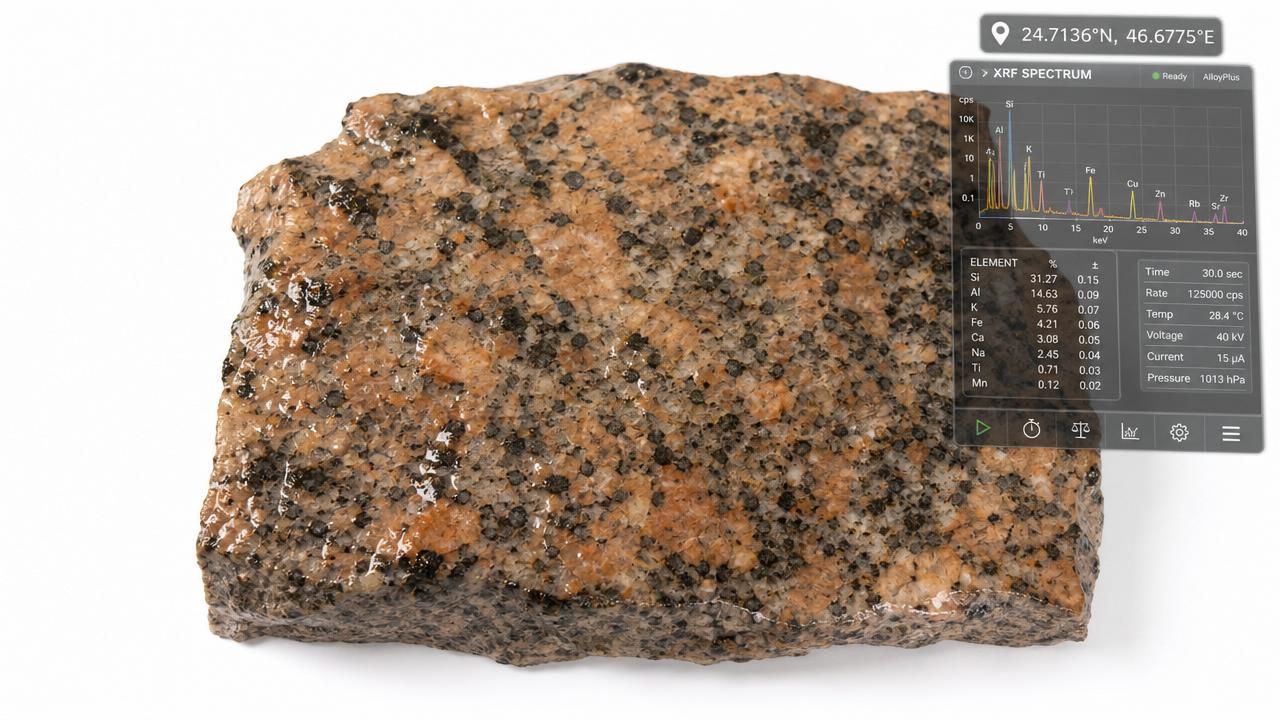
Saudi Arabia’s Standards, Metrology and Quality Organization (SASO) has introduced new traceability requirements for imported natural stone, effective May 12, 2026. The update mandates real-time GPS coordinates of quarrying locations and portable XRF spectral scan data for all import declarations. Exporters and importers in the natural stone supply chain — particularly those engaged with the Saudi market — should assess operational readiness, cost implications, and compliance pathways.
Event Overview
On May 10, 2026, SASO issued a technical notice stating that, starting May 12, 2026, every natural stone import declaration into Saudi Arabia must include two mandatory digital attachments: (1) real-time GPS coordinates recorded at the point of extraction, and (2) raw X-ray fluorescence (XRF) spectral analysis data of the rock layer, captured using certified portable scanning equipment. The measure is officially framed as part of SASO’s enhanced oversight of ‘green mining’ practices. As of the notice date, only seven natural stone enterprises — located in Fujian and Shandong provinces of China — have completed system integration and device certification. All other exporters must engage third-party testing laboratories to collect and submit the required data, incurring an additional per-shipment cost of USD 180–220.
Which Subsectors Are Affected
Direct Exporters (Trading Companies)
Exporters handling natural stone shipments to Saudi Arabia are directly responsible for submitting compliant documentation. Since SASO requires data tied to physical extraction — not just factory or port handling — exporters without upstream quarry access or certified scanning capability cannot generate the required files independently. Those relying on overseas suppliers must now verify whether their partners meet SASO’s field-data collection criteria or arrange third-party verification in advance.
Quarry Operators & Raw Material Suppliers
Quarries supplying stone destined for Saudi import must now operate certified portable XRF devices and record GPS-tagged extraction events in real time. This introduces new capital and procedural demands — including staff training, calibration protocols, and secure data logging — especially for smaller or export-occasional quarries outside China’s top seven certified firms.
Stone Fabricators & Processors
Fabricators who source rough blocks from quarries but do not control extraction points face indirect impact: they may be asked by exporters or buyers to confirm provenance or assist in coordinating third-party spectral scans. While not directly liable for submission, delays or inconsistencies in upstream data can halt customs clearance — affecting delivery timelines and contractual obligations.
Third-Party Testing & Certification Providers
The requirement creates immediate demand for accredited field-based XRF services near active quarries. Currently, only labs authorized by SASO (or recognized under mutual recognition arrangements) may perform and submit compliant scans. Providers lacking Saudi market authorization — or those unable to deploy mobile units to remote quarry sites — will be excluded from this workflow.
What Relevant Enterprises or Practitioners Should Focus On Now
Monitor SASO’s official implementation guidance
While the May 12, 2026 effective date is confirmed, SASO has not yet published detailed specifications for XRF data format, GPS accuracy thresholds, metadata fields, or acceptable device models. Exporters and labs should track updates via SASO’s e-portal and registered notifications, rather than assuming current third-party service offerings fully align with final technical requirements.
Distinguish between policy intent and enforceable scope
The notice applies exclusively to natural stone imports declared under HS codes covered by SASO’s Natural Stone Technical Regulation (e.g., marble, granite, limestone slabs and blocks). It does not extend to engineered stone, ceramic tiles, or cut-to-size finished products unless classified as natural stone under Saudi customs tariff headings. Companies should verify classification before allocating compliance resources.
Assess and document current quarry-level capabilities
Exporters should audit their supply base: identify which quarries already possess SASO-certified equipment and trained personnel, and which require third-party support. Where multiple quarries feed one shipment, each extraction site must produce its own GPS + XRF dataset — batch-level averaging or proxy reporting is not permitted per the notice.
Factor in lead-time and cost adjustments for near-term shipments
Third-party XRF scanning adds minimum 1–2 business days to pre-shipment preparation, depending on quarry location and lab scheduling. The USD 180–220 surcharge applies per import declaration line item — meaning consolidated shipments containing multiple stone types or origins may incur multiple fees. Pricing sheets, pro forma invoices, and Incoterms should reflect this added cost and timeline risk.
Editor Perspective / Industry Observation
Observably, this requirement signals a shift from product-level conformity assessment to geological-source accountability — moving traceability upstream into the earliest stage of the value chain. Analysis shows it is less a standalone regulatory change and more an enforcement extension of SASO’s broader sustainable sourcing agenda, previously signaled through voluntary green mining guidelines. From an industry perspective, it functions primarily as a compliance gatekeeper rather than a market access barrier — provided actors adapt workflows incrementally. However, its practical impact depends heavily on how strictly SASO enforces data authenticity (e.g., timestamp synchronization, anti-spoofing checks) during initial rollout. Current evidence suggests early enforcement will prioritize documentation completeness over forensic validation, making timely system adoption more urgent than technical perfection.
This development marks a tightening of origin transparency expectations for natural stone entering regulated Gulf markets — a trend likely to influence neighboring jurisdictions considering similar traceability frameworks. For now, it remains a targeted requirement, not a global standard; however, its design reflects growing convergence between environmental due diligence and trade compliance infrastructure.
Conclusion
The SASO natural stone traceability update is best understood as an operational recalibration — not a strategic pivot — for exporters and suppliers engaged with Saudi Arabia. Its significance lies not in novelty, but in enforceability: it codifies field-level data collection as a non-negotiable condition of market access. For affected businesses, the priority is pragmatic adaptation — verifying upstream capacity, updating internal checklists, and treating spectral and geospatial data as core customs documentation, equivalent in weight to certificates of origin or test reports. At present, the rule functions as a defined compliance checkpoint, not a structural disruption to trade flows.
Source Attribution
Main source: Technical Notice issued by the Saudi Standards, Metrology and Quality Organization (SASO), dated May 10, 2026.
Points requiring ongoing observation: SASO’s forthcoming technical annexes on XRF data format, device certification criteria, and enforcement protocols — none of which have been published as of the notice date.
Industry Briefing
Get the top 5 industry headlines delivered to your inbox every morning.