
2026 Global AIDC Industry Forum Opens in Dongguan
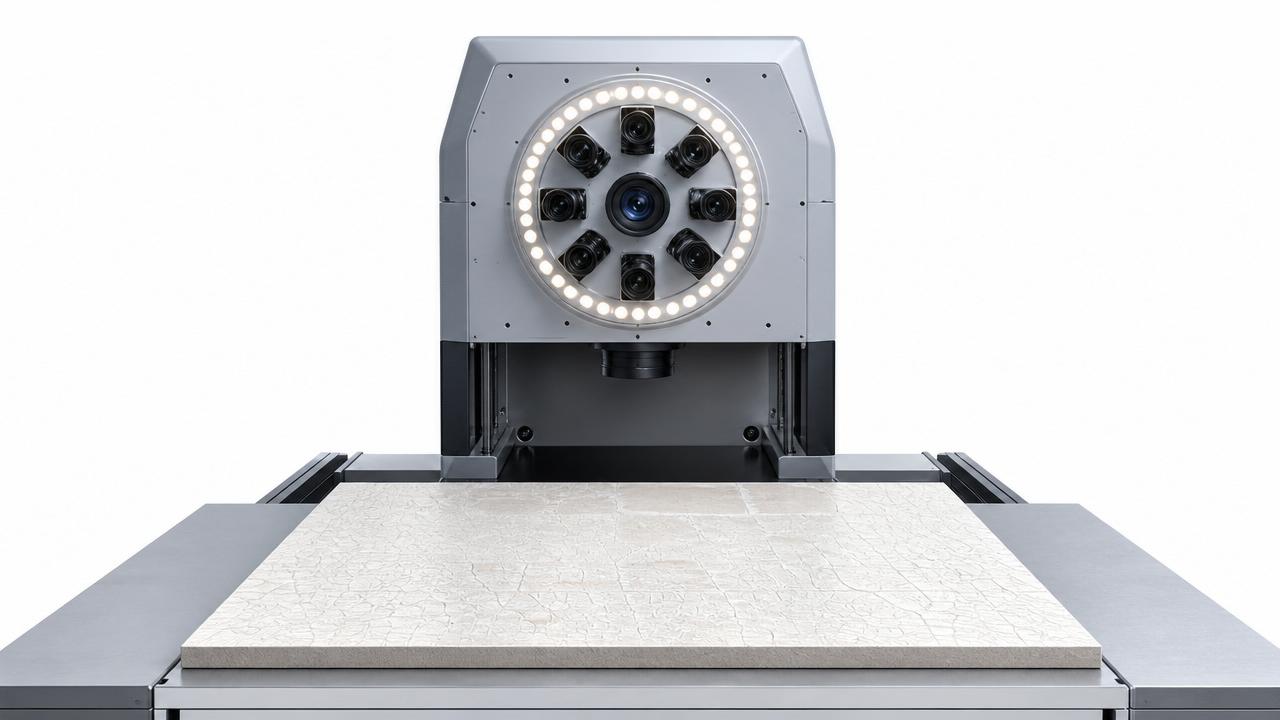
The 2026 Global AIDC Industry Forum opened in Dongguan on May 7, 2026 — a key indicator for ceramic tile and composite panel exporters, AI-driven quality inspection system vendors, and global procurement stakeholders. Its findings signal accelerating adoption of AI visual defect detection in export-oriented manufacturing, with measurable shifts in buyer behavior and technical expectations.
Event Overview
The 2026 Global AIDC Industry Forum took place in Dongguan from May 7 to 9, 2026. According to official forum data, AI-powered visual defect recognition systems — capable of identifying glaze micro-cracks, color grading deviations, and surface bubble localization — are now deployed in production lines of 73% of Chinese tile & ceramics and composite panel enterprises exhibiting at the event. Inquiries from Middle Eastern and North American buyers for such equipment rose by 320% year-on-year. Key technical requirements highlighted include detection accuracy ≥99.97%, multilingual UI support, and standardized integration protocols with ERP and MES systems.
Industries Affected
Direct Exporters (Tiles & Composite Panels)
These enterprises face growing buyer expectations for certified, AI-verified quality consistency — especially in high-value export markets where defect tolerance is low. The 73% adoption rate among exhibitors reflects not just technological readiness but also competitive pressure to demonstrate process transparency and traceability.
AI Inspection System Integrators & Solution Providers
With overseas buyer inquiries up 3.2×, demand is shifting from standalone hardware toward full-stack solutions: embedded vision modules must now interoperate with existing factory IT infrastructure. The emphasis on ERP/MES compatibility signals maturation beyond pilot deployments into enterprise-scale integration.
Third-Party Quality Assurance & Certification Services
As AI-based inspection becomes standard, traditional manual sampling and lab-based certification may be increasingly supplemented — or partially displaced — by real-time, AI-augmented audit trails. This affects service scope, reporting formats, and validation methodologies accepted by importers.
OEM/ODM Manufacturing Partners
For contract manufacturers serving international brands, AI inspection capability is becoming a de facto prerequisite for qualification. Buyers’ focus on precision (≥99.97%) and system interoperability implies tighter technical alignment requirements during vendor onboarding and production ramp-up.
What Enterprises and Practitioners Should Monitor and Act On
Track integration protocol standardization efforts
Current demand for ERP/MES compatibility is expressed as a requirement, not yet a standardized implementation. Enterprises should monitor emerging interface specifications (e.g., OPC UA extensions for vision systems) rather than assume proprietary APIs will suffice across buyer ecosystems.
Prioritize multilingual UI readiness for frontline operations
The explicit mention of multilingual UI as a buyer priority suggests that operator-level usability — not just backend analytics — is now part of the procurement evaluation. Exporters deploying new lines should verify language support coverage (Arabic, English, Spanish) during vendor selection, not post-installation.
Validate detection accuracy claims against real-world defect profiles
While ≥99.97% accuracy is cited, this metric depends heavily on training data relevance. Enterprises should request validation reports using defect types and lighting conditions representative of their specific product categories — e.g., polished porcelain vs. textured composite panels — rather than accepting generic benchmark scores.
Assess ERP/MES integration scope early in procurement cycles
Integration is no longer optional; however, depth varies (e.g., alarm logging only vs. full SPC data feed). Exporters should define required data fields and update frequency with vendors *before* PO issuance, to avoid scope creep or retrofit delays during commissioning.
Editorial Perspective / Industry Observation
Observably, this forum outcome reflects a transition point: AI inspection is moving from ‘advanced option’ to ‘baseline expectation’ for export-ready ceramic and composite panel production. Analysis shows the 320% inquiry surge is not isolated to technology vendors — it originates from procurement teams evaluating supplier capability, suggesting downstream market pull rather than upstream tech push. From an industry perspective, this is less a signal of imminent regulatory change and more evidence of converging commercial standards across key import regions. It is better understood as an operational benchmark shift — one that redefines minimum viable capability for competitive participation in global tenders and private-label programs.
Consequently, the pace of adoption appears driven by buyer-led risk mitigation, not just efficiency gains. That makes responsiveness to this trend less about strategic transformation and more about timely, targeted capability alignment — particularly at the interface between shop-floor automation and enterprise data systems.
Conclusion
This development signifies a consolidation phase for AI in industrial quality control — where technical feasibility has given way to interoperability, verification, and commercial deployment norms. It does not indicate universal replacement of human QA, but rather a recalibration of roles: AI handles high-volume, repeatable detection; human oversight shifts toward exception analysis, model validation, and cross-system correlation. For affected enterprises, the current takeaway is pragmatic: treat AI inspection not as a discrete upgrade, but as a foundational layer in export compliance infrastructure — one requiring deliberate attention to integration, localization, and measurement traceability.
Information Source
Main source: Official data released during the 2026 Global AIDC Industry Forum (Dongguan, May 7–9, 2026). Note: Integration protocol standards and regional regulatory acceptance of AI-generated inspection logs remain under observation and are not confirmed as finalized at time of publication.
Industry Briefing
Get the top 5 industry headlines delivered to your inbox every morning.