
Dubai Build 2026 Buyer Interest Jumps 42%
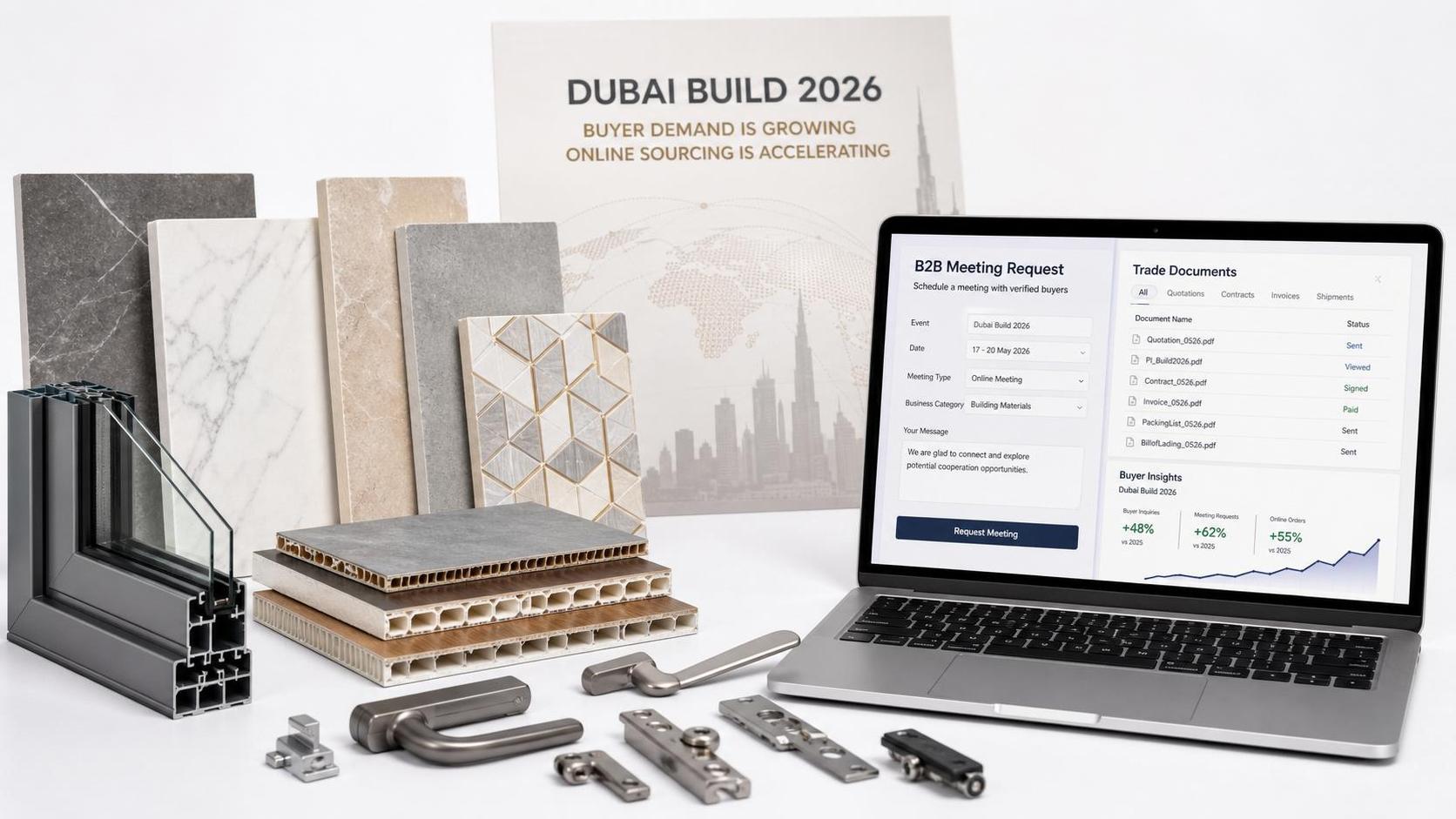
The timing of the underlying market shift is not explicitly stated in the source material, but the latest pre-registration figures released by DWTC on July 3, 2026 point to a clear acceleration in buying activity ahead of Dubai Build 2026. For suppliers, exporters, sourcing teams, and service providers focused on Middle East building materials trade, the significance lies less in the headline number alone and more in where demand is concentrating, how quickly buyer engagement is moving online, and what the full China pavilion means for access, timing, and competitive positioning.
What the pre-registration data confirms
According to pre-registration data released by Dubai World Trade Centre, the 28th Dubai Build international building materials exhibition, scheduled for October 13 to 16, 2026, has received 12,700 buyer pre-registration intentions from markets including Saudi Arabia, Egypt, and Iraq. This represents a 42% increase from the same period in 2025.
Among the registered buying interests, Tiles & Ceramics, Composite Panel, and Window Fittings account for more than 68% of demand. The China exhibitor allocation has already been filled, while overseas buyers are actively booking online B2B meetings.
Where the impact may be felt first
Suppliers in the top-demand categories face a more concentrated inquiry cycle
From an industry perspective, suppliers linked to Tiles & Ceramics, Composite Panel, and Window Fittings may feel the impact first because these categories already account for the majority of indicated demand. The business effect is likely to show up in quotation activity, sample preparation, specification matching, and buyer communication speed. What deserves closer attention is whether inquiries remain broad and exploratory or begin narrowing into product-level requirements during the run-up to the exhibition.
Trading companies may need to adjust how they access buyers
For direct trading companies, the filled China pavilion matters because it may change how exposure is gained and how meetings are scheduled. The rise in online B2B reservations suggests that buyer access is already moving into an earlier, more appointment-driven stage. Analysis shows that for firms without additional booth capacity, pre-show digital engagement may become more important than relying only on traffic during the exhibition itself.
Procurement and channel participants should watch demand concentration by market
Buyers and channel operators serving Saudi Arabia, Egypt, Iraq, and neighboring demand pools may need to track whether interest in the three leading categories translates into more focused sourcing plans. The key business link here is assortment planning: if buyer attention keeps clustering around a limited set of categories, distributors and procurement teams may prioritize comparability, supplier screening, and availability over broader category discovery.
Service providers may see pressure on coordination and response times
For sourcing support, meeting coordination, and related trade service providers, the surge in pre-registered buyer interest and dense B2B booking activity may increase pressure on scheduling, document readiness, and communication turnaround. Observably, the operational challenge is not just volume, but the need to connect the right buyers and suppliers before exhibition dates compress decision time.
What companies should be watching now
Track official updates around participation and meeting arrangements
Companies should closely monitor any further official wording from organizers regarding exhibitor arrangements, meeting formats, or registration rules. The current confirmed facts show full China exhibitor allocation and heavy buyer booking activity, which means even small procedural updates could affect meeting access and preparation priorities.
Prioritize the three categories already drawing the most attention
Analysis shows that enterprises active in Tiles & Ceramics, Composite Panel, and Window Fittings should review how clearly their product offers can be presented to buyers in a pre-scheduled setting. The issue is not only product availability, but whether specifications, application details, and core documentation can be communicated efficiently during online B2B discussions.
Prepare for earlier buyer engagement, not only on-site contact
The increase in online B2B appointments suggests that part of the commercial process is already shifting forward in time. What deserves closer attention is whether internal teams are ready for earlier screening conversations, faster follow-up, and more disciplined lead qualification before the exhibition opens.
Strengthen execution materials around qualification and delivery communication
For exporters and manufacturers, practical preparation should center on supplier credentials, product information, transaction documents, and delivery-cycle communication. This is an analytical recommendation rather than a confirmed market outcome, but in a market environment where buyer attention is rising quickly, weak documentation or slow response may become a more visible disadvantage.
Why this looks more like a demand signal than a finished result
Analysis shows that the 42% increase in buyer pre-registration should be read first as a strong forward signal rather than a completed commercial outcome. Pre-registration intentions indicate heightened market attention and sourcing interest, but they do not by themselves confirm order conversion, shipment volume, or category-specific transaction results.
It is more appropriate to understand this as an early indicator that the Middle East building materials sourcing cycle is becoming more active around Dubai Build 2026, especially in a narrow group of product categories. The full China allocation and active online meeting bookings reinforce that access to buyers may tighten earlier than usual, but the depth and durability of that demand still require continued observation.
How to read the signal at this stage
At this stage, the most balanced conclusion is that Dubai Build 2026 is showing stronger pre-show buyer momentum than the comparable period a year earlier, with demand clearly concentrated in Tiles & Ceramics, Composite Panel, and Window Fittings. For the industry, the immediate value of this update lies in planning and prioritization: who should engage now, which product lines deserve faster preparation, and where buyer communication is already becoming more competitive.
It is more appropriate to read this development as a short-term market signal with possible broader implications, rather than as proof of a settled long-term trend. The next phase to watch is whether concentrated buyer interest turns into sustained meeting quality and subsequent commercial follow-through.
About the basis of this article
This article is based on the user-provided news title, event timing note, and event summary. The specific official source link was not provided in the input, so the underlying information still requires ongoing verification against source materials where available.
For this type of industry update, commonly relevant source categories may include organizer announcements, company statements, industry association releases, authoritative media coverage, and standard-setting or trade-related institutional documents. Based on the current input, the areas that warrant continued tracking are any updated organizer disclosures, changes in participation arrangements, and whether buyer interest in the leading categories develops into clearer transaction signals.
Industry Briefing
Get the top 5 industry headlines delivered to your inbox every morning.