
Trade tariffs are reshaping tile pricing faster than expected
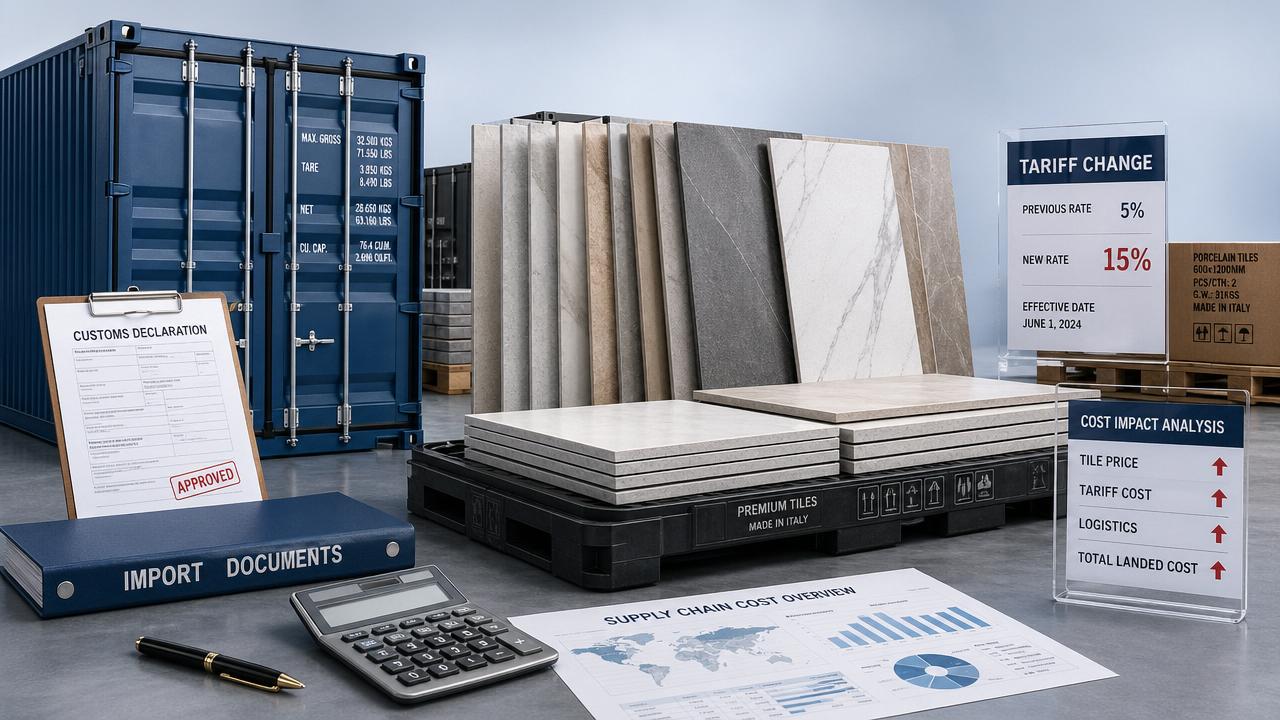
Trade tariffs are reshaping tile pricing faster than many distributors, agents, and wholesalers anticipated, creating immediate pressure on margins, sourcing plans, and customer negotiations. For channel partners navigating volatile supply chains, understanding how trade tariffs influence tile costs, lead times, and competitive positioning is now essential to protecting profitability and making smarter purchasing decisions in a rapidly changing global market.
Why are trade tariffs moving tile pricing so quickly right now?
Trade tariffs affect tile pricing faster than many other building materials because tiles sit at the intersection of energy-intensive production, international freight, and highly price-sensitive distribution. A change of 5% to 25% in import duty can move landed cost immediately, while buyers often expect price stability for at least one project cycle. For distributors serving residential showrooms, contractors, and commercial fit-out accounts, that gap creates a direct margin squeeze within 30 to 90 days.
The speed is also linked to how tile supply chains are structured. Raw material processing, firing, packaging, port handling, customs clearance, and local warehousing all stack costs before the product reaches a dealer network. If a tariff applies at customs entry, every downstream quotation must be recalculated. Unlike some categories where domestic substitution is easy, tile collections often depend on specific finishes, sizes, slip-resistance grades, or project-matching series that cannot be replaced overnight.
For channel partners, the issue is not only the tariff rate itself. The bigger challenge is the combined effect of currency fluctuation, supplier price revision, shipping volatility, and customer resistance to sudden increases. A 12% tariff change may end up translating into a 15% to 22% shift in final quoted price once freight, insurance, storage, and re-labeling costs are included.
What makes tile more exposed than buyers expect?
Tiles are often quoted per square meter or square foot, which makes price increases easy for customers to notice. At the same time, projects usually compare multiple suppliers side by side, so even a small landed-cost increase can push one distributor out of consideration. In hospitality, retail, multifamily housing, and public-space renovation, procurement teams may revisit supplier lists when pricing variance exceeds 8% to 10%.
- Tariffs hit imported tile at the border, before local margin recovery is possible.
- Many collections depend on matching color lots and repeat orders, reducing flexibility.
- Tile logistics involve breakage risk, pallet density, and warehouse space, which amplify landed-cost sensitivity.
- Commercial bids often lock prices for 60 to 180 days, while trade tariffs can change much faster.
For GIAM readers in distribution and agency roles, this means tariff awareness can no longer remain a policy topic handled only by finance teams. It now belongs in daily sourcing reviews, project qualification, and pricing strategy.
How do trade tariffs change the real landed cost of tile for distributors and agents?
The practical impact of trade tariffs is best understood through landed cost, not factory price alone. Many buyers look at ex-works or FOB numbers and underestimate the cost stacking that happens later. Once tariffs are added, the distributor must also account for freight, marine insurance, customs brokerage, inland delivery, receiving, warehousing, breakage allowance, and working-capital holding time, which can range from 45 to 120 days depending on the route.
A tariff rarely stays isolated. If customs classification changes, if a supplier changes origin country, or if container utilization falls due to mixed-size loading, the effective cost per square meter rises again. That is why some importers are seeing tile categories move from low-margin replenishment products into more carefully rationed stock lines, especially in large-format porcelain and decorative wall tile segments.
The table below shows how trade tariffs can alter the cost structure in a simplified but realistic way. The percentages are illustrative ranges used for planning rather than fixed market rates.
The key lesson is that trade tariffs should be modeled as part of total inventory economics, not just customs expense. A distributor that misses one cost layer may underquote a project by 6% to 12%, which is enough to erase profit on a full container or a multi-phase commercial order.
Which cost indicators should buyers track every month?
A monthly review cadence is now more useful than a quarterly one in many markets. Channel partners should track at least five indicators: duty exposure by origin, ocean or inland freight movement, average lead time, gross margin by tile category, and customer quote validity period. When these are reviewed every 30 days, pricing reactions become more disciplined and less emotional.
Recommended monitoring checklist
- Map each active supplier by country of origin and tariff exposure.
- Recalculate landed cost using updated freight and customs assumptions every 30 to 45 days.
- Segment inventory into project stock, showroom stock, and fast-turn replenishment lines.
- Adjust quote-validity windows if cost volatility exceeds acceptable margin thresholds.
This is where GIAM’s cross-sector intelligence becomes useful: tile pricing should not be viewed in isolation from broader building-material cost shifts, energy policies, and regional project demand patterns.
Which distributors, wholesalers, and agents are most affected by trade tariffs?
Not every channel partner feels trade tariffs in the same way. The most exposed businesses are those with high import dependence, narrow gross margins, long replenishment cycles, or heavy concentration in price-competitive project bidding. If more than 40% to 60% of a tile portfolio comes from one tariff-sensitive origin, the risk is materially higher than for diversified sourcing models.
Distributors focused on premium design collections can sometimes absorb tariff effects better because customers buy specification consistency, visual differentiation, and technical performance rather than just unit price. In contrast, wholesalers serving commodity floor tile and entry-level wall tile often face immediate substitution pressure when pricing moves beyond a narrow range.
Agents representing overseas factories also need to reassess how they position origin value. A supplier relationship built on price alone becomes fragile under tariff pressure. A relationship built on fill rate, shade consistency, packaging reliability, technical documentation, and project support has more room to survive cost turbulence.
How can channel partners identify their exposure level?
A quick way is to divide the business into three exposure bands: low, medium, and high. This is not a legal or accounting classification, but it helps management decide how urgently to act. The table below offers a practical screening framework.
This screening method helps teams prioritize action. A business with high source concentration and long fixed-price commitments should act in weeks, not months. A more diversified distributor may focus first on monitoring and customer communication rather than immediate assortment changes.
Who usually feels the pain first?
- Importers carrying container stock with low historical margin.
- Regional wholesalers serving fast-turn commodity projects.
- Agents tied to one export-heavy manufacturing base.
- Distributors with large showroom programs that must maintain visual continuity across many SKUs.
Understanding this exposure profile is the first step toward protecting both pricing discipline and customer retention.
How should buyers compare sourcing options when trade tariffs rise?
When trade tariffs increase, many companies react by asking only one question: where can we find a cheaper factory? That is too narrow. The better question is how to compare origin options across total delivered value, lead time reliability, technical suitability, and replacement risk. A lower factory price can still produce a worse result if freight is unstable, calibration differs, or repeat orders fail to match previous batches.
For tile distributors, especially those supplying mixed residential and commercial accounts, the sourcing decision should be measured across at least six dimensions: tariff exposure, logistics resilience, product consistency, technical documentation, MOQ and packing efficiency, and customer acceptance. In many cases, shifting only 20% to 35% of volume to a secondary origin is safer than replacing the entire program at once.
The comparison below can support structured sourcing discussions between procurement, sales, and warehouse teams.
What should be compared beyond basic price?
The main insight is that trade tariffs force buyers to value resilience more explicitly. The cheapest source at purchase order stage may become the most expensive source after customs, delay claims, and stock fragmentation are accounted for.
A practical sourcing response plan
- Keep core project lines stable unless technical equivalence is fully verified.
- Test secondary origins first on fast-moving standard sizes.
- Use sample and specification review before changing premium collections.
- Negotiate packing density, mixed-container options, and lead-time commitments together with price.
This approach supports more stable project delivery while still responding to tariff pressure.
What mistakes do distributors make when reacting to trade tariffs?
The first common mistake is delaying repricing because teams hope the tariff situation will reverse quickly. In reality, even short-term changes can affect stock purchased this month and sold next month. Waiting 60 days to adjust quotations may protect customer relationships briefly, but it can also create a margin hole that takes two or three sales cycles to recover.
The second mistake is focusing entirely on replacement sourcing without checking compatibility. Tiles are not generic boxes. Shade variation, edge rectification, facial pattern count, abrasion performance, and packaging durability all matter. A lower-cost alternative that creates 3% more breakage or frequent batch mismatch may cost more than the original tariff increase.
The third mistake is poor communication with customers. Many buyers accept price adjustments when the explanation is timely, specific, and tied to project timing. They resist when distributors provide sudden revisions with no context. Trade tariffs are easier to discuss when supported by transparent quote-validity windows, alternative specifications, and phased ordering options.
Which warning signs should management not ignore?
- Gross margin falling below internal threshold on imported tile despite stable sales volume.
- Quote conversion weakening in tariff-exposed product families within 30 to 45 days.
- Stock aging increasing because customers shift to cheaper domestic or regional substitutes.
- More frequent disputes over lead time, partial deliveries, or project holdbacks.
How can sales teams talk about tariff-driven pricing without losing trust?
A strong approach is to separate product value from cost change. Explain what remains consistent, such as design continuity, project compliance, or stock support, and then show where trade tariffs affect the cost base. Offer options: immediate purchase under current stock, revised lead-time sourcing, or alternative series within a target budget band. Customers are more responsive when they feel they still have control over timing and specification.
In practice, many distributors now shorten quotation validity to 7, 15, or 30 days depending on exposure. That may seem aggressive, but in volatile conditions it is often more honest than offering a 90-day quote that cannot be fulfilled profitably.
What should businesses confirm before updating tile procurement or pricing strategy?
Before changing procurement direction, companies should confirm what kind of business they are protecting: short-term volume, long-term specification position, or inventory stability. Trade tariffs may justify different actions for each objective. A project-led distributor may prioritize quote control and substitute approval, while a showroom-led dealer may focus on assortment simplification and selective stock protection.
It is also important to confirm operational details early. That includes HS code review, origin documentation, packaging specifications, sample lead time, technical data sheet availability, and reorder practicality. In many markets, a sourcing change that looks attractive on paper fails during execution because documentation or consistency support is incomplete.
For organizations working across tiles, sanitary products, and kitchen or bath systems, the best response is usually portfolio-based rather than single-category-based. GIAM’s perspective is that building-material channels perform better when they compare tariff exposure across adjacent categories, identify where margin can be defended, and rebalance sales effort toward more stable lines.
A final FAQ checklist for decision-makers
Use the following questions before finalizing new pricing, supply agreements, or customer communication around trade tariffs.
These questions help convert uncertainty into a workable action plan. In a market where trade tariffs can influence tile pricing within one procurement cycle, speed matters, but disciplined evaluation matters more.
Why choose us when trade tariffs are changing your tile decisions?
GIAM supports distributors, agents, and wholesalers with intelligence that connects policy movement to practical building-material decisions. We focus on how trade tariffs, energy standards, material evolution, and commercial demand interact across tiles, sanitary spaces, and smart kitchen and bath systems. That wider market view helps channel partners avoid making isolated sourcing choices that create new risks elsewhere in the portfolio.
If you need to review tile sourcing under current trade tariffs, we can help you organize the right decision points first: origin exposure, product selection logic, delivery-cycle assumptions, quote-validity strategy, and market positioning by customer segment. This is especially useful when your team must balance project continuity with cost control over the next 30, 60, or 90 days.
Contact us to discuss specific needs such as parameter confirmation, product selection, delivery timelines, alternative sourcing paths, documentation requirements, sample support, and quotation communication strategy. A focused discussion now can help you reduce margin surprises, improve negotiation confidence, and respond to trade tariffs with a more resilient tile business plan.
Industry Briefing
Get the top 5 industry headlines delivered to your inbox every morning.