What Makes Hygienic Building Materials Easier to Maintain?
For after-sales maintenance teams, hygienic building materials are easier to maintain when their surfaces resist stains, moisture, bacteria, and chemical wear while allowing fast, low-effort cleaning. In high-use spaces, the right material choices can reduce service time, extend product life, and support consistent hygiene standards. This article explores the key properties that make maintenance simpler and more cost-effective.
Why maintenance expectations around hygienic building materials are changing
A clear shift is taking place across healthcare-adjacent interiors, hospitality projects, commercial washrooms, food-service zones, education facilities, multifamily housing, and transport hubs: owners no longer evaluate hygienic building materials only by initial appearance or compliance claims. They increasingly judge them by how consistently those materials perform after months and years of cleaning, disinfection, moisture exposure, and heavy touch traffic. For after-sales maintenance teams, this change is significant because service pressure has moved from occasional repair toward continuous hygiene assurance.
This shift is not driven by one single factor. It comes from stricter hygiene expectations, labor shortages in maintenance departments, greater use of stronger cleaning agents, and a growing demand for durable finishes that still look acceptable under frequent wiping and disinfection. As a result, hygienic building materials are increasingly selected for maintainability, not just for installation performance. In practical terms, easier maintenance now means lower total service time, fewer repeat visits, less visible degradation, and clearer cleaning results.
For GIAM’s audience across the building materials ecosystem, this is an important market signal. The conversation is moving from “Is this material hygienic?” to “How does this material stay hygienic under real operating conditions?” That distinction affects specification, product development, warranty risk, and maintenance planning.
The strongest market signals behind easier-to-maintain surfaces
The most visible trend is the move toward low-porosity, easy-clean, chemically resilient surfaces. In the past, many projects accepted materials that looked premium on handover but demanded intensive maintenance later. Today, specifiers and operators are more cautious. They want hygienic building materials that can tolerate repeated cleaning cycles without swelling, discoloring, cracking, or trapping soil in joints and textures.
Another signal is the rise of lifecycle thinking. Instead of focusing narrowly on purchase price, project teams increasingly ask how long a wall panel, countertop, partition, door surface, sealant line, or flooring system can remain easy to clean. This trend matters for after-sales teams because materials that simplify daily upkeep also reduce escalation into service complaints, mold risks, odor retention, edge failures, and coating breakdown.
Digital reporting and brand reputation also play a role. In commercial spaces, visible cleanliness has become part of customer experience. In residential developments, poor maintainability creates tenant dissatisfaction. In both cases, hygienic building materials that support predictable cleaning outcomes are gaining favor because they reduce uncertainty for operators.
Trend change table: what the market is rewarding now
What actually makes hygienic building materials easier to maintain
For maintenance teams, maintainability is not an abstract quality. It is the result of a few physical and design characteristics that directly influence cleaning speed, contamination control, and repair frequency. Among hygienic building materials, the easiest products to maintain usually combine several of the following properties rather than relying on one feature alone.
1. Low porosity and closed surfaces
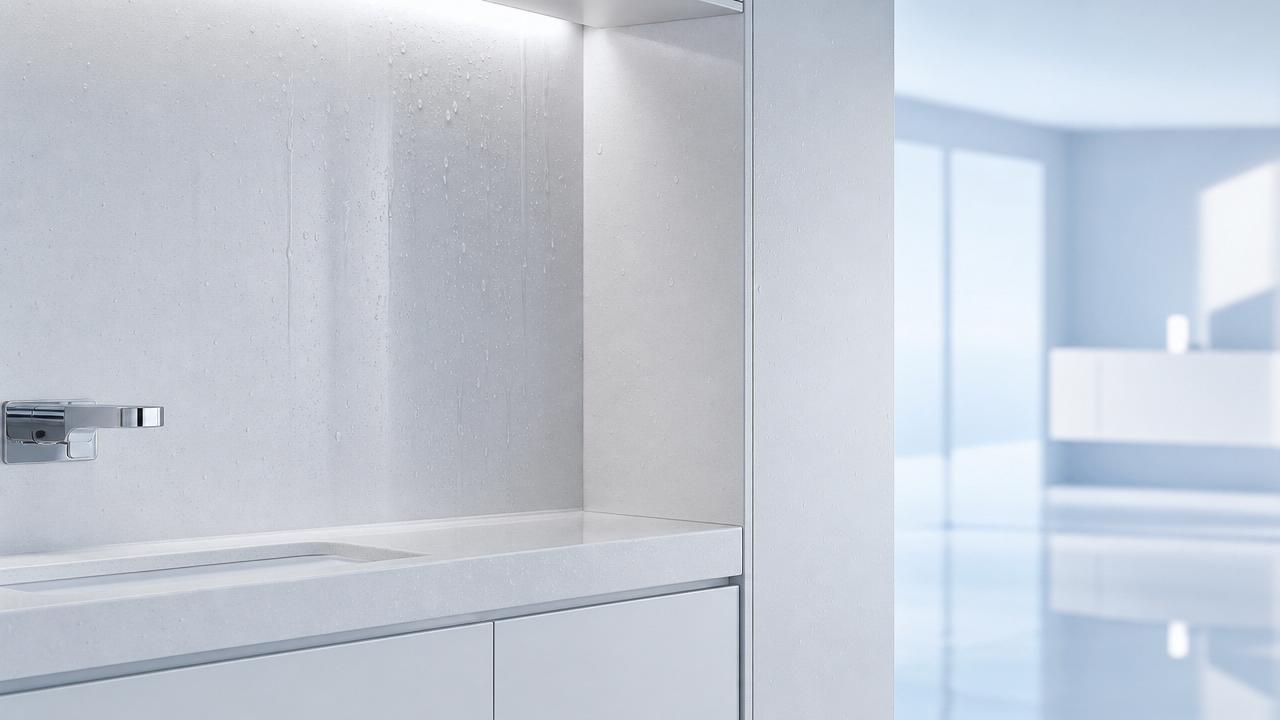
Low-porosity surfaces absorb less water, oil, soap residue, and staining agents. That means fewer deep-set marks and less need for aggressive cleaning. In washrooms, kitchens, and healthcare-related environments, this property also helps limit moisture retention that can support odor and microbial growth. Materials with closed, dense surfaces often show more stable performance under routine cleaning protocols.
2. Chemical resistance under real cleaning routines
A surface may seem durable until it is exposed to disinfectants, descalers, chlorine-based products, alkaline cleaners, or alcohol solutions over time. Easier-to-maintain hygienic building materials resist etching, discoloration, gloss loss, and brittleness under repeated chemical contact. This matters because after-sales maintenance teams often inherit the consequences of a mismatch between surface chemistry and cleaning practice.
3. Minimal joints, seams, and textured dirt traps
Even a strong material becomes harder to maintain if installation leaves many narrow joints, exposed edges, deep grooves, or rough textures. Dirt accumulates where cloths and tools cannot clean efficiently. The trend toward larger formats, integrated sink and countertop designs, seamless panels, and simplified detailing reflects a real operational need. Maintenance becomes easier when contamination has fewer places to collect.
4. Moisture stability and dimensional consistency
Materials that swell, warp, delaminate, or soften under humidity become difficult to sanitize and expensive to service. Hygienic building materials that remain dimensionally stable in wet or high-condensation environments reduce seal failure and edge lifting. This is especially relevant in shower areas, public toilets, locker rooms, utility zones, and commercial kitchens.
5. Repairability without hygiene compromise
Maintenance ease is not only about cleaning. It also includes how quickly a damaged area can be restored without creating a visible patchwork of weak points. Surfaces that allow modular replacement, simple resealing, or localized refinishing often perform better over the asset lifecycle than materials that require full-area intervention after minor damage.
Why these changes matter more for after-sales maintenance teams
After-sales personnel sit where specification decisions meet operating reality. They see whether hygienic building materials truly support cleaning teams, withstand user behavior, and deliver on promised durability. As maintenance windows become shorter and staffing remains tight in many facilities, materials that demand specialized cleaning steps or frequent touch-up work create hidden cost pressure.
This is why maintenance-friendly material selection is becoming a strategic issue rather than a housekeeping detail. Every extra seam, every coating that reacts poorly to disinfectant, and every absorbent substrate increases labor hours. Conversely, materials that are easy to wipe down, dry quickly, resist buildup, and keep a stable finish help maintenance teams move from reactive service toward planned upkeep.
Impact table: who feels the change most directly
The main forces driving this trend
Several drivers are converging. First, hygiene expectations are broader than before. They now extend beyond hospitals into offices, hotels, schools, gyms, transit projects, and residential common areas. Second, maintenance labor is more expensive and often less available, so easier-clean materials gain economic value. Third, sustainability goals are changing the discussion: if hygienic building materials can be cleaned efficiently with less water, fewer harsh chemicals, and fewer replacement events, they support operational carbon and waste reduction.
There is also a technology driver. Material science has improved coatings, compact surfaces, anti-microbial integrations, stain-resistant finishes, and water-resistant composites. However, the market is becoming more critical of marketing claims. Buyers and operators want proof that these solutions remain maintainable after repeated use, not just in a laboratory narrative. That creates a stronger link between product innovation and post-installation service evidence.
What maintenance teams should evaluate before calling a material “easy to maintain”
A useful trend-based judgment is to assess hygienic building materials by maintenance outcome, not by brochure language alone. Teams should ask whether the material stays clean-looking with standard tools, whether common chemicals damage it, whether moisture exposure changes the surface, and whether joints remain stable. They should also examine how the material behaves after accidental misuse, such as standing water, over-application of disinfectant, scale buildup, or abrasive contact.
Another important signal is whether the supplier provides realistic care instructions that fit actual facility conditions. If maintenance guidance is too narrow, too delicate, or disconnected from commercial cleaning reality, service problems are likely. Hygienic building materials that are truly easier to maintain usually come with clear compatibility guidance, repair methods, and practical cleaning limits.
Practical checkpoints for field evaluation
Look for visible residue retention after normal wiping, edge deterioration in wet zones, discoloration near dispensers and splash areas, sealant failure at transitions, and finish changes after disinfection cycles. These signs often reveal more than a product datasheet. They help after-sales teams predict whether hygienic building materials will remain serviceable under daily pressure.
Where the next phase of demand is heading
The next phase is likely to favor materials that combine hygiene performance, simplified cleaning, and stronger lifecycle transparency. The market is moving toward solutions that reduce maintenance complexity rather than transfer it downstream. That includes more seamless systems, surfaces designed for lower chemical burden, and modular elements that can be replaced without disturbing adjacent finishes.
For GIAM’s broader view of spatial intelligence, this trend also aligns with smart space management. As buildings become more data-aware, maintenance records will increasingly influence procurement decisions. If one category of hygienic building materials repeatedly produces fewer complaints and lower cleaning time, that operational evidence may shape future specifications more than aesthetic preference alone.
How businesses and maintenance teams should respond now
Manufacturers should strengthen proof of maintainability, not only claims of hygiene. That means clearer chemical compatibility data, better guidance for high-use settings, and product design that reduces seams and vulnerable edges. Contractors and specifiers should involve maintenance feedback earlier, especially in washrooms, kitchens, and other moisture-intensive spaces. Facility teams should document cleaning outcomes and recurring defects so that future material choices reflect operating reality.
For after-sales maintenance personnel, the most effective response is to create a simple evaluation framework: Which hygienic building materials clean quickly? Which resist the chemicals actually used on site? Which surfaces fail first, and why? Which details cause trapped dirt or water ingress? By tracking these patterns, teams can support better replacement decisions and reduce avoidable service burdens.
Final judgment: easier maintenance is becoming a competitive standard
The meaning of hygienic building materials is expanding. It no longer refers only to surfaces associated with cleanliness in principle. It increasingly refers to materials that stay cleanable, durable, and service-friendly under real operating stress. That is the core trend worth watching. In a market shaped by labor pressure, higher hygiene expectations, and lifecycle accountability, easier maintenance is becoming a competitive standard across building interiors.
If a business wants to judge how this trend affects its own projects, the most useful questions are practical ones: Are current materials compatible with actual cleaning chemistry? Do seams and edges create repeat maintenance issues? Is moisture stability strong enough for heavy-use environments? Can damaged components be repaired quickly without compromising hygiene? The answers will show whether today’s hygienic building materials are truly prepared for tomorrow’s maintenance demands.
Industry Briefing
Get the top 5 industry headlines delivered to your inbox every morning.