Ceramics Expo USA 2026 Highlights Functional & Smart Ceramic Materials
Ceramics Expo USA—the largest ceramics trade exhibition in North America—concluded on May 6, 2026, in Cleveland. The event signaled a decisive industry shift toward functional and intelligent ceramic solutions, driven by procurement priorities from major North American construction firms and bathroom product brands.
Event Summary: Key Facts Confirmed
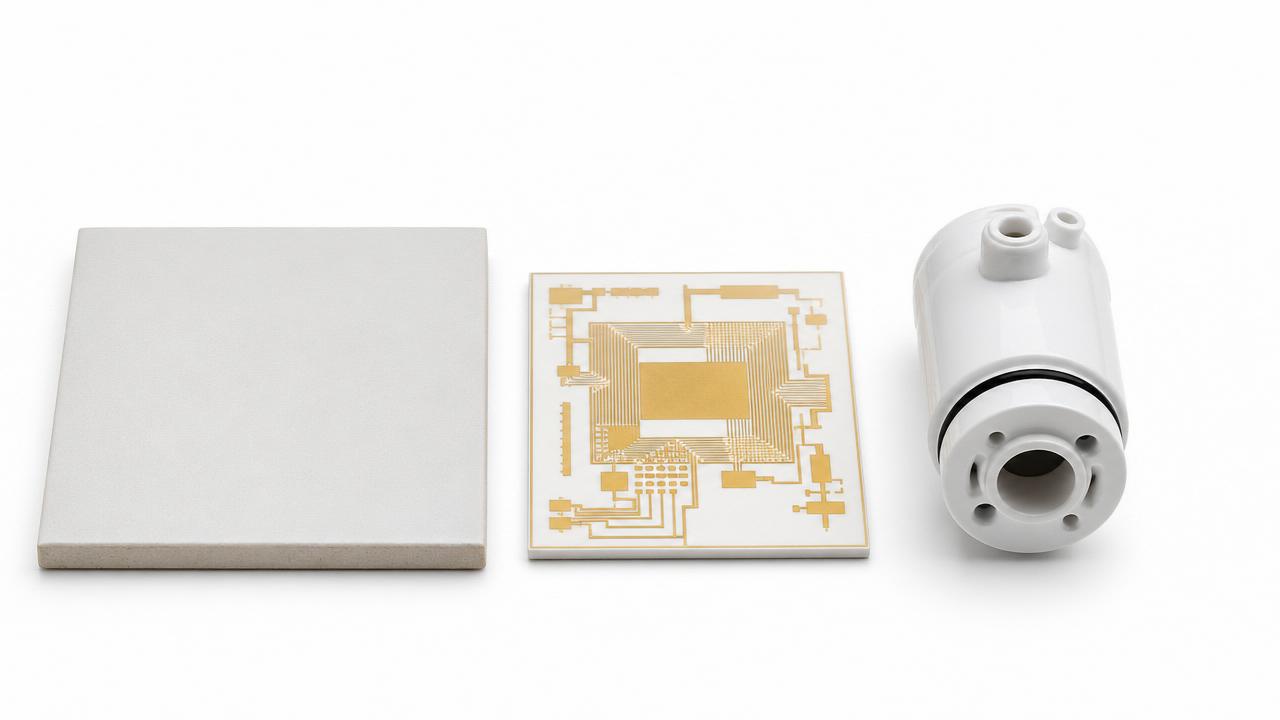
Ceramics Expo USA took place from May 5–6, 2026, in Cleveland. Exhibitors prominently featured electronic ceramic substrates, antimicrobial glazed tiles, and ceramic valve bodies for smart toilets. Over 3,000 attendees—including procurement representatives from North American construction companies and bathroom brand manufacturers—attended the exhibition. The event delivered a clear market signal: the tiles and ceramics sector is undergoing a functional and intelligent upgrade. For Chinese high-end ceramic exporters, it served as a targeted platform for direct business alignment.
Impact Across the Value Chain
Direct Exporters
Export-oriented ceramic manufacturers face intensified demand for performance-differentiated products—not just aesthetic or dimensional compliance. Buyers now prioritize technical documentation (e.g., antimicrobial efficacy test reports, thermal cycling data for electronic substrates) alongside standard certifications. This raises the bar for pre-shipment verification and technical bid alignment.
Raw Material Suppliers
Suppliers of specialty glazes, rare-earth dopants, and high-purity alumina must anticipate tighter traceability requirements and accelerated validation timelines. Antimicrobial functionality, for instance, hinges on precise compositional control and batch-level stability—demanding enhanced process documentation and material safety data sheets aligned with North American regulatory expectations.
Ceramic Component Manufacturers
Producers of precision-engineered parts—such as ceramic valve bodies for smart toilets—must ensure dimensional repeatability under varying service conditions (e.g., thermal expansion, water pressure cycling). End-user specifications increasingly reference ISO 13849 (safety-related control systems) and IPC-2221 (printed board design), implying cross-domain compliance awareness beyond traditional ceramic standards.
Supply Chain Service Providers
Logistics, testing labs, and certification consultants must adapt to shorter lead times for functional validation. Third-party lab reports—especially for biocidal claims or dielectric performance—now serve as de facto commercial prerequisites, not post-sale add-ons. Coordination across testing, labeling, and customs classification (e.g., HTS codes distinguishing electronic vs. architectural ceramics) has become mission-critical.
Strategic Priorities for Exporters
Align Technical Specifications with North American Procurement Signals
Electronic ceramic substrates must meet IPC-2221A design rules and demonstrate thermal conductivity ≥24 W/m·K (per ASTM C177). Antimicrobial tiles require ISO 22196-compliant test reports with ≥99.9% reduction against E. coli and S. aureus. Smart toilet valve bodies need pressure-cycle validation per ANSI Z124.1 and leak-tightness certification per ASME B16.34.
Strengthen Certification & Regulatory Documentation
CE marking remains insufficient for U.S. markets; UL 746C (polymeric materials), NSF/ANSI 61 (drinking water system components), and California Prop 65 compliance are increasingly requested—even for ceramic-only assemblies where migration pathways exist (e.g., glaze leaching under acidic cleaning agents).
Optimize Lead Times for Functional Validation
Procurement cycles now include mandatory third-party functional testing prior to order placement. Exporters should pre-qualify accredited labs (e.g., UL, Intertek, TÜV SÜD) capable of delivering antimicrobial, dielectric, and fatigue test reports within ≤10 working days to remain competitive.
Industry Observation: Beyond the Show Floor
Analysis shows that Ceramics Expo USA 2026 reflects more than a product showcase—it marks an inflection point in how ceramic materials are specified and qualified in North America. What deserves closer attention is the convergence of building code updates (e.g., ASHRAE 189.1’s emphasis on antimicrobial surfaces in healthcare facilities), smart home interoperability mandates (Matter protocol integration for smart toilet actuators), and tightening chemical disclosure requirements (TSCA inventory status for glaze additives). From an industry perspective, this signals rising compliance complexity—not just for finished goods, but across upstream material sourcing, processing, and documentation architecture.
Conclusion: A Strategic Inflection, Not Just a Trend
The 2026 edition of Ceramics Expo USA confirms that functional and intelligent performance is no longer a differentiator—it is becoming a baseline requirement for market access in key North American segments. For exporters, success will hinge less on scale and more on verifiable technical readiness, cross-standard compliance fluency, and agile response to evolving procurement criteria. Sustainable advantage lies in embedding validation capability—not just into quality control, but into R&D and supply chain governance.
Source Information & Verification Guidance
This article was generated exclusively from the provided title, event date (May 6, 2026), and event summary. Specific official source links were not provided in the input and should be verified continuously. Stakeholders are advised to monitor updates from the National Institute of Standards and Technology (NIST), ANSI-accredited standards development organizations, UL Solutions’ regulatory bulletins, and the U.S. Consumer Product Safety Commission (CPSC) regarding upcoming revisions to ceramic component safety guidelines, antimicrobial claim substantiation protocols, and smart device cybersecurity requirements for connected bathroom fixtures.
Industry Briefing
Get the top 5 industry headlines delivered to your inbox every morning.