
China-EU Green Building Materials Certification Mutual Recognition Talks Begin
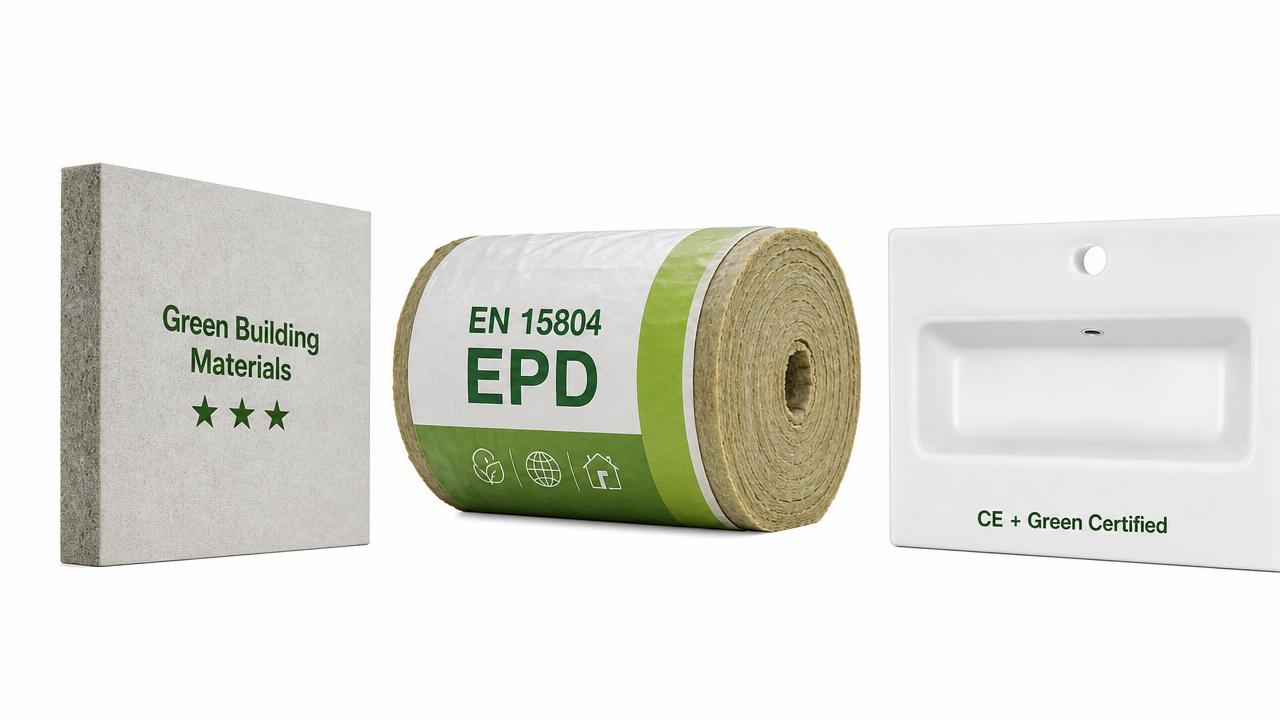
On May 27, 2026, the China-EU Green Product Standards Working Group announced the launch of technical consultations on mutual recognition between China’s Green Building Materials Certification (1–3 star levels) and the EN 15804 sustainability module under the EU CE marking framework. The initiative directly affects exporters of composite panels, thermal insulation materials, and architectural sanitary ceramics — making it especially relevant for manufacturers, distributors, and EPC contractors engaged in EU-bound construction product trade.
Event Overview
On May 27, 2026, the China-EU Green Product Standards Working Group confirmed the initiation of technical consultations to explore mutual recognition between China’s Green Building Materials Certification (rated one to three stars) and the EN 15804 environmental product declaration (EPD) module embedded in the EU CE marking system. The first pilot categories include composite panels, thermal insulation materials, and building sanitary ceramics. According to official statements, the alignment could reduce certification lead times for EU project-based procurement by 30–45 days and lower duplicate testing costs by approximately 22%.
Industries Affected
Manufacturers of Composite Panels, Insulation, and Sanitary Ceramics:
These producers face direct implications because their products are named as initial pilot categories. They currently undergo separate Chinese green certification and EU CE conformity assessments — including EN 15804-compliant EPDs — resulting in duplicated testing, documentation, and timeline overhead. Mutual recognition, if implemented, would allow test reports and declarations issued under one scheme to be accepted under the other, reducing administrative burden and time-to-market.
Distributors and Importers Serving EU Markets:
EU-based importers and regional distributors sourcing from China rely on CE-marked products for tender eligibility and project compliance. Delays or inconsistencies in green claims can stall procurement or trigger requalification. A recognized green certification pathway would strengthen supply chain credibility and accelerate product acceptance in public and private infrastructure tenders requiring verified sustainability performance.
EPC Contractors and Project Integrators:
Contractors executing EU-funded or EU-regulated construction projects must demonstrate compliance with sustainability criteria across material specifications. Streamlined green certification reduces verification complexity during pre-qualification and tender submission phases — particularly where EN 15804-aligned EPDs are mandatory or strongly preferred.
What Enterprises and Practitioners Should Monitor and Do Now
Track official updates from both the China National Certification and Accreditation Administration (CNCA) and the European Commission’s Joint Research Centre (JRC)
The current phase is technical consultation — not formal agreement. Final scope, timelines, and legal instruments (e.g., Memorandum of Understanding vs. regulatory amendment) remain undefined. Stakeholders should monitor official channels for confirmation of pilot implementation dates, eligible certification bodies, and required documentation formats.
Focus on the three pilot product categories when reviewing EU tender requirements
While broader mutual recognition remains aspirational, these three categories are the only ones explicitly included at this stage. Companies exporting outside this scope — e.g., structural timber, sealants, or flooring — should not assume automatic coverage. Prioritize internal readiness for composite panels, insulation, and sanitary ceramics where EU projects are active.
Distinguish between policy intent and operational readiness
Consultations do not equate to immediate equivalency. Even after agreement, national accreditation bodies (e.g., CNAS in China and EA members in Europe) must align assessment procedures, and notified bodies must be authorized to issue cross-recognized reports. Businesses should avoid prematurely revising compliance workflows until official authorization pathways are published.
Review existing test reports and EPD documentation for alignment opportunities
Manufacturers with recent EN 15804-compliant EPDs or CNCA-recognized green certification reports may already hold data that meets core methodological requirements of both schemes (e.g., life cycle inventory boundaries, impact categories). Preparing comparative gap analyses now can accelerate future application processes once mutual recognition protocols are finalized.
Editorial Perspective / Industry Observation
Observably, this development signals a maturing phase in Sino-European technical cooperation on sustainable construction standards — but it remains a procedural milestone, not an operational outcome. Analysis shows the talks reflect growing alignment on life-cycle thinking and transparency in building material sustainability assessment, rather than a sudden harmonization of regulatory regimes. From an industry perspective, the initiative is best understood as a confidence-building measure: it lowers the perceived risk of regulatory divergence, yet real-world impact depends on execution rigor, accreditation capacity, and enforcement consistency across both jurisdictions. Continued attention is warranted — not because mutual recognition is imminent, but because its progress reveals how fast green standard interoperability is advancing in high-priority trade corridors.
Concluding, this initiative marks an early but concrete step toward reducing green compliance fragmentation for Chinese building material exporters targeting the EU. Its significance lies less in immediate cost savings and more in signaling institutional willingness to co-develop interoperable sustainability frameworks. For now, it is more accurately interpreted as a preparatory signal — one that warrants structured monitoring, not operational overhaul.
Source: Official announcement by the China-EU Green Product Standards Working Group, May 27, 2026.
Note: The mutual recognition status, implementation timeline, and scope beyond the three pilot categories remain subject to ongoing technical consultation and have not been finalized.
Industry Briefing
Get the top 5 industry headlines delivered to your inbox every morning.