Smart kitchen appliances with hidden installation limits
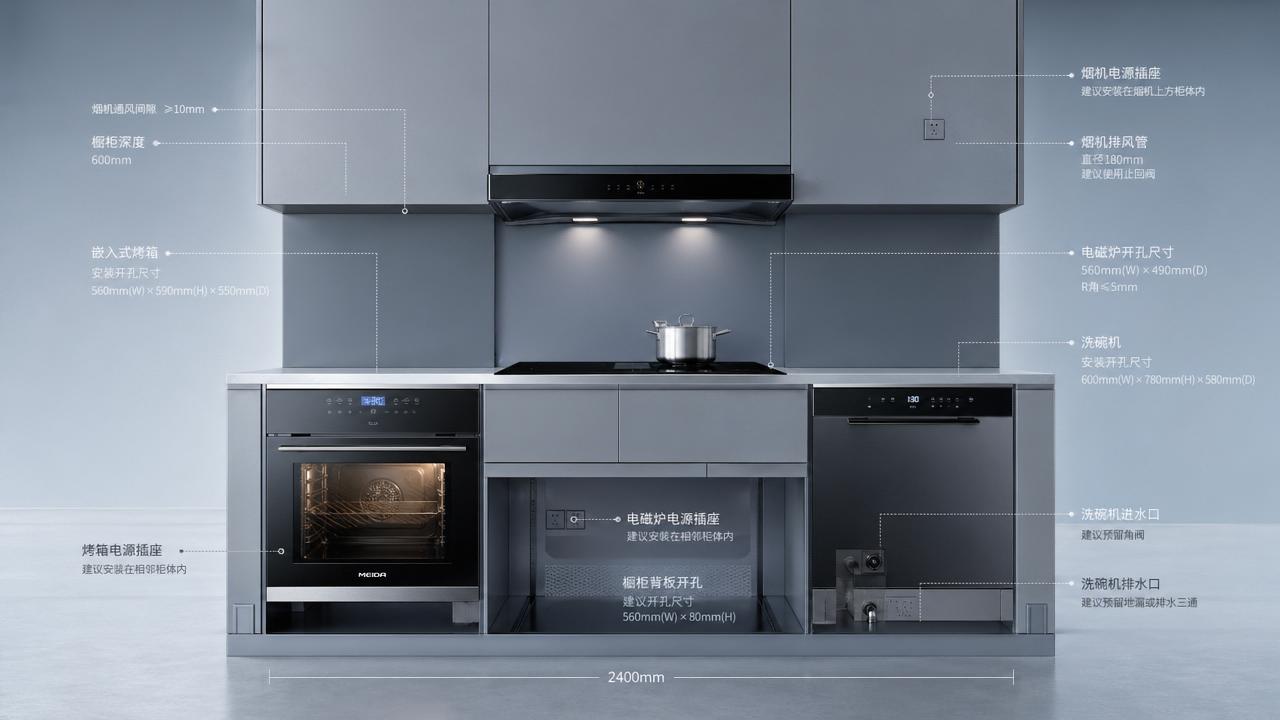
Smart kitchen appliances can elevate project value, but hidden installation limits often disrupt schedules, budgets, and compliance targets. For project managers and engineering leaders, understanding space constraints, utility loads, ventilation needs, and integration standards is essential before specification. This article explores the overlooked factors that shape successful appliance selection, helping teams reduce risk, improve coordination, and deliver smarter, more efficient kitchen spaces.
Why installation limits are becoming a bigger issue in smart kitchen appliances
Across residential towers, serviced apartments, hospitality projects, and mixed-use developments, smart kitchen appliances are no longer treated as optional upgrades. They are increasingly tied to energy positioning, user experience, and asset differentiation. Yet the market shift is not only about adding connected ovens, intelligent dishwashers, or sensor-based range hoods. It is also about the growing gap between what is specified on paper and what can actually be installed on site without redesign, delay, or utility conflict.
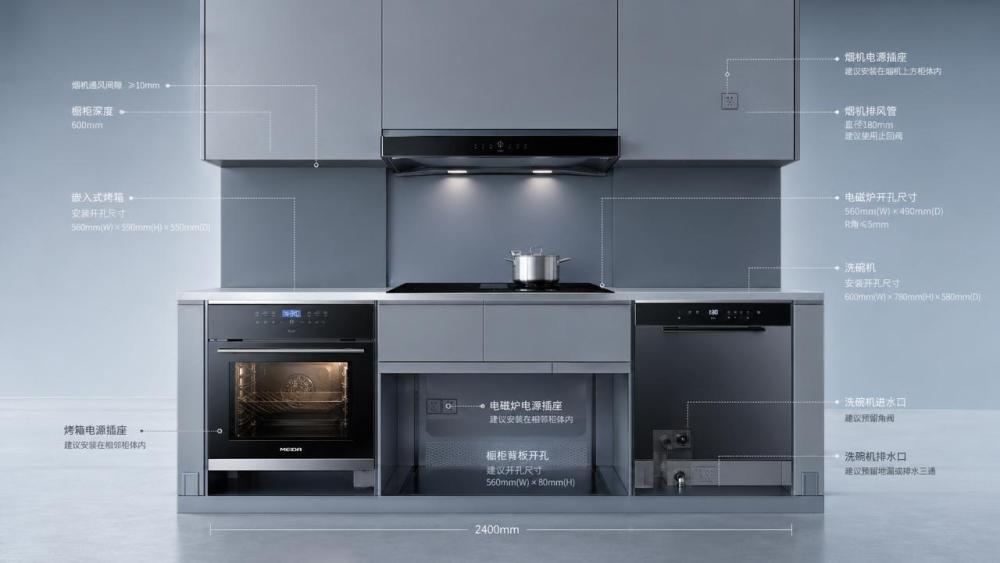
Over the past 3 to 5 years, project teams have faced tighter cabinet geometries, denser MEP coordination, and stronger expectations around noise, ventilation, and energy efficiency. In many urban projects, kitchen footprints have narrowed while appliance functionality has expanded. A built-in smart steam oven may require only 600 mm nominal width, but the true installation envelope can expand once rear ventilation clearance, side heat dissipation, service access, and door swing radius are included. These hidden dimensions often surface too late.
The result is a trend that matters to project managers: smart kitchen appliances now create more cross-discipline dependencies than conventional equipment. Specification decisions increasingly affect joinery design, electrical capacity, water points, drainage slope, fire compartment logic, and digital control integration. In fast-track projects with 8 to 16 week fit-out windows, even a single mismatch between appliance requirements and site conditions can cause procurement changes, rework, and commissioning setbacks.
Key market signals behind this shift
Several signals explain why installation constraints are becoming more visible. First, more clients prefer integrated kitchen aesthetics, which means appliances are concealed within tighter millwork tolerances. Second, utility standards are moving toward lower water use, better electrical safety, and improved indoor air quality. Third, digital features such as Wi-Fi modules, app control, occupancy-based settings, and centralized monitoring introduce additional requirements for power quality, network stability, and maintenance access.
- Integrated design reduces visible gaps, but it also reduces tolerance for field adjustment.
- Higher appliance functionality often means higher combined utility demand per kitchen zone.
- More projects now require lifecycle thinking, including serviceability over 5 to 10 years.
- Compliance expectations are extending beyond basic fit to include ventilation, condensation control, and safe operation.
For GIAM’s audience in construction, interiors, and smart living systems, this trend is especially relevant because smart kitchen appliances sit at the intersection of materials, mechanical design, and end-user expectations. That makes early-stage intelligence more valuable than late-stage correction.
The hidden limits project teams underestimate during specification
When teams review brochures or product lists, they usually compare visible metrics such as nominal dimensions, energy class, and feature count. However, installation risk often comes from the less visible layer: operational clearances, pipe routing, cable zones, load diversity, and service access. These factors are not minor details. In many projects, they determine whether smart kitchen appliances can be commissioned in one visit or require multiple corrective rounds.
A common example is electrical planning. A smart induction hob, built-in oven, dishwasher, and warming drawer may individually appear compatible, but the circuit layout may still fail if diversity assumptions are unrealistic or if local panel capacity is already constrained by HVAC controls and small power loads. In compact apartment schemes, available spare capacity may be limited to a narrow range, sometimes only enough for baseline appliances without future upgrades. This is where early utility mapping becomes essential.
Ventilation is another recurring issue. Smart kitchen appliances with heat-generating or steam-producing functions can require defined air pathways and moisture management strategies. If these are ignored, cabinet swelling, overheating, condensation, or poor extraction performance may emerge within the first 6 to 12 months of operation. Such failures are often blamed on the appliance, even when the real cause is incompatible installation detailing.
Typical hidden constraints by appliance category
The table below summarizes the hidden installation limits that frequently affect smart kitchen appliances in project environments. The values are indicative planning ranges rather than brand-specific requirements, and they should be verified against the selected model data before final coordination.
What this table shows is that smart kitchen appliances should be assessed as installed systems, not isolated products. A unit that appears dimensionally compliant may still fail because its operating envelope was never coordinated with cabinetry, MEP, and user movement patterns.
Early checks that reduce late-stage surprises
- Confirm net installation space, not only nominal product size, including service voids and door swing.
- Map electrical load by kitchen cluster and test realistic simultaneous use scenarios.
- Review water, drainage, and ventilation routes before millwork fabrication starts.
- Reserve access zones for maintenance tasks that may occur every 6 to 24 months.
- Verify whether digital features need stable Wi-Fi, gateway integration, or power backup behavior.
These checks are simple in principle, but they are often omitted when project schedules compress procurement and fit-out into overlapping stages. For project leaders, the real advantage is not just avoiding defects; it is preserving decision flexibility before site conditions lock in.
What is driving the change: compact layouts, stricter standards, and digital integration
The pressure around smart kitchen appliances is not random. It is being driven by three converging forces. The first is spatial compression. In many cities, premium value is being extracted from smaller residential and hospitality units, leaving less tolerance for appliance footprints, duct runs, and service zones. The second is performance expectation. Owners want better energy use, lower water consumption, and quieter operation. The third is digital integration, which turns appliances into connected nodes rather than stand-alone devices.
For engineering teams, this means the installation discussion starts earlier and becomes more interdisciplinary. Appliance selection now intersects with joinery tolerances, indoor air quality strategy, electrical protection design, and even data handover plans. In projects where appliance packages are confirmed after MEP rough-in, the risk level rises significantly because the physical infrastructure may already be too fixed to absorb model-specific requirements.
There is also a lifecycle dimension. Smart kitchen appliances are expected to remain relevant for 5 to 8 years or longer, but digital platforms and replacement parts may evolve faster than cabinet systems. If maintenance clearance or modular replacement logic is not considered, even a minor component failure can trigger major dismantling. This affects operational continuity, especially in rental, hospitality, and managed living environments.
Trend drivers and what they mean for projects
The following comparison helps project teams understand why installation planning for smart kitchen appliances is changing from a simple fit-check into a strategic coordination task.
This shift matters because the cost of correction increases sharply with each project stage. A coordination issue identified during concept design may take hours to resolve. The same issue discovered after cabinetry fabrication can take days, with cost implications that affect multiple trades.
Standards and coordination themes worth monitoring
Project managers do not need to memorize every regional rule, but they should monitor broad themes: electrical safety provisions, ventilation performance expectations, moisture control around enclosed appliances, accessibility of isolation points, and compatibility with building management or smart home ecosystems where relevant. For international projects, even small differences in voltage, plug format, water hardness conditions, or extraction practice can influence model suitability.
A practical rule is to treat appliance data sheets as a starting point, not the final answer. Coordination should test whether site conditions align with local installation practice, maintenance routines, and the final user profile. In student housing, serviced residences, and family apartments, usage intensity can differ enough to change what “appropriate specification” really means.
Who is affected most and where the project risks concentrate
The impact of hidden installation limits is not distributed evenly. Some project roles absorb the cost directly, while others experience it through schedule pressure or warranty disputes. For project managers and engineering leaders, the key is to identify where risk accumulates first. In most cases, it concentrates at the boundaries between design intent and execution reality: appliance procurement, millwork production, MEP rough-in, and final commissioning.
Developers and owners are affected through budget drift and delayed turnover. Interior designers face pressure when visual intent conflicts with ventilation or service clearance. MEP teams may need to revise routing after equipment is locked. Contractors carry installation sequencing risk, especially when appliance dimensions are finalized after joinery shop drawings. Facility operators inherit serviceability problems that may persist for years.
This is why smart kitchen appliances should be treated as coordination-sensitive assets. In portfolio projects with repeatable unit types, even a small hidden mismatch can multiply across 50, 200, or 500 kitchens. That changes the significance of what might otherwise seem like a minor technical omission.
Impact by stakeholder and project stage
The matrix below shows how installation issues in smart kitchen appliances typically surface across teams and phases.
For large developments, the risk multiplies when specification templates are copied across unit types without checking local variations in shaft location, ceiling depth, or electrical distribution. A repeatable kitchen may still require 2 to 4 different coordination solutions depending on stack position and utility arrangement.
Where project teams should focus first
- Focus first on built-in appliances that require both utility connection and cabinet enclosure.
- Prioritize high-volume unit types, because small errors scale quickly across repeated layouts.
- Review maintenance access before approving decorative closure panels.
- Align procurement timing with shop drawing release to avoid dimensional surprises.
In practical terms, the highest-value intervention is often a coordinated appliance schedule issued before fabrication, not after delivery. That schedule should include dimensional, electrical, hydraulic, ventilation, and access data in one place.
How to respond: a smarter evaluation framework for specification and delivery
The most effective response is not simply choosing smaller products or adding more contingency. It is building a structured review method for smart kitchen appliances that matches the pace and complexity of modern projects. For most teams, this means shifting from product-led selection to scenario-led selection. Instead of asking whether an appliance fits the design concept, ask whether it fits the installed reality, operating profile, and maintenance model of the project.
A practical framework can be applied in 4 stages. Stage 1 is concept alignment, where kitchen typologies, user intensity, and utility constraints are mapped. Stage 2 is technical filtering, where candidate smart kitchen appliances are screened against net space, load, and ventilation criteria. Stage 3 is coordinated detailing, where joinery, MEP, and access zones are frozen together. Stage 4 is commissioning and handover, where connectivity, safe operation, and service documentation are verified.
This sequence may sound standard, but what changes outcomes is the quality of the checkpoints. If each stage includes measurable acceptance points, the project is less likely to absorb hidden risk later. Even a 2 to 3 week early coordination window can prevent much larger disruption during fit-out.
Recommended evaluation checklist for smart kitchen appliances
The checklist below is useful for project managers, consultants, and procurement teams reviewing smart kitchen appliances before final approval.
- Confirm actual installation envelope, including clearances, hinges, heat dissipation, and service reach.
- Verify electrical characteristics, protective device needs, and probable simultaneous use conditions.
- Check water inlet, waste connection, pressure stability, and access to shut-off points where applicable.
- Assess extraction route, airflow resistance, recirculation strategy, and filter maintenance frequency.
- Review digital setup needs, such as app onboarding, pairing, reset process, and handover responsibility.
- Test whether replacement can occur without dismantling major surrounding finishes.
Decision signals worth watching in the next 12 to 24 months
Looking ahead, project teams should watch for several signals. More appliance packages will likely emphasize energy management and sensor-assisted operation. More developers will request integrated reporting on water and power use in premium smart living environments. More compact kitchens will require multifunction appliances to save space, which increases the need for precise installation detailing. And more cross-border procurement will bring variation in standards, lead times, and accessory compatibility.
For GIAM readers, this means the value of intelligence lies in connecting product evolution with project reality. The winning teams will not be the ones chasing the largest feature list. They will be the ones that judge smart kitchen appliances through the lens of utility fit, compliance readiness, serviceability, and repeatable delivery performance.
Why choose us for smarter project decisions on kitchen appliance integration
GIAM supports project managers, engineering leaders, and supply-side decision makers who need more than product promotion. Our focus is on connecting building materials intelligence, sanitary space evolution, and smart kitchen and bath system trends into practical project judgment. When smart kitchen appliances are involved, that means helping teams identify hidden installation limits before they turn into delivery problems.
If your team is evaluating appliance packages for residential, hospitality, or commercial interior projects, we can help you frame the right questions early. That includes parameter confirmation, selection logic for compact or high-density layouts, coordination concerns between cabinetry and utilities, likely delivery-cycle pressure points, and broad certification or compliance themes that may affect procurement decisions across regions.
Contact us if you want to discuss smart kitchen appliances in a more structured way. We can support conversations around installation parameters, product selection routes, lead-time planning, customization direction, certification considerations, sample review priorities, and quotation communication. For teams trying to reduce rework and improve certainty, early technical clarification is often the most cost-effective step.
Industry Briefing
Get the top 5 industry headlines delivered to your inbox every morning.