Kitchen system intelligence: useful upgrade or added complexity
As smart living moves from trend to infrastructure, kitchen system intelligence is becoming a strategic topic for business decision-makers. The real question is whether it delivers measurable efficiency, better user experience, and premium market value—or simply adds cost and operational complexity. Understanding this shift is essential for companies seeking competitive advantage in modern residential and commercial space development.
For developers, manufacturers, operators, and procurement leaders, the discussion is no longer about whether connected kitchens are technically possible. It is about where kitchen system intelligence creates operational value, which functions matter in real projects, and how to avoid overspending on features that increase maintenance without improving performance.
This matters across the wider building materials and interior systems ecosystem. In mixed-use projects, premium residential developments, serviced apartments, hospitality kitchens, and compact urban housing, intelligent kitchen systems now influence user satisfaction, energy management, hygiene control, and brand positioning. For decision-makers following GIAM’s perspective on spatial evolution, the priority is practical intelligence: systems that integrate with construction logic, compliance demands, and commercial return.
What kitchen system intelligence actually means in a project environment
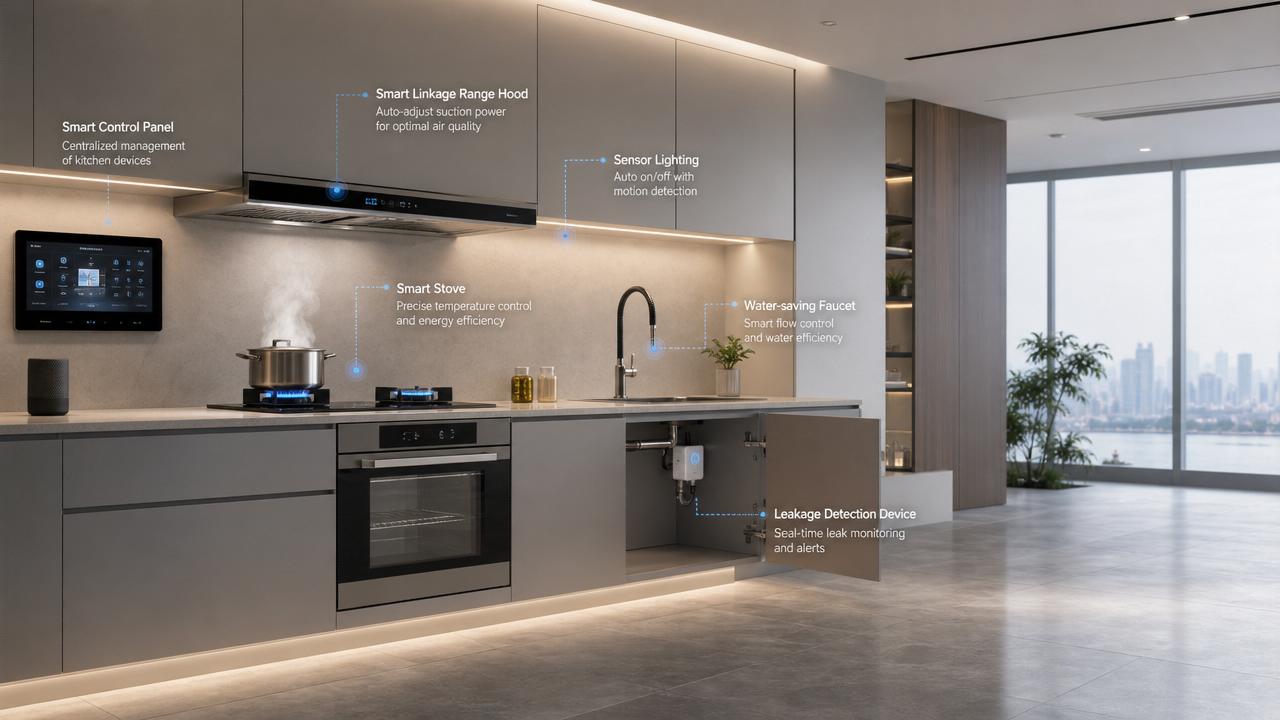
In B2B terms, kitchen system intelligence is not a single appliance. It is a coordinated layer of sensors, controls, software, connectivity, and user interfaces embedded into cabinets, ventilation, water fixtures, cooking units, lighting, access devices, and after-sales monitoring. In most projects, the intelligence layer sits across 4 to 7 core touchpoints rather than one standalone product.
A practical intelligent kitchen may include leak detection, energy-use monitoring, app-based equipment control, automatic shutoff, water-saving settings, occupancy-triggered lighting, smart locks for storage, and maintenance alerts. In higher-spec installations, data can also be linked to building management systems, allowing centralized monitoring at daily, weekly, or monthly intervals.
The value of kitchen system intelligence depends on project type. In luxury residential developments, convenience and premium pricing may drive adoption. In rental housing or hospitality, the stronger case often comes from lower service calls, reduced misuse, and better asset lifecycle control over 3 to 5 years.
Three levels of intelligence commonly seen in the market
Not all intelligent kitchens are built to the same depth. Many decision errors come from buying a Level 3 system for a Level 1 operational need. The table below helps separate basic smart features from integrated system logic.
The commercial lesson is clear: kitchen system intelligence becomes more defensible when it moves from isolated convenience to coordinated risk reduction and facility efficiency. For many enterprise buyers, Level 2 delivers the best balance between capital cost and operational impact.
Where decision-makers often misread the category
- Confusing connected appliances with full kitchen system intelligence.
- Paying for feature density instead of workflow relevance.
- Ignoring compatibility with plumbing, cabinetry, ventilation, and electrical planning.
- Underestimating software support cycles, which may require updates every 6 to 12 months.
Useful upgrade: where the business case is strongest
Kitchen system intelligence proves its value when the kitchen is treated as a managed asset rather than a static fit-out. In projects with high turnover, premium positioning, or strict resource targets, even a 10% to 20% reduction in service interventions can justify selective smart upgrades over a 24- to 36-month operating window.
The strongest use cases usually combine at least 2 of 3 business goals: lower operating risk, stronger user appeal, and better sustainability performance. That is why GIAM’s sector intelligence places smart kitchen systems at the intersection of material science, hydraulic design, and commercial insight.
Operational gains that can be measured
In practical deployments, the most valuable functions are often the least glamorous. Water leak alerts can reduce hidden damage exposure. Automatic shutoff can lower safety incidents. Usage diagnostics can shorten troubleshooting time from several manual checks to 1 guided inspection workflow. Occupancy-linked lighting and ventilation can also support daily efficiency in both residential and semi-commercial settings.
For developers and operators, value should be measured in 5 categories: installation coordination, energy and water use, service burden, user retention, and premium resale or rental differentiation. If a proposed system improves only marketing presentation but not these 5 areas, its return may be limited.
Decision matrix for common project scenarios
Different asset classes require different intelligence priorities. The table below shows where kitchen system intelligence usually produces the most defensible commercial outcome.
The pattern is consistent: the more units an operator manages, the more kitchen system intelligence shifts from lifestyle feature to operating tool. That is particularly true when labor costs, utility efficiency targets, and maintenance response times are under pressure.
Signs the upgrade is likely to be useful
- The project has 50 or more repeatable units, making standardization possible.
- Water, energy, and maintenance costs are monitored monthly.
- Brand positioning relies on smart living value, not only decorative finish.
- The building already supports digital access, lighting, or utility integration.
Added complexity: where intelligent kitchens create friction
Kitchen system intelligence becomes a burden when the digital layer is not matched to the project’s construction reality, user profile, or service capacity. In lower-budget projects, overspecified systems may increase handover delays, compatibility disputes, and callback volume within the first 6 to 18 months.
Complexity usually enters through integration points. A smart faucet is easy to explain. A connected kitchen involving plumbing interfaces, electrical circuits, ventilation triggers, cabinet tolerances, software permissions, and mobile app onboarding is a different procurement category. If one link is weak, the user blames the whole system.
The four most common friction points
1. Installation coordination risk
A conventional kitchen may be installed through 3 main trades. An intelligent kitchen can require 5 or more coordinated inputs, including controls setup and testing. If cabinet, plumbing, and electrical tolerances are not aligned early, rework risk increases sharply near handover.
2. After-sales fragmentation
Many buyers underestimate service ownership. When a ventilation trigger fails, is the issue with the hood, the sensor, the software bridge, or the power supply? Without a clear 1-party or 2-party escalation model, issue resolution can stretch from 48 hours to 2 weeks, affecting occupancy and reputation.
3. User adoption gaps
Not every resident or operator wants deep digital control. In some projects, fewer than 30% of users consistently engage with advanced app features. If the system requires too many steps for basic tasks, the “smart” layer becomes invisible in value but visible in cost.
4. Upgrade and cybersecurity maintenance
Connected systems require firmware, access control, and compatibility maintenance. Even simple platforms may need quarterly checks and annual review of device support life. For enterprise owners, this adds governance responsibilities that traditional kitchen packages do not carry.
How to tell when complexity outweighs value
- The payback model depends only on marketing language, not operating metrics.
- The supplier cannot define spare-parts availability for 3 to 5 years.
- The system adds more than 2 separate user interfaces for routine kitchen use.
- No one has mapped responsibility across design, installation, commissioning, and service.
How enterprise buyers should evaluate kitchen system intelligence
The most effective procurement process does not start with product catalogs. It starts with a business brief. Decision-makers should define 4 things before vendor comparison: target user group, asset management model, required integration depth, and acceptable service burden. This keeps kitchen system intelligence aligned with business outcomes rather than showroom appeal.
A disciplined evaluation framework also helps compare suppliers across construction compatibility, lifecycle support, and data usefulness. In many cases, the right supplier is not the one with the largest feature list, but the one with the cleanest implementation pathway.
Five procurement criteria that matter most
Before signing, buyers should request a structured review of technical and commercial fit. The table below provides a practical framework for assessing kitchen system intelligence in real-world developments.
For procurement teams, this framework turns kitchen system intelligence into a manageable buying category. It also supports clearer cross-functional conversations between design, engineering, operations, and finance teams.
Recommended implementation sequence
- Define the top 3 operational goals: safety, efficiency, premium value, or resource control.
- Map intelligence points to design packages before tender release.
- Run a pilot in 1 mock-up unit or 3 to 5 sample rooms.
- Test commissioning, resident onboarding, and service response before scale rollout.
- Review usage and maintenance data after the first 90 to 180 days.
The strategic view: from smart feature to spatial intelligence
For the wider construction and interiors industry, kitchen system intelligence should be understood as part of a larger shift toward data-informed living spaces. It connects directly with GIAM’s focus on advanced materials, hydraulic performance, energy-saving standards, hygiene expectations, and commercial intelligence across global urbanization.
In the next 3 to 5 years, the winning solutions are unlikely to be the most complex ones. They will be the systems that integrate with anti-bacterial surfaces, water-saving technologies, smart access logic, and maintainable digital infrastructure. In other words, the future belongs to kitchens that are intelligent enough to improve outcomes, but simple enough to operate at scale.
Kitchen system intelligence is a useful upgrade when it reduces risk, strengthens user experience, and supports measurable lifecycle value. It becomes added complexity when features outpace project needs, service capability, or integration discipline. For enterprise decision-makers, the answer is not to reject intelligent kitchens, but to specify them with tighter operational logic and clearer procurement criteria.
If your organization is assessing smart kitchen and bath systems, premium building materials, or intelligent space strategies across residential and commercial projects, GIAM can help you translate market signals into practical selection and implementation decisions. Contact us to discuss tailored solutions, compare project-fit options, and explore more actionable intelligence for next-generation spatial development.
Industry Briefing
Get the top 5 industry headlines delivered to your inbox every morning.