Bath technology trends that improve comfort without waste
Today’s bath technology trends are redefining what comfort means in modern bathrooms. Better comfort no longer depends on using more water, more energy, or more chemical-intensive cleaning products. Instead, the most valuable innovations focus on precise control, cleaner surfaces, lower resource consumption, and a smoother daily routine. From digital shower valves and leak detection to touchless flushing and self-cleaning finishes, the bathroom is becoming a practical space where convenience and efficiency can work together.
For anyone evaluating upgrades, the key question is not which feature looks the most advanced, but which technologies improve comfort without creating hidden waste. This is where the broader conversation in building materials, sanitary systems, and intelligent living environments becomes important. As global standards continue to move toward water efficiency, hygiene performance, and carbon-aware construction, bath technology trends now sit at the intersection of design, engineering, and long-term operating value.
Why a structured evaluation matters for bath technology trends
Bathrooms often receive upgrades based on appearance first, yet many comfort problems come from technical mismatches: unstable water temperature, excessive flow rates, difficult-to-clean joints, noisy ventilation, poor moisture control, or smart functions that add complexity without measurable benefit. A structured review helps separate meaningful innovation from novelty.
This matters in both residential and commercial environments. In homes, the goal is a more comfortable daily experience with lower utility bills and easier maintenance. In hotels, apartments, offices, wellness spaces, and healthcare-related settings, the same bath technology trends also affect hygiene consistency, lifecycle cost, downtime risk, and user satisfaction. Looking at each feature through a checklist makes decision-making clearer and more durable.
Core points to check before choosing comfort-focused bathroom upgrades
- Confirm whether the product improves comfort through precision, such as stable temperature, targeted spray control, or automatic shutoff, instead of simply increasing water or power consumption.
- Check certified flow rates, flush volumes, and energy demand so the technology supports measurable efficiency rather than marketing claims alone.
- Prioritize smart controls that solve real problems, including anti-scald protection, occupancy sensing, leak alerts, and usage scheduling.
- Review surface materials and component design for hygiene performance, stain resistance, and reduced need for aggressive cleaning chemicals.
- Assess installation compatibility with existing plumbing, water pressure, drainage layout, electrical access, and local efficiency standards.
- Choose systems with easy maintenance access, replaceable cartridges, available spare parts, and transparent service documentation.
- Evaluate digital features for security and reliability, especially if the bathroom includes app control, voice functions, or cloud-connected monitoring.
- Compare full lifecycle value, including water savings, cleaning time reduction, maintenance intervals, and durability under daily use.
The bath technology trends delivering comfort with less waste
1. Smart showers with precise temperature and flow control
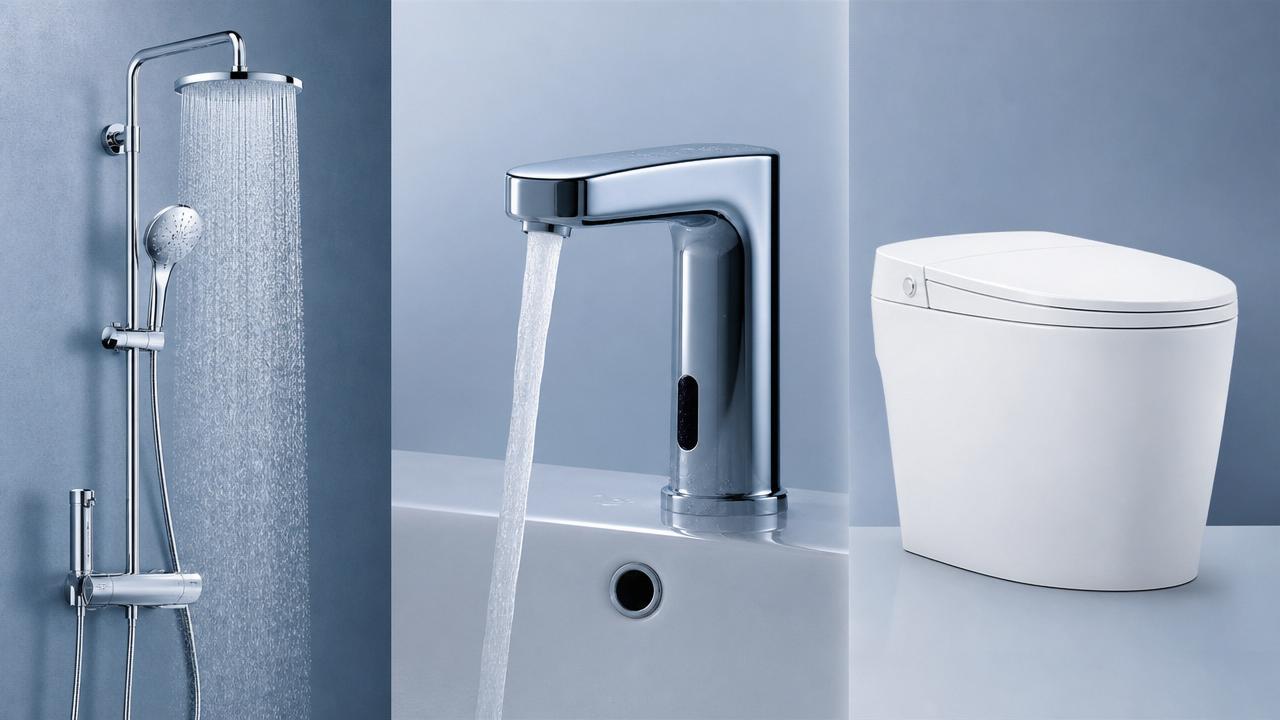
One of the most practical bath technology trends is the digital or thermostatic shower system. These products improve comfort by maintaining water temperature accurately, reducing the familiar problem of sudden hot or cold fluctuations. The efficiency benefit is equally important: users spend less time adjusting the shower, less water is wasted before reaching a comfortable temperature, and settings can be repeated with consistency.
Look for features such as eco modes, pause functions, timed presets, and anti-scald protection. A well-designed shower system should make the experience feel more luxurious through control, not through excessive flow. In this category, the best bath technology trends prove that precision is often more comfortable than volume.
2. Water-saving toilets with stronger flush intelligence
Modern high-efficiency toilets have advanced beyond the old trade-off between low water use and weak performance. Pressure-assisted systems, optimized bowl geometry, dual-flush designs, and better trapway engineering now allow lower flush volumes with reliable waste removal. This makes them a leading example of bath technology trends that improve both hygiene confidence and utility efficiency.
Sensor-based flush options can also reduce touchpoints in shared environments, though reliability and maintenance access should be reviewed carefully. The real value comes from balancing flush performance, water consumption, and servicing simplicity.
3. Touchless faucets and aerated water delivery
Touchless and low-flow faucets remain among the most visible bath technology trends because they support hygiene and resource efficiency at the same time. Infrared or capacitive activation reduces unnecessary run time, while aerators maintain the feel of adequate water volume by mixing air into the stream. This creates a comfortable handwashing experience with lower actual consumption.
The best models avoid delayed shutoff, false triggering, or difficult battery replacement. In high-use spaces, these details determine whether the technology reduces waste or creates operational frustration.
4. Easy-clean materials and anti-bacterial surfaces
Not all efficiency gains come from water or electricity. Some of the most valuable bath technology trends involve materials science: non-porous surfaces, anti-bacterial glazing, stain-resistant coatings, grout alternatives, and rimless sanitary fixtures. These features reduce the labor, water, and chemical load required to keep bathrooms clean.
Comfort improves because the space feels fresher and maintenance becomes less demanding. In long-term use, low-maintenance materials often outperform decorative options that look appealing at installation but age poorly under moisture and cleaning stress.
5. Leak detection and moisture management
A hidden leak can waste far more water than any efficient fixture can save. For that reason, leak sensors, smart shutoff valves, and humidity-responsive ventilation are rising within bath technology trends as essential protective systems rather than optional extras. These tools improve comfort indirectly by protecting air quality, preserving finishes, and reducing the risk of mold or structural damage.
Good moisture management also includes quieter fans, automatic run-on timers, and better airflow design. A dry, odor-controlled bathroom feels more comfortable and stays in better condition with less intervention.
How these bath technology trends apply in different settings
Homes and apartments
In residential settings, the most useful approach is to prioritize technologies that remove daily friction. Thermostatic showers, efficient toilets, easy-clean wall surfaces, quiet ventilation, and leak alerts typically deliver more value than highly complex entertainment-style features. When reviewing bath technology trends, focus on comfort that can be felt every day and savings that continue without constant adjustment.
Hospitality and premium rental spaces
Hotels and serviced apartments benefit from technologies that create a premium impression while controlling resource use across many rooms. Repeatable shower temperature, touchless faucets, durable finishes, and water-monitoring systems help maintain guest comfort and operational consistency. Here, the strongest bath technology trends are those that reduce complaints, shorten maintenance cycles, and support sustainability targets.
Healthcare-adjacent and wellness environments
In hygiene-sensitive environments, material selection and touch reduction become especially important. Anti-bacterial surfaces, touchless controls, reliable drainage, and controlled water temperature are central decision points. For these applications, bath technology trends must be evaluated for cleanability, consistency, and safety first, with aesthetics supporting rather than replacing technical performance.
Commonly overlooked issues that can reduce the value of bath technology trends
Overly complex smart features: Some products introduce app layers, voice integrations, or programmable settings that users rarely need. If the interface is confusing or the core function fails during connectivity issues, comfort declines instead of improving.
Poor compatibility with existing infrastructure: Even the best bath technology trends can underperform if water pressure is unstable, drainage slope is poor, or electrical planning is incomplete. Technical review should come before product selection.
Ignoring maintenance realities: Hidden valves, sealed electronics, hard-to-source cartridges, or inaccessible sensors can turn a smart upgrade into a long-term service problem. Maintenance pathways should be visible from the start.
Choosing finishes for appearance alone: Attractive materials that show water spots, trap residue, or require harsh cleaners often increase labor and resource use over time. Surface performance matters as much as visual style.
Practical steps for selecting the right upgrades
- Start with the main comfort problem: temperature instability, cleaning effort, humidity, noise, touchpoints, or high water use.
- Compare products using performance data, not feature count, with attention to water efficiency labels and maintenance documentation.
- Select two or three high-impact technologies first, rather than attempting a fully connected system with weak practical value.
- Match every smart function to a measurable outcome such as reduced run time, lower cleaning frequency, or better moisture control.
- Review local codes, plumbing constraints, and replacement part availability before finalizing installation decisions.
FAQ about bath technology trends
Do bath technology trends always cost more to maintain?
Not necessarily. Well-designed systems often lower maintenance through better materials, faster cleaning, and fewer water-related failures. The risk is highest when products add fragile complexity without service support.
Which bath technology trends offer the fastest practical return?
High-efficiency toilets, low-flow touchless faucets, thermostatic shower controls, and leak detection usually provide the clearest combination of comfort, savings, and measurable operational value.
Are smart bathroom products only suitable for premium projects?
No. Many current bath technology trends are scalable. Even simple upgrades such as aerated faucets, humidity-sensing fans, and easy-clean surfaces can significantly improve everyday performance without requiring luxury-level budgets.
Conclusion and next steps
The most important bath technology trends are not the ones with the most digital features, but the ones that make bathrooms more comfortable, hygienic, efficient, and durable with less waste. Precision water control, high-performance low-flow fixtures, touchless operation, advanced surface materials, and moisture management all support this direction.
A strong next step is to review the bathroom through a performance lens: identify where water, energy, time, or maintenance effort is being lost, then choose upgrades that solve those exact issues. In a market increasingly shaped by material innovation, efficiency standards, and intelligent building systems, the best bath technology trends are the ones that turn everyday comfort into a measurable long-term advantage.
Industry Briefing
Get the top 5 industry headlines delivered to your inbox every morning.