Bathroom Design Trends Moving Beyond Spa-Look Minimalism
Bathroom design trends are moving decisively beyond spa-look minimalism, blending warmth, performance, and smarter functionality into more expressive spaces. For researchers tracking material innovation and spatial evolution, this shift reveals how color, texture, sustainable surfaces, and integrated technology are reshaping the modern bathroom into a high-value, design-led environment.
The market signal is clear: bathroom design trends are becoming more layered and human-centered
For years, the dominant visual language in premium bathrooms was calm, pale, and highly restrained. Smooth stone looks, frameless glass, and hotel-inspired serenity defined what many considered aspirational. That model still matters, but current bathroom design trends show a meaningful pivot. Buyers, designers, developers, and product manufacturers are increasingly moving away from one-note minimalism toward bathrooms that feel warmer, more adaptive, and more closely tied to daily living patterns.
This change is not merely aesthetic. It reflects deeper shifts in construction priorities, residential expectations, sustainability standards, and smart-home adoption. Bathrooms are no longer treated only as private wellness zones. They are now seen as high-performance spaces where hygiene, water efficiency, material resilience, storage intelligence, and visual identity must work together. In both residential and commercial settings, decision-makers are evaluating bathrooms as integrated systems rather than isolated decorative rooms.
For information researchers and industry observers, that makes bathroom design trends a useful lens for reading broader market evolution. They reveal where consumer taste is heading, which materials are gaining premium value, how sanitary technology is changing product specifications, and why interior aesthetics are becoming more technical in execution.
What is replacing spa-look minimalism in today’s bathroom design trends
The emerging direction is not the rejection of simplicity itself, but the expansion of what simplicity means. Instead of cold uniformity, many current bathroom design trends favor balanced richness: tactile surfaces, soft contrast, layered lighting, and design choices that feel personal rather than anonymous. The bathroom is becoming more expressive without becoming visually chaotic.
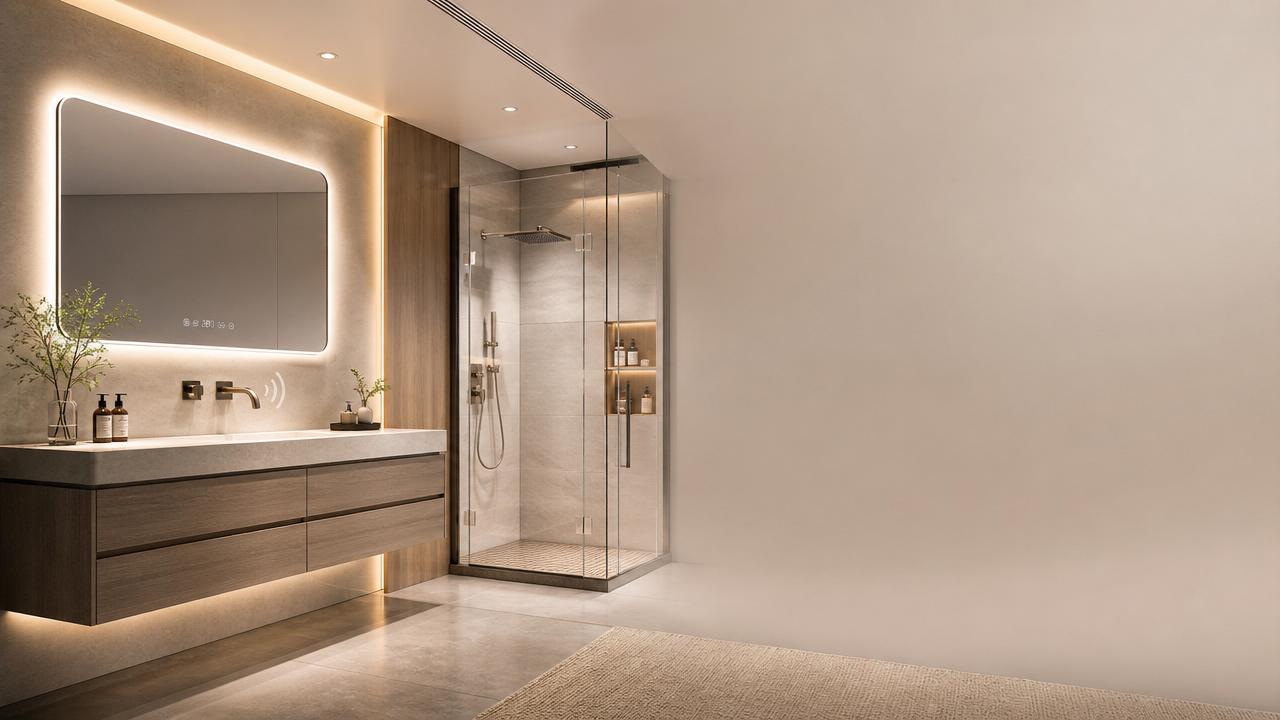
Several shifts stand out. Color palettes are warming up, with earthy neutrals, clay tones, muted greens, charcoal accents, and brushed metallic finishes gaining visibility. Surface selection is also changing. Matte textures, fluted details, porcelain slabs, engineered stone, anti-bacterial coatings, and water-resistant wood looks are increasingly specified because they combine visual depth with practical performance. At the same time, integrated vanity systems, concealed storage, smart mirrors, touchless controls, and efficient shower platforms are redefining what premium functionality looks like.
In short, bathroom design trends are becoming less about copying a spa image and more about building a responsive environment. That shift matters because it raises the value of materials, systems integration, and design intelligence across the supply chain.
Key direction of change
Why bathroom design trends are changing now
Several forces are driving this transition at the same time. First, post-pandemic hygiene awareness permanently elevated expectations around sanitary surfaces, easy-clean detailing, and touchless or low-contact interaction. This created stronger demand for anti-microbial materials, simplified maintenance, and fixtures engineered for cleaner use cycles.
Second, sustainability is no longer a side conversation. Water-saving technologies, lower-impact materials, durable finishes, and longer lifecycle specifications are shaping bathroom design trends across both consumer and project markets. Developers and brand owners increasingly understand that environmental compliance and operational savings now support premium positioning rather than limit it.
Third, smart-home expectations have entered wet-space planning. Mirrors with integrated lighting, occupancy-aware controls, app-connected systems, and precision temperature management are becoming part of bathroom decision-making. The bathroom is following the larger pattern seen across kitchens, entry systems, and climate controls: convenience is becoming infrastructural.
Fourth, demographic and lifestyle changes matter. Urban homes often require more compact yet efficient bathroom layouts, while aging populations increase interest in accessible design, anti-slip materials, grab-support integration, and intuitive controls. Hospitality and commercial operators, meanwhile, are looking for spaces that combine differentiation, ease of maintenance, and water-performance accountability.
Main drivers behind the shift
Material innovation is now central to bathroom design trends
One of the strongest signals in current bathroom design trends is the rising strategic role of materials. Researchers tracking the building-materials sector should pay close attention here, because specification choices increasingly determine not only appearance but maintenance cost, sustainability performance, and product differentiation.
Porcelain and sintered surfaces remain important because they can deliver stone-like luxury with strong resistance to moisture, stains, and wear. Engineered composites continue to appeal where consistency, fabrication flexibility, and hygiene are priorities. Textured ceramic tiles, especially in larger formats or relief finishes, are helping designers introduce visual movement without overwhelming compact spaces. Meanwhile, brushed metal, PVD-coated hardware, and blackened or bronze-toned details are being used to add contrast and warmth.
Another important shift is the search for materials that communicate softness while meeting performance demands. Wood-look porcelain, water-resistant laminates for vanity systems, and matte anti-fingerprint finishes are becoming more relevant because they answer two needs at once: emotional comfort and operational practicality. This dual requirement is a defining feature of future-facing bathroom design trends.
Technology is moving from novelty to standard expectation
Technology in the bathroom used to be marketed mainly as luxury. Today, many features are being judged as functional upgrades with measurable value. This is especially true in premium residential projects, hospitality developments, and renovation segments where users expect visible convenience gains.
Smart mirrors now serve as lighting hubs, information interfaces, and anti-fog solutions. Shower systems with digital temperature control improve comfort while reducing water waste from manual adjustment. Touchless faucets and sensor-based flushing systems are increasingly attractive in commercial environments because they strengthen hygiene positioning and reduce contact points. Leak detection, occupancy sensing, and ventilation automation are also gaining relevance as part of broader building intelligence strategies.
For industry stakeholders, this means bathroom design trends should be evaluated through systems compatibility, not just product appearance. Brands that can connect aesthetics, electronics, hydraulic performance, and installation simplicity are better positioned as bathroom spaces become more integrated.
Who is most affected by these bathroom design trends
The current shift affects multiple business roles across design, manufacturing, procurement, and project delivery. The impact is not uniform, which is why decision-makers should map these bathroom design trends to their own position in the value chain.
The next signals worth monitoring
Looking ahead, several signals will help researchers and businesses judge which bathroom design trends are likely to strengthen. First, monitor whether regulations and green-building frameworks place more emphasis on water efficiency, material traceability, and indoor health. Such policy changes often accelerate product upgrades across broad markets.
Second, follow how premiumization evolves. If buyers continue to prioritize fewer but better interior upgrades, bathrooms may receive higher per-square-meter investment than many other rooms. That would support demand for advanced sanitaryware, higher-value surfaces, and integrated storage systems. Third, watch the convergence between accessibility and luxury. Features once associated with clinical design are increasingly being refined into elegant, mainstream solutions.
Fourth, track the role of modularity. As renovation cycles shorten and installation efficiency becomes more important, prefabricated vanity solutions, easy-upgrade fittings, and compatible smart components may become stronger specification priorities. In that scenario, bathroom design trends will favor brands that reduce installation friction without reducing visual quality.
How businesses should respond to bathroom design trends now
A useful response begins with reframing the bathroom as a strategic micro-environment. Instead of asking only which look is currently popular, businesses should ask how aesthetics, technical performance, maintenance logic, and user behavior are changing together. That broader view leads to better decisions.
Manufacturers should review whether their product lines address warmth, tactility, hygiene, and smart readiness in a unified way. Designers should test whether proposed schemes support actual routines such as storage access, lighting transitions, moisture management, and aging-in-place needs. Procurement teams should compare products not only on initial cost but also on installation complexity, lifecycle value, compliance support, and after-sales risk. Content researchers and market analysts should map bathroom design trends against adjacent categories including tiles, faucets, lighting, glass systems, cabinetry, and home automation.
Practical judgment checklist
Conclusion: bathroom design trends now reveal a broader evolution in spatial intelligence
The most important takeaway is that bathroom design trends are no longer driven by visual minimalism alone. The direction of travel now includes richer material language, measurable performance, integrated technology, sustainability, and more personalized spatial character. This is a meaningful change for the construction and interiors ecosystem because it connects user experience directly to product engineering and specification strategy.
For researchers, this shift offers a practical framework for evaluating where value is moving across sanitary spaces and interior systems. For businesses, the next step is to identify which of these signals are already affecting their category: material selection, smart integration, project procurement, regulatory compliance, or premium brand positioning. If an enterprise wants to judge the real impact of bathroom design trends on its own business, it should first confirm three questions: where user expectations are changing fastest, which specifications are becoming non-negotiable, and how its current offer aligns with the next phase of bathroom space evolution.
Industry Briefing
Get the top 5 industry headlines delivered to your inbox every morning.