
EU Bathtub Rule EN 14428:2026 Takes Effect
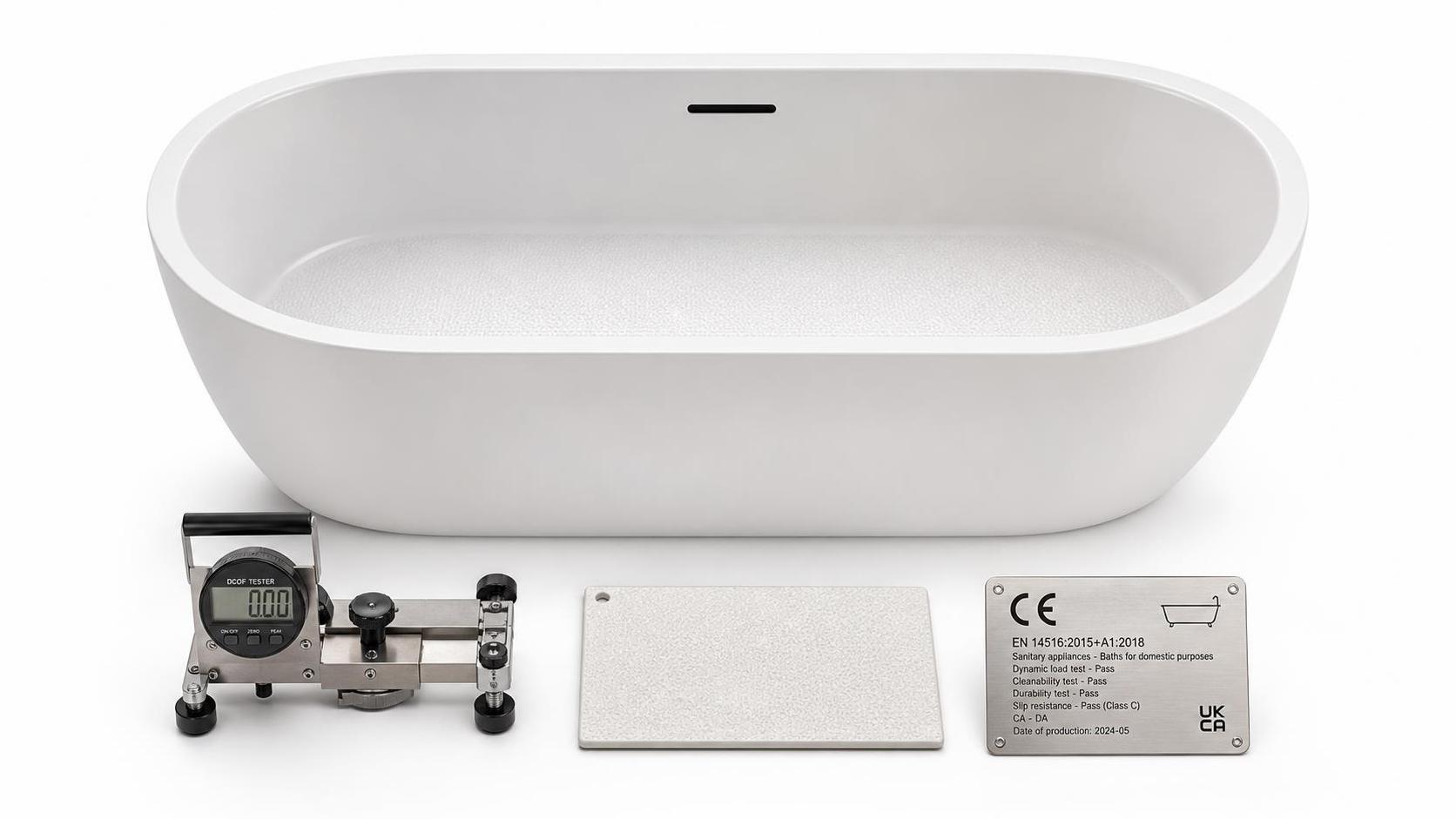
On August 1, 2026, the updated EU bathtub safety standard EN 14428:2026 became mandatory following an OJEU notice issued on July 31. For companies shipping bathtubs into the European market, the immediate issue is not only a revised technical requirement, but also a market-access condition tied to dynamic slip-resistance testing and permanent compliance marking. This is particularly relevant for Chinese manufacturers exporting to Europe, as well as importers and distributors whose customs clearance and delivery schedules may now depend on whether products have completed the required assessment and carry the new mark.
What the new mandatory requirement includes
According to the information provided, the Official Journal of the European Union published a notice on July 31, 2026 updating the bathtub product safety standard to EN 14428:2026, and the revised standard became mandatory on August 1, 2026.
The update adds two explicit requirements: a dynamic slip-resistance performance test, described as an inclined ramp test under wet conditions, and a permanent compliance marking requirement.
The same information states that bathtubs that have not been assessed by a designated notified body and do not bear the new marking will be refused customs clearance.
Where the operational pressure is likely to appear
Export manufacturers face an immediate compliance gate
From an industry perspective, bathtub manufacturers exporting from China to the EU are the first group directly exposed to the change, because the new requirement affects whether goods can enter the market at all. The impact is likely to center on product assessment, labeling readiness, and shipment timing. What deserves closer attention is whether current export models and batches already align with the updated testing and marking requirement before shipment is arranged.
Importers must pay closer attention to entry documentation and product status
EU importers are also likely to be affected because customs clearance risk now appears directly linked to whether the bathtub has been assessed by the relevant notified body and carries the required permanent mark. In practice, their concern is less about broad policy interpretation and more about whether incoming products are already compliant at the point of entry.
Distributors may feel the effect through delivery disruption
For distributors, the issue is likely to surface through product availability and lead-time stability. If a shipment is stopped at customs because the updated requirements have not been met, downstream supply plans may be interrupted. Observably, this makes compliance status part of routine inventory and delivery planning rather than a back-end regulatory issue.
Supply-chain service providers may need tighter coordination
Service providers involved in shipping, customs handling, and document coordination may also need to adjust, because the standard change appears tied directly to clearance outcomes. The practical pressure point is likely to be whether product files, assessment status, and marking details are confirmed early enough to avoid avoidable delays in transit or at entry points.
What companies should check now
Whether existing export products fall within the new requirement immediately
The first practical issue is timing. The notice was published on July 31, 2026 and the updated standard became mandatory on August 1, 2026, leaving little room between announcement and enforcement in the information provided. Companies involved in ongoing shipments should therefore focus on whether products intended for EU entry after that date are already aligned with the new test and marking requirement.
Whether assessment and marking are being treated as separate tasks
The information provided indicates that both notified body assessment and the new permanent compliance marking matter for market entry. Analysis shows companies should avoid treating testing, assessment, and marking as isolated steps, because customs clearance risk appears linked to the final compliance status of the shipped product.
Whether supplier and customer communication is specific enough
For cross-border transactions, a practical concern is whether manufacturers, importers, and distributors are using the same understanding of compliance readiness. What deserves closer attention is not general awareness of the new rule, but whether product status, assessment completion, and marking arrangements are being communicated clearly enough to support shipment decisions and delivery commitments.
Whether delivery schedules need contingency planning
Because the provided information links non-compliance to refusal of customs clearance, companies may need to review delivery timelines and buffer arrangements. This is especially relevant where goods are already in production, booked for shipment, or committed under fixed delivery expectations.
Why this should be read as more than a technical update
Analysis shows this development is not just a routine revision of a product standard. In the short term, it functions as an immediate compliance threshold for EU-bound bathtubs. The combination of a new dynamic slip-resistance test, permanent marking, and customs-clearance consequences means the update reaches beyond engineering review and into trade execution.
At the same time, it is more appropriate to understand this as a concrete regulatory result rather than a policy signal still waiting to take shape, because the information provided states that the requirement is already mandatory as of August 1, 2026. Continued observation is still necessary, however, around how market participants interpret and implement the requirement in day-to-day transactions.
How the market is likely to frame this development
The industry significance of this update lies in the fact that compliance, labeling, and clearance are now more tightly connected for bathtubs entering the EU market. For affected businesses, the immediate issue is not abstract regulatory direction but whether products can move through assessment, marking, and customs without disruption.
From a neutral reading, this is best understood as an effective market-access change with near-term operational consequences. It may also serve as a longer-term signal that technical safety requirements and visible compliance identification are being enforced more directly at the trade level, but that broader interpretation still requires continued observation.
Basis of this article and points requiring follow-up
This article is based on the user-provided news title, event date, and event summary concerning the mandatory implementation of the updated EU bathtub safety standard EN 14428:2026 on August 1, 2026.
For this type of industry update, commonly relevant source categories may include official notices, standard organization documents, company disclosures, industry association updates, and reporting by authoritative media. The specific official source link was not provided in the input, so continued verification remains necessary.
Follow-up attention should focus on any further official wording, implementation guidance, or market-side clarification related to assessment procedures, marking practice, and customs enforcement under EN 14428:2026.
Industry Briefing
Get the top 5 industry headlines delivered to your inbox every morning.